
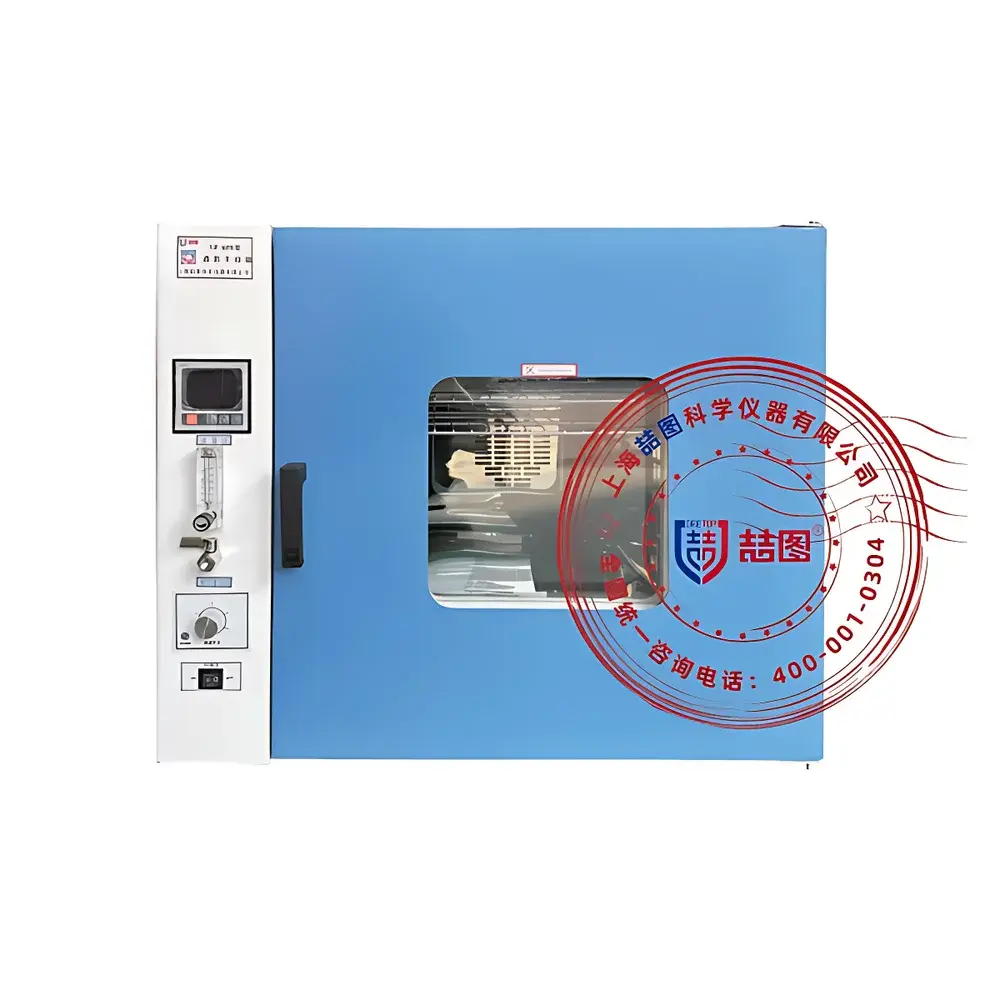
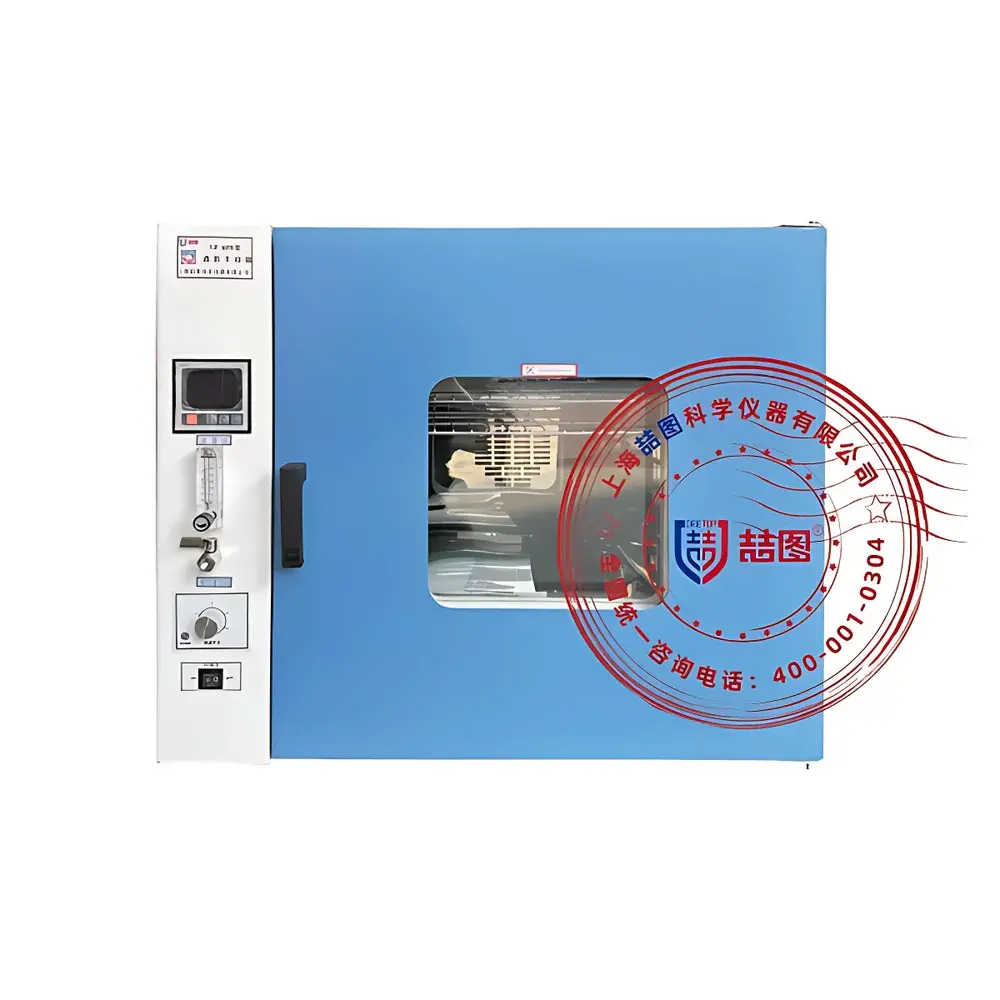
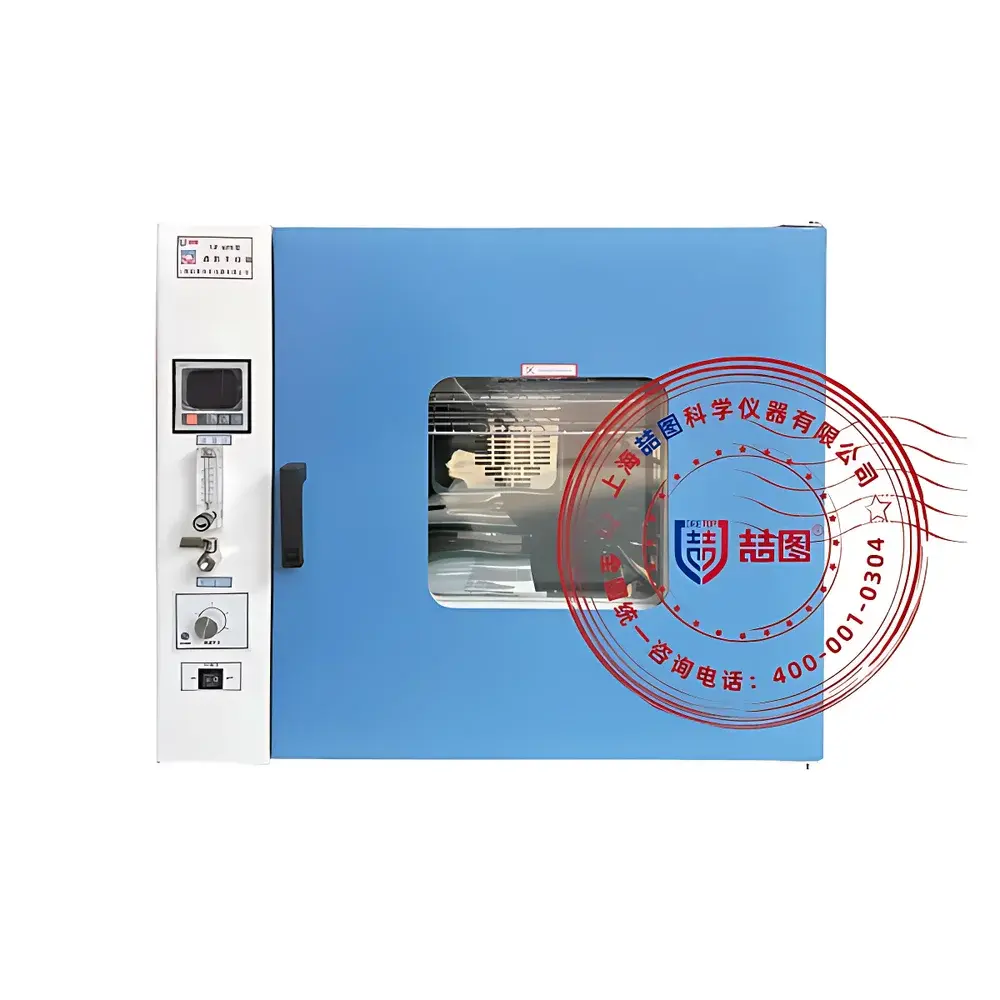
DRETOP TDZ-30 Vacuum-Nitrogen Purged Drying Oven
| Brand | DRETOP |
|---|---|
| Origin | Shanghai, China |
| Manufacturer Type | Direct Manufacturer |
| Region Classification | Domestic (China) |
| Model | TDZ-30 |
| Instrument Type | General-Purpose Drying Oven |
| Temperature Range | RT+5°C to 250°C |
| External Dimensions (W×D×H) | 615 × 500 × 505 mm |
| Internal Chamber Dimensions (W×D×H) | 320 × 320 × 300 mm |
| Temperature Resolution | 0.1°C |
| Operating Ambient Temperature | 5–45°C |
| Interior Material | Stainless Steel (AISI 304) |
| Heating Method | Forced-Air Circulation with Adjustable Fan Speed |
| Vacuum Capability | Optional integrated vacuum pump (V-series variant) |
| Compliance | GB 474–2008, JB/T 5520–91, GB/T 212–2008, GB/T 211–2017 |
Overview
The DRETOP TDZ-30 Vacuum-Nitrogen Purged Drying Oven is an engineered solution for controlled thermal processing under inert or low-oxygen atmospheres. Unlike conventional forced-air ovens, the TDZ-30 integrates dual operational modes—nitrogen-purged drying and optional vacuum-assisted inertization—to mitigate oxidative degradation during drying, curing, aging, and stabilization processes. Its core architecture leverages a fully welded stainless-steel chamber (AISI 304), fluororubber sealing gaskets, and electromagnetic flow control to maintain oxygen concentrations below 0.1% when configured with vacuum pre-evacuation (TDZ-V30 variant). The system operates on the principle of gas-phase displacement and pressure-controlled inert atmosphere maintenance, making it suitable for applications where sample integrity—particularly for oxygen-sensitive materials such as noble metal powders, photoactive compounds, lithium battery cathode precursors, and pharmaceutical reference standards—is non-negotiable.
Key Features
- Stainless-steel interior chamber (320 × 320 × 300 mm) with full weld seams and fluororubber door gasketing ensures structural integrity and minimal inert gas leakage.
- Dual-mode operation: Standard nitrogen purging mode (continuous or pulsed flow) and optional vacuum-integrated mode (requires TDZ-V30 configuration) for sequential evacuation and nitrogen backfilling.
- PID-based digital temperature controller with 0.1°C resolution and ±0.5°C uniformity across the chamber at 100°C (per JB/T 5520–91 test protocol).
- Programmable multi-segment temperature ramping (up to 8 segments) supporting time-temperature profiles required for ICH Q1 stability testing, polymer crosslinking, and catalyst activation protocols.
- Electromagnetically actuated mass flow control system with rotameter calibration enables repeatable nitrogen dosing (0–10 L/min range, adjustable in 0.1 L/min increments) and closed-loop consistency >99.9% between cycles.
- Safety architecture includes over-temperature cutoff (mechanical backup), over-pressure relief valve, audible/visual alarm for temperature deviation >±3°C, and real-time chamber pressure monitoring (V-series only).
Sample Compatibility & Compliance
The TDZ-30 accommodates solid, granular, and thin-film samples up to 30 L volume without airflow-induced displacement—critical for fragile ceramics, nanomaterial dispersions, and lyophilized biologics. Its inert environment meets requirements for ASTM E145–22 (Standard Specification for Gravity-Convection and Forced-Ventilation Ovens) Class II inert-atmosphere ovens and supports GLP-compliant documentation when paired with optional RS485 data logging and 21 CFR Part 11–enabled software (DRETOP DataTrace Pro v3.2). Validation packages include IQ/OQ documentation templates aligned with ISO/IEC 17025 and EU Annex 15 guidelines. Complies with national standards GB 474–2008 (coal sample preparation), GB/T 211–2017 (total moisture in coal), and GB/T 212–2008 (proximate analysis), confirming suitability for accredited materials testing laboratories.
Software & Data Management
The standard LCD controller supports local setpoint entry, real-time temperature/pressure display (V-series), and alarm history storage (last 100 events). For regulated environments, optional USB/RS485 interface enables connection to DRETOP DataTrace Pro—a validated data acquisition platform supporting audit trails, electronic signatures, user role management, and automatic report generation (PDF/CSV). All temperature and flow data are timestamped with NTP-synchronized clocks and stored redundantly on internal flash memory and external host systems. Data integrity complies with FDA 21 CFR Part 11 Subpart B requirements when configured with password-protected administrator access and change-control logs.
Applications
- Pharmaceutical stability studies (ICH Q1A–Q1E) requiring inert, moisture-controlled thermal exposure.
- Drying of oxygen-labile catalysts (e.g., Pd/C, Raney Ni) and air-sensitive organometallics.
- Preconditioning of electrode materials for lithium-ion batteries prior to cell assembly.
- Thermal aging of polymer composites and encapsulants under nitrogen to isolate thermal degradation mechanisms from oxidation.
- Moisture removal from hygroscopic reference standards (e.g., USP moisture content reference materials) without surface oxidation.
- Low-noise, vibration-free drying of optical coatings and semiconductor wafers where forced convection induces particulate contamination.
FAQ
Does the TDZ-30 include a built-in vacuum pump?
No—the base TDZ-30 model supports nitrogen purging only. Vacuum capability requires the TDZ-V30 configuration, which integrates a two-stage oil-free rotary vane pump capable of reaching ≤5 Pa absolute pressure.
What is the maximum allowable nitrogen inlet pressure?
The system is rated for inlet pressures up to 0.3 MPa (gauge); downstream pressure regulation is managed via integrated solenoid valves and needle valves.
Can the oven be validated for GMP use?
Yes—DRETOP provides IQ/OQ documentation kits, sensor calibration certificates (NIST-traceable Pt100 sensors), and supports third-party PQ execution per ASTM E2500 and ISPE Good Automated Manufacturing Practice (GAMP®) 5.
Is the chamber volume verified per ISO 17025?
Chamber dimensions are factory-measured using laser interferometry; volumetric tolerance is ±0.5% (30.72 L nominal, measured 30.56 L). Calibration reports available upon request.
How is temperature uniformity verified across the working zone?
Per JB/T 5520–91, nine-point mapping is performed at 100°C and 200°C using calibrated Class A Pt100 probes; uniformity is reported as ±0.8°C (max deviation) at 100°C and ±1.2°C at 200°C.



