
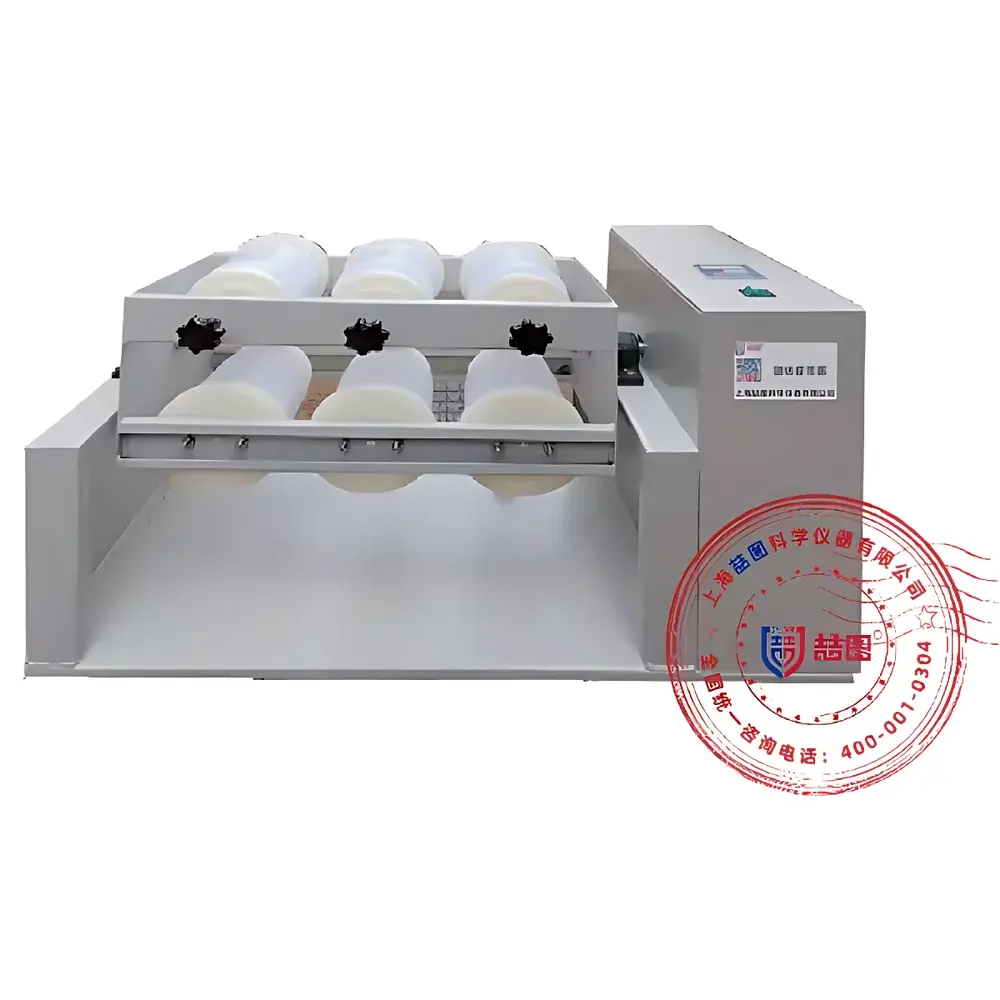
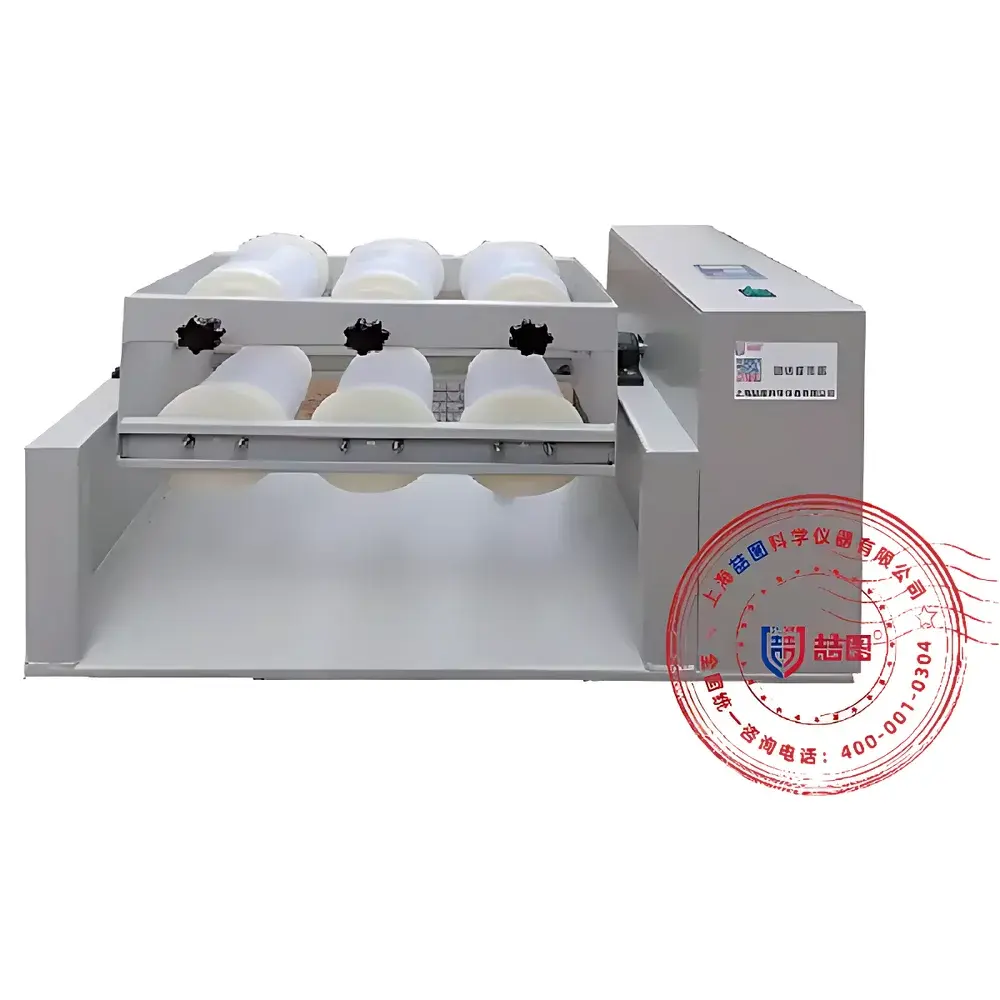
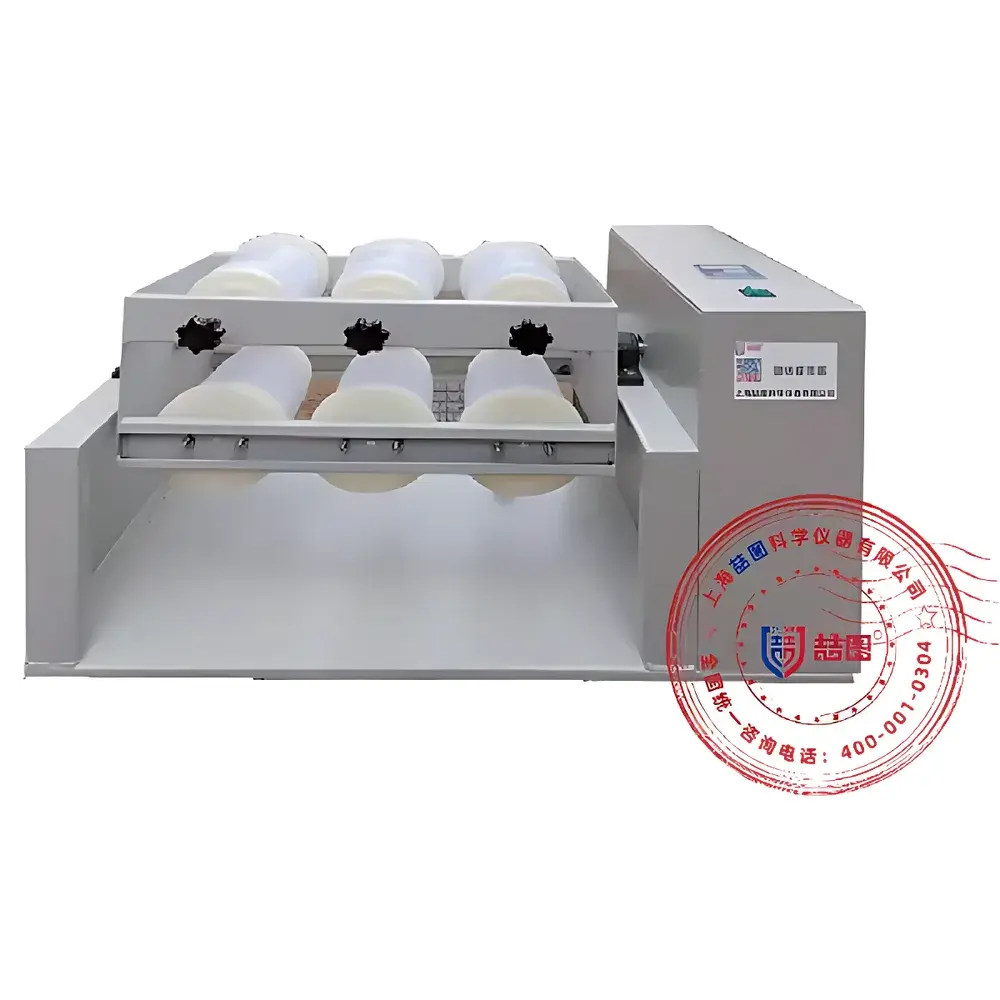
DRETOP TFZ8-1000 Constant-Temperature Inverting Shaker
| Brand | DRETOP |
|---|---|
| Origin | Shanghai, China |
| Manufacturer Type | Direct Manufacturer |
| Product Category | Domestic |
| Model | TFZ8-1000 |
| Instrument Type | Inverting Shaker |
| Timer Range | 1–999 min |
| Oscillation Speed | 0–60 rpm |
| Temperature Control Range | RT+5°C to 65°C |
| Number of Shaking Plates | 8 |
| Power Supply | AC 220 V, 50 Hz |
| Sample Bottle Options | 1 L or 2 L (glass, PE, PTFE, or ZHE containers) |
| Rotation Direction Control | Programmable forward/reverse/stop intervals |
| Safety Protections | Lid-interlock power cutoff, overtemperature protection, overload protection, leakage current protection |
Overview
The DRETOP TFZ8-1000 Constant-Temperature Inverting Shaker is an engineered laboratory instrument designed for standardized leaching procedures in environmental solid waste analysis. It operates on a precise mechanical inversion principle—rotating sample containers end-over-end along a horizontal axis—to ensure uniform and reproducible contact between solid matrices and extraction solvents. This motion mimics the tumbling action required by regulatory leaching protocols, minimizing sedimentation bias and maximizing mass transfer efficiency. The device integrates thermostatic control with programmable bidirectional rotation, enabling strict adherence to time-, temperature-, and agitation-dependent extraction methods mandated by national and international environmental testing standards. Its robust architecture supports continuous operation under high-load conditions, making it suitable for routine compliance testing in accredited environmental laboratories, university research facilities, and governmental regulatory agencies.
Key Features
- Eight independently mounted, corrosion-resistant aluminum shaking plates with passivated surface finish—designed for rapid disassembly, cleaning, and long-term chemical resistance.
- Electrostatically coated steel enclosure—scratch-resistant, non-porous, and compatible with common lab disinfectants and organic solvents.
- Top-hinged, fully enclosed lid with integrated safety interlock—automatically cuts power upon lid opening to prevent operator exposure during active rotation.
- Programmable bidirectional inversion: users define discrete forward/reverse durations and pause intervals (e.g., 2 min forward → 5 sec pause → 2 min reverse), supporting complex leaching sequences per HJ/T 299–2007 and HJ/T 300–2007.
- Dual-mode operation: continuous unidirectional rotation or alternating inversion—configurable via intuitive LCD interface with real-time parameter feedback.
- Comprehensive safety suite: overtemperature cut-off (±0.5°C hysteresis), motor overload detection, ground-fault circuit interruption (GFCI), and thermal fuse backup.
- Low-noise brushless AC motor—rated for >18 hours of uninterrupted operation at maximum load, with speed stability maintained within ±1 rpm across full 0–60 rpm range.
Sample Compatibility & Compliance
The TFZ8-1000 accommodates standardized 1 L and 2 L extraction vessels—including borosilicate glass, high-density polyethylene (HDPE), polytetrafluoroethylene (PTFE), and certified ZHE containers—ensuring compatibility with aggressive leachants such as sulfuric-nitric acid mixtures (HJ/T 299–2007) and acetic acid buffer solutions (HJ/T 300–2007). Its mechanical design conforms to the geometric and kinematic requirements specified in both standards, including minimum inversion angle (>140°), consistent angular velocity, and absence of lateral shear forces that could compromise particle integrity. The unit is validated for use in GLP-compliant laboratories and supports audit-ready documentation when paired with external data loggers compliant with ISO/IEC 17025 traceability requirements.
Software & Data Management
While the TFZ8-1000 utilizes an embedded microcontroller with local LCD-based configuration, it supports external data acquisition via RS-232 or optional USB-to-serial interface (sold separately). When integrated with laboratory information management systems (LIMS) or electronic lab notebooks (ELN), all operational parameters—including setpoints, elapsed time, actual temperature, and rotation status—are timestamped and exportable in CSV format. The system adheres to ALCOA+ principles for raw data integrity; manual parameter entry is logged with user ID and change history. Though not natively 21 CFR Part 11 compliant, the instrument can be deployed within validated workflows where procedural controls (e.g., dual-operator verification, printed audit trails) satisfy regulatory data governance requirements.
Applications
- Regulatory leaching tests for hazardous waste characterization (TCLP, SPLP analogs under Chinese EPA frameworks).
- Soil and sediment toxicity screening in agricultural and forestry research.
- Leachate generation for subsequent ICP-MS, AAS, or IC analysis of heavy metals and anions.
- Method development and validation studies requiring controlled agitation-temperature coupling.
- Extraction optimization for pharmaceutical excipients, biopolymers, and activated carbon matrices.
- Quality control of industrial slags, fly ash, and construction debris prior to landfill disposal.
FAQ
What sample bottle sizes and materials are supported?
The TFZ8-1000 accepts standardized 1 L and 2 L containers made from borosilicate glass, HDPE, PTFE, or certified ZHE polymers—selected based on solvent compatibility and regulatory acceptance for specific leaching protocols.
Does the shaker support temperature calibration traceability?
Yes—internal PT100 sensor output can be verified against NIST-traceable reference thermometers; calibration certificates are available upon request with optional IQ/OQ documentation packages.
Can the device operate unattended overnight?
It is rated for continuous 18-hour operation under nominal load; however, unattended use requires integration with facility-wide monitoring systems and adherence to local electrical safety policies.
Is firmware upgradable in the field?
Firmware updates are performed via secure serial connection by authorized DRETOP service engineers—no user-accessible update interface is provided to maintain regulatory stability.
How is mechanical alignment maintained across eight plates?
Each plate mounts on hardened stainless-steel shafts with preloaded angular contact bearings; factory alignment is verified using laser interferometry and documented in the unit’s出厂 calibration report.
Related Products






