
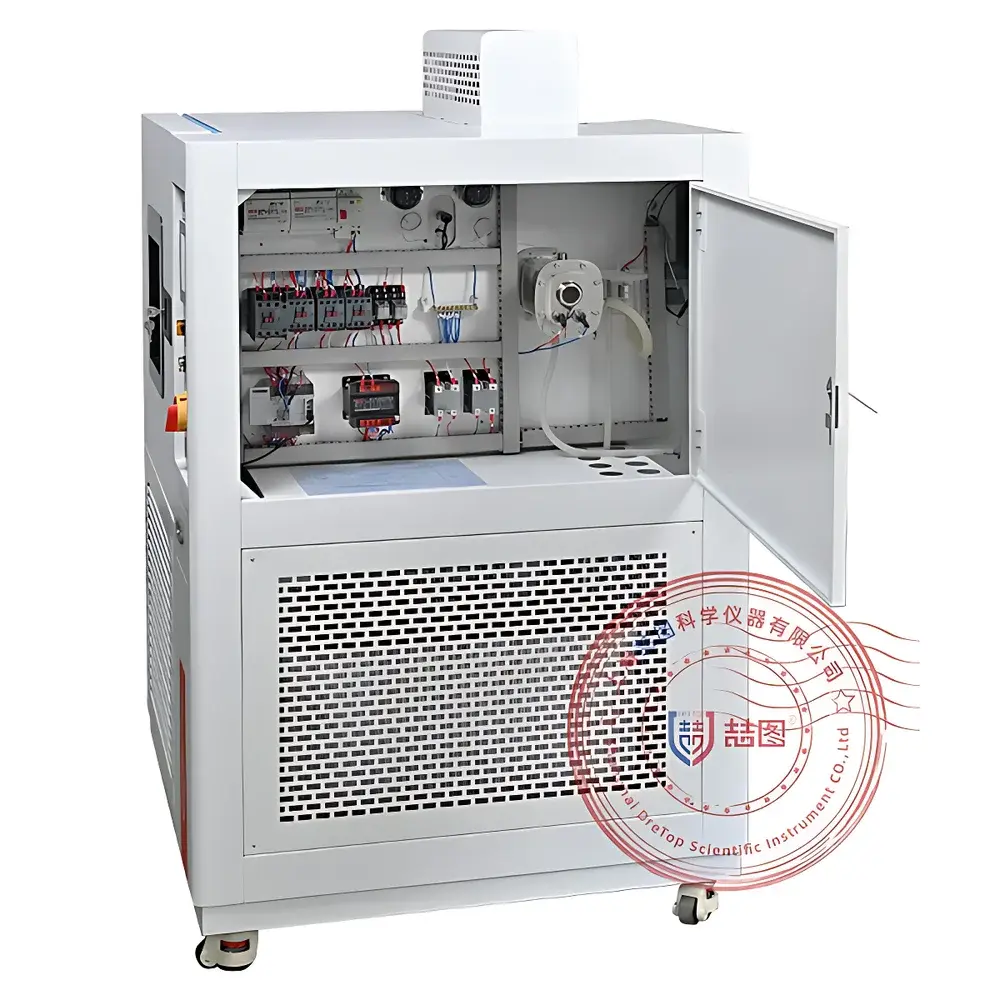
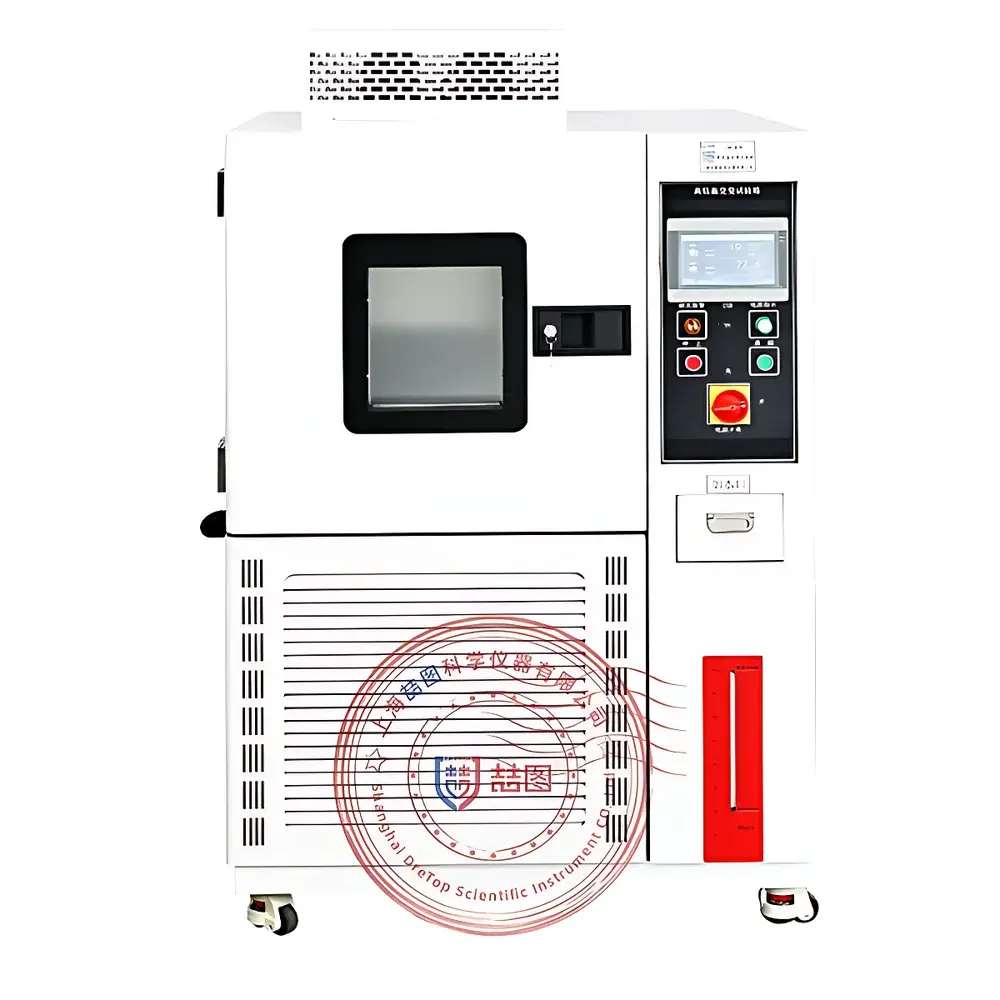
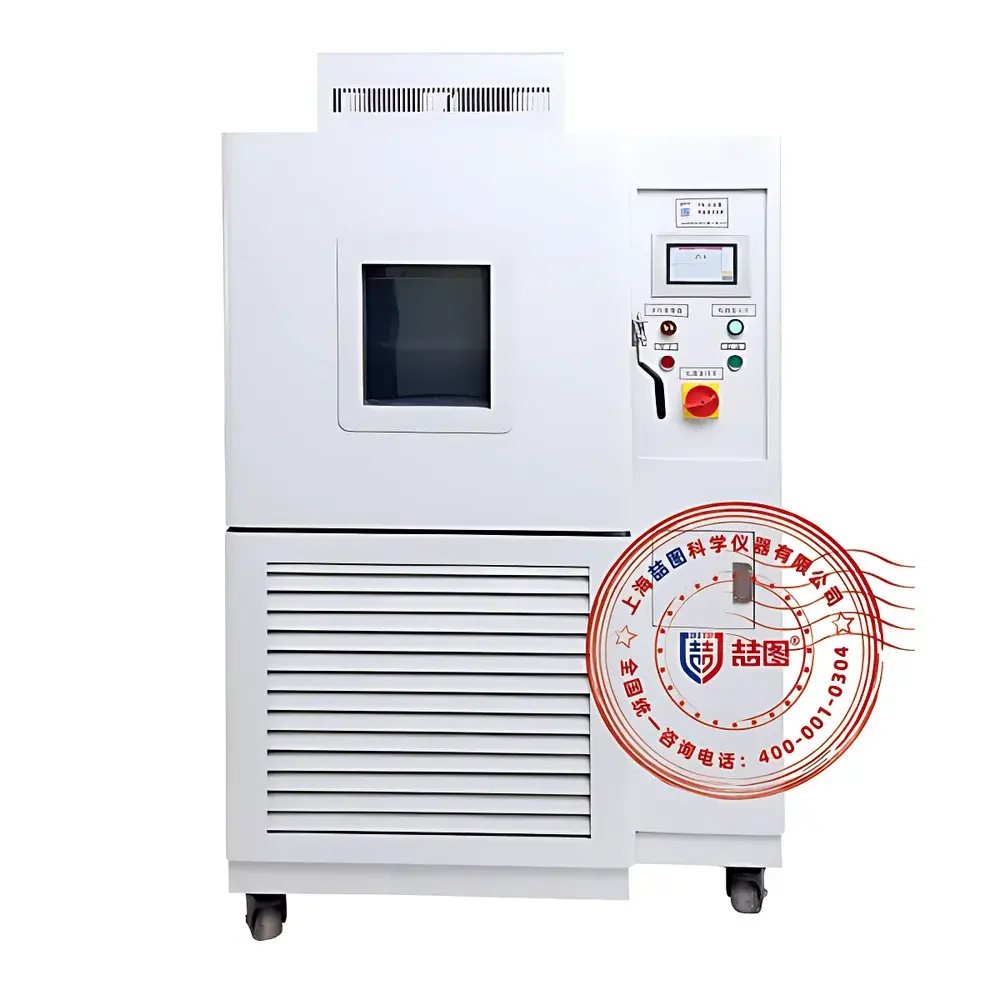
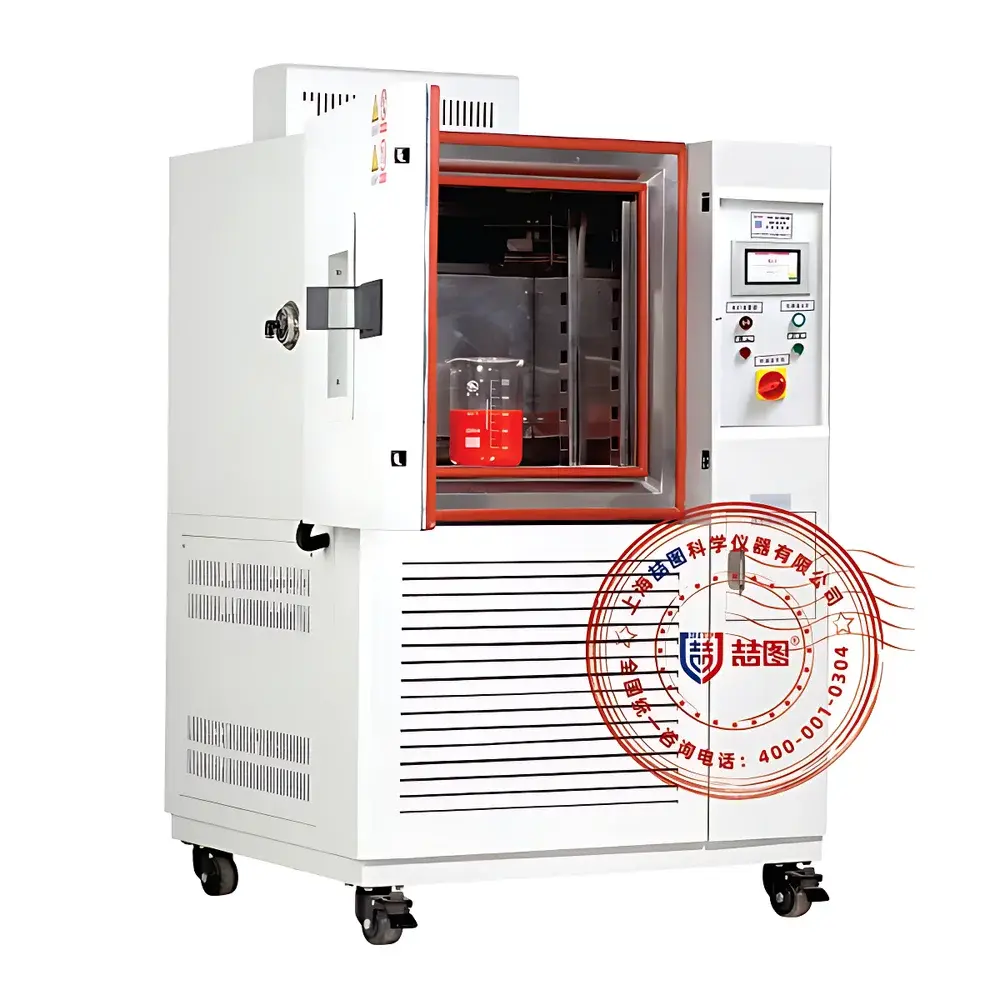
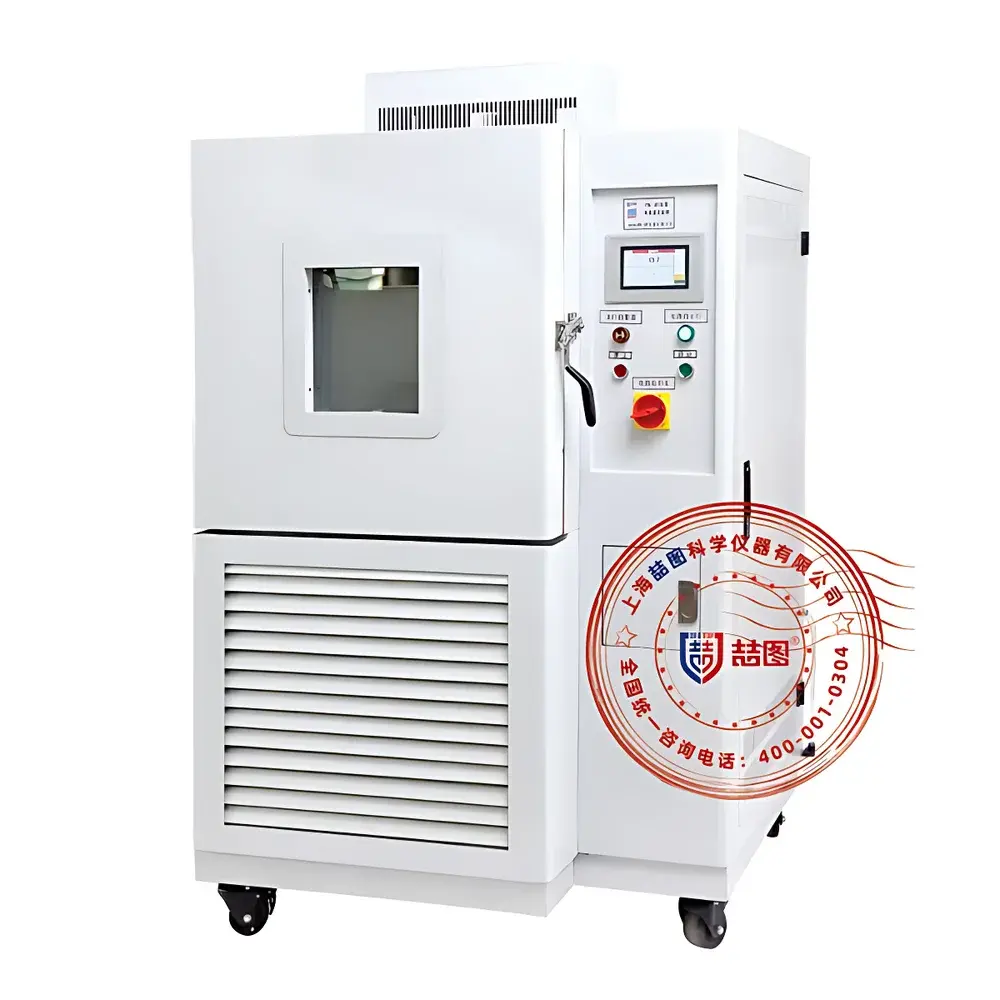
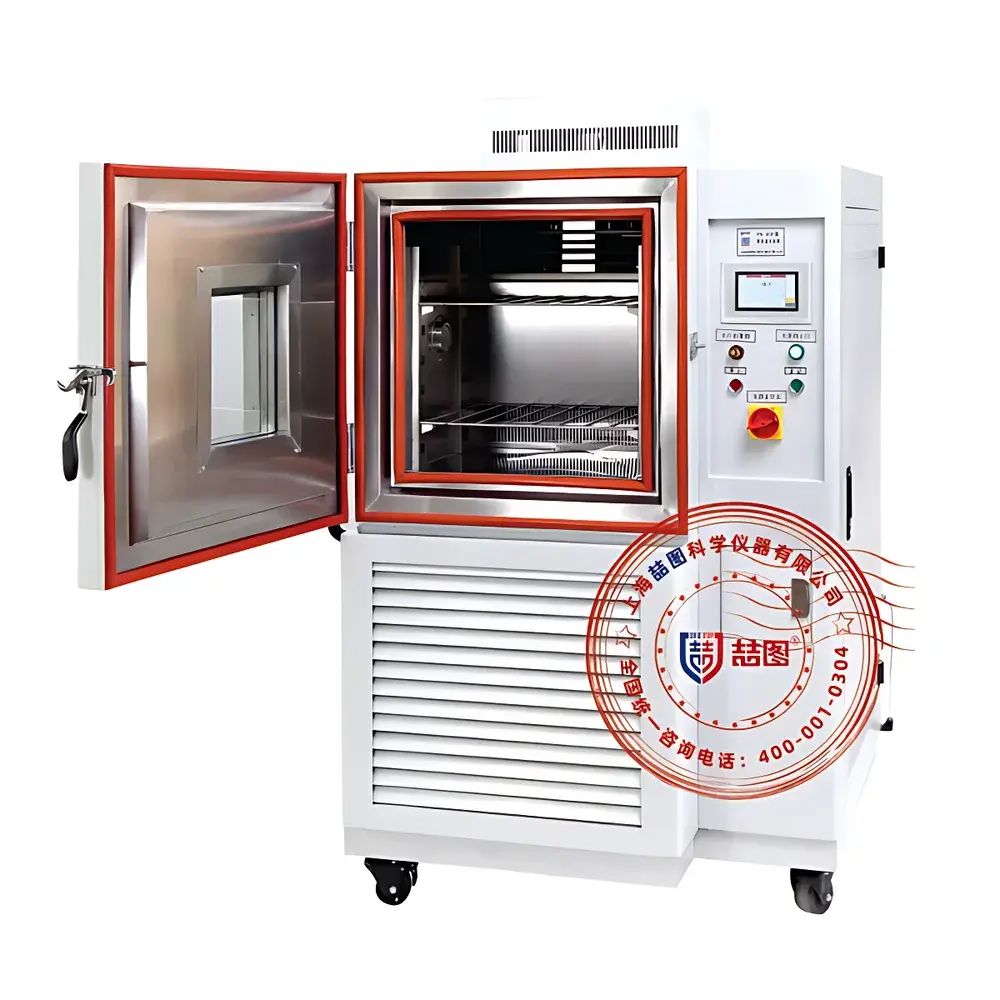
DRETOP THL-125-III Triple-Zone High-Low Temperature Environmental Test Chamber
| Brand | DRETOP |
|---|---|
| Origin | Shanghai, China |
| Model | THL-125-III |
| Refrigeration Method | Compressor-based |
| Temperature Range | −40 °C to +160 °C |
| Temperature Fluctuation | ±0.3 °C |
| Temperature Uniformity | ≤2 °C |
| Temperature Deviation | ±2 °C |
| Heating Rate | 3 °C/min (avg.) |
| Cooling Rate | 1 °C/min (avg.) |
| Interior Dimensions (W×D×H) | 500 mm × 500 mm × 500 mm |
| Nominal Volume | 125 L |
| Power Supply | AC 380 V |
| Input Power | 9 kW |
Overview
The DRETOP THL-125-III Triple-Zone High-Low Temperature Environmental Test Chamber is an engineered precision system designed for rigorous thermal stress evaluation under controlled, programmable temperature cycling conditions. It operates on a dual-stage compressor refrigeration architecture—featuring cascaded evaporator-condenser coupling—enabling stable operation across an extended range of −40 °C to +160 °C. Unlike single-zone chambers, the THL-125-III integrates three independently controllable thermal zones within a unified chamber structure, allowing simultaneous or staggered exposure of multiple samples to differentiated thermal profiles—critical for accelerated life testing, failure mode analysis, and qualification of multi-material assemblies. Its design adheres to core principles of environmental simulation per IEC 60068-2-1 (cold), IEC 60068-2-2 (dry heat), and ISO 16750-4 (road vehicles), supporting compliance-driven validation workflows in R&D, quality assurance, and regulatory submission environments.
Key Features
- Triple-zone thermal control architecture with independent PID loops per zone, enabling concurrent high/low/ambient profile execution or sequential ramp-hold-step sequences
- 10.1-inch full-color capacitive touchscreen HMI with bilingual (English/Chinese) interface, password-protected access levels, and audit-trail–capable event logging
- 1000 programmable test cycles, each supporting up to 100 segments with slope-defined ramping, dwell timing, and conditional branching (e.g., jump-to-segment, hold-on-alarm)
- Dual-layer tempered glass observation window with integrated anti-frost heating film and LED illumination—prevents condensation-induced short circuits during low-temperature operation
- Nichrome alloy heating elements coupled with high-static-pressure centrifugal circulation fans ensure ≤2 °C temperature uniformity per IEC 60068-3-5
- Silicone rubber door gasket maintains integrity from −40 °C to +160 °C; no hardening, cracking, or adhesion loss across operational lifetime
- Compressor system uses environmentally compliant R404A/R23 cascade refrigerant blend with automatic defrost cycle and oil return optimization
Sample Compatibility & Compliance
The THL-125-III accommodates standard test specimens up to 450 mm × 450 mm × 450 mm per zone, with standardized 50 mm-diameter cable/port openings (3x standard, configurable sealing options). Its thermal performance meets ASTM E145 Class II accuracy requirements for laboratory environmental chambers and supports GLP-compliant data integrity when paired with optional 21 CFR Part 11–enabled software modules. The chamber’s structural rigidity, vibration-damped mounting, and EMI-shielded internal wiring minimize external interference—ensuring measurement fidelity for sensitive electronics, battery packs, optical sensors, and polymer composites undergoing thermal shock or cyclic endurance testing.
Software & Data Management
Embedded firmware supports real-time data acquisition at 1 Hz resolution per thermocouple channel (standard 6-channel Pt100 input, expandable to 12). All logged parameters—including chamber setpoint, actual zone temperatures, power consumption, compressor runtime, and alarm status—are timestamped and exportable in CSV or Excel-compatible formats. Optional PC-based DRETOP EnviroLog Pro software provides graphical trend analysis, deviation mapping, statistical process control (SPC) charting, and automated report generation aligned with ISO/IEC 17025 documentation standards. Audit trails record user actions, parameter changes, and system events with immutable timestamps—essential for FDA, CNAS, or TÜV audits.
Applications
- Electronics reliability testing: PCB solder joint fatigue, capacitor derating, connector contact resistance drift under thermal cycling
- Automotive component validation: ECUs, ADAS sensors, EV battery modules per ISO 16750-4 and LV-124
- Aerospace materials qualification: Composite curing verification, sealant adhesion testing, thermal expansion coefficient (CTE) correlation
- Pharmaceutical packaging stability: Blister pack integrity, cold-chain container validation per USP
- Academic research: Polymer crystallinity transitions, phase-change material hysteresis, nanocomposite thermal conductivity modeling
- Quality control: Incoming inspection of metal alloys, elastomers, and coated substrates per ASTM D6988 and ISO 22088
FAQ
What is the difference between “triple-zone” and conventional dual-chamber designs?
The THL-125-III achieves true spatial thermal differentiation using three isolated air circulation paths and dedicated sensor arrays—not merely segmented shelving. This enables simultaneous testing of dissimilar materials under divergent thermal regimes without cross-contamination or thermal lag penalties.
Does the chamber support thermal shock testing per MIL-STD-810H Method 503.7?
Yes—when configured with optional rapid transition hardware (enhanced compressor bypass and auxiliary heater banks), it achieves ≥15 °C/min transition rates between extreme setpoints, meeting Method 503.7 Category B requirements.
Can test data be integrated into LabVantage or Thermo Fisher SampleManager LIMS?
Via OPC UA or Modbus TCP protocol support (firmware v3.2+), raw telemetry streams and event logs are compatible with major LIMS and MES platforms through standard industrial gateways.
Is calibration traceability available to NIST or CNAS-accredited standards?
DRETOP provides factory calibration certificates traceable to Shanghai Institute of Measurement and Testing Technology (SIMT), with optional on-site verification by third-party ISO/IEC 17025 laboratories.
What maintenance intervals are recommended for compressor and fan systems?
Compressor oil and filter replacement every 12 months or 4,000 operating hours; fan motor bearing inspection every 24 months; full thermocouple recalibration recommended annually.



