
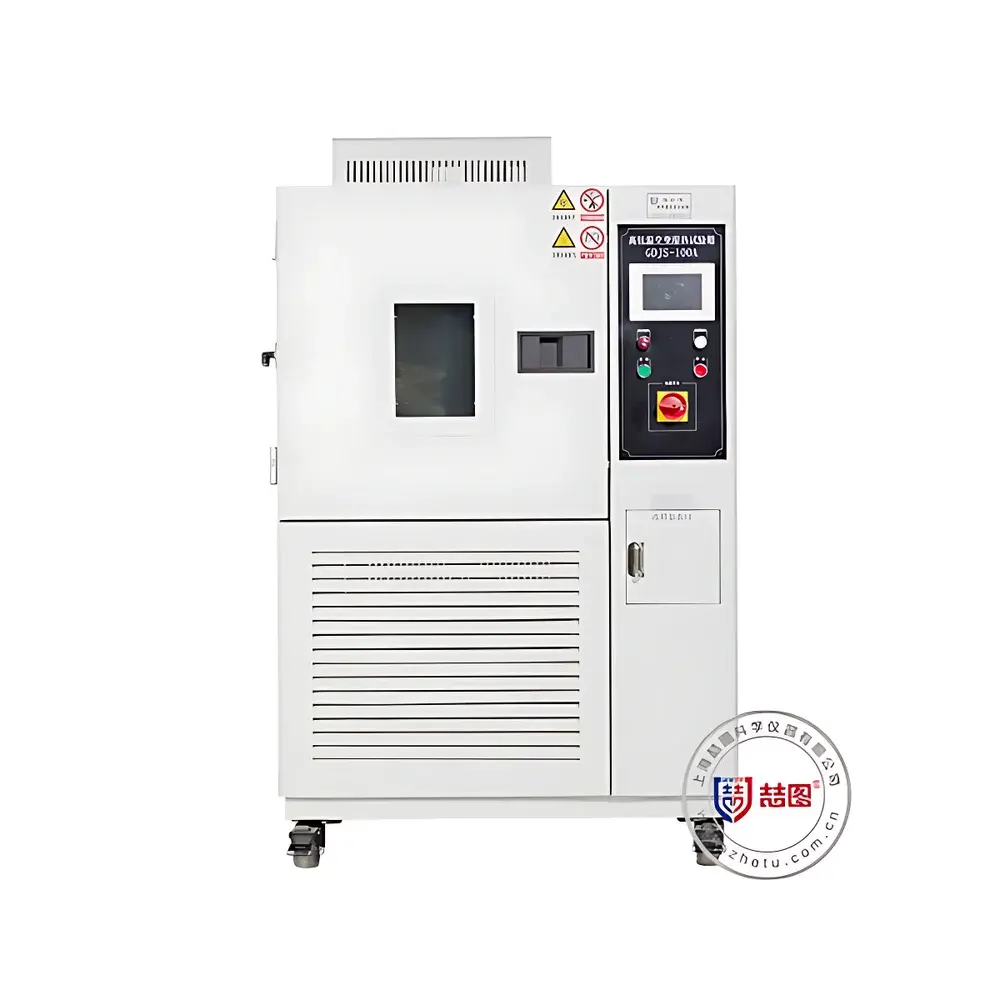
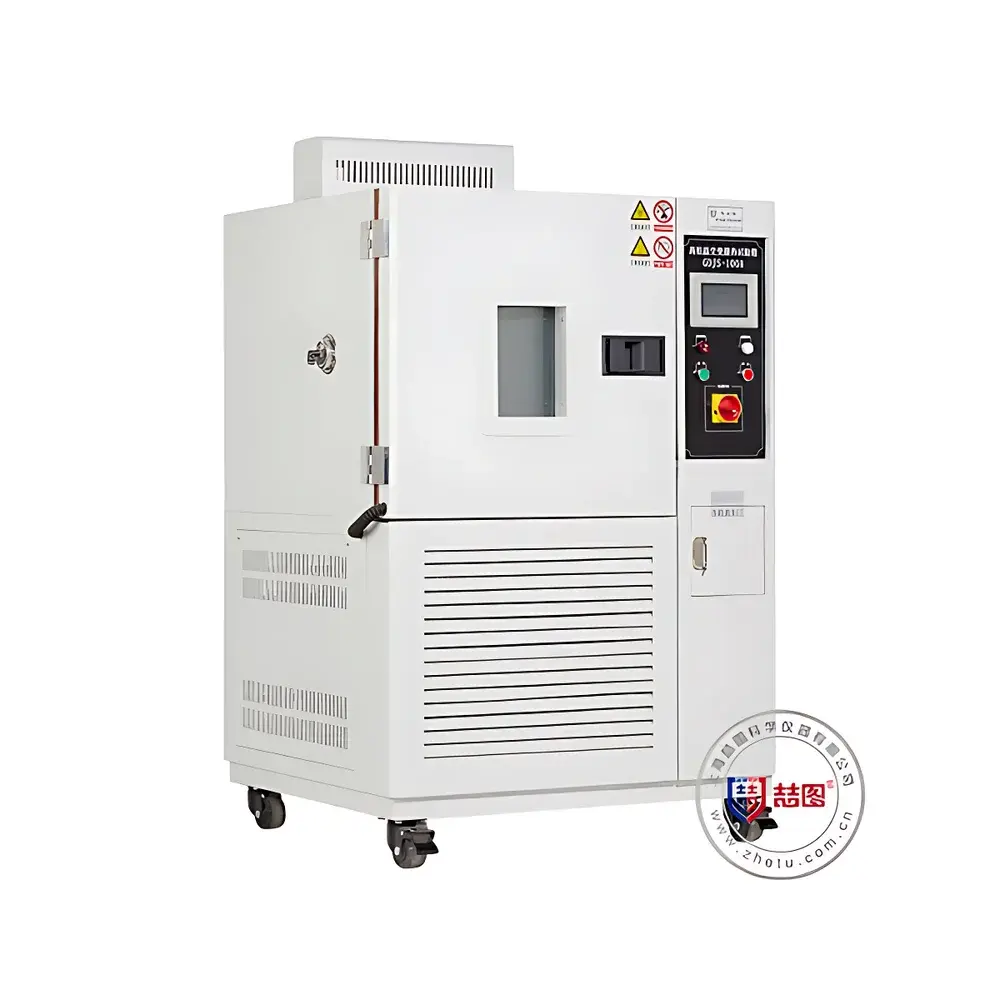
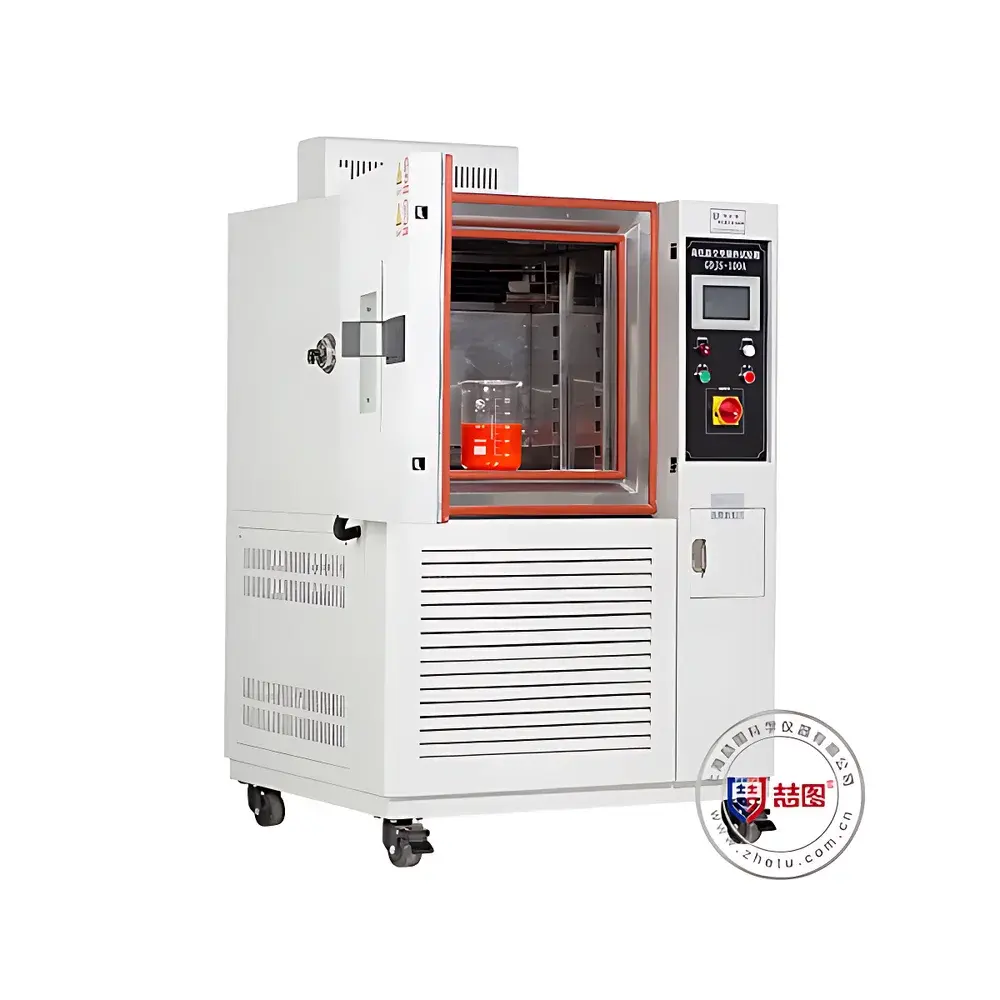
DRETOP THL-C100-I High-Low Temperature Environmental Test Chamber
| Brand | DRETOP |
|---|---|
| Origin | Shanghai, China |
| Manufacturer Type | Direct Manufacturer |
| Model | THL-C100-I |
| Temperature Range | −60 °C to +120 °C |
| Cooling Method | Hermetic Compressor-Based Refrigeration |
| Explosion-Proof | Standard (Non-Explosion-Proof) |
| Temperature Fluctuation | ±0.5 °C |
| Temperature Uniformity | ≤2 °C |
| Heating Rate | 1–3 °C/min (adjustable) |
| Cooling Rate | 0.7–1 °C/min (adjustable) |
| Internal Chamber Dimensions | 500 × 400 × 500 mm (W × D × H) |
Overview
The DRETOP THL-C100-I High-Low Temperature Environmental Test Chamber is an engineered precision system designed for accelerated environmental stress testing under controlled thermal extremes. Based on dual-stage compressor refrigeration architecture and PID-controlled resistive heating, the chamber replicates dynamic temperature profiles encountered during product lifecycle exposure—including storage, transportation, and operational conditions across aerospace, automotive, electronics, and materials science applications. Its operating range of −60 °C to +120 °C enables compliance with key international test standards such as IEC 60068-2-1 (cold), IEC 60068-2-2 (dry heat), and MIL-STD-810H Method 502.7 (temperature shock). The unit is constructed for laboratory-grade repeatability and long-term stability in continuous operation environments typical of QC laboratories, R&D centers, and third-party certification facilities.
Key Features
- Full-color 7-inch capacitive touchscreen HMI with multi-language interface (English/Chinese), password-protected hierarchical access control, and audit-trail-capable user management.
- Programmable logic controller supporting up to 1000 stored test protocols, each comprising up to 100 programmable segments—enabling complex ramp-hold-soak cycles, slope-controlled transitions, and conditional branching (e.g., jump-to-step, hold-on-alarm, auto-restart).
- Dual-layer tempered glass observation window with integrated anti-frost heating film and LED interior lighting—designed to prevent condensation-induced sample contamination or electrical shorting during low-temperature operation.
- Optimized forced-air convection system using high-efficiency centrifugal fans and a re-engineered air duct layout to ensure ≤2 °C temperature uniformity across the 100 L working volume (500 × 400 × 500 mm internal dimensions).
- Independent thermal subsystems: separate compressor-based cooling circuit, NiCr alloy heating elements, and dedicated airflow management—minimizing cross-interference and enabling simultaneous optimization of heating/cooling rates (1–3 °C/min and 0.7–1 °C/min respectively).
- Robust mechanical design featuring silicone rubber door gasket (stable from −70 °C to +150 °C), heavy-duty casters with locking mechanism, and reinforced stainless-steel inner chamber with electropolished finish for corrosion resistance and cleanability.
- Comprehensive safety architecture including over-temperature cut-off, compressor/fan overload protection, ground-fault interruption, and automatic power recovery after grid interruption.
Sample Compatibility & Compliance
The THL-C100-I accommodates a broad spectrum of physical samples—from PCB assemblies and lithium-ion battery cells to polymer composites and metal fasteners—without requiring modification to standard mounting fixtures. Its standard 50 mm-diameter test port (with silicone plug) permits real-time electrical signal routing, pneumatic feedthrough, or thermocouple access under thermal load. The chamber meets structural and operational requirements for ISO/IEC 17025-accredited laboratories and supports GLP/GMP documentation workflows through optional RS485/USB data logging interfaces. While not intrinsically explosion-proof, its design complies with IEC 61000-6-2 (immunity) and IEC 61000-6-4 (emissions) for electromagnetic compatibility in shared lab environments.
Software & Data Management
Data acquisition and control are managed via embedded firmware supporting CSV export of time-stamped temperature logs (sampling interval configurable down to 1 s) and direct Excel-compatible report generation. Optional PC software provides remote monitoring, alarm notification (email/SMS via gateway), and graphical overlay of multiple test runs for comparative analysis. All system events—including parameter changes, program starts/stops, and fault triggers—are timestamped and stored in non-volatile memory for regulatory traceability. When configured with audit trail mode, the system satisfies FDA 21 CFR Part 11 requirements for electronic records and signatures, including user authentication, change history, and immutable log archiving.
Applications
This chamber serves critical functions across multiple validation and qualification workflows: thermal cycling reliability assessment per JEDEC JESD22-A104; cold-start performance evaluation of automotive ECUs; moisture barrier integrity testing of pharmaceutical packaging under thermal-humidity coupling (when paired with optional humidity module); accelerated aging studies of elastomers per ASTM D573; and pre-conditioning of optical components prior to spectral calibration. It is routinely deployed in Tier-1 supplier labs for PPAP submissions, university materials science departments for phase-transition characterization, and defense contractors performing MIL-STD-810G/H environmental tailoring.
FAQ
What is the maximum allowable ambient temperature for stable operation?
The chamber is rated for continuous operation at ambient temperatures up to 30 °C with relative humidity ≤80% non-condensing. For installations above 30 °C, derating of cooling capacity and extended stabilization times should be expected.
Can the THL-C100-I be integrated into a centralized lab monitoring network?
Yes—via optional RS485 Modbus RTU or USB virtual COM port, enabling integration with SCADA platforms, LIMS, or custom Python-based orchestration scripts.
Is calibration certificate included with shipment?
A factory calibration report (traceable to NIM, China) is provided. UKAS or NIST-traceable calibration certificates are available upon request at additional cost.
What maintenance intervals are recommended for compressor longevity?
Compressor oil inspection every 12 months; full refrigerant circuit check and filter-drier replacement every 24 months under standard usage (≤8 hrs/day, 5 days/week).
Does the unit support temperature ramp-and-soak profiles required by IPC-9701?
Yes—the programmable controller supports precise ramp rate definition (°C/min), dwell duration, and cycle repetition count, fully satisfying IPC-9701 Annex A thermal profile specifications.



