
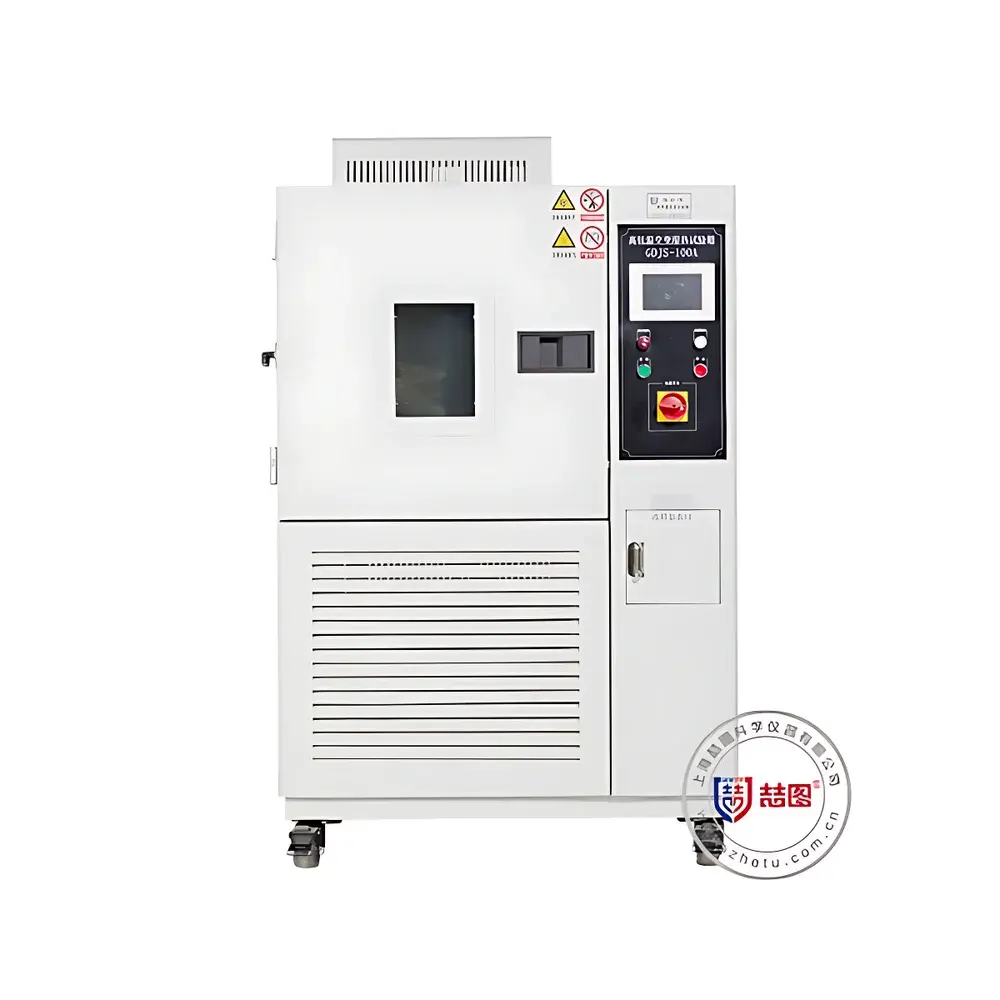
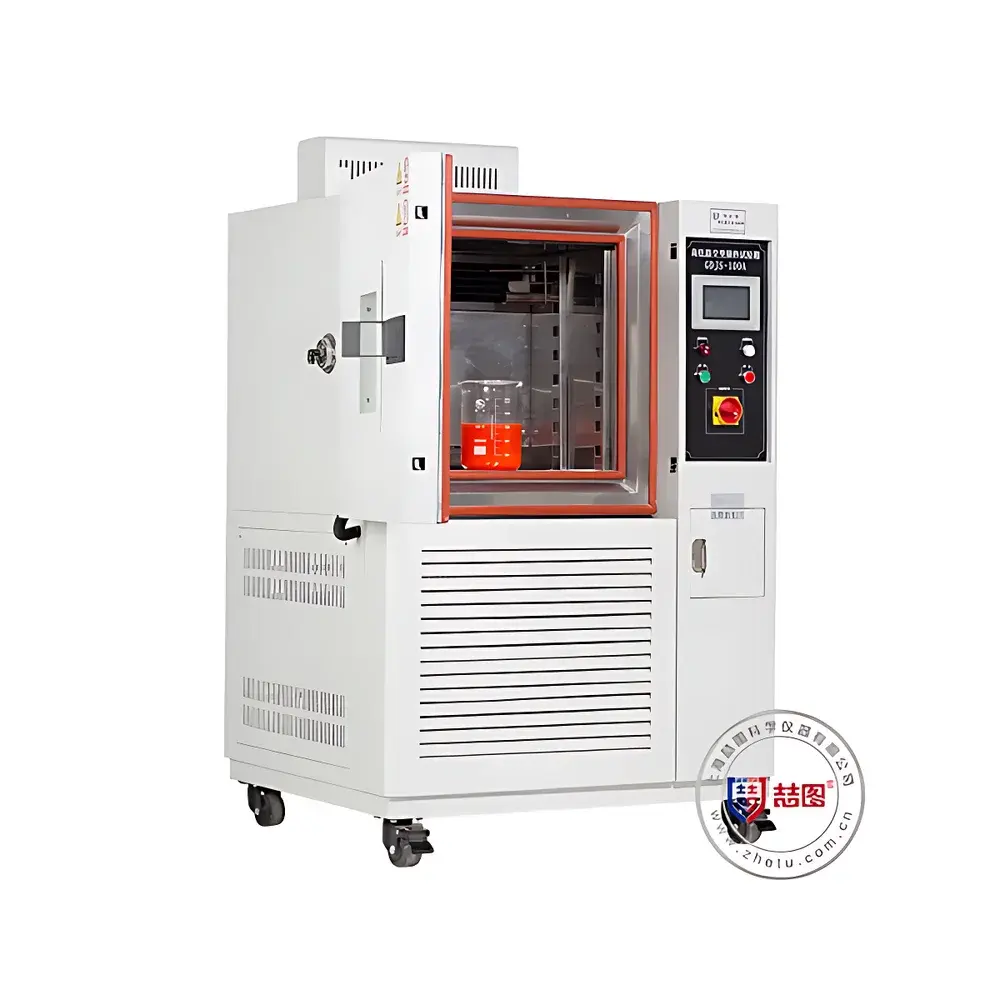
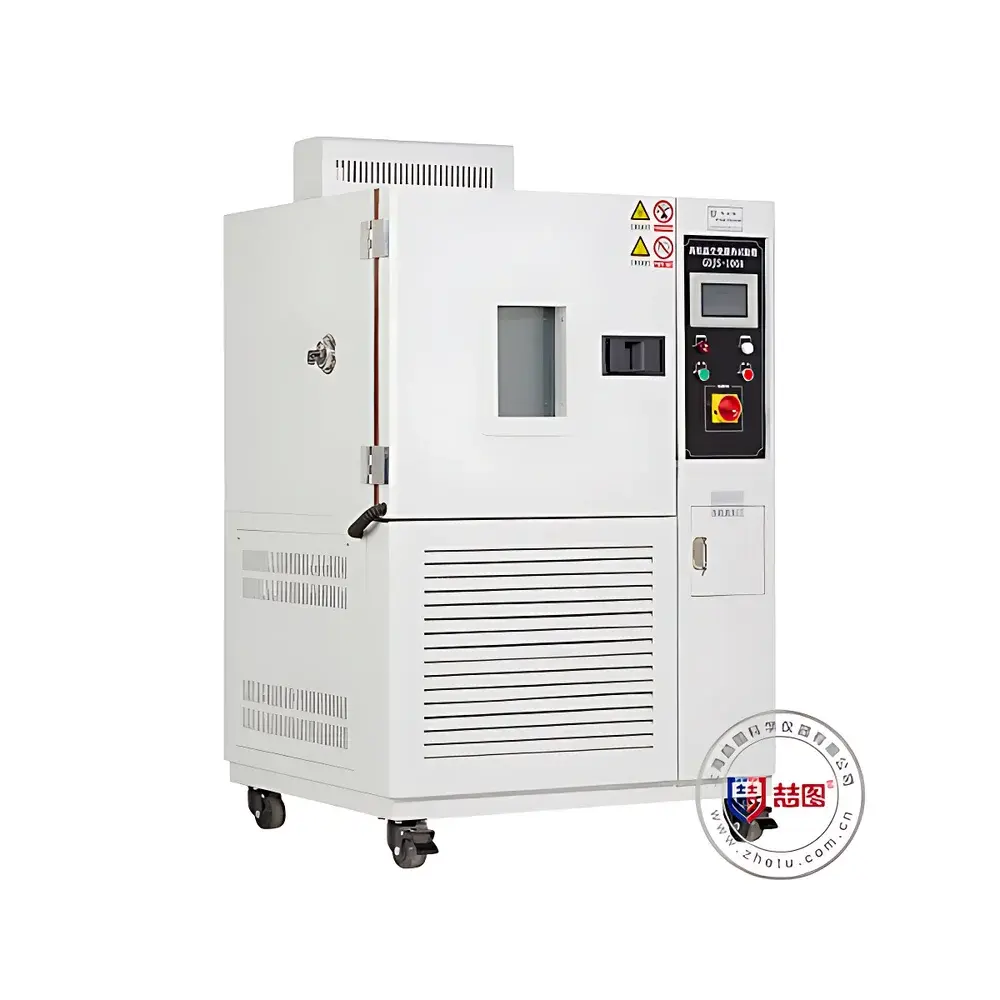
DRETOP THL-C1000-II High-Low Temperature Environmental Test Chamber
| Brand | DRETOP |
|---|---|
| Origin | Shanghai, China |
| Manufacturer Type | Direct Manufacturer |
| Model | THL-C1000-II |
| Temperature Range | −60 °C to +150 °C |
| Cooling Method | Hermetic Compressor-Based Refrigeration |
| Explosion-Proof | Standard (Non-Explosion-Proof) |
| Temperature Fluctuation | ±0.5 °C |
| Temperature Uniformity | ≤2 °C |
| Heating Rate | 1–3 °C/min (adjustable) |
| Cooling Rate | 0.7–1 °C/min (adjustable) |
| Internal Chamber Dimensions | 1000 mm × 1000 mm × 1000 mm |
| Control Interface | Color Touchscreen with Multi-Stage Programmability |
Overview
The DRETOP THL-C1000-II High-Low Temperature Environmental Test Chamber is an engineered thermal stress testing platform designed for precise simulation of extreme ambient temperature conditions across industrial and scientific applications. Operating on a dual-stage refrigeration cycle with cascade compressor architecture, the chamber delivers stable, repeatable thermal profiles from −60 °C to +150 °C—enabling rigorous evaluation of material behavior under sustained or cyclic thermal loads. Its design adheres to core principles of environmental simulation: controlled heat transfer via forced convection, minimized thermal inertia through optimized air duct geometry, and high-fidelity temperature regulation using PID auto-tuning algorithms. The system supports both steady-state exposure and dynamic thermal cycling protocols, making it suitable for qualification testing in accordance with IEC 60068-2-1 (cold), IEC 60068-2-2 (dry heat), and MIL-STD-810H Method 501.7/502.7. As a Class II environmental test chamber per ISO 17025-compliant laboratory infrastructure, it serves as a foundational tool for reliability engineering, product validation, and failure mode analysis.
Key Features
- 1000 L internal working volume (1000 × 1000 × 1000 mm) with stainless steel 304 inner chamber and double-layer tempered glass observation window equipped with anti-frost heating and LED illumination
- Intelligent color touchscreen controller supporting up to 1000 programmable test sequences, each containing up to 100 segments; configurable ramp rates, soak durations, and step transitions
- Dual independent control loops for heating and cooling subsystems—ensuring rapid thermal response, reduced cross-interference, and extended component service life
- Hermetically sealed imported compressors with eco-friendly R404A/R23 cascade refrigerant system; evaporative condenser functions as both high-stage evaporator and low-stage condenser
- Nichrome alloy heating elements combined with high-efficiency centrifugal forced-air circulation fans—guaranteeing ≤2 °C temperature uniformity across full load volume
- Multi-level security architecture: password-protected access tiers, audit-trail-capable operation logging, and user-defined privilege assignments per ISO/IEC 17025 documentation requirements
- Integrated safety suite including over-temperature cut-off, compressor/fan overload protection, leakage current detection, and automatic power recovery after mains interruption
- Standard 50 mm diameter test port (with silicone plug) for live electrical, pneumatic, or signal feedthrough during operation
- Energy-efficient operation with adaptive start-stop scheduling, real-time power consumption monitoring, and timer-based autonomous shutdown
Sample Compatibility & Compliance
The THL-C1000-II accommodates a broad spectrum of sample geometries and materials—including PCB assemblies, automotive ECUs, polymer housings, metal castings, battery modules, and optical components—without requiring custom fixtures. Its internal airflow pattern conforms to ASTM E145-22 Annex A3 guidelines for forced-air thermal chambers, ensuring representative thermal loading across heterogeneous samples. The chamber meets structural and operational criteria referenced in GB/T 10589–2008 (Chinese national standard for low-temperature test chambers) and aligns with functional equivalency to JEDEC JESD22-A104F (temperature cycling) and IPC-9701A (performance testing of interconnects). While not intrinsically rated for hazardous area use, optional modifications—including purge-compatible sealing and grounding enhancements—are available upon request to support limited-use integration into GMP-aligned cleanroom environments.
Software & Data Management
Data acquisition and protocol execution are managed via embedded firmware compliant with FDA 21 CFR Part 11 Annex 11 expectations for electronic records and signatures. All temperature setpoints, actual readings, alarm events, and operator actions are timestamped and stored locally with non-volatile memory retention exceeding 30 days. Optional RS485 or USB interfaces enable bidirectional communication with external PCs running DRETOP’s proprietary LabView-based monitoring software, which exports time-series data in native .CSV format and generates ISO-compliant PDF reports—including min/max/mean statistics, deviation plots, and pass/fail annotations against user-defined acceptance limits. Audit trails include immutable operator IDs, session timestamps, and parameter modification history—supporting GLP/GMP traceability requirements without third-party middleware.
Applications
This chamber is routinely deployed in accelerated life testing (ALT), thermal shock pre-screening, solder joint reliability assessment, and packaging integrity verification. Key application domains include: qualification of EV battery packs per UN 38.3 thermal abuse protocols; validation of aerospace avionics under cold-soak and hot-soak conditions; aging studies of elastomeric seals in oil & gas instrumentation; screening of display modules for consumer electronics under simultaneous thermal and humidity stress (when integrated with optional humidification add-ons); and thermal coefficient of expansion (TCE) measurement of composite substrates used in semiconductor packaging. Universities and national metrology institutes utilize the system for inter-laboratory comparison exercises involving thermal stability reference materials.
FAQ
What is the maximum allowable sample mass for thermal uniformity compliance?
For guaranteed ≤2 °C uniformity across the full chamber volume, total loaded mass should not exceed 40 kg. Higher loads require empirical mapping per IEC 60068-3-5.
Can the chamber be integrated into a central building management system (BMS)?
Yes—via Modbus RTU over RS485, enabling remote status polling, setpoint adjustment, and alarm forwarding to SCADA platforms.
Is calibration certification included with delivery?
A factory-issued as-found/as-left calibration report (traceable to NIM China) is provided; UKAS or DAkkS-accredited field calibration is available as an add-on service.
Does the system support thermal cycling between −60 °C and +150 °C within a single program?
Yes—up to 999 cycles with fully configurable dwell times, transition rates, and intermediate holds.
What maintenance intervals are recommended for optimal long-term performance?
Compressor oil inspection every 12 months; condenser coil cleaning quarterly; door gasket integrity check semiannually; full sensor verification annually per ISO/IEC 17025 Clause 6.4.6.



