
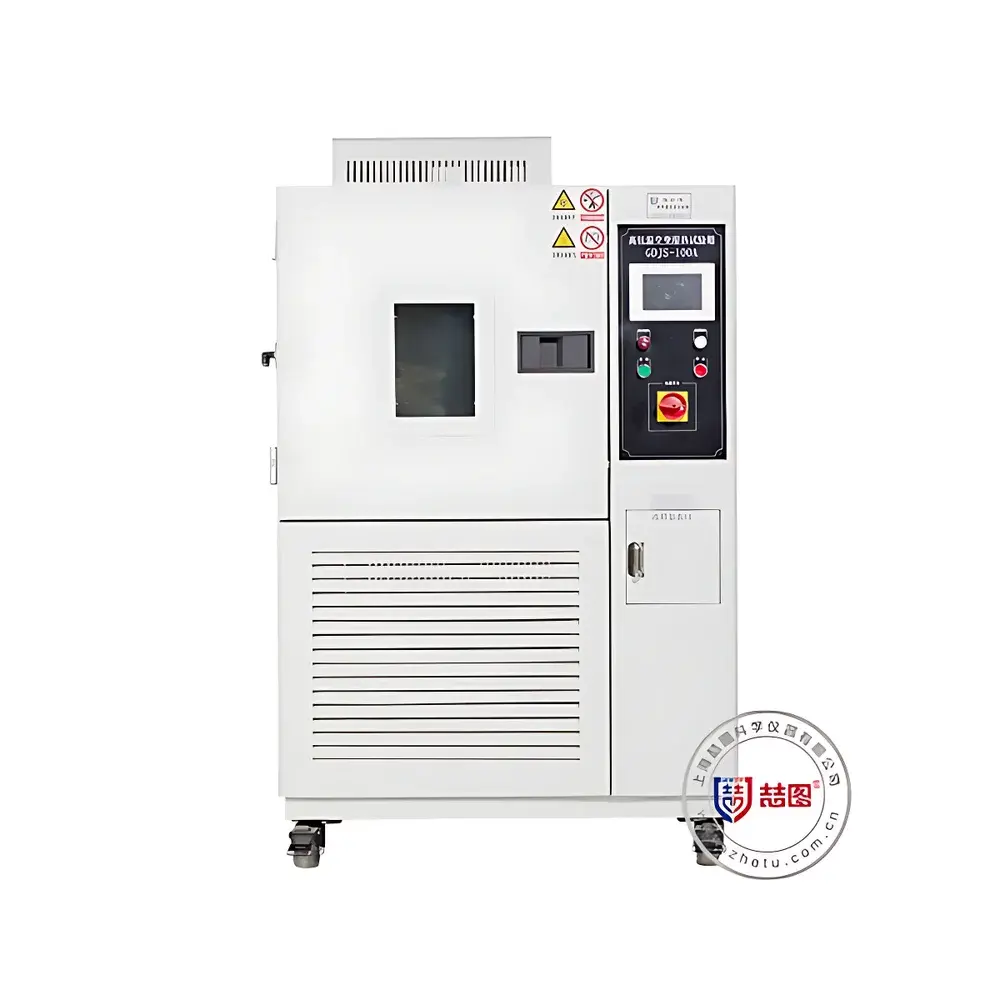
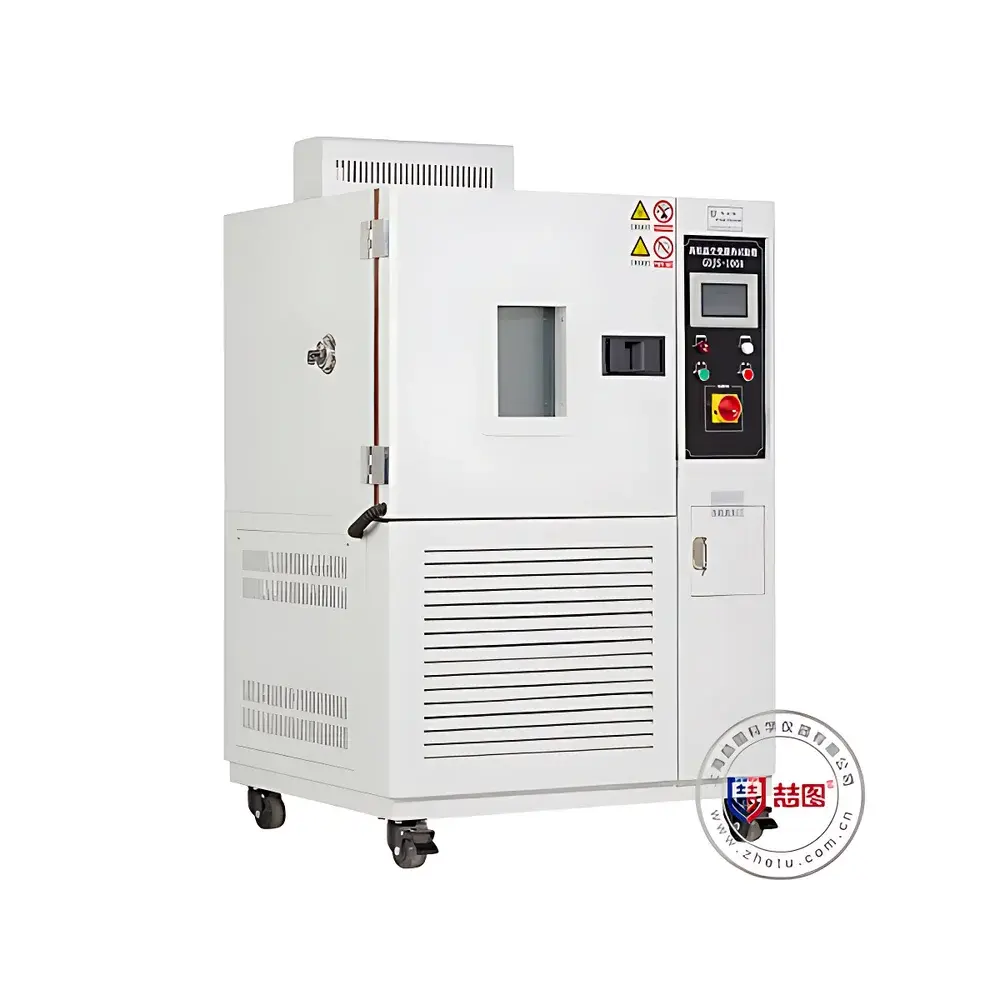
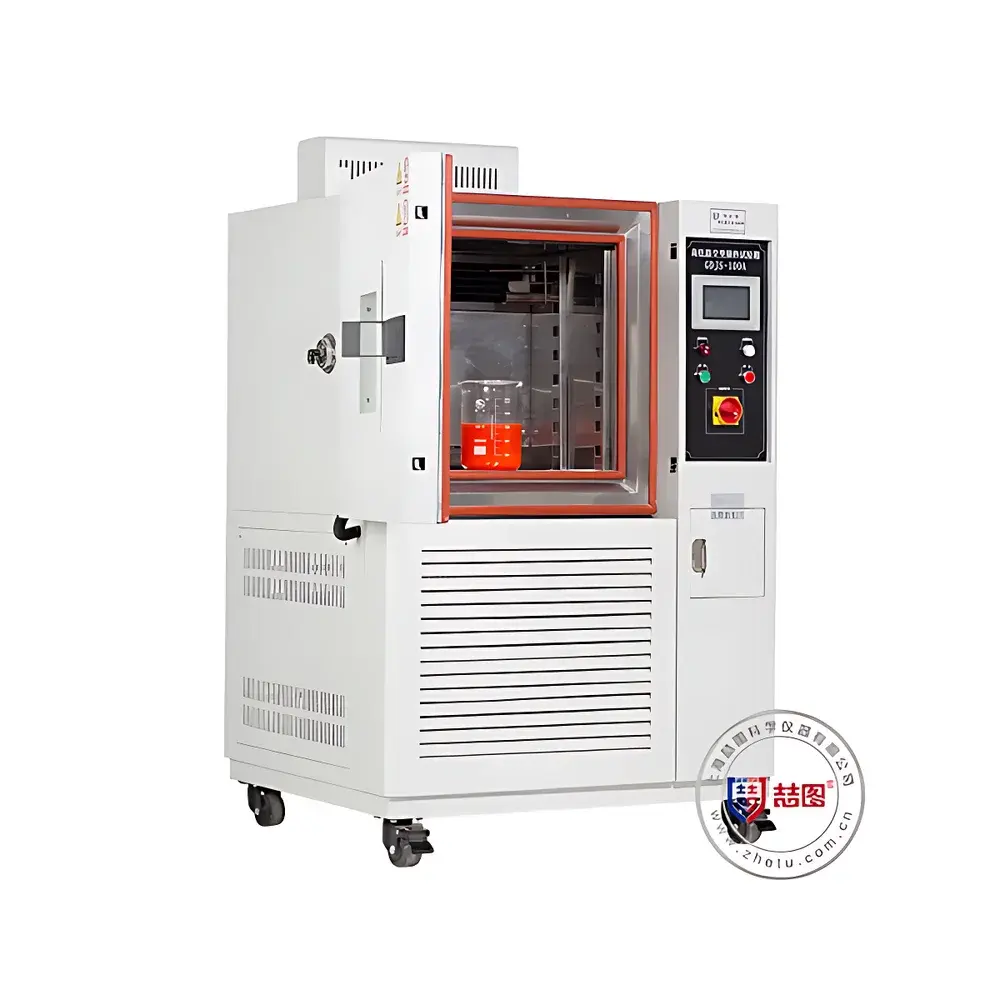
DRETOP THL-C150-II High-Low Temperature Cycling Test Chamber
| Brand | DRETOP |
|---|---|
| Origin | Shanghai, China |
| Manufacturer Type | Direct Manufacturer |
| Model | THL-C150-II |
| Temperature Range | -60 °C to +150 °C |
| Refrigeration Method | Hermetic Compressor Cooling |
| Explosion-Proof | Standard (Non-Explosion-Proof) |
| Temperature Fluctuation | ±0.5 °C |
| Temperature Uniformity | ≤2 °C |
| Heating Rate | 1–3 °C/min (Adjustable) |
| Cooling Rate | 0.7–1 °C/min (Adjustable) |
| Interior Dimensions (W×D×H) | 500 mm × 500 mm × 600 mm |
| Control Interface | Color Touchscreen with Multi-Program Capability |
| Power Supply | AC 220 V / 380 V, 50 Hz |
| Safety Protections | Over-Temperature, Over-Current, Compressor/Fan Overload, Leakage Current Protection |
| Compliance | Designed for ASTM D4329, ISO 4892-2, IEC 60068-2-1, IEC 60068-2-2, MIL-STD-810G (Temperature Cycling), and GLP/GMP-aligned operational logging |
Overview
The DRETOP THL-C150-II High-Low Temperature Cycling Test Chamber is an engineered environmental simulation system designed for precise, repeatable thermal stress testing of industrial components and materials under controlled alternating temperature profiles. Based on forced-air convection and dual-stage refrigeration architecture, the chamber delivers stable thermal cycling between -60 °C and +150 °C—enabling rigorous evaluation of product reliability across extreme ambient conditions. Its thermodynamic design adheres to fundamental principles of heat transfer and thermal inertia management, ensuring minimal overshoot, rapid stabilization, and low thermal lag during transitions. This chamber is not a general-purpose storage unit but a calibrated test platform intended for qualification-level environmental stress screening in R&D, quality assurance, and regulatory compliance workflows.
Key Features
- Industrial-grade color touchscreen controller supporting up to 1000 programmable test sequences, each containing up to 100 individual segments with independent ramp/soak parameters.
- Multi-language interface (English/Chinese) with hierarchical password protection—supporting operator, engineer, and administrator access levels to prevent unauthorized parameter modification.
- Dual-stage refrigeration system using imported hermetic compressors and shared evaporator-condenser configuration for enhanced efficiency and extended service life.
- Optimized air circulation architecture featuring high-efficiency centrifugal blower, nickel-chromium alloy heating elements, and aerodynamically refined wind ducts—achieving ≤2 °C temperature uniformity across the full working volume.
- Double-layer tempered glass observation window with integrated anti-frost heating film and LED interior lighting—ensuring unobstructed visual monitoring without condensation interference or sample contamination.
- Robust mechanical construction: cold-rolled steel outer shell with electrostatic powder coating; SUS304 stainless steel inner chamber; silicone rubber door gasket rated for continuous operation from -60 °C to +150 °C without hardening or adhesion loss.
- Comprehensive safety suite including over-temperature cutoff, compressor/fan overload detection, ground-fault circuit interruption (GFCI), and automatic power recovery after grid interruption.
- Standard 50 mm-diameter test port with EPDM sealing cap—compatible with electrical feedthroughs, pneumatic lines, or sensor cables for in-situ monitoring under thermal load.
- PID auto-tuning algorithm with real-time adaptive correction—maintaining ±0.5 °C temperature fluctuation under dynamic cycling conditions.
Sample Compatibility & Compliance
The THL-C150-II accommodates a broad range of non-hazardous solid and assembled samples—including PCBs, automotive ECUs, polymer housings, battery modules, optical assemblies, and aerospace fasteners—within its 150 L internal workspace (500 × 500 × 600 mm). It supports static and dynamic thermal cycling per IEC 60068-2-1 (cold), IEC 60068-2-2 (dry heat), and IEC 60068-2-14 (change of temperature). The system meets structural and operational requirements referenced in ASTM D4329 (plastics), ISO 4892-2 (polymeric materials), and MIL-STD-810G Method 501.6/502.6. While not intrinsically explosion-proof, its standard configuration complies with CE machinery directive 2006/42/EC and RoHS 2011/65/EU. Data logging functionality supports audit-ready records aligned with GLP and GMP documentation practices.
Software & Data Management
The embedded controller logs timestamped temperature data at user-defined intervals (1–600 seconds), storing up to 30 days of continuous operation history internally. Export options include CSV-formatted files compatible with Excel and third-party statistical analysis tools. Optional RS485 or USB interfaces enable remote supervision via PC-based software—supporting real-time graphing, alarm event logging, and scheduled start/stop commands. All logged data includes metadata such as program ID, segment number, setpoint deviation, and active safety status. The system supports time-stamped digital signatures and configurable audit trails—facilitating FDA 21 CFR Part 11 compliance when deployed with validated software extensions and network authentication protocols.
Applications
This chamber serves critical functions across multiple sectors: accelerated aging of electronic solder joints and conformal coatings; validation of thermal expansion coefficients in composite materials; pre-conditioning of sensors prior to calibration; qualification testing of lithium-ion battery packs under charge/discharge thermal stress; verification of seal integrity in hermetically packaged devices; and environmental screening of avionics hardware per DO-160 Section 4. It is routinely employed by QC laboratories in Tier-1 automotive suppliers, contract manufacturing organizations (CMOs), and university materials science departments conducting failure mode analysis (FMEA) and accelerated life testing (ALT).
FAQ
What is the maximum allowable sample mass for stable thermal performance?
For optimal uniformity and response time, total sample mass should not exceed 20 kg. Heavier loads may extend stabilization times and require revalidation of temperature distribution.
Can the chamber operate continuously at -60 °C?
Yes—the refrigeration system is rated for uninterrupted operation at minimum setpoint, provided ambient room temperature remains ≤30 °C and relative humidity <80% RH.
Is external cooling water required?
No—this is an air-cooled system; no chilled water connection or dedicated ventilation ducting is needed.
Does the controller support custom alarm thresholds beyond default settings?
Yes—users may define up to eight independent alarm conditions (e.g., deviation >1.0 °C, rate-of-change >5 °C/min) with configurable relay outputs and email/SMS notifications via optional gateway module.
How often does the system require preventive maintenance?
Compressor oil and refrigerant levels should be verified annually; air filter cleaning is recommended every 3 months; calibration of internal PT100 sensors is advised biannually per ISO/IEC 17025 guidelines.



