
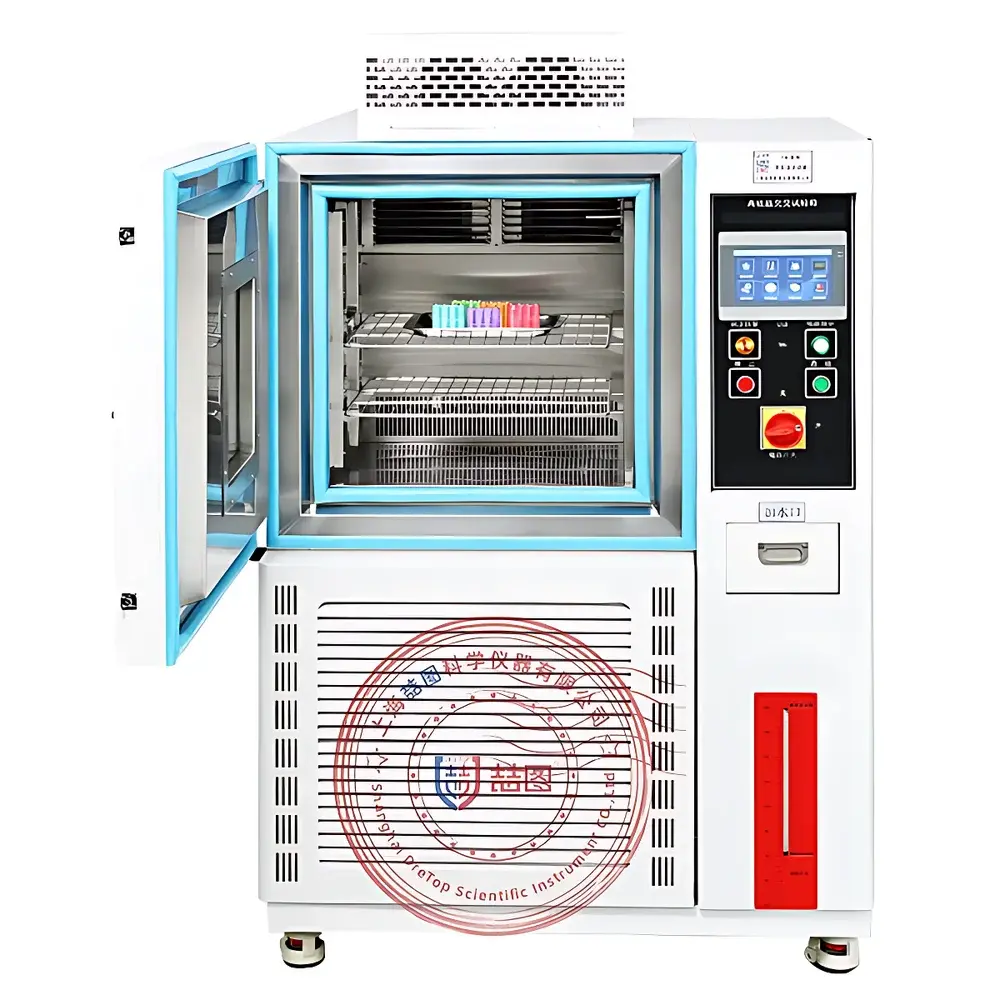
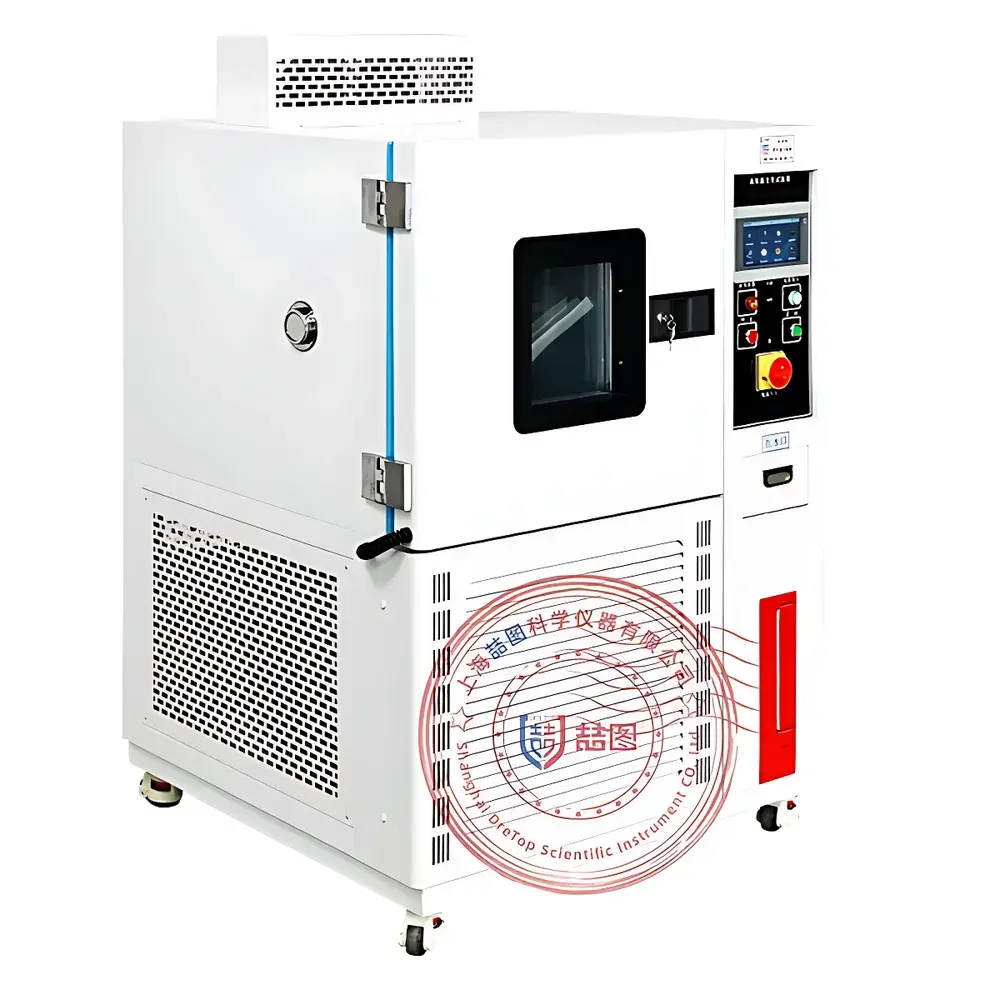
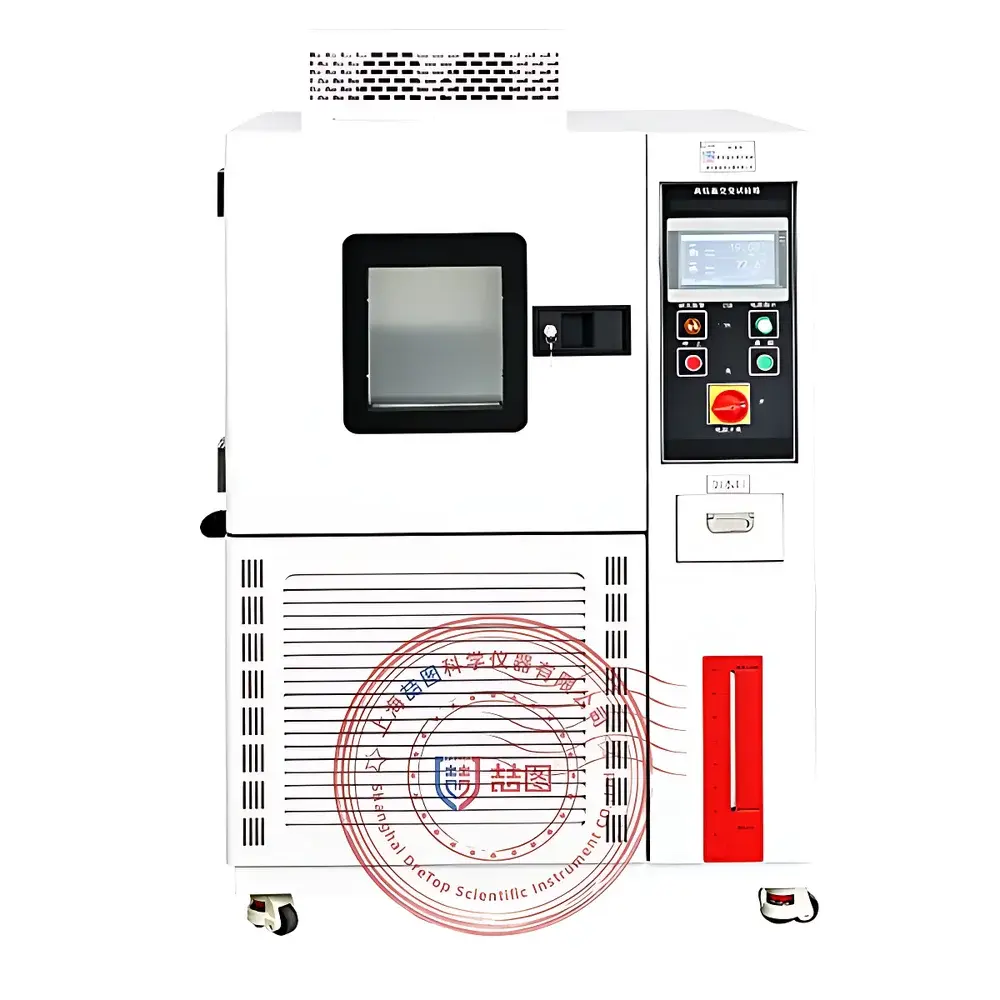
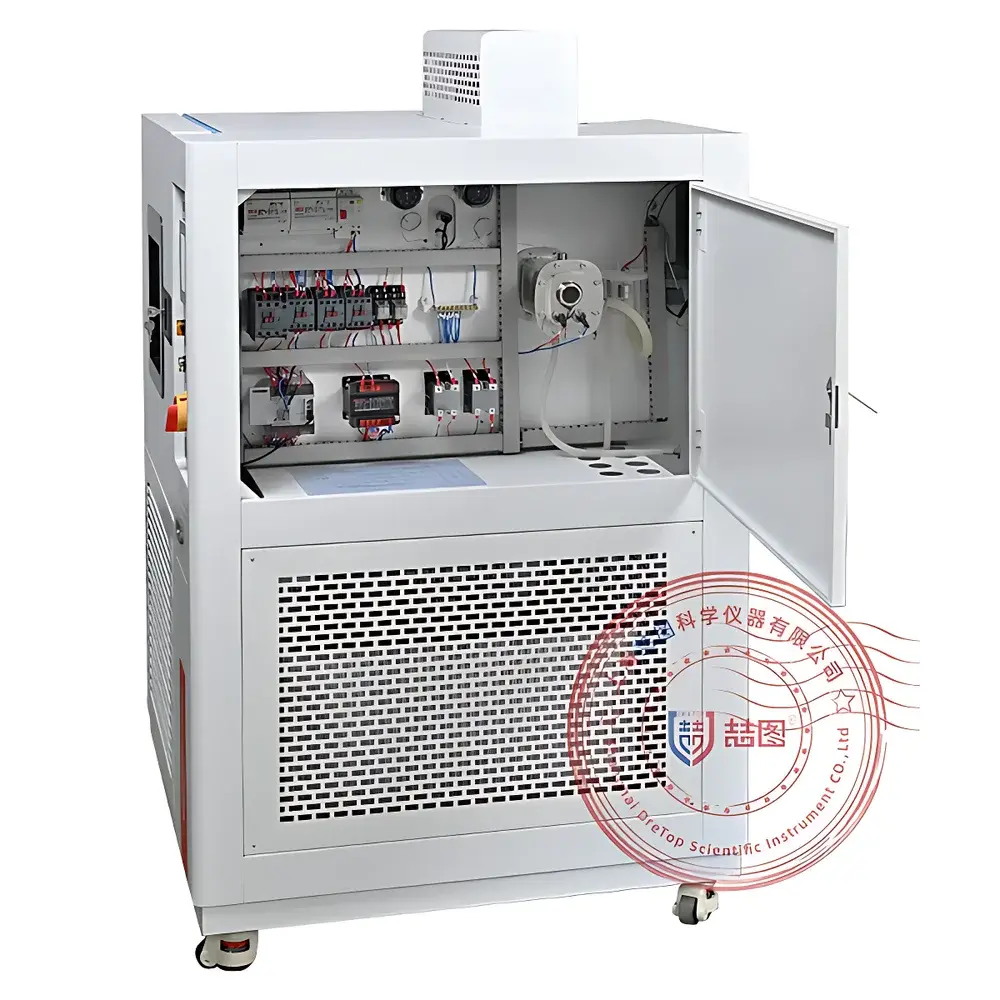
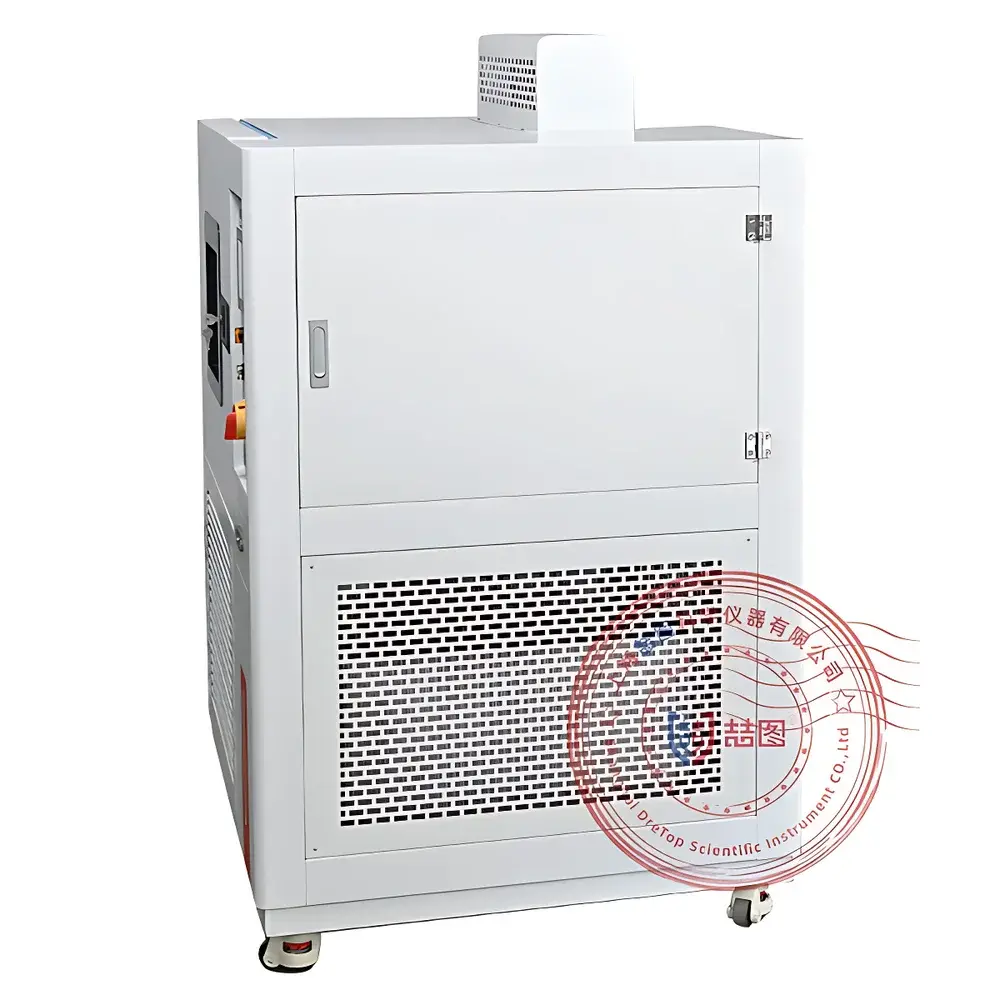
DRETOP THL-D100-II High-Low Temperature Alternating Test Chamber
| Brand | DRETOP |
|---|---|
| Origin | Shanghai, China |
| Manufacturer Type | Direct Manufacturer |
| Model | THL-D100-II |
| Temperature Range | -80°C to +150°C |
| Temperature Uniformity | ≤2°C |
| Temperature Fluctuation | ±0.5°C |
| Heating Rate | 1–3°C/min (adjustable) |
| Cooling Rate | 0.7–1°C/min (adjustable) |
| Internal Dimensions (W×D×H) | 800×600×850 mm |
| Nominal Volume | 400 L |
| Power Supply | AC 380 V, 50/60 Hz |
| Input Power | 8.5 kW |
| Control System | Color Touchscreen Controller with 1000 Programmable Profiles (100 Segments Each) |
| Compliance | Designed for ASTM D3574, ISO 16750-4, IEC 60068-2-1, IEC 60068-2-2, MIL-STD-810G, GB/T 2423.1, GB/T 2423.2 |
Overview
The DRETOP THL-D100-II High-Low Temperature Alternating Test Chamber is an engineered environmental simulation system designed to replicate extreme thermal cycling conditions in accordance with international reliability testing standards. It operates on a dual-stage refrigeration architecture—featuring cascaded hermetic compressors and a shared evaporator-condenser heat exchanger—to achieve stable, repeatable temperature control across a wide operational range of –80°C to +150°C. This chamber supports programmable thermal profiles with precise ramp-and-soak sequencing, enabling rigorous evaluation of material integrity, solder joint fatigue, seal performance, and electronic component behavior under repeated thermal stress. Its structural design prioritizes thermal stability, mechanical robustness, and long-term calibration retention—making it suitable for use in accredited laboratories, automotive Tier-1 validation centers, aerospace component qualification facilities, and industrial R&D departments conducting accelerated life testing per JEDEC JESD22-A104 or IPC-9701.
Key Features
- Industrial-grade color touchscreen controller with multilingual interface (English/Chinese), hierarchical password protection, and audit-trail-capable operation logging.
- 1000 programmable test profiles, each supporting up to 100 time-temperature segments—including rate-controlled ramps, dwell periods, and conditional transitions (e.g., “jump to step”, “hold until condition met”, “power-off on completion”).
- Dual-layer tempered glass observation window with integrated anti-frost heating film and LED interior lighting—preventing condensation-induced electrical hazards during low-temperature operation.
- Optimized forced-air circulation system featuring nickel-chromium heating elements and high-efficiency centrifugal fans, delivering uniform airflow distribution and minimizing thermal gradients (≤2°C deviation across working volume).
- Triple-sealed door gasket using high-purity silicone rubber—maintaining dimensional stability and compression resilience across –80°C to +150°C without hardening, cracking, or adhesion loss.
- Modular refrigeration circuit with independent high- and low-stage compressors, enabling energy-efficient operation and extended service intervals between maintenance cycles.
Sample Compatibility & Compliance
The THL-D100-II accommodates test specimens up to 400 L in nominal volume, with standardized 50 mm diameter cable/port access (standard), expandable via optional RS485 or USB communication interfaces for remote monitoring and data acquisition. It complies with the thermal testing requirements of multiple internationally recognized standards, including but not limited to: ASTM D3574 (flexible cellular materials), ISO 16750-4 (road vehicles—environmental conditions), IEC 60068-2-1 (cold testing), IEC 60068-2-2 (dry heat), MIL-STD-810G Method 502.6 (temperature shock), and Chinese national standards GB/T 2423.1 and GB/T 2423.2. The chamber’s thermal performance has been verified under GLP-compliant calibration protocols; traceable temperature sensors (PT100 class A) are installed at multiple spatial locations within the working chamber to support ISO/IEC 17025-compliant uncertainty analysis.
Software & Data Management
Data acquisition and reporting are supported through embedded real-time logging (sample interval configurable from 1 s to 60 min) and export functionality to CSV or Excel-compatible formats. Optional PC-based software enables live graphing, alarm configuration, multi-chamber synchronization, and automated report generation—including timestamped event logs, temperature deviation charts, and pass/fail compliance summaries. All stored data includes metadata such as operator ID, profile name, start/stop timestamps, and environmental anomalies (e.g., power interruption recovery events). The system supports 21 CFR Part 11-compliant user authentication and electronic signature workflows when deployed in regulated pharmaceutical or medical device quality assurance environments.
Applications
This chamber serves critical roles in product development and quality assurance across multiple sectors: evaluating thermal expansion mismatch in PCB assemblies and semiconductor packaging; validating cold-start performance of automotive ECUs and battery management systems; assessing elastomer aging and seal degradation in HVAC components; qualifying polymer-based medical device housings per ISO 10993-12; and performing accelerated corrosion testing in combination with humidity modules (when integrated). It is routinely employed by Tier-1 suppliers to OEMs in the automotive and aerospace industries, third-party certification labs (e.g., SGS, TÜV, UL), and university research groups investigating phase-change behavior in shape-memory alloys and thermally responsive hydrogels.
FAQ
What is the standard temperature range for the THL-D100-II model?
The THL-D100-II is configured for operation from –80°C to +150°C, with a typical stabilization time of ≤30 minutes after door opening under nominal load conditions.
Does the chamber support automated data export compliant with FDA 21 CFR Part 11?
Yes—when equipped with the optional validated software package, the system provides role-based access control, electronic signatures, and immutable audit trails required for regulated GxP environments.
Can external sensors be connected for in-situ sample temperature monitoring?
Yes—the standard 50 mm test port allows integration of calibrated thermocouples or RTDs; additional ports can be added upon request.
Is the unit certified to CE or UL safety standards?
The THL-D100-II meets IEC 61010-1 safety requirements for laboratory equipment; CE marking is available upon request with full technical documentation package.
What maintenance schedule is recommended for optimal long-term performance?
Compressor oil and refrigerant levels should be inspected annually; air filters require cleaning every 3 months; temperature sensor calibration is recommended biannually per ISO/IEC 17025 guidelines.



