

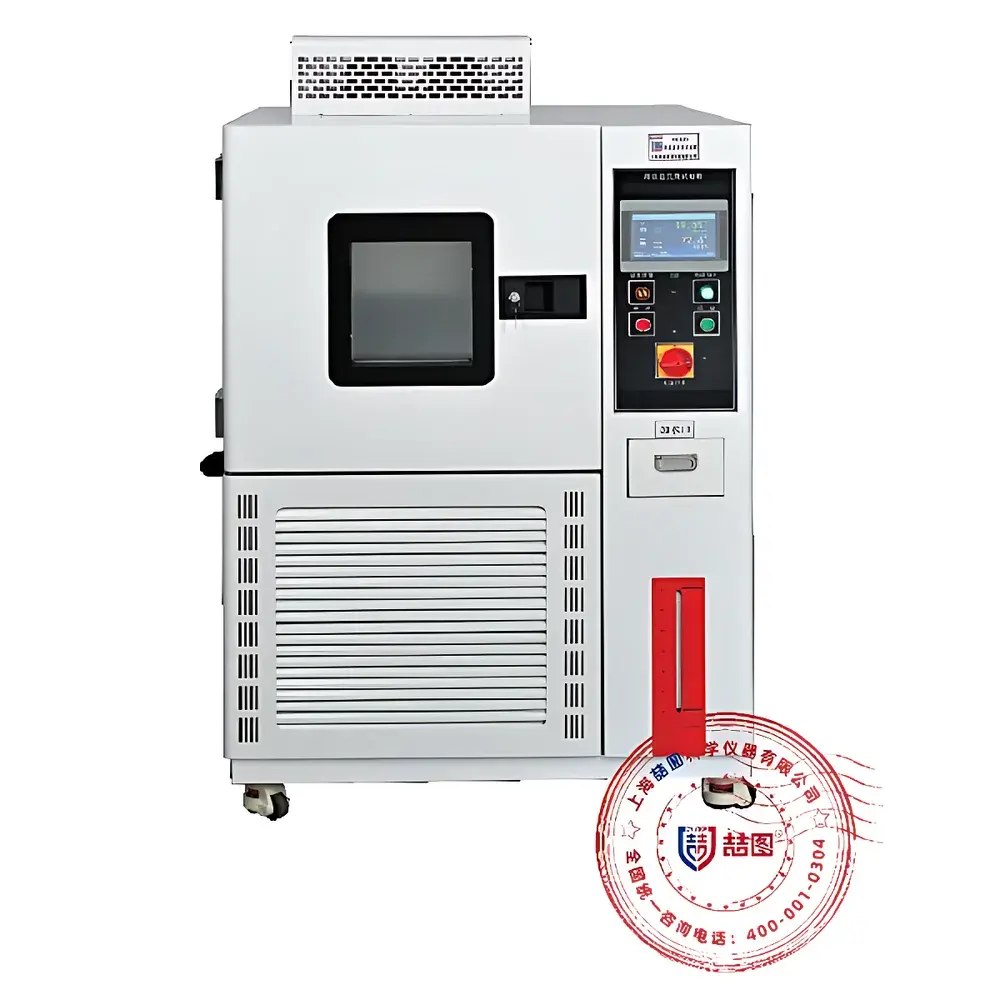
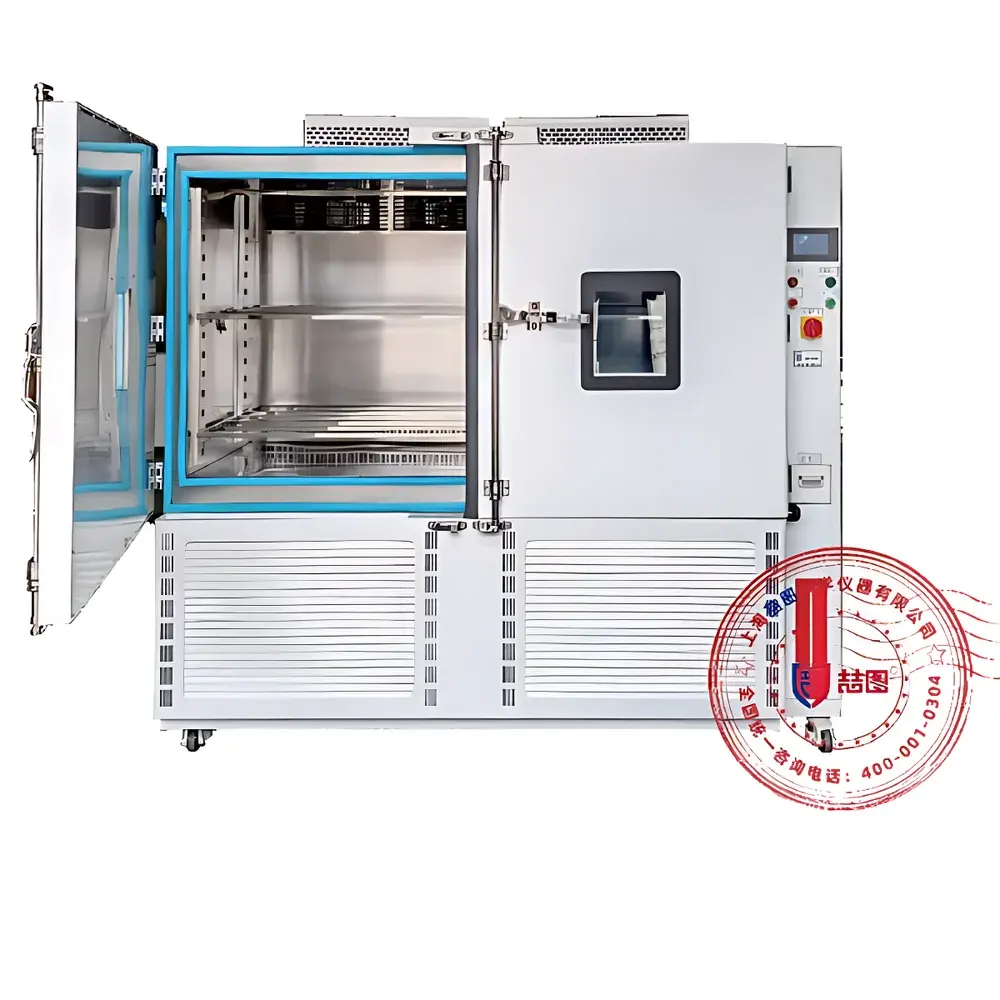
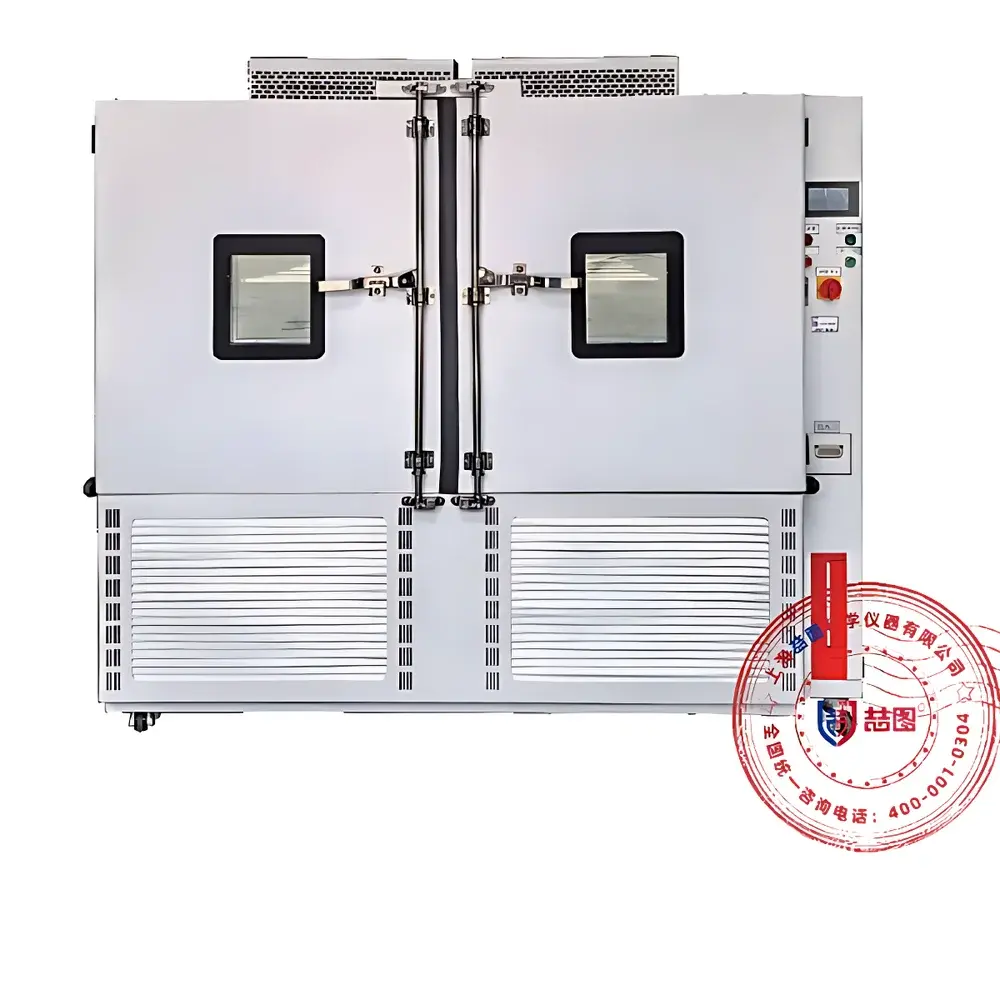
DRETOP THL-D500H High-Low Temperature Alternating Environmental Test Chamber
| Brand | DRETOP |
|---|---|
| Origin | Shanghai, China |
| Manufacturer Type | Direct Manufacturer |
| Model | THL-D500H |
| Internal Volume | 500 L |
| Temperature Range | −70 °C to +150 °C |
| Temperature Uniformity | ≤2 °C |
| Temperature Fluctuation | ±0.5 °C |
| Heating Rate | 1–3 °C/min (adjustable) |
| Cooling Rate | 0.7–1 °C/min (adjustable) |
| Power Supply | AC 380 V, 3-phase |
| Input Power | 12,000 W |
| Inner Chamber Dimensions (W×D×H) | 800 × 700 × 900 mm |
| Outer Dimensions (W×D×H) | 1300 × 1250 × 2010 mm |
| Standard Accessories | 2 adjustable stainless-steel shelves, 1 Φ50 mm test port, PID auto-tuning controller |
| Optional Interfaces | RS485, USB |
Overview
The DRETOP THL-D500H High-Low Temperature Alternating Environmental Test Chamber is an engineered solution for accelerated environmental stress testing under precisely controlled thermal cycling conditions. Designed in accordance with IEC 60068-2-1 (Cold), IEC 60068-2-2 (Dry Heat), and IEC 60068-2-14 (Change of Temperature), the chamber subjects specimens to programmable sequences of extreme low-temperature exposure (down to −70 °C) and high-temperature exposure (up to +150 °C), simulating real-world atmospheric thermal transients experienced during transport, storage, and operational life cycles. Its dual-stage cascade refrigeration system—comprising high- and low-stage evaporative/condensing heat exchangers—enables stable sub-zero performance without cryogenic consumables. The chamber’s structural architecture prioritizes thermal inertia minimization and airflow homogeneity, supporting repeatable validation of material integrity, solder joint reliability, seal performance, and electronic component functionality across aerospace, automotive, semiconductor, and defense applications.
Key Features
- Industrial-grade 10.1-inch color touchscreen HMI with multi-language interface (English/Chinese), password-protected hierarchical access control (operator, engineer, administrator levels), and audit-trail-capable event logging.
- Advanced programmable logic: up to 1000 stored test profiles; each profile supports 100 programmable segments with independent ramp/soak parameters, slope-controlled transitions, and conditional branching (e.g., jump-to-step, hold-on-alarm, end-on-completion).
- Optimized dual-circulation air system: centrifugal forced convection blower (rated for continuous operation at 60 °C ambient), nickel-chromium heating elements, and aerodynamically tuned wind tunnel geometry ensuring ≤2 °C temperature uniformity across the 500 L working volume per IEC 60068-3-5.
- Double-glazed, low-emissivity observation window with integrated anti-frost heater and LED illumination—prevents condensation-induced short circuits and enables non-intrusive visual monitoring during cryogenic phases.
- Robust mechanical design: stainless-steel inner chamber (SUS304), silicone rubber door gasket rated for −70 °C to +150 °C service, heavy-duty casters with locking mechanism, and modular compressor mounting for vibration isolation.
Sample Compatibility & Compliance
The THL-D500H accommodates samples up to 600 mm × 500 mm × 700 mm (W×D×H) on two load-bearing stainless-steel shelves (max. 30 kg/shelf). A standard 50 mm diameter test port (with EPDM sealing collar) permits concurrent electrical signal routing, pneumatic feedthroughs, or thermocouple insertion under full thermal load. The chamber meets essential requirements for ISO/IEC 17025-accredited laboratories, including traceable temperature calibration (NIST-traceable RTD sensors), documented uncertainty budgets (<±0.3 °C at key setpoints), and compatibility with GLP/GMP documentation workflows. Optional RS485/USB interfaces support integration into centralized MES or LIMS platforms compliant with FDA 21 CFR Part 11 for electronic records and signatures.
Software & Data Management
Embedded firmware includes real-time data acquisition at 1-second intervals, with onboard storage for ≥30 days of timestamped temperature logs (CSV export via USB). Optional PC-based software (DRETOP TestSuite v3.2) provides graphical trend analysis, statistical process control (SPC) charts (X-bar/R), automated report generation (PDF/Excel), and remote supervision via Ethernet. All data files include embedded metadata: operator ID, test ID, chamber serial number, calibration certificate expiry date, and environmental ambient conditions. Audit trail functionality records user login/logout events, parameter modifications, and alarm acknowledgments—supporting regulatory review per ISO 9001:2015 clause 8.5.2 and IATF 16949 section 8.5.1.2.
Applications
- Electronics: Thermal cycling qualification of PCBAs per JEDEC JESD22-A104, solder joint fatigue assessment, and conformal coating adhesion validation.
- Automotive: Component-level validation against GMW3172, Ford CETP 00.00-L-467, and VW 80101 thermal shock requirements.
- Aerospace: Material screening per MIL-STD-810H Method 502.7 (Low Temperature) and Method 501.7 (High Temperature).
- Polymers & Elastomers: Determination of glass transition shifts, compression set retention, and low-temperature brittleness (ASTM D746, ISO 974).
- Quality Assurance Labs: In-process verification of incoming raw materials, final product release testing, and failure analysis root cause correlation.
FAQ
What is the typical temperature stabilization time after door opening?
For a 1-minute door opening at −40 °C operating point, full recovery to ±0.5 °C tolerance requires ≤12 minutes—verified per IEC 60068-3-5 Annex B.
Can the chamber operate unattended for extended durations?
Yes. Built-in power-failure recovery, automatic restart after brownout, and configurable alarm escalation (audible + relay output) enable 72-hour uninterrupted operation under monitored conditions.
Is third-party calibration certification included with delivery?
A factory-issued calibration report (covering −70 °C, 25 °C, and +150 °C setpoints) is provided. Full ISO/IEC 17025 accreditation by an external body is available as a value-added service.
How is refrigerant sustainability addressed?
The system uses R404A/R23 cascade refrigerant blend compliant with current EU F-Gas Regulation (EU) No 517/2014, with leakage rate <0.5% per year and documented refrigerant handling procedures per EN 378.
What maintenance intervals are recommended for optimal performance?
Compressor oil analysis every 2,000 operating hours; condenser coil cleaning quarterly; door gasket inspection semiannually; and full system performance verification annually per manufacturer’s PM checklist.



