

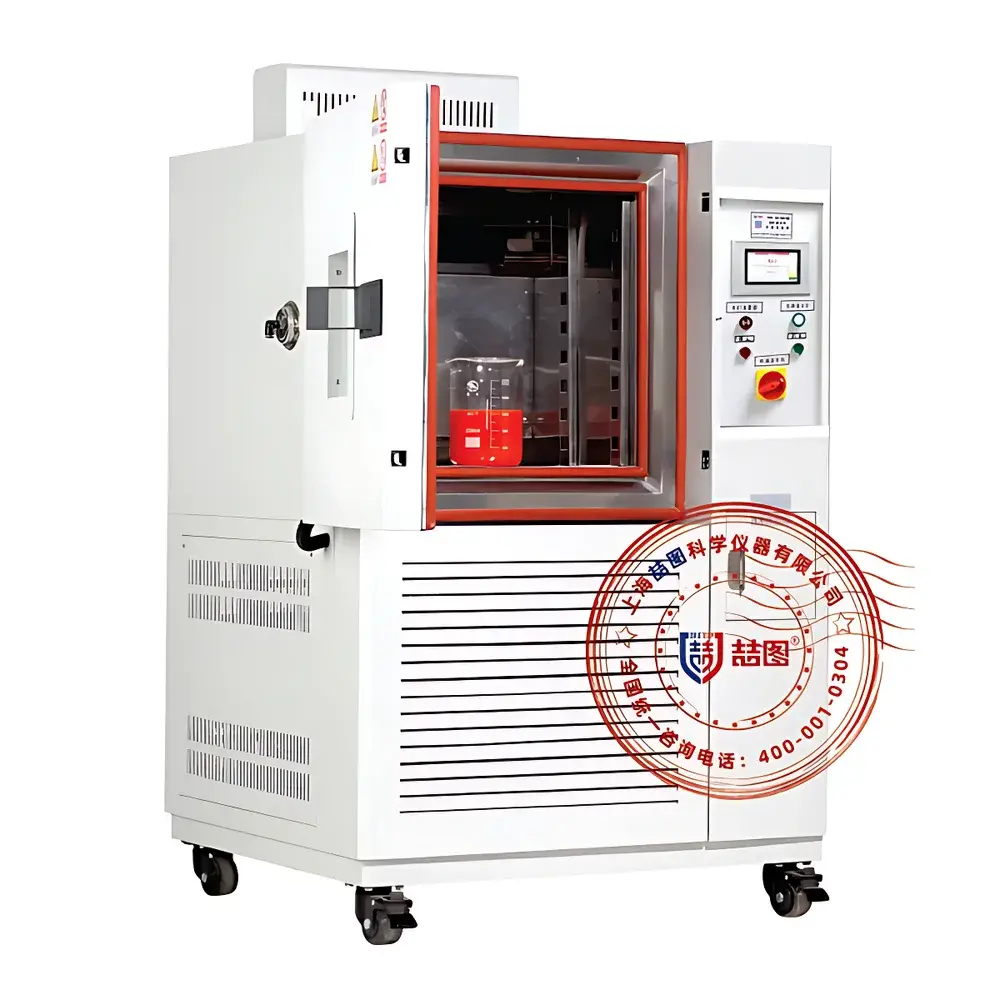
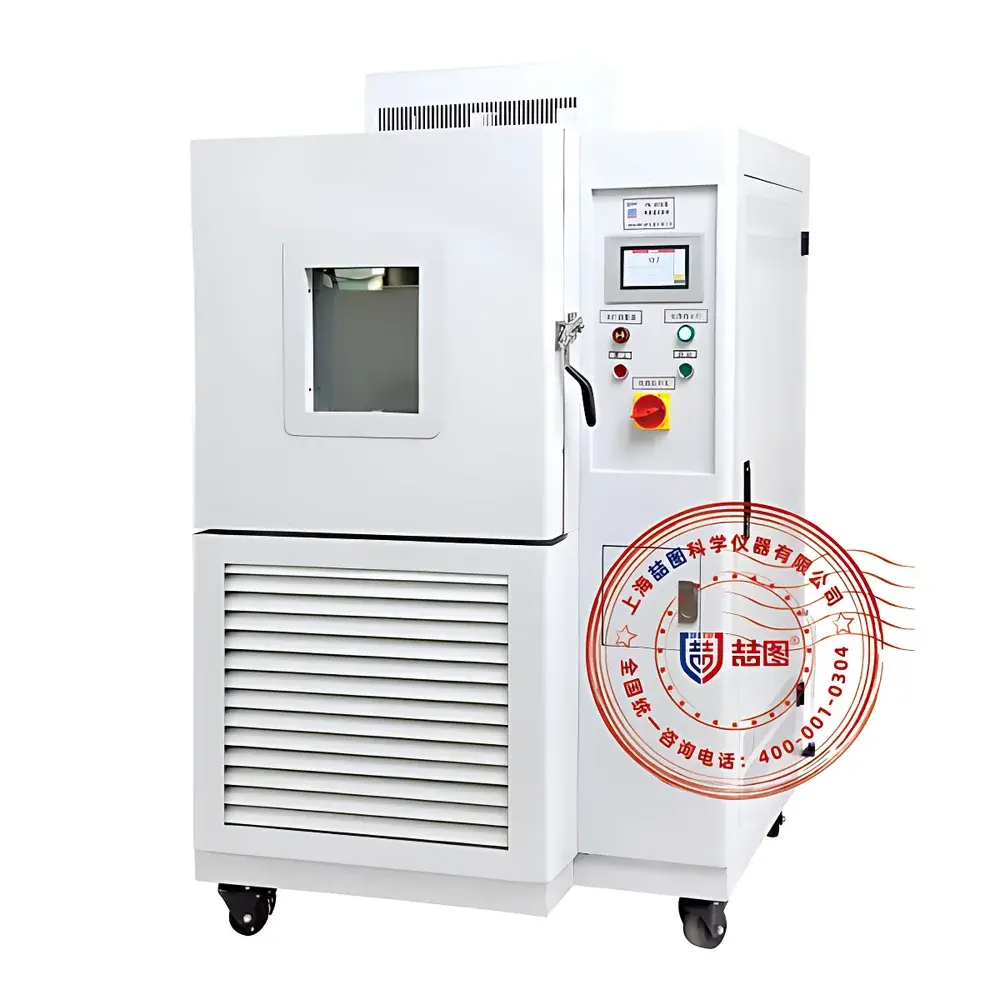
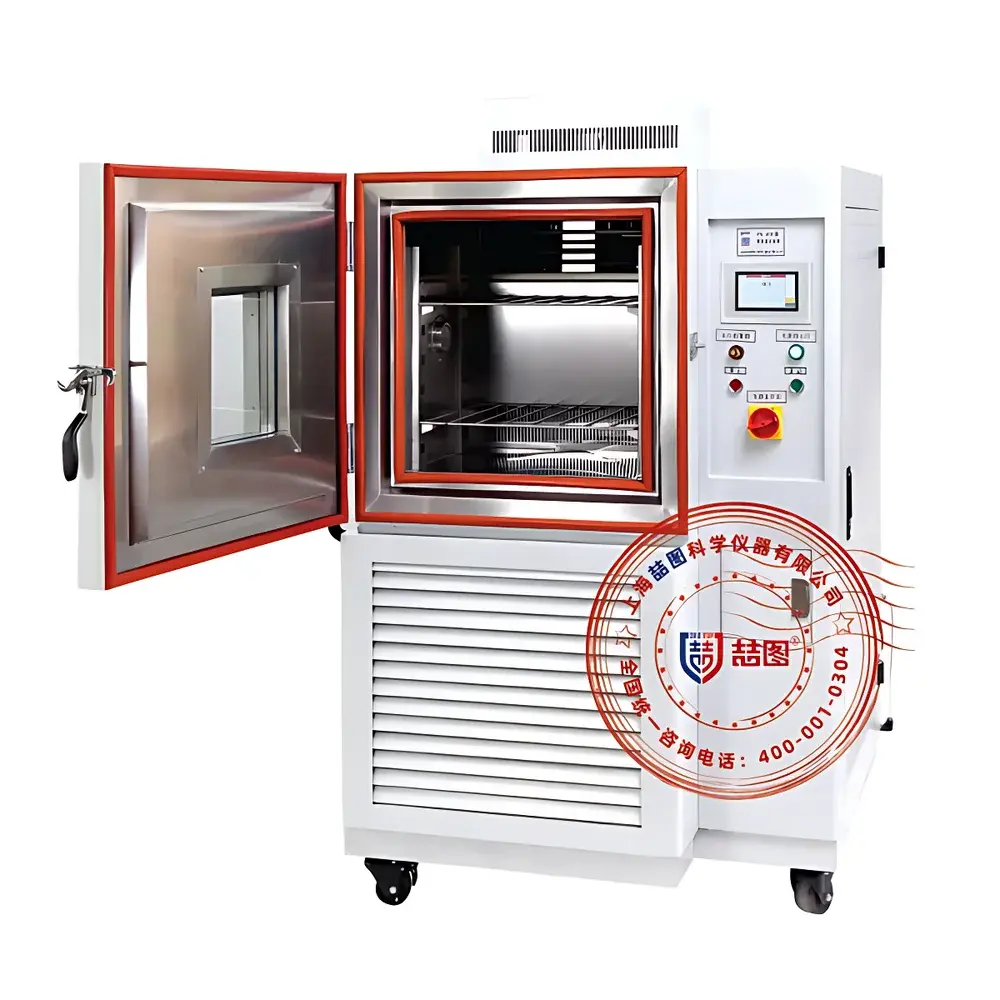
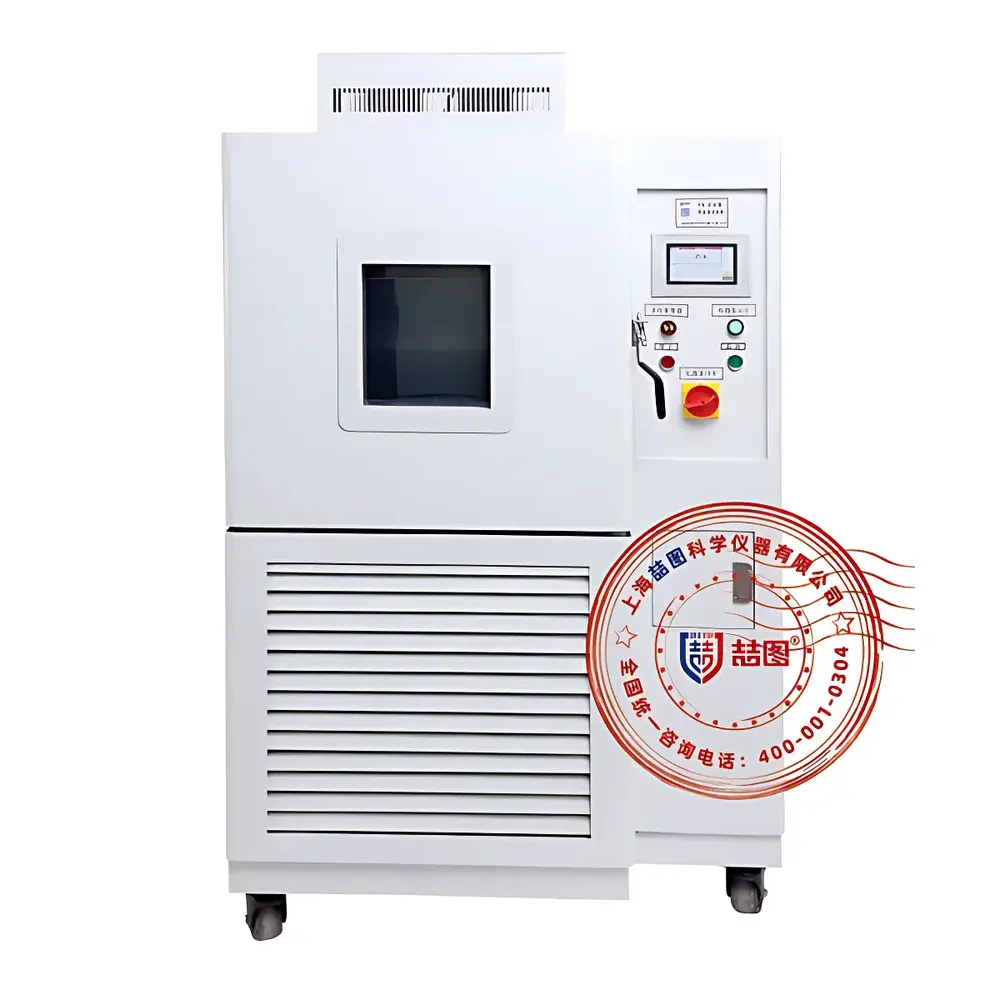
DRETOP THS-A500 High-Low Temperature and Humidity Environmental Test Chamber
| Brand | DRETOP |
|---|---|
| Origin | Shanghai, China |
| Manufacturer Type | Direct Manufacturer |
| Model | THS-A500 |
| Refrigeration Method | Compressor-based Cooling |
| Temperature Range | −20 °C to +120 °C |
| Temperature Fluctuation | ±0.5 °C |
| Temperature Uniformity | ≤2.0 °C |
| Heating Rate | ≤60 min (from −20 °C to +120 °C) |
| Cooling Rate | ≤60 min (from +120 °C to −20 °C) |
| Internal Chamber Dimensions (W×D×H) | 800 mm × 700 mm × 900 mm |
| Volume | 500 L |
Overview
The DRETOP THS-A500 High-Low Temperature and Humidity Environmental Test Chamber is an engineered environmental simulation system designed for rigorous reliability validation of industrial components and finished products under controlled thermal and hygrothermal stress conditions. It operates on the principle of closed-loop PID-controlled heating, refrigeration, and humidification—integrated via independent subsystems—to replicate standardized climatic profiles defined in international test standards. The chamber supports static and dynamic environmental conditioning, including constant temperature/humidity, temperature cycling, humidity cycling, and combined temperature–humidity–time profiles. Its architecture conforms to the physical requirements of accelerated life testing, failure mode analysis, and qualification testing for electronics, automotive modules, LED assemblies, medical devices, and aerospace-grade materials.
Key Features
- Independent tri-modal control architecture: separate heating (NiCr alloy resistive elements), cooling (high-efficiency hermetic compressor with eco-friendly R404A or R134a refrigerant), and humidification (electric steam generator with deionized water feed) systems ensure precise decoupled regulation and extended component service life.
- 10.1-inch full-color capacitive touchscreen HMI with dual-language (English/Chinese) interface, password-protected multi-level access control (administrator, engineer, operator), and 1000 programmable test sequences—each supporting up to 100 segments with ramp/soak logic, lighting scheduling, and custom experiment naming.
- Optimized air circulation design featuring centrifugal forced convection blower, symmetrically distributed wind ducts, and adjustable airflow baffles—validated to achieve ≤2.0 °C spatial uniformity per IEC 60068-3-5 across the 500 L working volume (800 × 700 × 900 mm).
- Dual-layer tempered glass observation window with integrated anti-frost heater and LED illumination—prevents condensation-induced sample contamination and enables real-time visual monitoring without thermal disturbance.
- Robust mechanical construction: electrophoretically coated steel outer shell, 304 stainless-steel inner chamber with radius-rounded corners, silicone rubber door gasket rated for −70 °C to +150 °C operation, and castor-mounted base with locking leveling feet for stable positioning and repositioning.
- Comprehensive safety suite: over-temperature cut-off (dual independent sensors), compressor/fan overload protection, leakage current detection, automatic power recovery after grid interruption, and audible/visual alarm with event logging.
Sample Compatibility & Compliance
The THS-A500 accommodates samples up to 450 mm in height and 650 mm in depth, with two adjustable 304 stainless-steel shelves (load capacity: 25 kg each). Standard 50 mm diameter cable/port access is provided for powered or signal-connected device-under-test (DUT) operation. The chamber meets structural and performance requirements of MIL-STD-810H Method 502.7 (low temperature), Method 501.7 (high temperature), Method 507.7 (humidity), and Method 506.7 (temperature shock); as well as GB/T 2423.1–2008 (IEC 60068-2-1), GB/T 2423.2–2008 (IEC 60068-2-2), GB/T 2423.3–2016 (IEC 60068-2-78), GB/T 2423.4–2008 (IEC 60068-2-30), and GJB 150.3–1986 / 150.4–1986 / 150.9–1986. Optional calibration certificates traceable to NIM (National Institute of Metrology, China) are available upon request.
Software & Data Management
Data acquisition is performed at 1 Hz resolution with internal storage for ≥30 days of timestamped temperature/humidity readings. Export formats include CSV (Excel-compatible) and native .dat files readable by DRETOP’s optional PC-based analysis software, which supports curve overlay, deviation mapping, pass/fail threshold marking, and GLP-compliant audit trails. RS485 (Modbus RTU) and USB host interfaces are standard; optional Ethernet/WiFi modules enable integration into facility-wide SCADA or LIMS environments. Remote cloud connectivity supports concurrent access by up to 10 users with granular permission assignment—fully compliant with FDA 21 CFR Part 11 requirements for electronic records and signatures when deployed with validated configuration.
Applications
The THS-A500 serves critical roles in product development and quality assurance workflows: thermal aging of polymer encapsulants and conformal coatings; burn-in screening of PCBAs prior to field deployment; validation of thermal management systems in EV battery modules; environmental stress screening (ESS) of IoT sensor nodes; humidity-induced corrosion assessment of metallic contacts; and regulatory compliance testing for CE, UL, and CCC-marked consumer electronics. Its repeatable profile execution and documented uncertainty budgets support ISO/IEC 17025 accredited laboratories conducting third-party verification.
FAQ
What is the maximum allowable ambient temperature for continuous operation?
The unit is rated for installation in rooms maintained at 5 °C–35 °C with ≤80% RH non-condensing ambient conditions.
Can the chamber operate at 100% RH above 85 °C?
No—maximum relative humidity is limited to 98% RH across the full temperature range; sustained 100% RH is not supported above 85 °C due to physical saturation constraints.
Is external water deionization required for humidification?
Yes—continuous operation requires deionized or distilled water (conductivity <5 µS/cm) to prevent scale buildup in the steam generator and maintain long-term reliability.
Does the system support automated test report generation?
Yes—when used with DRETOP’s optional ReportGen module, it produces PDF reports containing test parameters, environmental logs, pass/fail status, and digital signatures per ISO/IEC 17025 Annex A.3.
What maintenance intervals are recommended?
Compressor oil and refrigerant levels should be verified annually; steam generator descaling every 3 months; air filter replacement every 6 months; and full calibration verification every 12 months or per internal QA schedule.



