
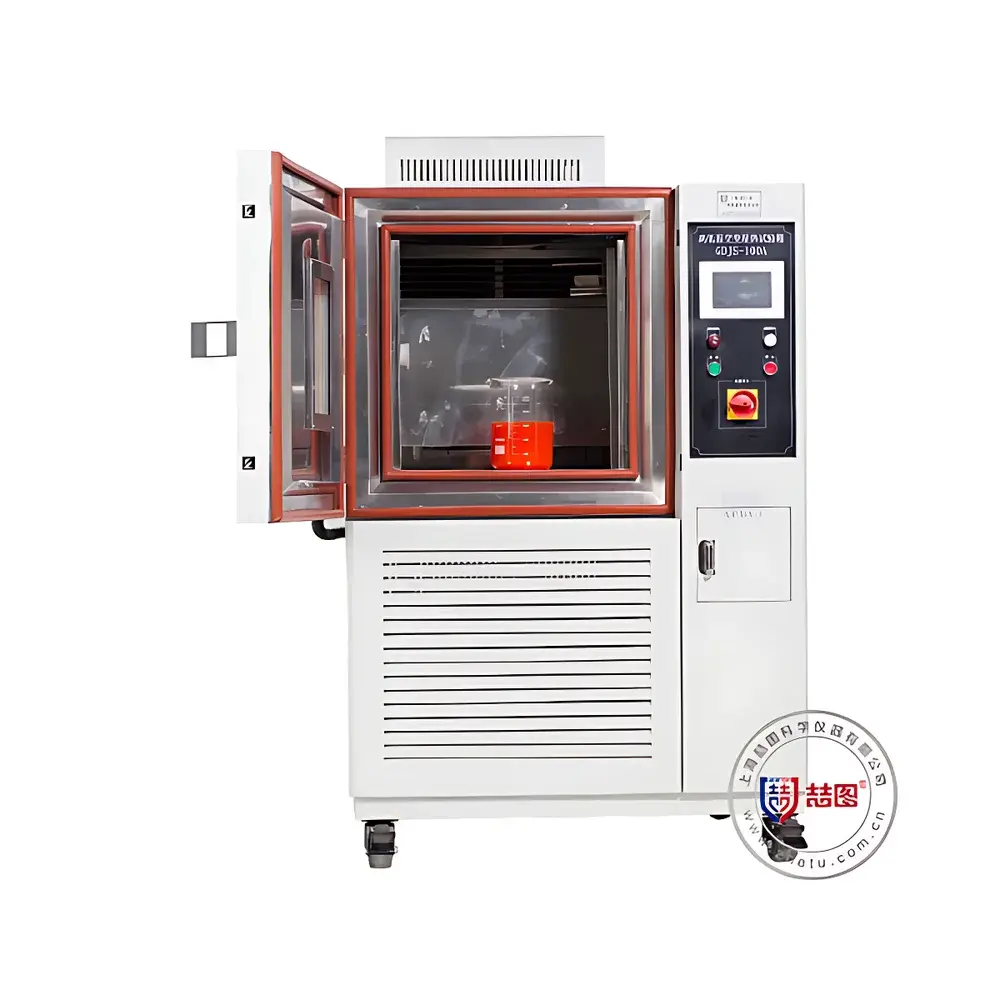
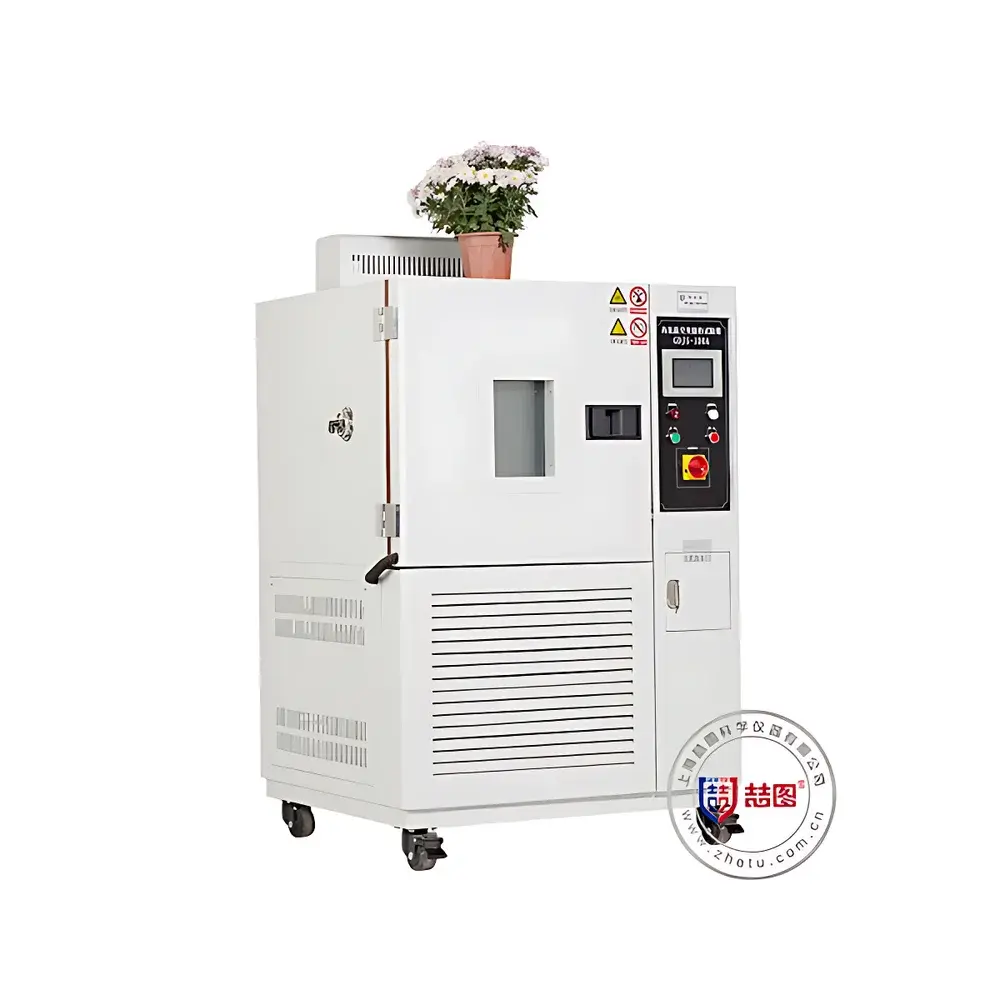
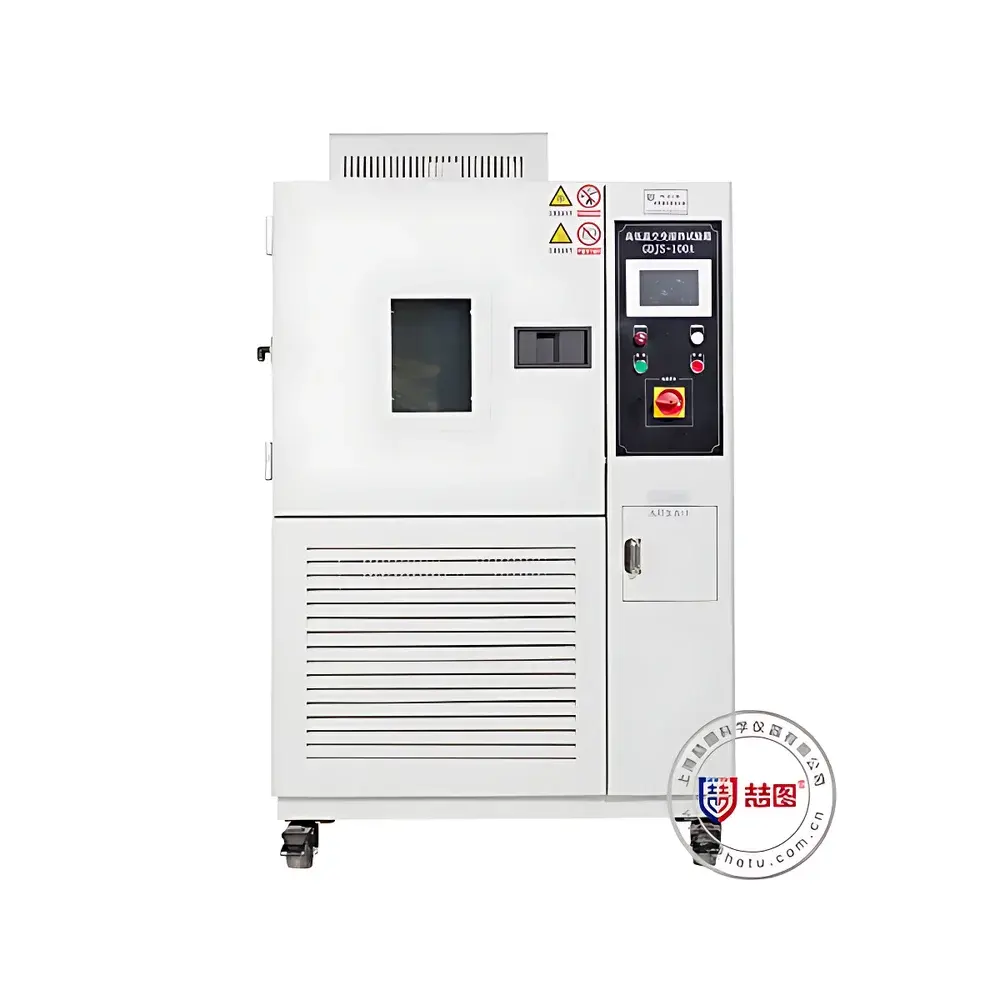
DRETOP THS-C100-II High-Low Temperature & Humidity Environmental Test Chamber
| Brand | DRETOP |
|---|---|
| Origin | Shanghai, China |
| Manufacturer Type | Direct Manufacturer |
| Model | THS-C100-II |
| Temperature Range | −60 °C to +150 °C |
| Cooling Method | Compressor-Based Refrigeration |
| Explosion-Proof | Standard (Non-Explosion-Proof) |
| Temperature Fluctuation | ±0.5 °C |
| Temperature Uniformity | ≤2.0 °C |
| Temperature Deviation | ±2.0 °C |
| Heating Rate | 1–3 °C/min (average) |
| Cooling Rate | 0.7–1 °C/min (average) |
| Internal Chamber Dimensions | 500 × 400 × 500 mm (W × D × H) |
| Nominal Volume | 100 L |
| Humidity Range | 30–95 % RH (standard), optional 20–95 % RH |
| Humidity Deviation | ±3–5 % RH |
| Power Supply | AC 220 V / 50 Hz |
| Input Power | 3500 W / 4500 W |
Overview
The DRETOP THS-C100-II High-Low Temperature & Humidity Environmental Test Chamber is an engineered environmental simulation system designed for rigorous reliability validation and accelerated life testing of industrial components and finished products. It operates on the principle of controlled thermal and hygrothermal cycling—precisely regulating chamber air temperature and relative humidity via independent heating, refrigeration, and steam-based humidification subsystems. The chamber meets fundamental requirements for environmental stress screening (ESS) and qualification testing per IEC 60068-2 series, MIL-STD-810H (Methods 502.7, 506.6, 507.6), and GB/T 2423.1–2423.4, enabling reproducible simulation of extreme climatic conditions including high-temperature storage, low-temperature operation, temperature-humidity cycling, and steady-state damp heat exposure. Its −60 °C to +150 °C operational range and 30–95 % RH capability make it suitable for validating electronic assemblies, automotive ECUs, LED modules, aerospace avionics housings, medical device enclosures, and polymer-based packaging under real-world environmental extremes.
Key Features
- Independent dual-control architecture for temperature and humidity—ensuring precise decoupling of thermal and moisture dynamics during complex profiles.
- 10.1-inch full-color capacitive touchscreen HMI with multilingual UI (English/Chinese), hierarchical password-protected access levels (up to 10 user accounts), and audit-trail-capable operation logging.
- Advanced programmable controller supporting up to 1000 stored test programs, each containing up to 100 segments with ramp/hold/slope control, conditional branching (e.g., jump-to-step, loop, end-on-alarm), and scheduled start/stop functionality.
- Optimized forced-air convection system featuring high-efficiency centrifugal blower, nickel-chromium alloy heating elements, and a hermetically sealed, low-GWP R404A or R507 compressor (imported brand) with adaptive start-stop logic and automatic recovery after power interruption.
- Dual-layer tempered glass observation window with integrated anti-frost heater and LED interior lighting—preventing condensation accumulation and enabling unobstructed visual monitoring without thermal disturbance.
- Stainless steel 304 inner chamber with radius-rounded corners, removable adjustable stainless steel shelves, and silicone rubber door gasket ensuring long-term sealing integrity across −60 °C to +150 °C.
- Standard 50 mm diameter test port (with brass plug and silicone O-ring) for live electrical, pneumatic, or signal feedthrough during testing.
- Comprehensive safety suite: over-temperature cut-off, compressor overcurrent protection, fan failure detection, leakage current monitoring, and audible/visual alarm with auto-shutdown.
- Real-time data acquisition with internal storage (≥100,000 data points), exportable in CSV/Excel format; optional USB/RS485 interface for external PC integration and remote supervision.
Sample Compatibility & Compliance
The THS-C100-II accommodates samples up to 500 × 400 × 500 mm (W × D × H) within its 100 L stainless steel working chamber. Its uniform airflow design—validated per ISO 16750-4 Annex C and IEC 60068-3-5—achieves ≤2.0 °C spatial temperature uniformity and ±0.5 °C temporal stability under steady-state conditions. Humidity control accuracy complies with ISO 16750-4:2018 (±3–5 % RH deviation at 25 °C/60 % RH reference point). The unit conforms to CE marking requirements (EMC Directive 2014/30/EU, LVD Directive 2014/35/EU), and its control firmware supports GLP/GMP-aligned data integrity practices—including electronic signatures, time-stamped event logs, and non-erasable audit trails—when configured with optional network-enabled software modules.
Software & Data Management
The embedded controller provides native data logging at user-selectable intervals (1 s to 60 min), storing temperature, humidity, program step, alarm status, and runtime metrics. Exported files are compatible with Microsoft Excel and third-party analysis tools (e.g., MATLAB, Python pandas). Optional cloud connectivity enables secure remote access via web browser or dedicated iOS/Android application—supporting concurrent multi-user viewing, real-time parameter adjustment, firmware updates, and historical trend visualization. All remote sessions are TLS 1.2 encrypted; role-based permissions (Operator, Supervisor, Administrator) enforce strict separation of duties. When integrated with enterprise LIMS or MES platforms via Modbus TCP or OPC UA (via optional gateway), the chamber supports 21 CFR Part 11-compliant electronic records with electronic signatures and audit trail archiving.
Applications
- Electronics: Thermal cycling validation of PCBAs, connectors, sensors, and power modules per JEDEC JESD22-A104.
- Automotive: Environmental stress screening of infotainment units, ADAS cameras, and battery management systems per ISO 16750-4 and LV-124.
- LED Lighting: Lifetime acceleration testing under combined high-temperature/high-humidity conditions (e.g., 85 °C/85 % RH).
- Medical Devices: Biocompatibility material aging per ISO 10993-12 and sterilization packaging validation per ISO 11607-1.
- Materials Science: Polymer degradation studies, adhesive bond strength evaluation, and coating adhesion testing under cyclic thermal-hygric loading.
- Quality Assurance: In-process verification of supplier component robustness prior to final assembly.
FAQ
What is the maximum allowable sample mass for thermal stability testing in the THS-C100-II?
Thermal load capacity depends on sample emissivity, surface area, and internal airflow obstruction. For optimal uniformity and control fidelity, DRETOP recommends limiting total sample volume to ≤30 % of chamber volume (i.e., ≤30 L) when conducting tests requiring ≤±0.5 °C stability.
Does the THS-C100-II support custom humidity setpoints below 30 % RH?
Yes—optional low-humidity configuration extends the range to 20–95 % RH using enhanced dehumidification and precision dry-air purge capability.
Can the chamber be integrated into a centralized lab automation network?
Yes—standard RS485 Modbus RTU and optional Ethernet (Modbus TCP) interfaces enable seamless integration with SCADA, LabVIEW, or custom Python-based orchestration frameworks.
Is calibration documentation provided with shipment?
Each unit ships with a factory calibration certificate traceable to NIM (National Institute of Metrology, China); optional UKAS-accredited calibration services are available upon request.
What maintenance intervals are recommended for long-term reliability?
Compressor oil and refrigerant pressure should be verified annually; air filter cleaning is required every 3 months; door gasket integrity and sensor drift checks are advised semiannually.



