
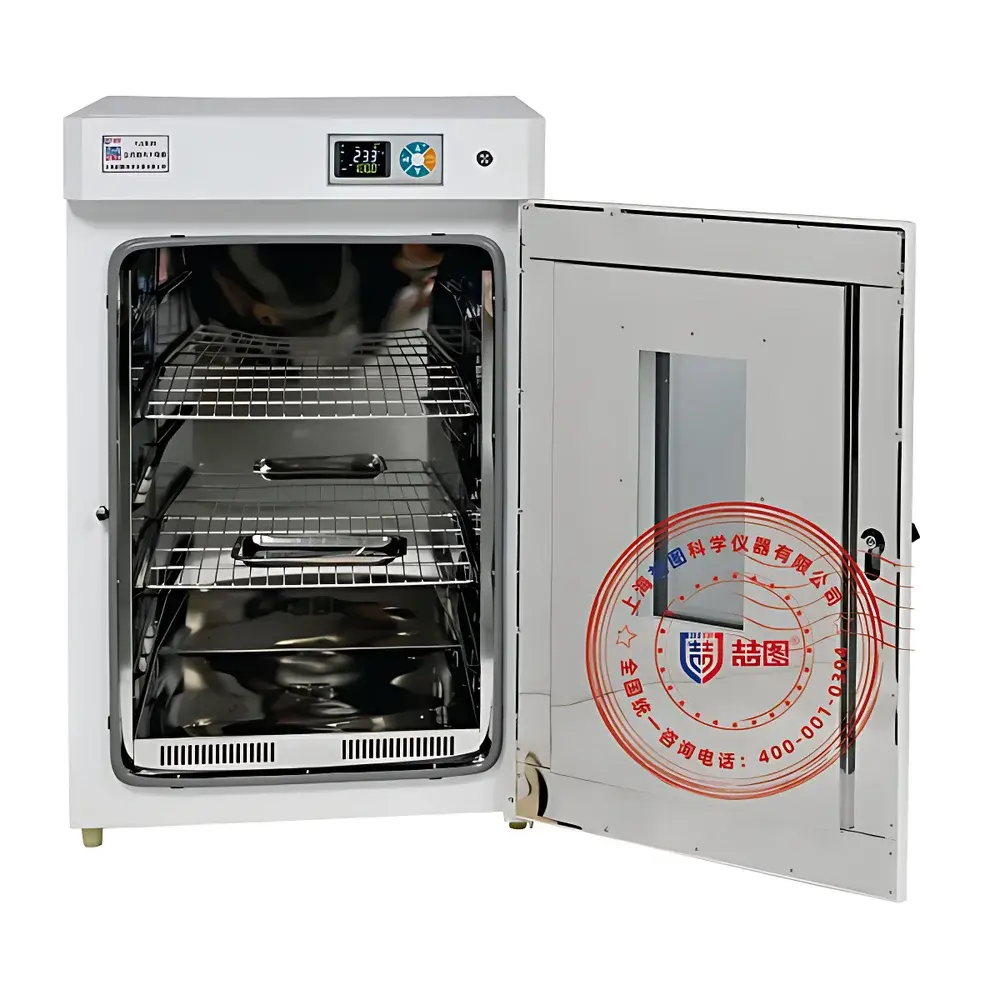
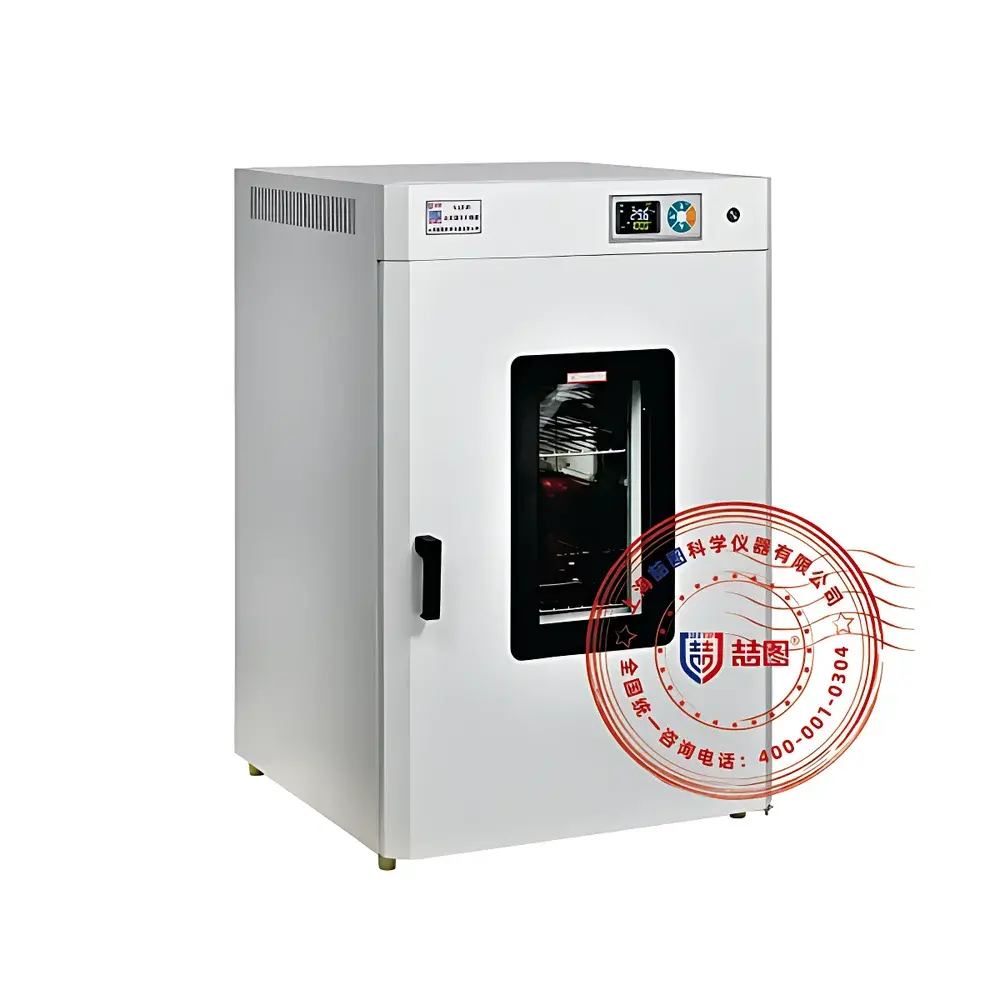
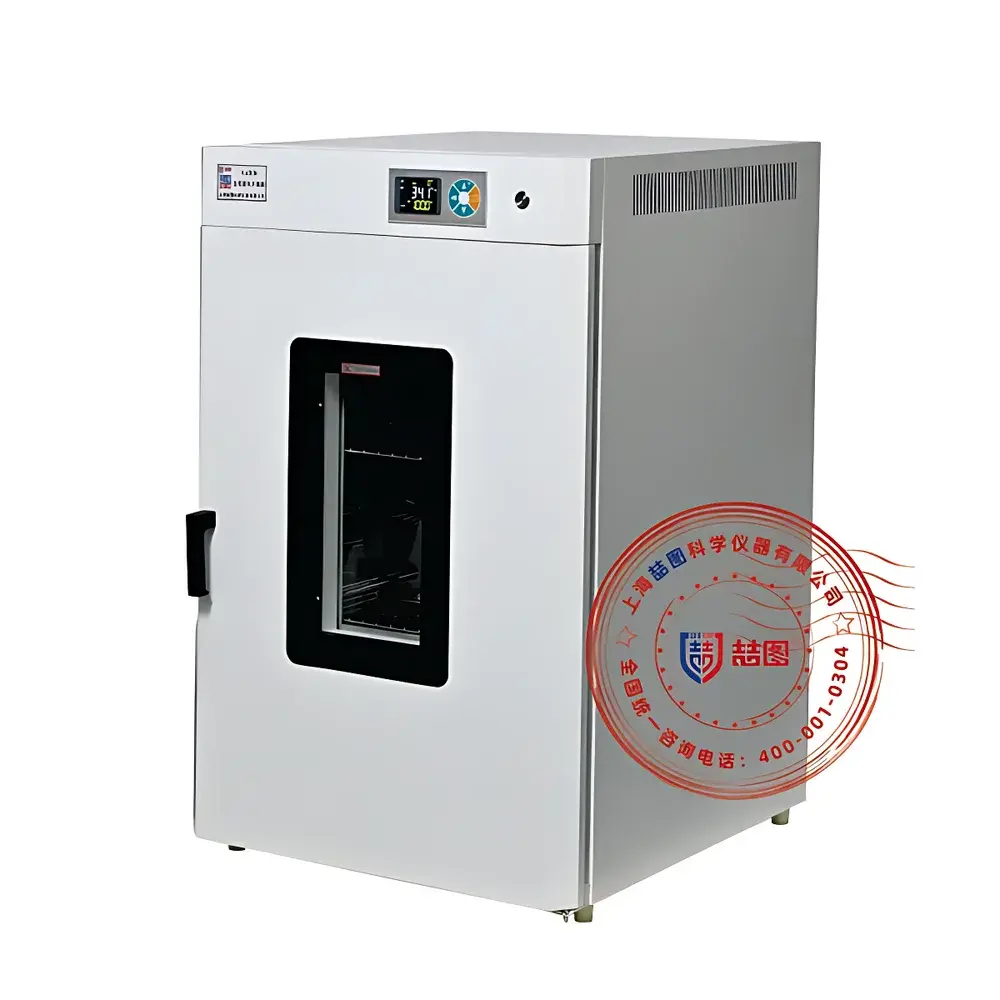
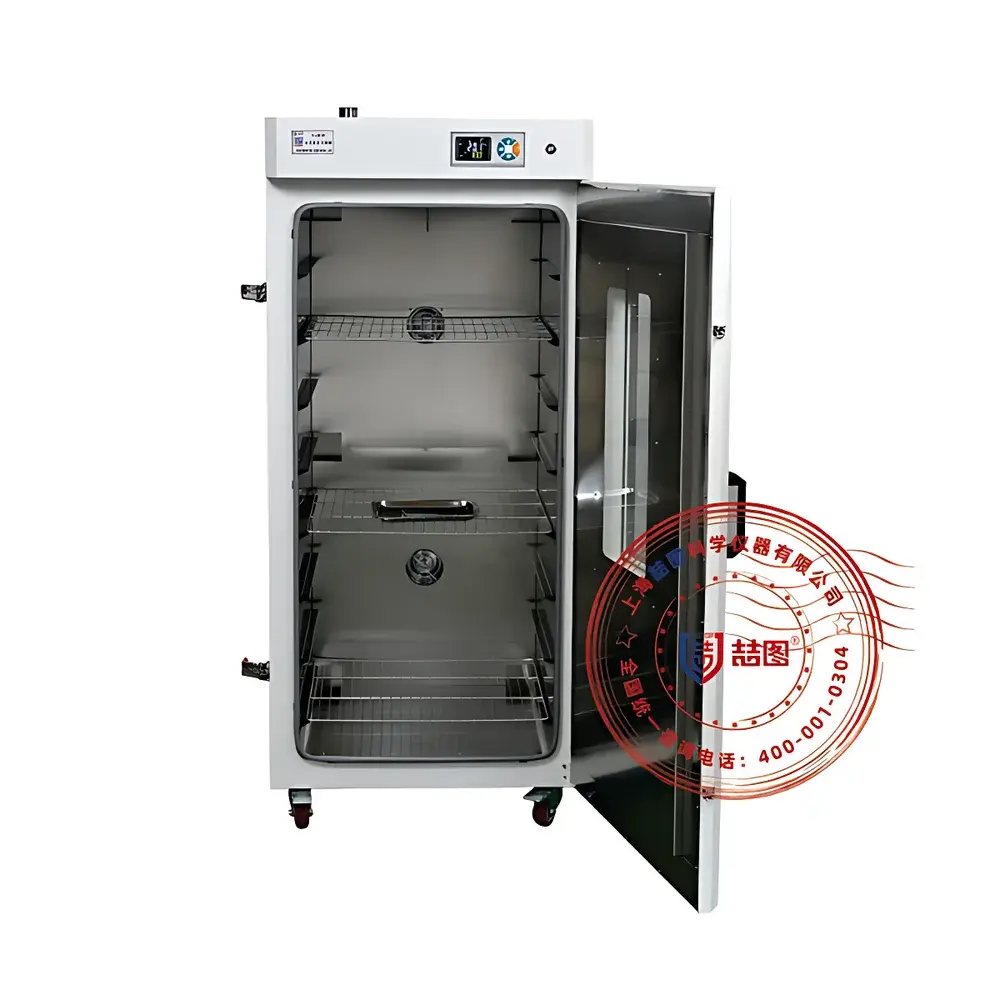
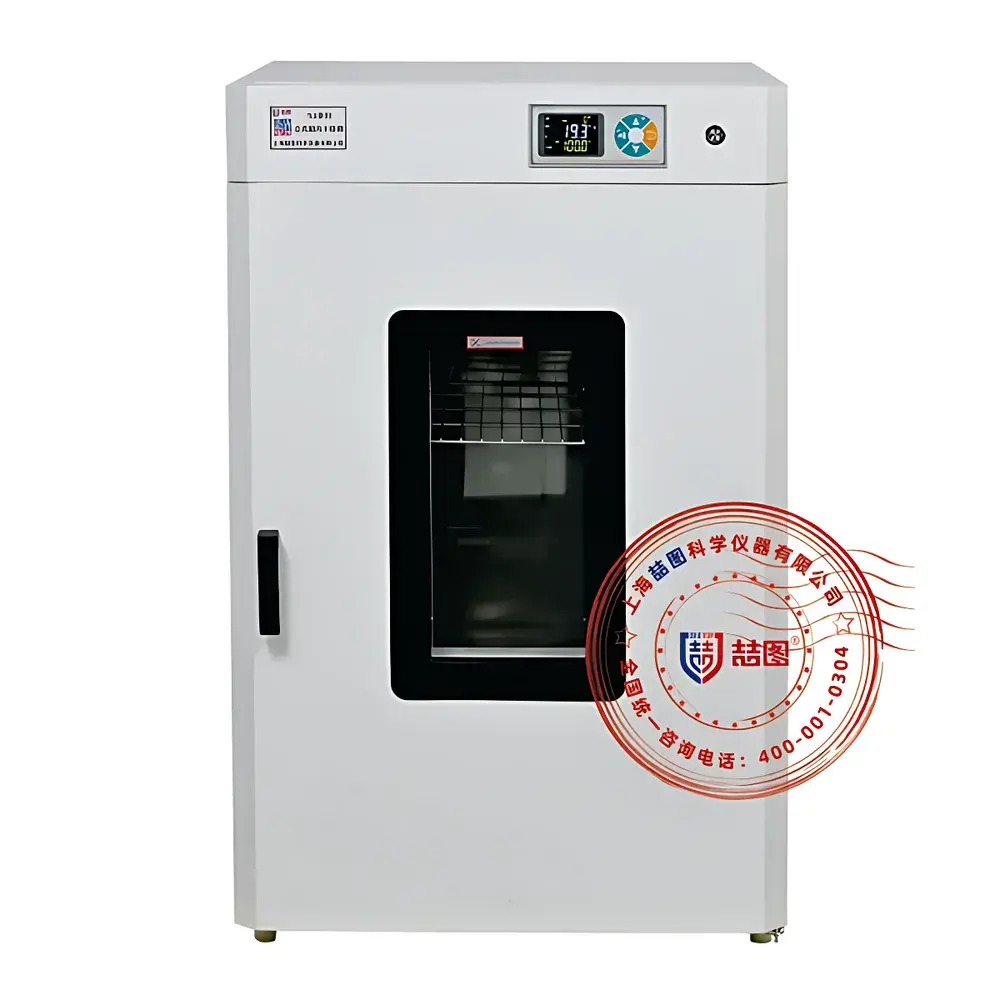
DRETOP TLG-9030A Vertical Forced-Air Drying Oven
| Brand | DRETOP |
|---|---|
| Origin | Shanghai, China |
| Manufacturer Type | Direct Manufacturer |
| Product Category | Domestic |
| Model | TLG-9030A |
| Instrument Type | Standard Benchtop/Free-Standing Drying Oven |
| Temperature Range | RT+10°C to 250°C |
| Temperature Uniformity | ±2.5°C (empty chamber @ 100°C) |
| Temperature Fluctuation | ±0.5°C |
| Temperature Resolution | 0.1°C |
| External Dimensions (W×D×H) | 465×495×700 mm |
| Internal Chamber Dimensions (W×D×H) | 300×300×345 mm |
| Working Ambient Temperature | 5–45°C |
| Interior Material | Stainless Steel (SUS304) |
| Heating Method | Forced-Air Convection with Optimized Airflow Channel Design |
| Power Supply | AC 220 V, 50 Hz |
| Input Power | 800 W |
| Timer Range | 1–9999 minutes |
| Standard Accessories | 2 Adjustable Stainless Steel Shelves, Dual-Layer Tempered Glass Viewing Window, P.I.D Microprocessor Temperature Controller with Over-Temperature Protection |
Overview
The DRETOP TLG-9030A Vertical Forced-Air Drying Oven is an engineered solution for precise, repeatable thermal processing in research laboratories, quality control environments, and industrial R&D settings. Designed around the principle of forced convection heating—where a high-temperature-rated centrifugal blower circulates heated air through a geometrically optimized internal duct system—the TLG-9030A ensures rapid thermal equilibration and uniform temperature distribution across its 30 L stainless steel chamber. Unlike natural convection ovens, this model eliminates thermal stratification via directional airflow management, achieving ±2.5°C uniformity (measured per ISO 17025-aligned validation protocols at 100°C, empty load) and ±0.5°C fluctuation under steady-state conditions. Its vertical architecture minimizes floor footprint while maintaining ergonomic access; the unit operates within a validated ambient range of 5–45°C and supports continuous duty cycles up to 250°C. The oven complies with fundamental safety and electromagnetic compatibility requirements per IEC 61000-6-3 and IEC 61000-6-2, and its structural design aligns with general laboratory equipment guidelines for mechanical stability and thermal containment.
Key Features
- Microprocessor-based P.I.D temperature controller with real-time digital display, 0.1°C resolution, and programmable timer (1–9999 min)
- Dual-layer tempered glass observation window with high-efficiency thermal insulation and integrated seal integrity verification
- Adjustable, removable stainless steel (SUS304) shelving system—two standard shelves included, with infinite vertical positioning capability
- Two-stage rotary locking mechanism with zinc-alloy handle and high-temperature silicone gasket (rated to 300°C), ensuring consistent door compression and minimal heat leakage
- Self-diagnostic fault reporting: error codes displayed directly on LCD interface for rapid troubleshooting (e.g., E01 = sensor open circuit, E02 = over-temperature alarm activation)
- Automatic power recovery function retaining setpoint, timer, and alarm parameters after unexpected interruption
- Independent over-temperature cut-off circuit with audible/visual alert, compliant with EN 60519-1 safety standards for industrial heating equipment
- Horizontal rear exhaust port (Ø30 mm) compatible with external ducting for volatile compound evacuation or controlled atmosphere venting
Sample Compatibility & Compliance
The TLG-9030A accommodates a broad spectrum of non-volatile, thermally stable samples—including electronic components, polymer specimens, pharmaceutical excipients, ceramic precursors, metal coatings, and analytical reference standards. Its stainless steel interior and absence of organic coatings prevent catalytic decomposition or contamination during extended drying, baking, or pre-conditioning cycles. While not certified for Class I Division 1 hazardous locations, the unit meets general-purpose electrical safety standards applicable to non-explosive laboratory environments. It supports GLP-compliant documentation workflows when paired with optional RS485 communication or USB data export modules. Although not inherently 21 CFR Part 11 compliant, audit trails can be generated externally using third-party data acquisition software interfaced via serial output. Validation packages—including IQ/OQ templates aligned with ASTM E2876 and ISO/IEC 17025—are available upon request for installation qualification and operational qualification.
Software & Data Management
The TLG-9030A integrates seamlessly into modern lab informatics ecosystems via optional connectivity modules. The USB data export interface enables direct transfer of time-stamped temperature logs to FAT32-formatted USB drives for offline analysis in Excel or MATLAB. An RS485 (Modbus RTU) port supports bidirectional communication with SCADA systems or centralized environmental monitoring platforms, allowing remote setpoint adjustment, real-time parameter readback, and alarm status polling. For advanced thermal profiling, the optional programmable controller offers up to 30 segment ramp-soak cycles with user-defined rate limits and hold durations. All firmware updates are performed via secure UART bootloading, preserving calibration constants and configuration memory. No proprietary cloud platform is required; raw CSV-formatted output ensures interoperability with LIMS, ELN, and statistical process control (SPC) tools.
Applications
- Moisture content determination per AOAC 950.46 and USP <731> loss-on-drying protocols
- Pre-drying of filter papers, crucibles, and volumetric glassware prior to gravimetric analysis
- Thermal aging studies of elastomers, adhesives, and encapsulation resins under controlled oxidative conditions
- Baking of printed circuit board (PCB) assemblies post-solder paste application to remove volatiles and improve intermetallic bonding
- Conditioning of hygroscopic reference materials (e.g., potassium hydrogen phthalate, sodium chloride standards) before standardization
- Stabilization of catalyst supports and metal oxide powders prior to BET surface area analysis
- Residual solvent removal from thin-film coatings and nanoparticle dispersions
FAQ
What is the maximum recommended continuous operating temperature?
The TLG-9030A is rated for continuous operation up to 250°C. Sustained use above this threshold may accelerate degradation of the silicone door gasket and compromise long-term temperature uniformity.
Can the oven be validated for ISO/IEC 17025 accreditation?
Yes—DRETOP provides IQ/OQ documentation templates, sensor calibration certificates traceable to NIM (National Institute of Metrology, China), and guidance for performing temperature mapping per ASTM E2876 Annex A2.
Is the interior chamber fully welded or seam-welded?
The SUS304 inner chamber features continuous TIG welding on all seams, with passivation treatment applied post-fabrication to enhance corrosion resistance.
Does the unit include a built-in data logger?
No—the base model does not include internal logging memory. However, time-series temperature data can be captured externally via USB or RS485 interfaces using compatible host software.
What maintenance intervals are recommended for optimal performance?
Inspect door gasket integrity and clean air intake filters every 3 months; verify temperature sensor calibration annually or after any physical impact to the chamber; replace the blower motor thermal fuse only if fault code E04 appears persistently.



