
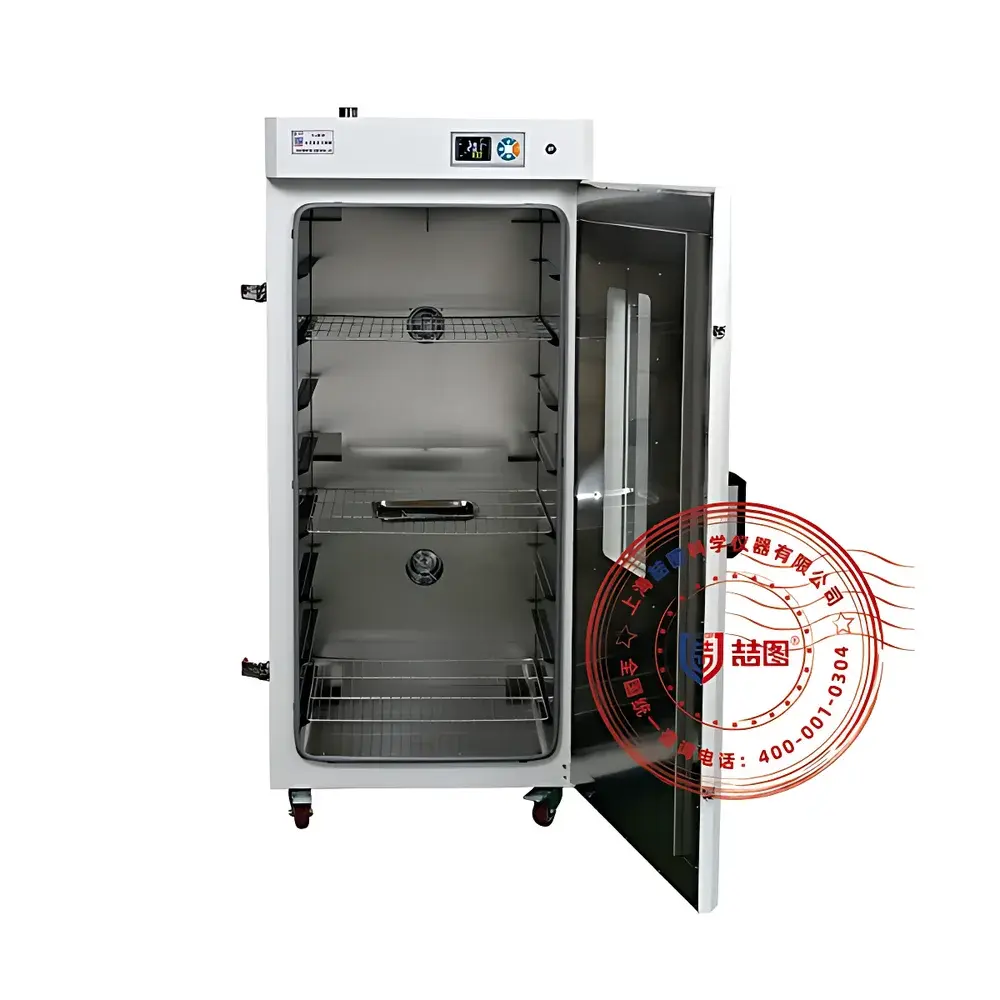
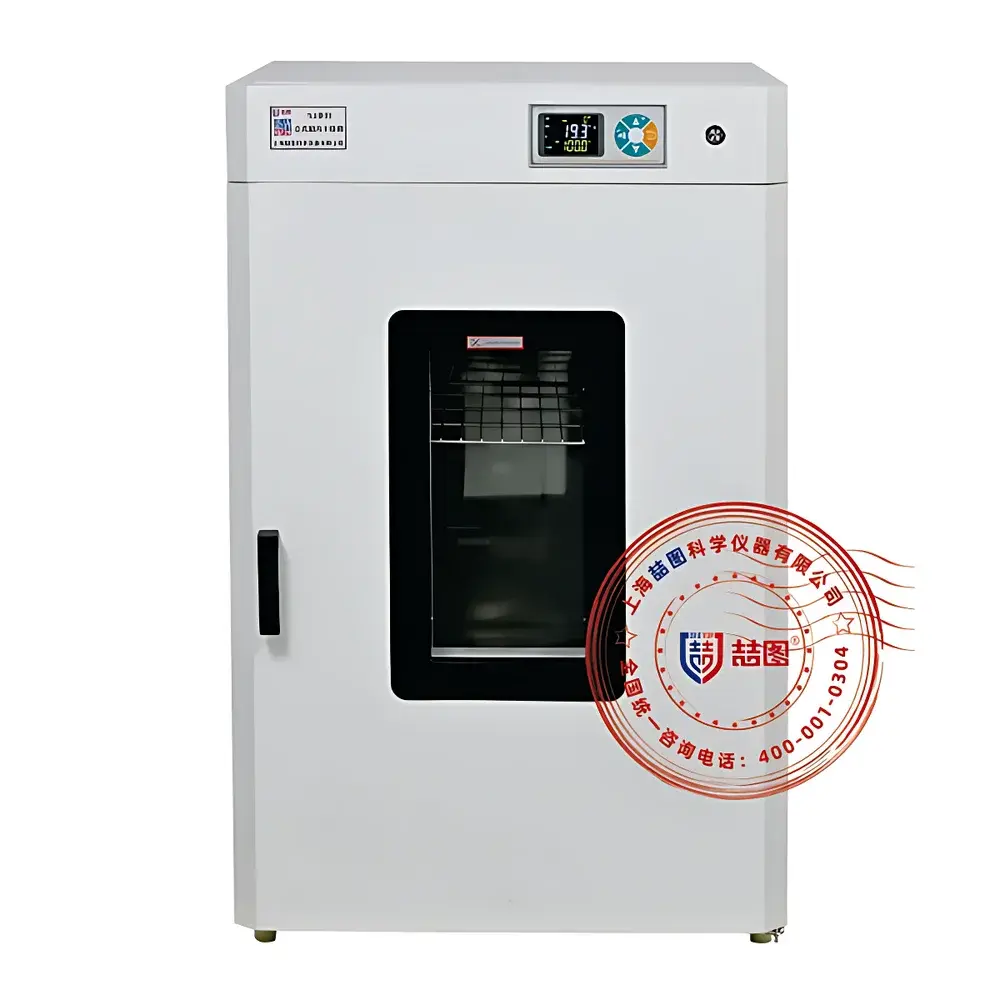
DRETOP TLG-9075A Vertical Forced-Air Drying Oven
| Brand | DRETOP |
|---|---|
| Origin | Shanghai, China |
| Manufacturer Type | Direct Manufacturer |
| Instrument Category | High-Temperature Drying Oven |
| Model | TLG-9075A |
| Temperature Range | RT+10°C to 300°C |
| Temperature Uniformity | ±2.5°C (empty chamber, at 100°C) |
| Temperature Fluctuation | ±0.5°C |
| Temperature Resolution | 0.1°C |
| Chamber Dimensions (W×D×H) | 400×400×445 mm |
| External Dimensions (W×D×H) | 565×605×800 mm |
| Heating Method | Forced Convection (Hot Air Circulation) |
| Inner Chamber Material | Stainless Steel (SUS304) |
| Operating Ambient Temperature | 5–45°C |
| Power Supply | AC 220 V, 50 Hz |
| Input Power | 1550 W |
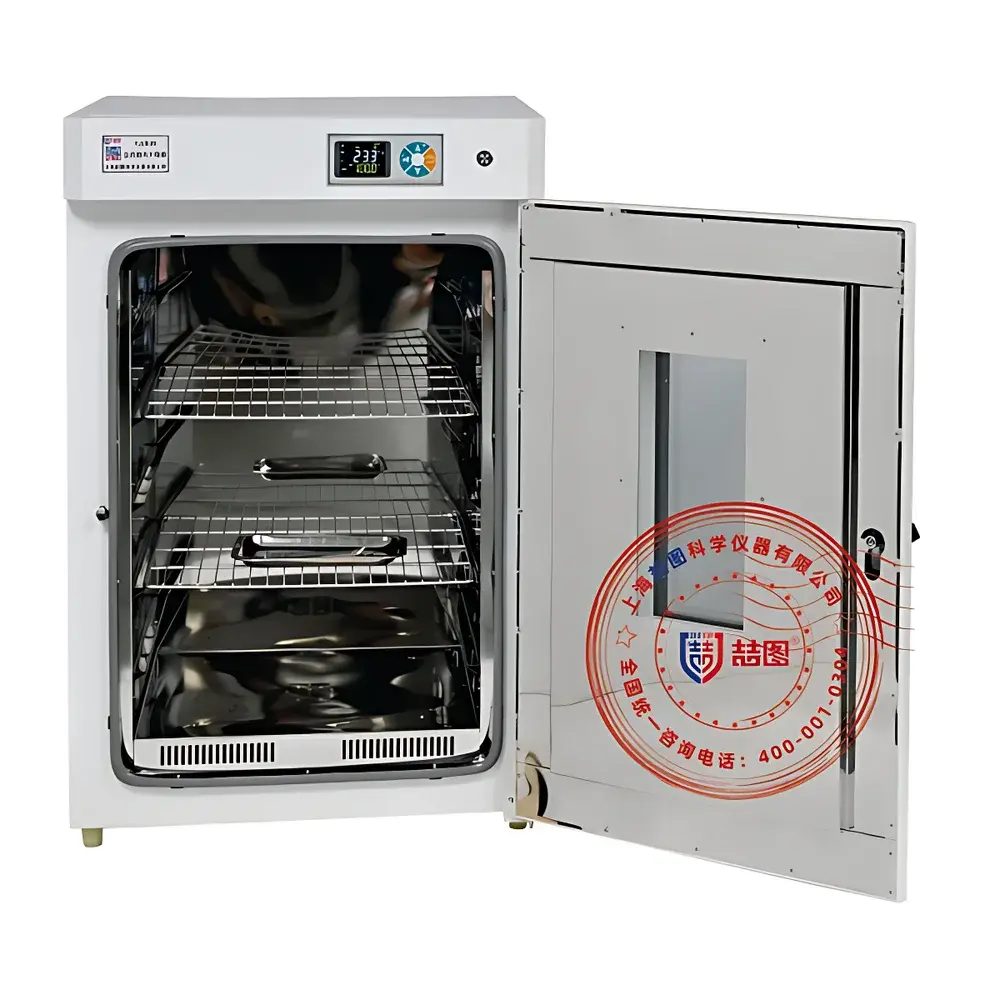
| Standard Shelving | 3 Adjustable Stainless Steel Trays |
| Safety Features | Independent Over-Temperature Cut-off, Auto-Recovery After Power Failure, Programmable Alarm Threshold |
Overview
The DRETOP TLG-9075A Vertical Forced-Air Drying Oven is an engineered solution for precise, repeatable thermal processing in research laboratories, quality control environments, and industrial R&D settings. Designed around the principle of forced convection heat transfer, this oven utilizes a high-efficiency centrifugal blower and an optimized internal airflow architecture to ensure rapid thermal equilibration and minimal spatial temperature gradients across its 75 L stainless-steel working chamber. Unlike natural convection ovens, the TLG-9075A actively circulates heated air through calibrated ducts and rear-mounted exhaust channels—enabling uniform heating even under variable load conditions and supporting applications requiring strict adherence to thermal stability protocols per ASTM E145, ISO 17025, and ICH Q5C guidelines.
Key Features
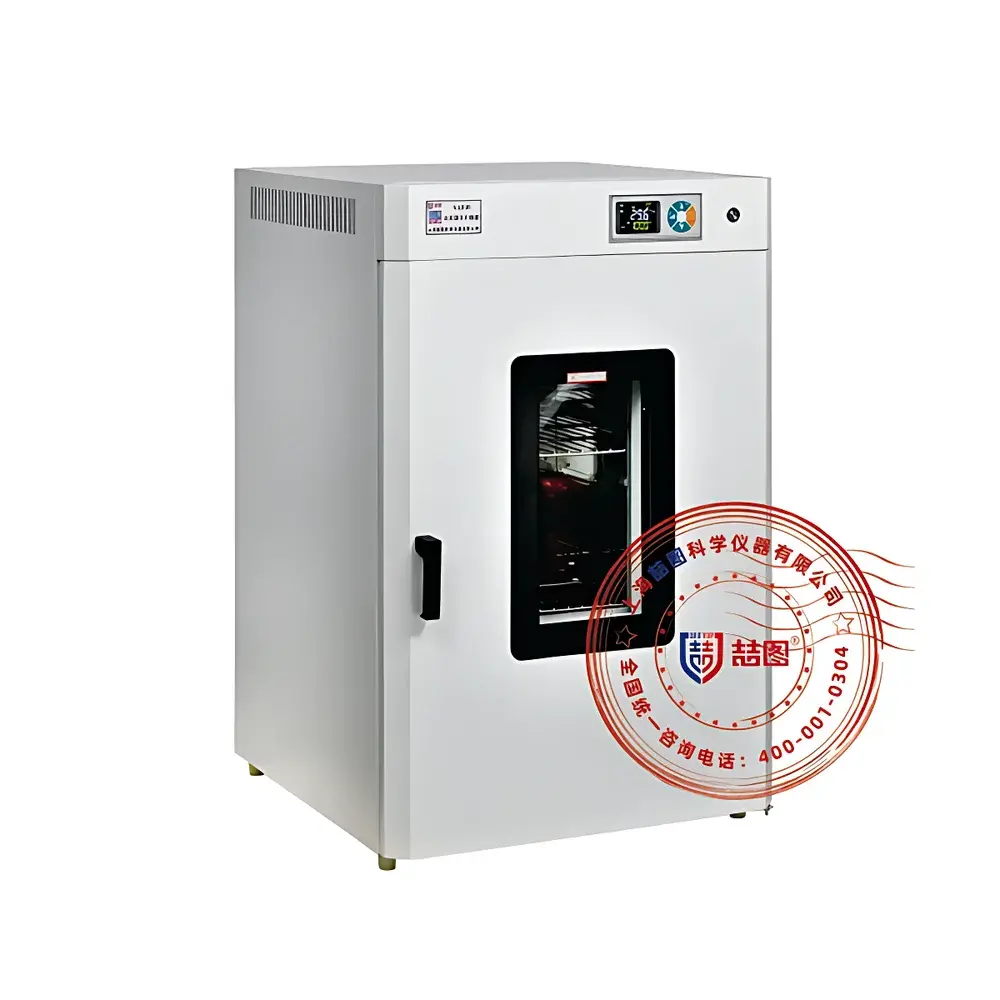
- Microprocessor-based P.I.D. temperature controller with LCD interface, offering real-time three-color display of setpoint, actual temperature, and elapsed time—enhancing operational transparency and reducing operator error.
- Self-diagnostic system with alphanumeric fault code reporting (e.g., E01 = sensor open circuit, E03 = over-temperature event), enabling rapid troubleshooting without external service tools.
- Dual-stage mechanical door lock with zinc-alloy handle and high-temperature silicone gasket (rated to 350°C), ensuring long-term sealing integrity and minimizing thermal leakage.
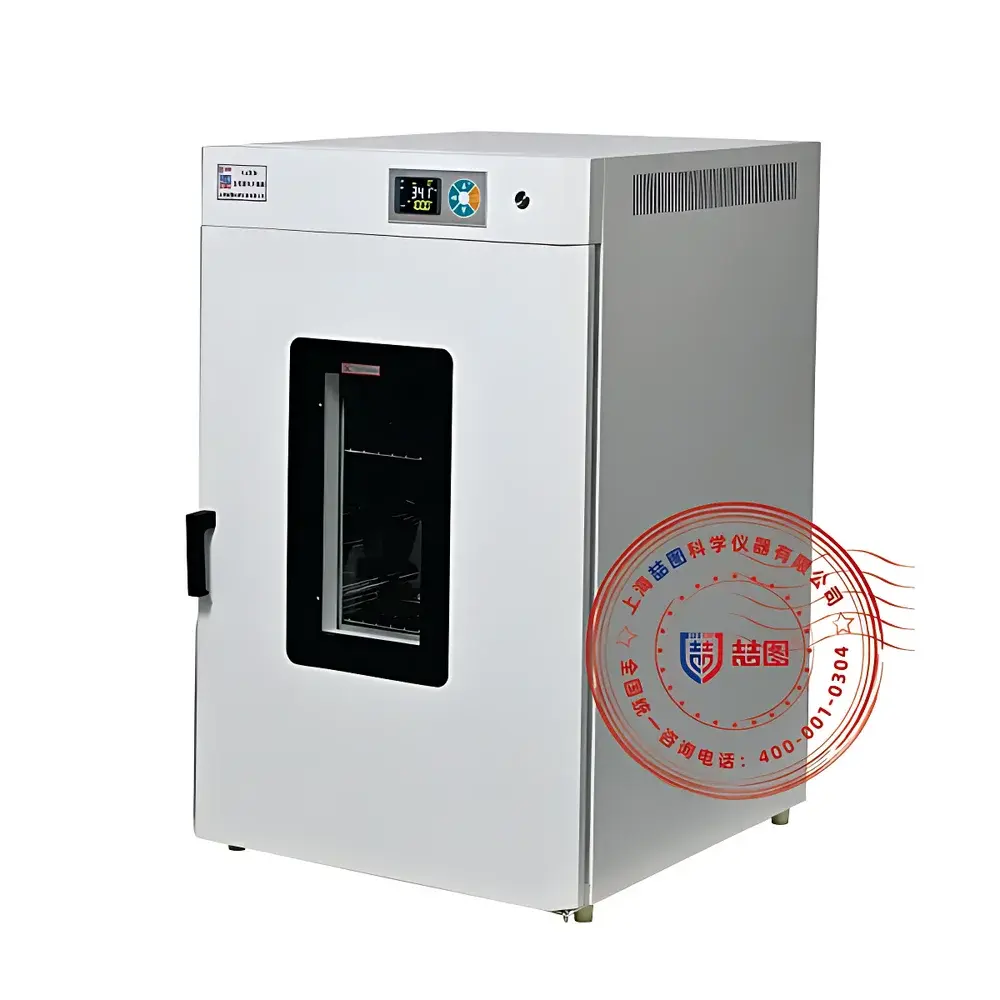
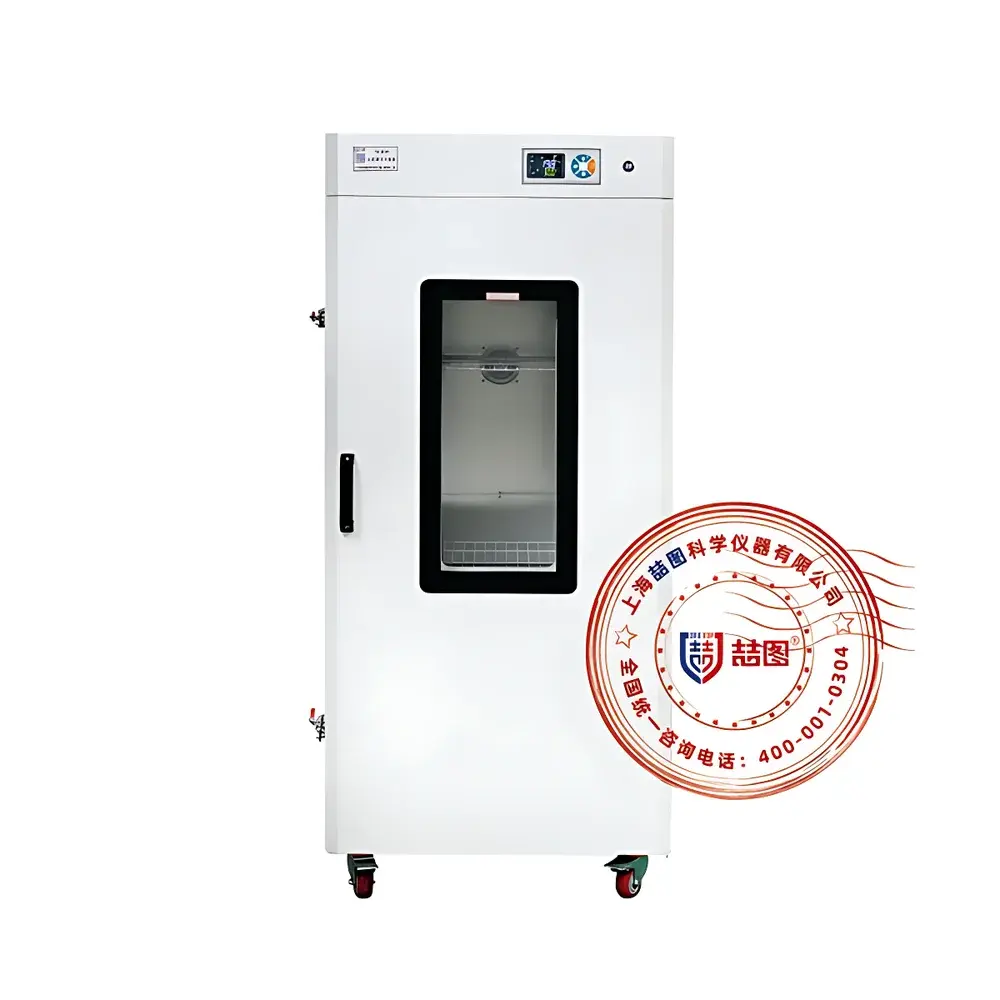
- Double-layer tempered glass observation window with anti-fog coating, providing unobstructed visual monitoring while maintaining thermal insulation performance.
- Three independently adjustable, removable stainless-steel shelves (SUS304), spaced to accommodate standard Petri dishes, crucibles, glassware, and PCB substrates without airflow obstruction.
- Back-mounted horizontal exhaust port compatible with optional ducting systems—critical for handling volatile solvents, residual moisture, or odor-emitting samples in compliance with OSHA ventilation standards.
Sample Compatibility & Compliance
The TLG-9075A accommodates a broad spectrum of sample types—including electronic components (PCBs, sensors), polymer films, pharmaceutical excipients, ceramic precursors, metal coatings, and biological assay plates—without compromising thermal fidelity. Its stainless-steel interior resists corrosion from mild acids, alkalis, and organic vapors encountered during solvent evaporation or pre-baking processes. The unit conforms to general safety requirements outlined in IEC 61010-1:2010 for laboratory electrical equipment and supports GLP-compliant workflows via optional data logging accessories. While not certified for Class I Division 1 hazardous locations, it meets CE marking requirements for electromagnetic compatibility (EMC Directive 2014/30/EU) and low-voltage safety (LVD Directive 2014/35/EU).
Software & Data Management
The base configuration includes a programmable timer (1–9999 minutes) and non-volatile memory that retains user-defined parameters—including setpoint, dwell time, and alarm thresholds—during power interruption. Optional upgrades expand functionality: a USB data export module enables CSV-formatted temperature/time logs to be transferred to offline analysis software; an RS-485 interface supports Modbus RTU communication for integration into centralized lab management systems (LIMS); and a color touchscreen controller allows multi-segment ramp-soak profiles (up to 30 steps) with slope rate control and audit-trail-enabled user authentication—aligning with FDA 21 CFR Part 11 requirements when paired with validated firmware.
Applications
This drying oven serves critical roles across multiple technical domains: moisture content determination per AOAC 950.46 and USP <731>; pre-conditioning of test specimens prior to tensile or dielectric testing; curing of conformal coatings on aerospace electronics; desiccation of hygroscopic reagents in analytical chemistry labs; aging studies of elastomers and adhesives per ASTM D573; and stabilization of calibration standards in metrology labs. Its stable ±0.5°C fluctuation and ≤2.5°C uniformity at 100°C make it suitable for method validation where intermediate precision must be demonstrated across chamber zones.
FAQ
What is the maximum recommended operating temperature for continuous use?
The TLG-9075A is rated for continuous operation up to 300°C. For extended exposure (>8 hours), sustained use above 250°C may accelerate gasket aging; periodic inspection of door seal integrity is advised.
Can the oven be used for sterilization purposes?
No. This unit is not designed or validated for microbial kill efficacy. It lacks the chamber pressure control, HEPA filtration, and cycle validation required for autoclave or dry-heat sterilization per ISO 17665 or EN 285.
Is the stainless-steel interior electropolished?
The inner chamber uses brushed-finish SUS304 stainless steel. Electropolishing is available as a custom option for enhanced cleanability in semiconductor or biotech applications.
Does the oven support NIST-traceable calibration?
Yes. DRETOP provides optional factory calibration certificates traceable to NIST standards (via accredited third-party labs), including as-found/as-left reports and uncertainty budgets per ISO/IEC 17025.
How is airflow velocity controlled?
Air velocity is fixed by blower RPM and duct geometry. A manual airflow damper is not included, but optional variable-frequency drive (VFD) retrofit kits are available for fine-tuned convection modulation in specialized applications.



