
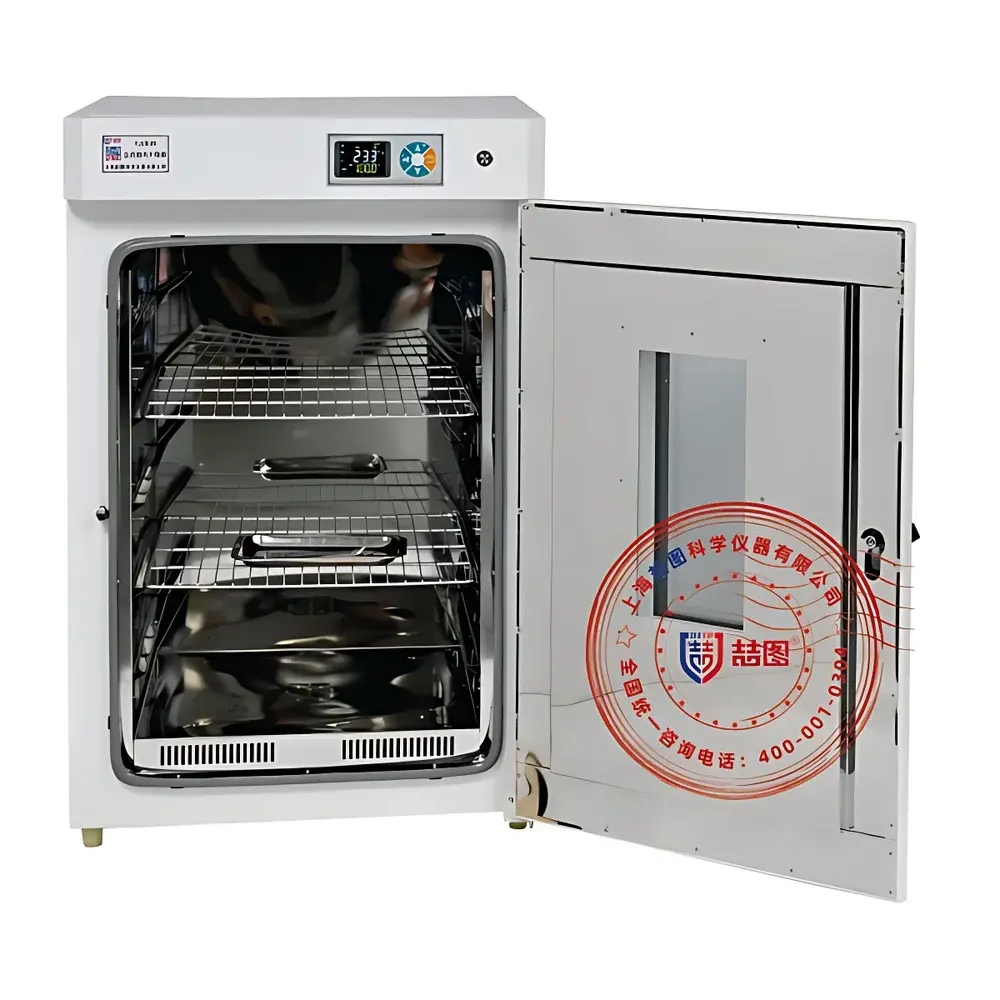
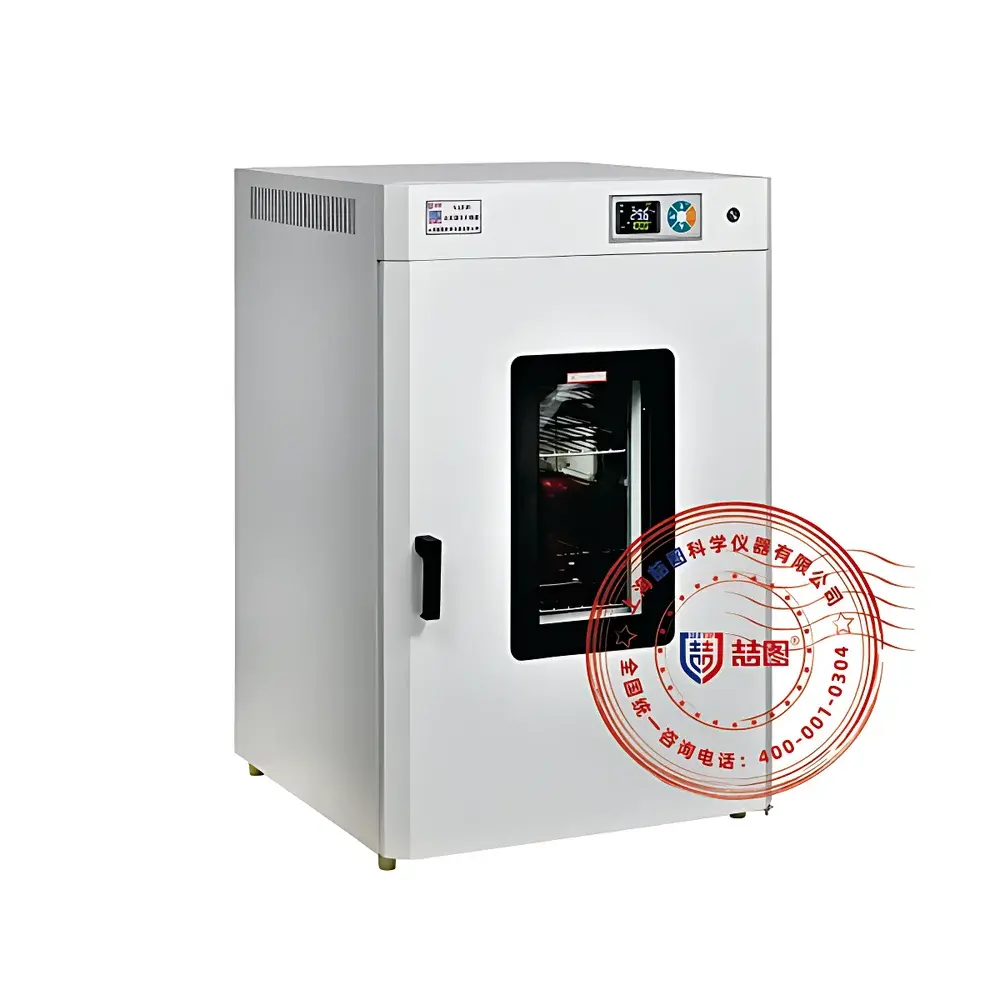
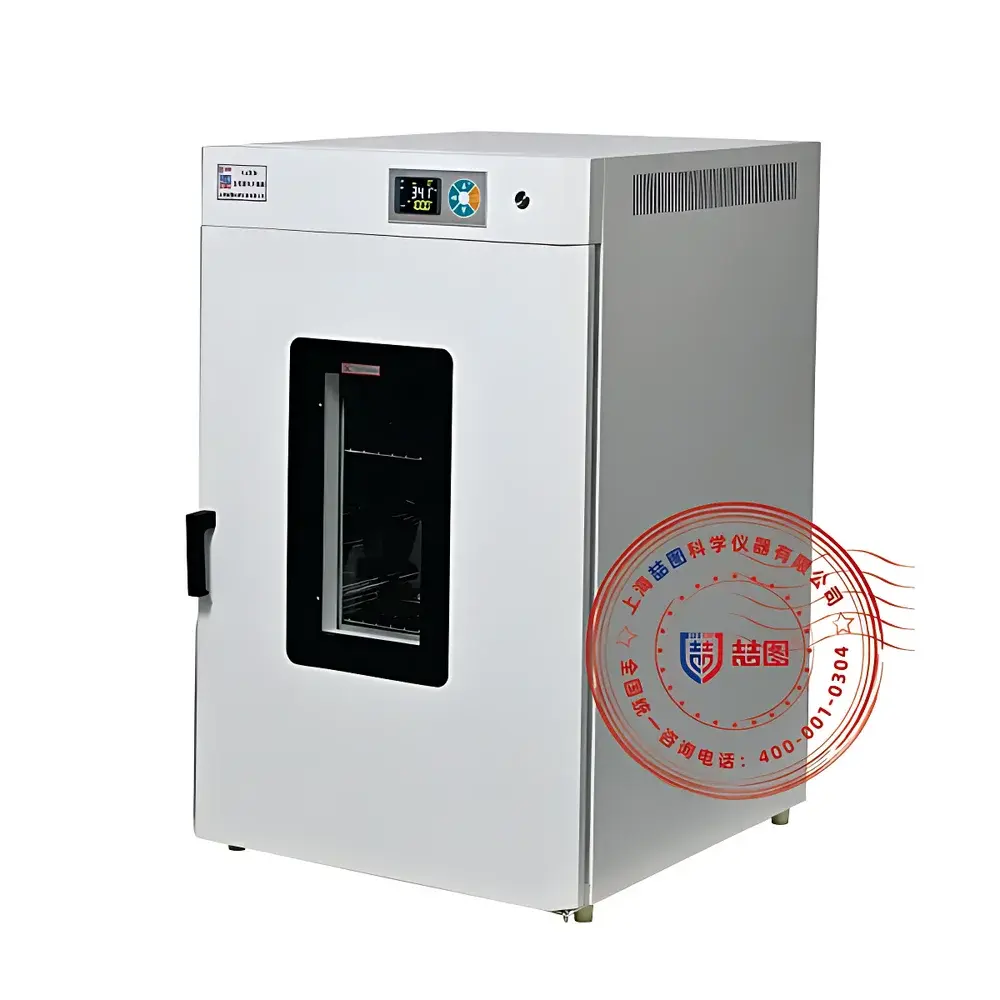
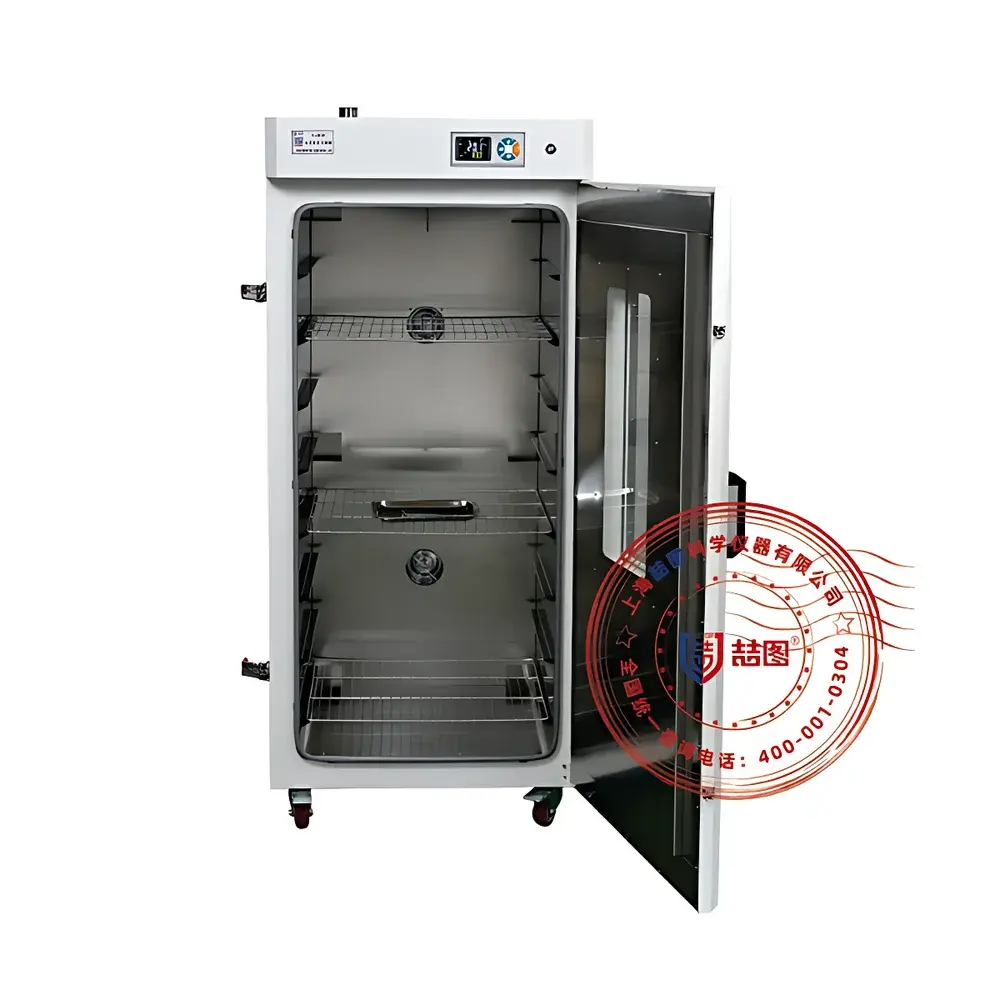
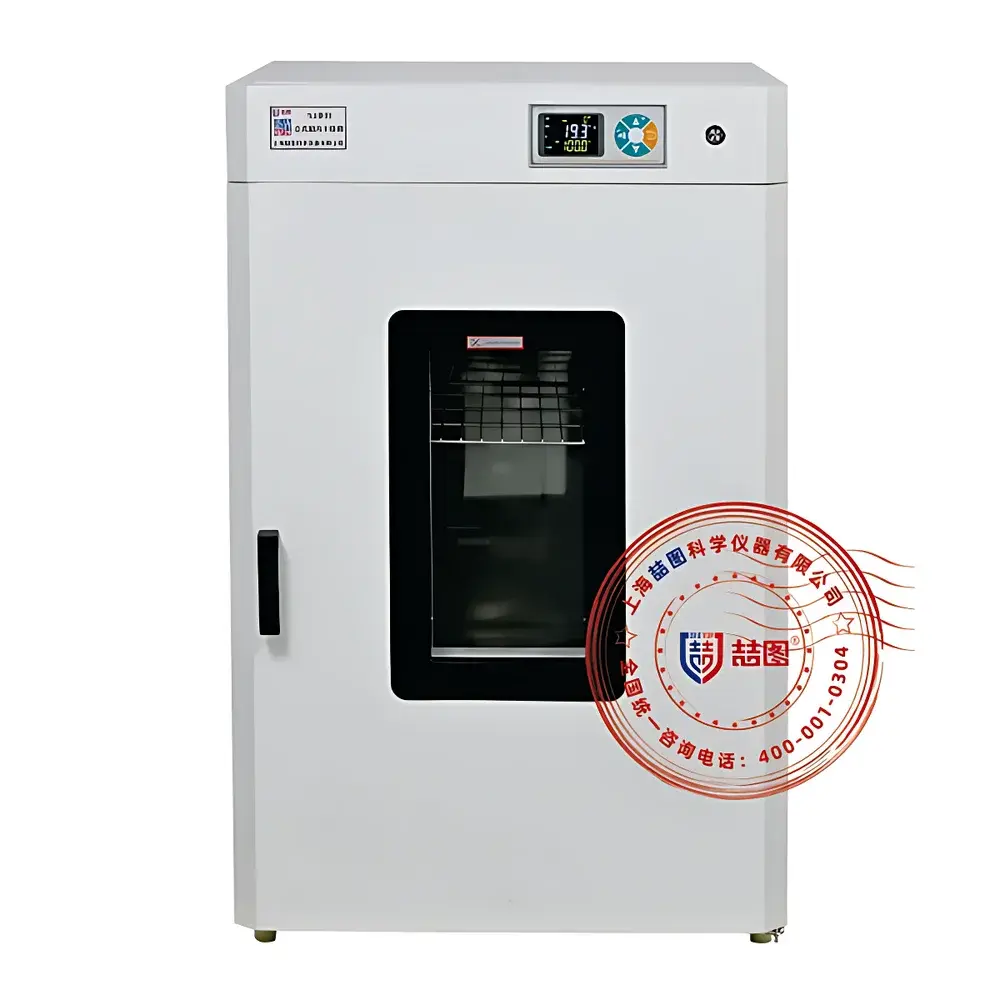
DRETOP TLG-9240A Vertical Forced-Air Drying Oven
| Brand | DRETOP |
|---|---|
| Origin | Shanghai, China |
| Manufacturer Type | Direct Manufacturer |
| Product Category | Domestic |
| Model | TLG-9240A |
| Instrument Type | Standard Benchtop/Free-Standing Oven |
| Temperature Range | RT+10°C to 250°C |
| Temperature Uniformity | ±2.5°C (empty chamber @ 100°C) |
| Temperature Fluctuation | ±0.5°C |
| Temperature Resolution | 0.1°C |
| External Dimensions (W×D×H) | 710×791×1150 mm |
| Internal Chamber Dimensions (W×D×H) | 500×600×750 mm |
| Operating Ambient Temperature | 5–45°C |
| Interior Material | Stainless Steel (SUS304) |
| Heating Method | Forced Convection with Horizontal Rear Air Outlet |
| Power Supply | AC 220 V, 50 Hz |
| Input Power | 2500 W |
| Standard Shelving | 4 Adjustable Stainless Steel Trays |
| Safety Features | Dual-Lock Door Mechanism, Independent Over-Temperature Cut-Off, Auto-Restart After Power Failure, Programmable Alarm Threshold |
Overview
The DRETOP TLG-9240A Vertical Forced-Air Drying Oven is an engineered solution for precise, repeatable thermal processing in research laboratories, quality control environments, and industrial R&D settings. Designed around the principle of forced convection heating, it employs a horizontally oriented rear-mounted air outlet and an optimized internal airflow channel to ensure uniform temperature distribution across its 250 L stainless steel chamber. Unlike natural convection ovens, this model utilizes a high-temperature-rated centrifugal blower capable of continuous operation at 250°C, delivering consistent air velocity and minimizing thermal stratification. Its operational envelope—RT+10°C to 250°C—is validated per ISO 17025-compliant calibration protocols, with temperature stability maintained within ±0.5°C fluctuation and spatial uniformity of ±2.5°C (measured at nine points in empty chamber per ASTM E2203). The unit meets general-purpose drying, curing, baking, and moisture removal requirements across pharmaceutical stability studies, polymer aging tests, electronic component preconditioning, and material pre-conditioning prior to tensile or spectroscopic analysis.
Key Features
- Microprocessor-based P.I.D. temperature controller with three-color LCD display, supporting real-time monitoring of setpoint, actual temperature, and elapsed time—all on a single screen.
- Self-diagnostic system with alphanumeric fault code reporting (e.g., E01 for sensor open circuit, E02 for over-temperature), enabling rapid troubleshooting without external instrumentation.
- Dual-stage door locking mechanism with zinc-alloy handle and high-temperature silicone gasket (rated to 300°C), ensuring long-term compression set resistance and zero leakage under thermal cycling.
- Double-layer tempered glass observation window with anti-fog coating, providing unobstructed visual access while maintaining thermal integrity and operator safety.
- Four removable and height-adjustable stainless steel shelves (SUS304), spaced via precision-machined notches to accommodate variable sample heights without tools.
- Horizontal rear air exhaust port compatible with standard 50 mm ducting—enabling connection to fume hoods or dedicated ventilation systems when processing volatile or odoriferous materials.
Sample Compatibility & Compliance
The TLG-9240A accommodates a broad range of sample types—including petri dishes, crucibles, glassware, PCB assemblies, powder-filled trays, and coated substrates—without risk of cross-contamination, thanks to its seamless stainless steel interior and absence of painted surfaces. Its design adheres to IEC 61010-1:2010 safety standards for laboratory electrical equipment and incorporates dual redundant safety circuits: one integrated into the main controller and a physically independent mechanical over-temperature limiter. While not certified for Class I Division 1 hazardous locations, the oven complies with GLP documentation requirements through optional RS485 Modbus RTU interface (supporting traceable data export) and configurable alarm thresholds aligned with USP drying validation guidance. All thermal performance specifications are verified using NIST-traceable PT100 probes during factory acceptance testing.
Software & Data Management
The standard configuration includes a built-in timer (1–9999 minutes) and programmable deviation alarms. Optional upgrades expand data governance capabilities: a USB data logger module enables direct export of time-stamped temperature logs to FAT32-formatted USB drives; an RS485 serial interface supports integration with LabVIEW, MATLAB, or SCADA platforms for centralized monitoring; and a programmable multi-segment controller (optional) allows up to 30 ramp-hold cycles with slope control—essential for accelerated aging protocols per ISO 4892-2. Audit trail functionality—including user login timestamps, parameter change logs, and alarm event records—is available with the color touchscreen upgrade, meeting FDA 21 CFR Part 11 requirements when deployed with appropriate IT infrastructure controls.
Applications
- Moisture content determination in pharmaceutical excipients and active ingredients per USP .
- Curing of epoxy-coated substrates and printed circuit boards under controlled thermal profiles.
- Pre-drying of filter papers, desiccants, and analytical standards prior to gravimetric analysis.
- Accelerated thermal aging of polymers, elastomers, and composites per ASTM D573 and ISO 188.
- Baking of ceramic green bodies and metal oxide precursors in materials science workflows.
- Stabilization of reference standards and calibration weights in metrology labs.
FAQ
What is the maximum load capacity per shelf?
Each SUS304 tray is rated for 15 kg uniformly distributed load; total chamber loading should not exceed 60 kg to maintain airflow integrity and temperature uniformity.
Can the oven be used for sterilization?
No—it is not designed or validated for microbial kill validation (e.g., F0 calculations); it lacks steam generation, pressure control, and biological indicator compatibility required for sterilization.
Is the temperature sensor calibrated before shipment?
Yes—each unit undergoes full-point calibration at 100°C, 150°C, and 250°C using a Fluke 1524 thermometer and reference-grade PRTs, with calibration certificate provided.
Does the optional RS485 interface support Modbus TCP?
No—only Modbus RTU over RS485 physical layer; Ethernet gateway integration requires third-party protocol converters.
How often does the silicone door gasket require replacement?
Under normal use (≤200°C, ≤8 hrs/day), expected service life exceeds 5 years; visual inspection for cracking or compression loss is recommended annually.



