
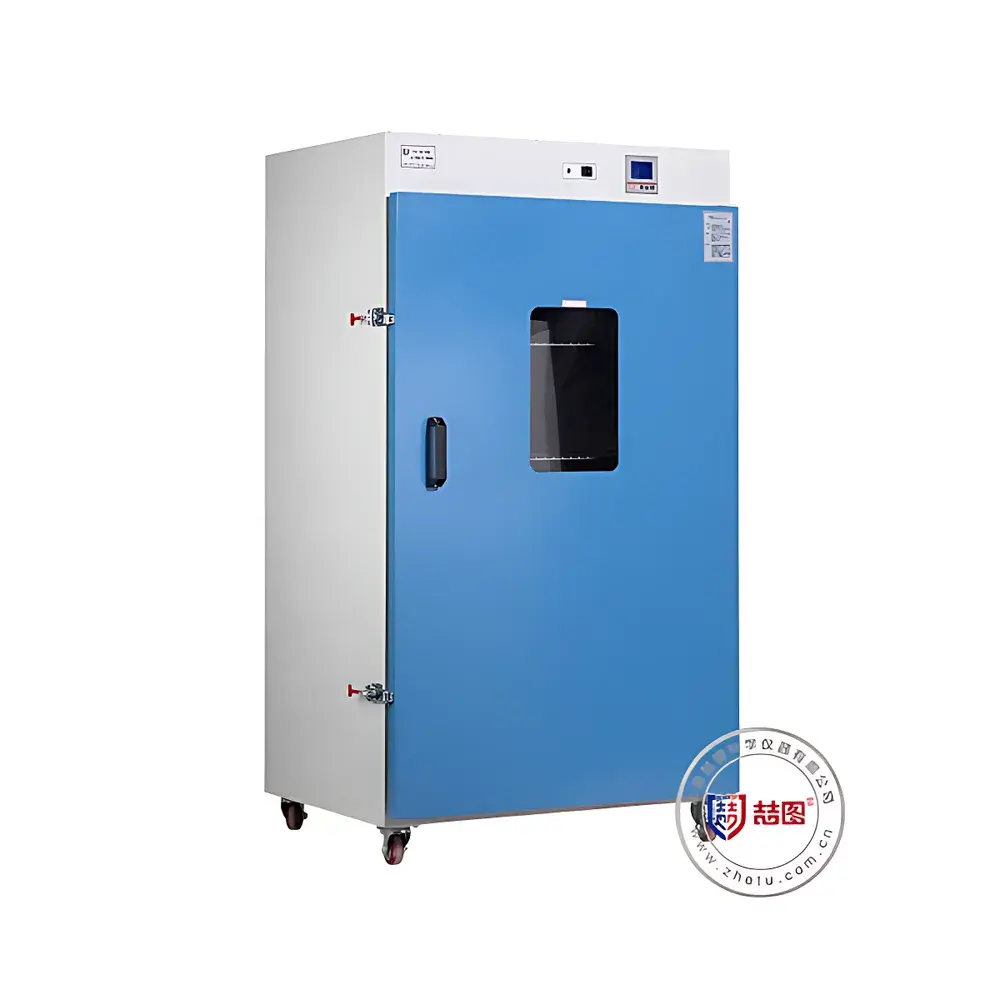
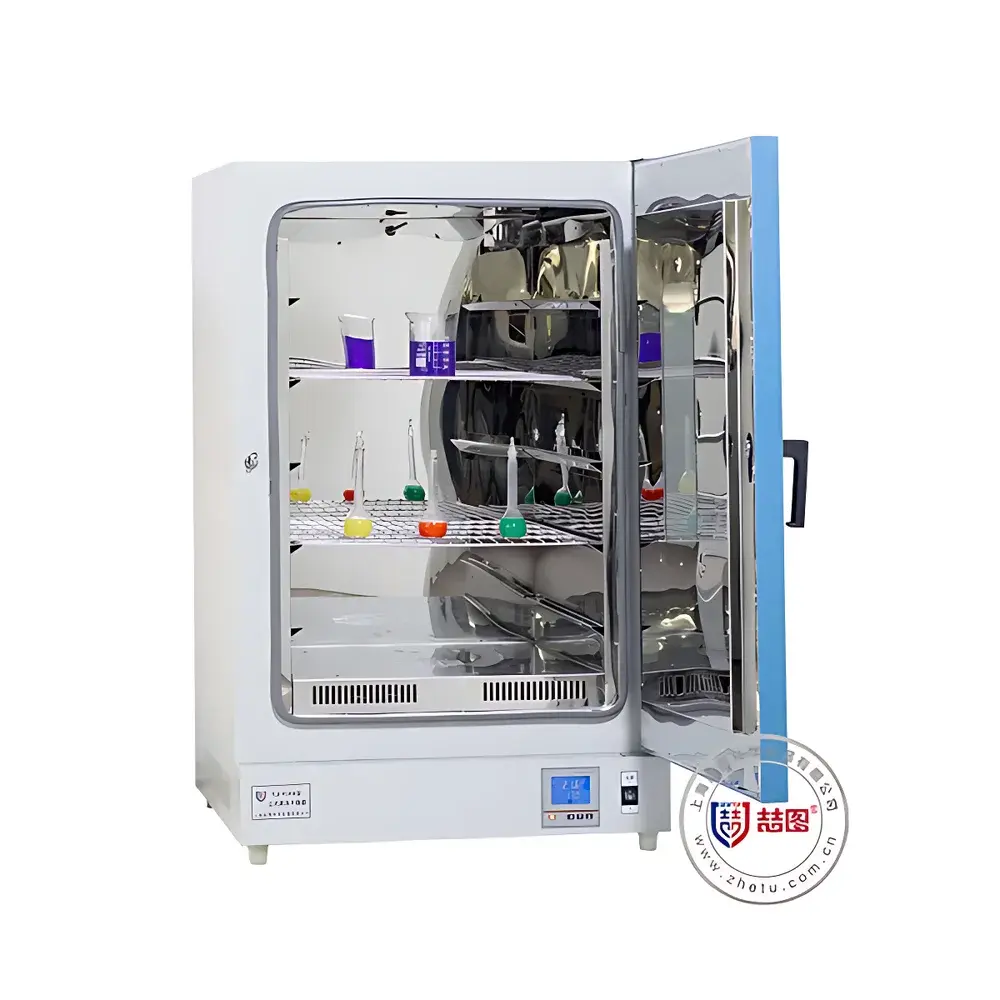
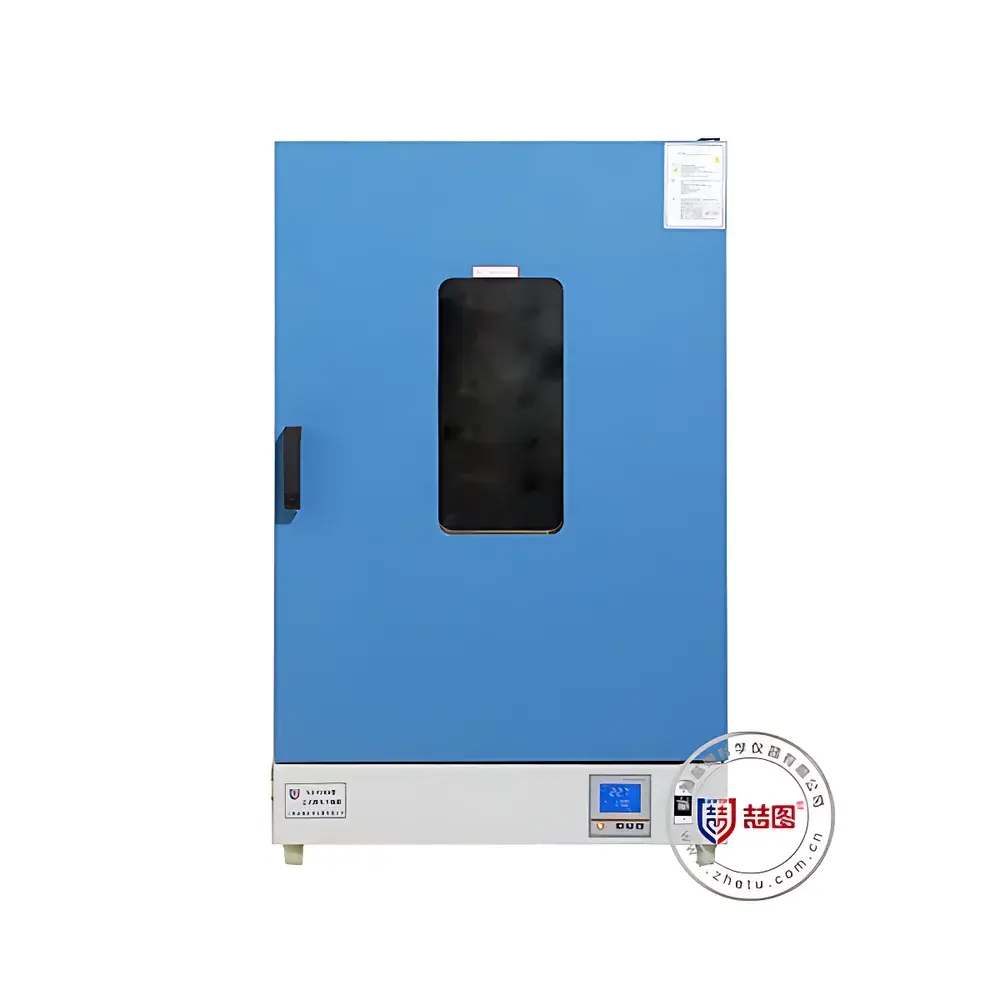
DRETOP TLG-9665A Vertical Forced-Air Constant-Temperature Drying Oven
| Brand | DRETOP |
|---|---|
| Origin | Shanghai, China |
| Manufacturer Type | Direct Manufacturer |
| Product Category | Domestic |
| Model | TLG-9665A |
| Instrument Type | General-Purpose Drying Oven |
| Temperature Range | RT+10°C to 300°C |
| Temperature Fluctuation | ±1°C |
| External Dimensions (W×D×H) | 980×750×1750 mm |
| Control Temperature Range | RT+10°C to 300°C |
| Internal Chamber Dimensions (W×D×H) | 800×640×1300 mm |
| Temperature Resolution | 0.1°C |
| Operating Ambient Temperature | 5–45°C |
| Interior Material | Stainless Steel (SUS304) |
| Heating Method | Forced-Air Circulation |
| Temperature Uniformity | ±2.5°C (empty chamber @ 100°C) |
| Vacuum Capability | Not Applicable (Standard Atmospheric Operation) |
Overview
The DRETOP TLG-9665A is a vertically oriented, forced-air convection drying oven engineered for precision thermal processing in academic, industrial, and quality control laboratories. It operates on the principle of uniform convective heat transfer—using a high-reliability centrifugal blower and an optimized internal air duct system to ensure laminar, directional airflow across the entire working chamber. This architecture minimizes thermal stratification and accelerates equilibration, enabling consistent drying, curing, sterilization, and stability testing under controlled ambient-pressure conditions. Designed for long-term operational integrity, the TLG-9665A complies with fundamental safety and performance expectations outlined in IEC 61010-1 (Safety Requirements for Electrical Equipment for Measurement, Control, and Laboratory Use) and supports adherence to GLP-compliant documentation workflows when integrated with optional data logging peripherals.
Key Features
- Microprocessor-based P.I.D. temperature controller with real-time digital display (0.1°C resolution), adjustable setpoint memory, and programmable ramp-soak profiles via optional color touchscreen interface;
- Dual-stage mechanical door lock with high-elasticity, high-temperature silicone gasket (rated to 350°C), ensuring sustained thermal sealing and energy efficiency;
- Double-layer tempered glass observation window with anti-fog coating, offering unobstructed visual monitoring without compromising insulation integrity;
- Modular stainless-steel interior (SUS304), including removable, height-adjustable perforated shelves and smooth-welded corners for ease of cleaning and residue-free operation;
- Self-diagnostic firmware that displays standardized fault codes (e.g., E01 for sensor open-circuit, E02 for overtemperature) directly on the LCD panel;
- Independent overtemperature cut-off circuit with audible/visual alarm—mechanically isolated from the main controller to meet fail-safe requirements per ISO 13849-1;
- Automatic condensate exhaust path integrated into rear wall ducting, mitigating moisture accumulation during prolonged low-temperature drying cycles;
- Power-loss recovery function: retains last-used parameters and resumes operation upon grid restoration, minimizing experimental interruption;
- Rear-mounted horizontal air outlet port (φ50 mm) compatible with standard laboratory fume extraction systems for volatile or odoriferous samples;
- Electrostatically coated carbon-steel outer casing with corrosion-resistant finish, rated for continuous use in ISO Class 8 cleanroom-adjacent environments.
Sample Compatibility & Compliance
The TLG-9665A accommodates a broad spectrum of non-volatile, non-explosive solid and semi-solid specimens—including polymer pellets, pharmaceutical excipients, ceramic green bodies, metallurgical powders, botanical extracts, and electronic components—within its 660 L working volume. Its stainless-steel chamber resists oxidation and chloride-induced pitting, making it suitable for ASTM D1654 (corrosion testing of coated metals) preconditioning steps and USP dry-heat sterilization validation protocols (when operated at ≥160°C for ≥2 hours). While not certified for Class I Division 1 hazardous locations, the unit meets EN 60529 IP20 ingress protection standards and is routinely deployed in ISO/IEC 17025-accredited labs for routine QC drying per ISO 5725 (accuracy and precision of measurement methods).
Software & Data Management
The base configuration includes an RS485 serial interface (Modbus RTU protocol) for integration into centralized lab management systems. Optional accessories expand traceability: a USB data logger enables direct export of time-stamped temperature logs to FAT32-formatted USB drives; an embedded thermal printer (optional) produces hard-copy records compliant with FDA 21 CFR Part 11 Annex 11 audit trail requirements; and a programmable logic controller (PLC)-compatible analog output (4–20 mA) supports closed-loop environmental chamber cascading. All firmware revisions maintain backward compatibility with legacy DRETOP calibration certificates and support NIST-traceable sensor recalibration using external PT100 reference probes.
Applications
- Moisture content determination per AOAC 950.46 and ISO 6587 (paper/board), ASTM D2231 (rubber), and USP (pharmaceuticals);
- Pre-conditioning of test specimens prior to tensile, impact, or dielectric testing (e.g., ASTM D638, D256, D149);
- Accelerated aging studies under elevated temperature (e.g., IPC-TM-650 2.6.22 for PCB substrates);
- Drying of filtration membranes, chromatography media, and catalyst supports without thermal degradation;
- Bake-out cycles for vacuum system components and optical assemblies prior to high-vacuum processing;
- Stabilization of hygroscopic reference standards (e.g., potassium hydrogen phthalate, sodium chloride) in metrology labs.
FAQ
Is the TLG-9665A suitable for vacuum drying applications?
No—this model is configured exclusively for atmospheric-pressure forced-air convection. For vacuum drying, consider DRETOP’s ZK series vacuum ovens with dual-chamber design and oil-free diaphragm pumps.
What is the maximum permissible load weight per shelf?
Each adjustable shelf supports up to 15 kg uniformly distributed. Total chamber loading must not obstruct airflow paths or exceed 80% of internal volume occupancy.
Does the unit include factory calibration documentation?
Yes—each unit ships with a manufacturer’s calibration certificate covering chamber uniformity (per ISO 17025 clause 6.4.10) and sensor accuracy at three points (50°C, 100°C, 200°C), traceable to CNAS-accredited standards.
Can the temperature controller be validated for GMP compliance?
The embedded P.I.D. controller supports IQ/OQ protocols; optional 21 CFR Part 11-compliant software modules provide electronic signature, audit trail, and user role-based access control.
What maintenance intervals are recommended?
Blower motor lubrication every 12 months; silicone gasket inspection every 6 months; annual verification of overtemperature cutoff functionality using independent thermocouple validation.



