
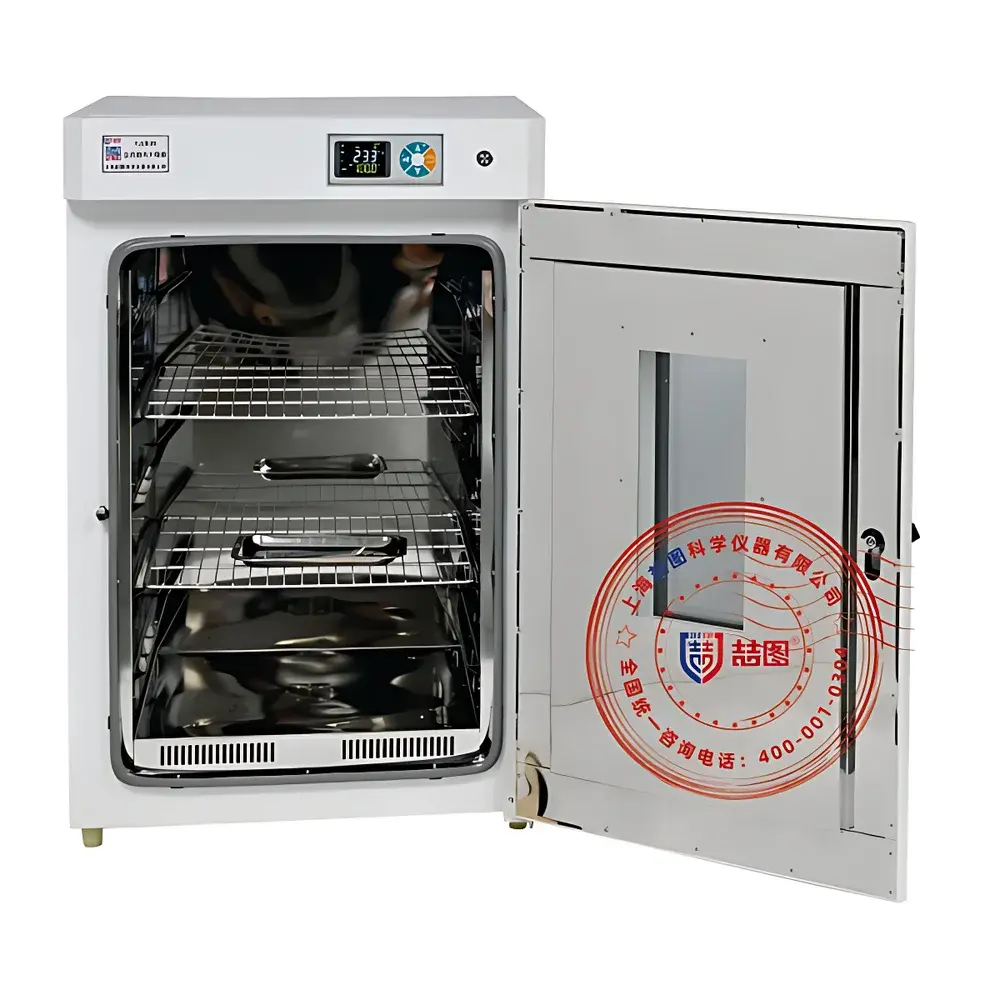
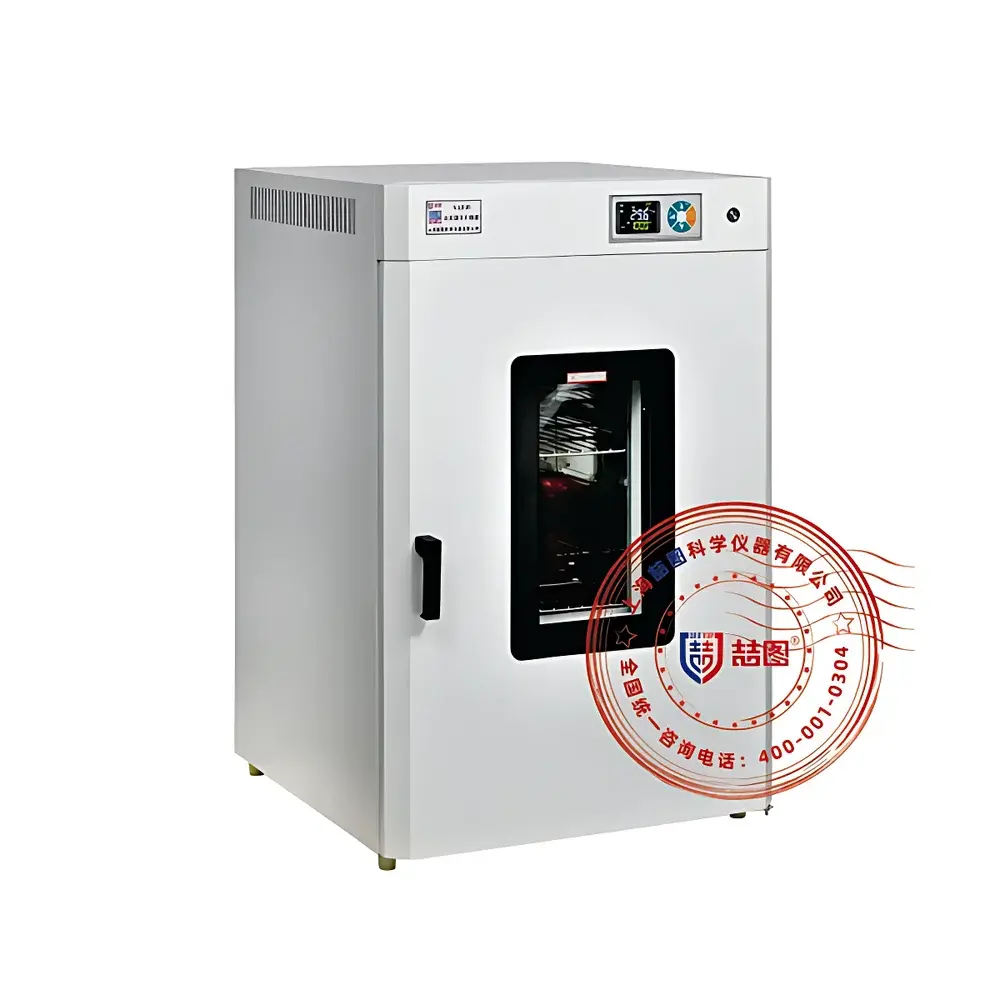
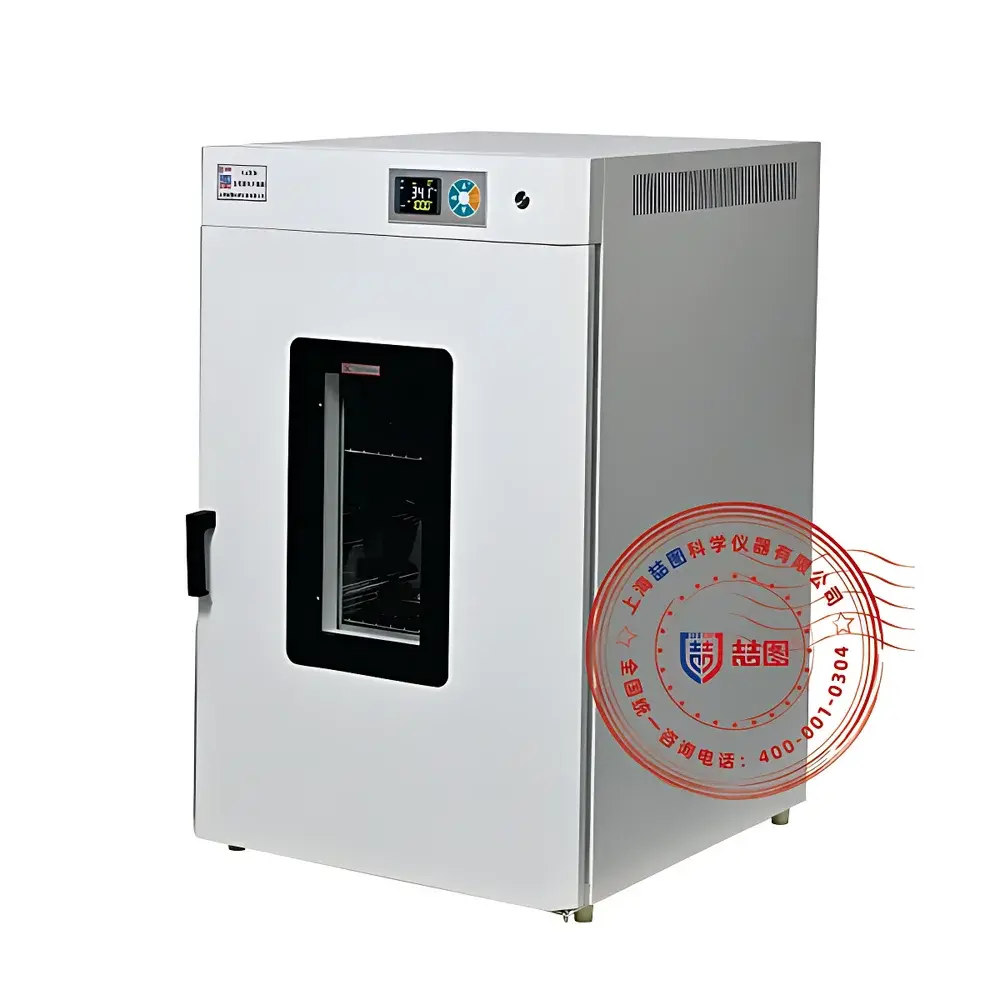
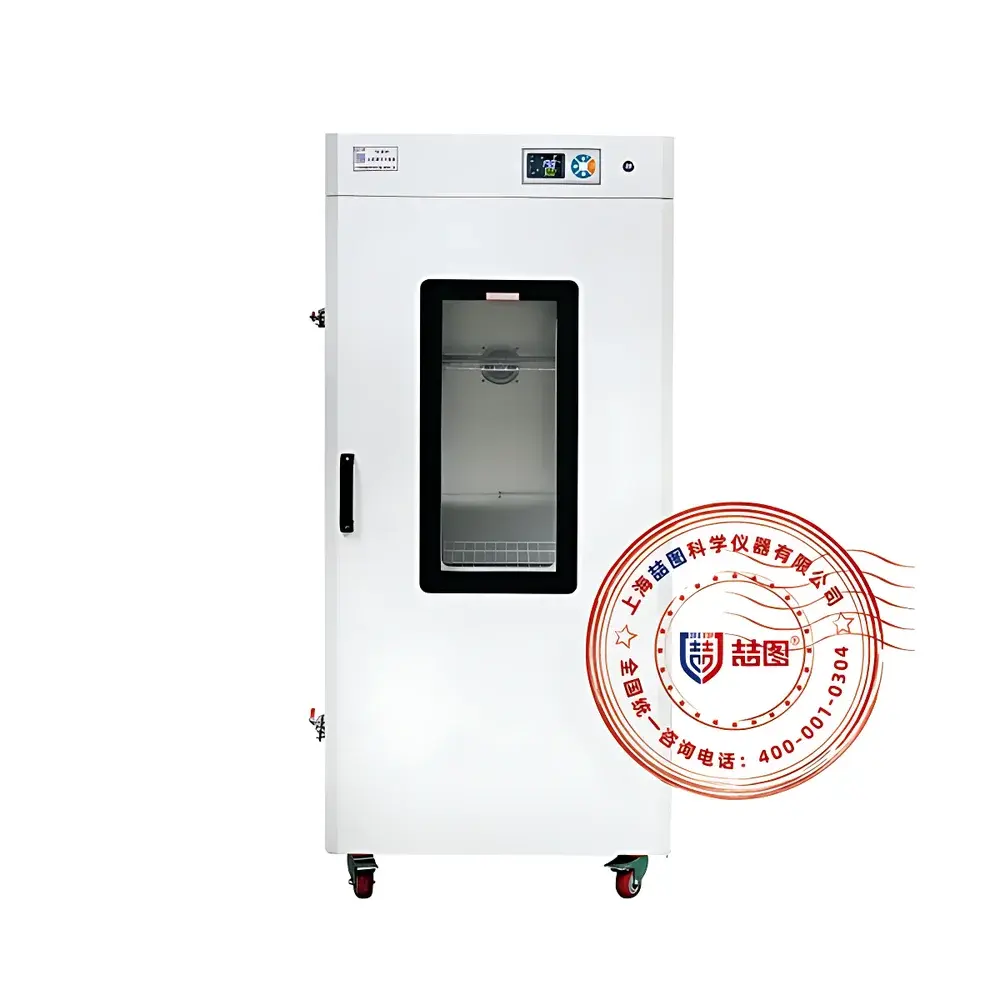
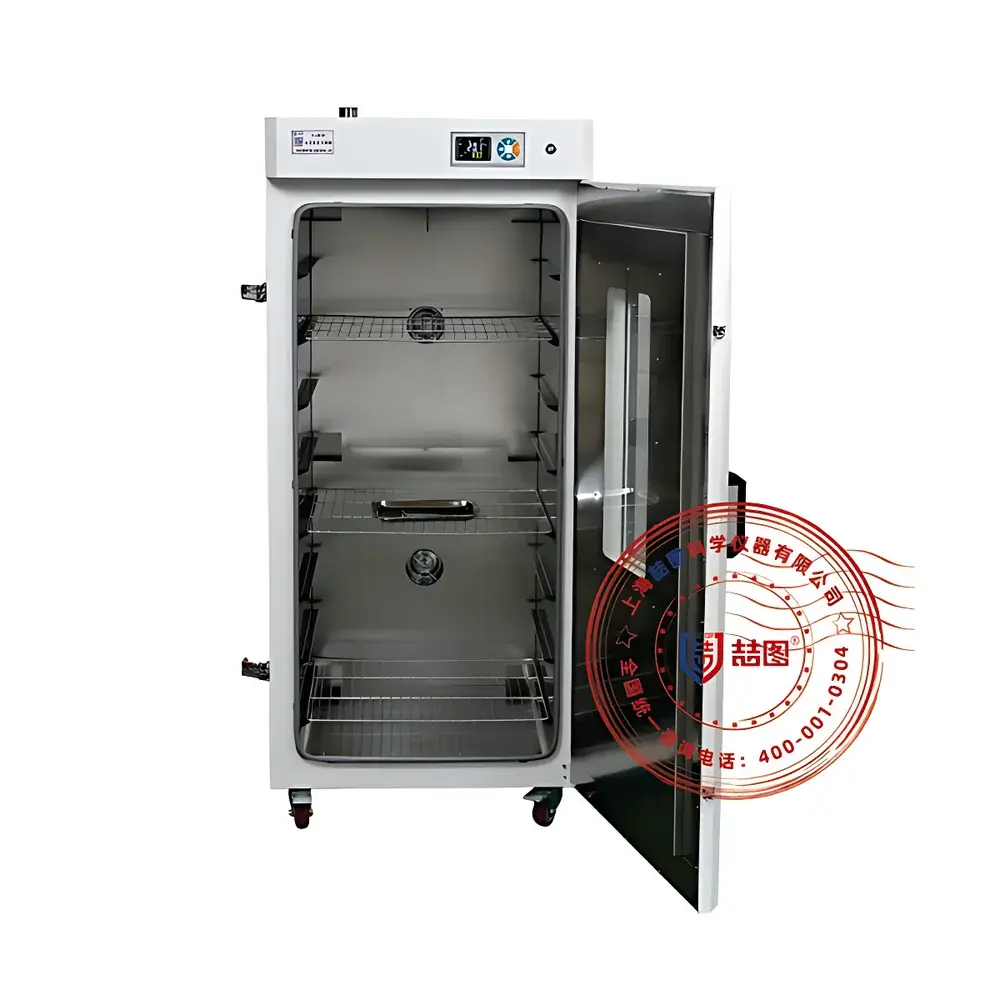
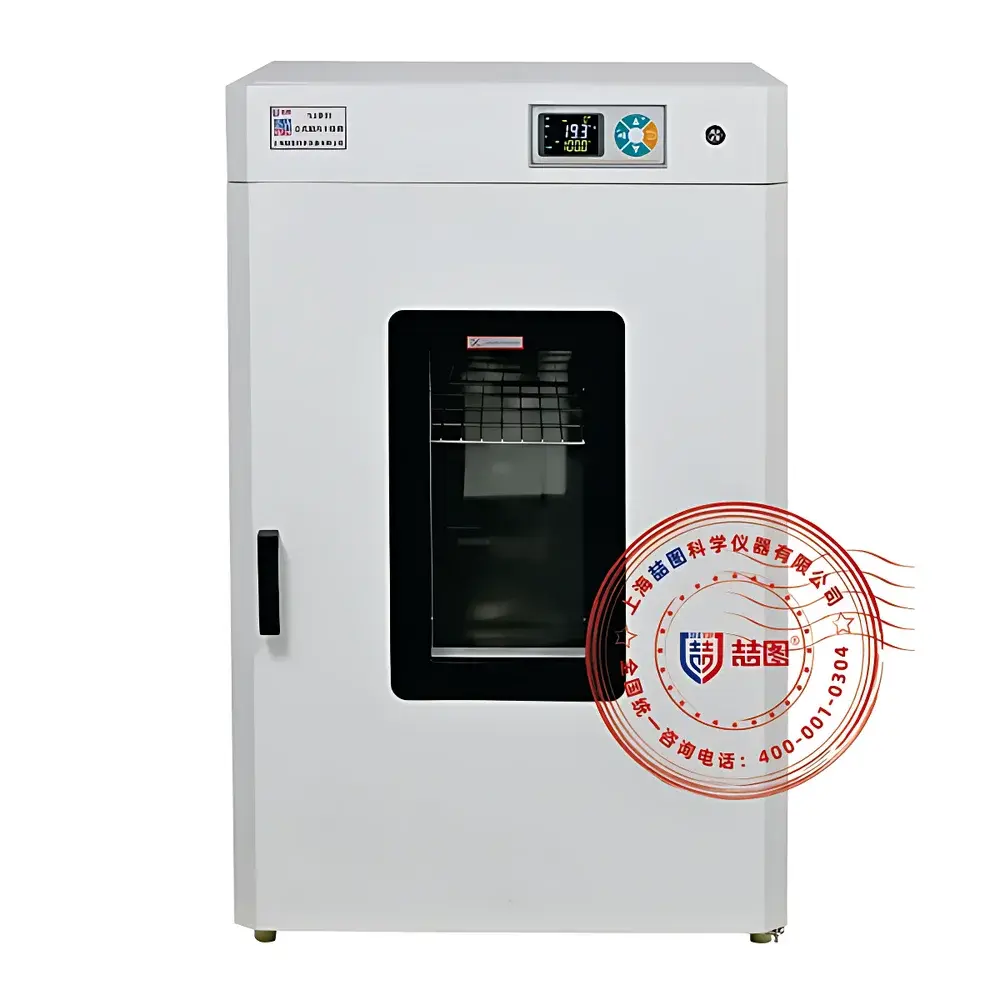
DRETOP TLG-9960A Vertical Forced-Air Drying Oven
| Brand | DRETOP |
|---|---|
| Origin | Shanghai, China |
| Manufacturer Type | Direct Manufacturer |
| Product Category | Domestic |
| Model | TLG-9960A |
| Instrument Type | General-Purpose Drying Oven |
| Temperature Range | RT+10°C to 250°C |
| Temperature Uniformity | ±2.5°C (empty chamber @ 100°C) |
| Temperature Fluctuation | ±0.5°C |
| Temperature Resolution | 0.1°C |
| Chamber Dimensions (W×D×H) | 1000 × 600 × 1600 mm |
| External Dimensions (W×D×H) | 1185 × 880 × 1950 mm |
| Operating Ambient Temperature | 5–45°C |
| Interior Material | Stainless Steel (SUS304) |
| Heating Method | Forced Convection with Horizontal Rear Air Outlet |
| Power Supply | AC 380 V, 50 Hz |
| Input Power | 6500 W |
| Standard Shelving | 4 Adjustable, Removable Stainless Steel Trays |
| Compliance | Designed for GLP-compliant laboratories |
Overview
The DRETOP TLG-9960A Vertical Forced-Air Drying Oven is an industrial-grade, bench- or floor-standing convection oven engineered for precise thermal processing in research, quality control, and production environments. It operates on the principle of forced-air convection—using a high-temperature-stable axial fan and a thermally optimized air duct system to ensure uniform heat distribution across the entire working chamber. Unlike gravity convection ovens, the TLG-9960A actively circulates heated air horizontally from the rear wall, minimizing thermal stratification and accelerating temperature equilibration. Its 960 L internal volume supports large-scale sample batches, making it suitable for drying, baking, sterilization pre-treatment, moisture loss analysis, and aging tests under controlled isothermal conditions. The unit complies with fundamental safety and performance expectations outlined in IEC 61010-1 (Safety Requirements for Electrical Equipment for Measurement, Control, and Laboratory Use) and is designed to support traceable, auditable operation in regulated settings.
Key Features
- Microprocessor-based P.I.D. temperature controller with dual-stage over-temperature protection, real-time deviation monitoring, and automatic fault-code display on a high-contrast LCD interface.
- Four independently adjustable, removable stainless steel (SUS304) shelves with tool-free vertical repositioning—enabling flexible load configuration and rapid cleaning between runs.
- Double-layer tempered glass observation window with reinforced aluminum frame and high-temperature silicone gasket seal (rated to 300°C), ensuring visual access without compromising thermal integrity or operator safety.
- Horizontal rear-mounted exhaust duct with standardized 60 mm diameter port—compatible with external fume hoods or active ventilation systems for volatile or odoriferous samples.
- Robust cabinet construction: cold-rolled steel exterior with electrostatic epoxy-polyester powder coating; interior chamber and shelving fabricated entirely from food-grade 304 stainless steel for corrosion resistance and long-term dimensional stability.
- Power-fail recovery function retains setpoint, timer status, and operational history upon unexpected interruption—eliminating manual reconfiguration after grid instability.
Sample Compatibility & Compliance
The TLG-9960A accommodates diverse sample formats—including Petri dishes, crucibles, beakers, metal components, polymer sheets, electronic assemblies, and bulk granular materials—without requiring custom fixtures. Its uniform airflow design minimizes edge effects and ensures reproducible drying kinetics across heterogeneous loads. The oven meets baseline requirements for routine calibration traceability per ISO/IEC 17025:2017 Clause 6.4.10 (Equipment Verification), and its digital controller supports audit-ready logging when paired with optional RS485 communication or USB data export modules. While not inherently 21 CFR Part 11 compliant, the system architecture allows integration with validated third-party data acquisition software for GxP environments. All electrical components conform to CE marking directives (EMC Directive 2014/30/EU and Low Voltage Directive 2014/35/EU).
Software & Data Management
The standard control interface includes a programmable timer (1–9999 minutes), real-time temperature logging (displayed as numeric values and trend bar graphs), and error diagnostics with alphanumeric codes (e.g., “E03” = sensor open-circuit). Optional upgrades include:
- USB data export module: saves timestamped temperature profiles (.CSV) directly to FAT32-formatted USB drives for offline analysis in Excel or MATLAB.
- RS485 Modbus RTU interface: enables bidirectional communication with SCADA systems or centralized lab management platforms for remote monitoring and batch record generation.
- Multi-segment programmable controller (optional): supports up to 30 ramp-hold cycles with independent rate and dwell parameters—ideal for thermal cycling protocols in material stress testing.
- Thermal printer interface (via parallel port): produces hard-copy time-temperature charts meeting internal QA documentation standards.
All firmware updates are performed via secure local upload; no cloud dependency or internet connectivity is required.
Applications
This drying oven serves critical functions across multiple sectors:
- Materials Science: Pre-drying of ceramic green bodies, solvent removal from composite laminates, and thermal conditioning of elastomers prior to tensile testing (per ASTM D638).
- Pharmaceutical QC: Moisture content determination of excipients and finished dosage forms (aligned with USP <921>), residual solvent evaporation in API synthesis intermediates.
- Electronics Manufacturing: Bake-out of PCBs and encapsulated semiconductors to eliminate outgassing contaminants before hermetic sealing.
- Automotive & Aerospace: Accelerated aging of adhesives, coatings, and gasket materials per SAE J2527 and ASTM G154.
- Food & Agriculture: Constant-temperature dehydration of botanical samples for proximate analysis; validation of shelf-life prediction models under accelerated storage conditions.
FAQ
What is the maximum operating temperature and certified accuracy at that point?
The TLG-9960A is rated for continuous operation up to 250°C. At this setpoint, temperature fluctuation remains within ±0.5°C (1σ), and uniformity across the chamber is validated at ±2.5°C (empty, measured per ASTM E145 Annex A3 using nine-point probe mapping).
Can the oven be used for sterilization purposes?
No. This model is not validated for microbial lethality or bioburden reduction. It lacks the temperature uniformity certification, steam delivery, and cycle validation required for sterilization per ISO 17665 or EN 285. It may be used for depyrogenation of glassware only if operated above 250°C for ≥30 min—a condition beyond its rated specification.
Is the stainless steel interior electropolished or passivated?
The SUS304 chamber surfaces undergo standard acid pickling and passivation per ASTM A967, but electropolishing is not included in the base configuration. Passivation enhances corrosion resistance during repeated exposure to saline or acidic vapors.
Does the unit include a calibration certificate?
A factory-assembled verification report (including chamber uniformity test data at 100°C and 200°C) is supplied with each unit. NIST-traceable calibration certificates require third-party service and are available upon request at additional cost.
What maintenance intervals are recommended for the fan and heating elements?
The high-temp axial fan requires inspection every 12 months for dust accumulation and bearing integrity; heating elements should be visually inspected quarterly for discoloration or warping. No scheduled replacement is mandated unless performance degradation (e.g., >1°C deviation from setpoint after 30 min stabilization) is observed.



