

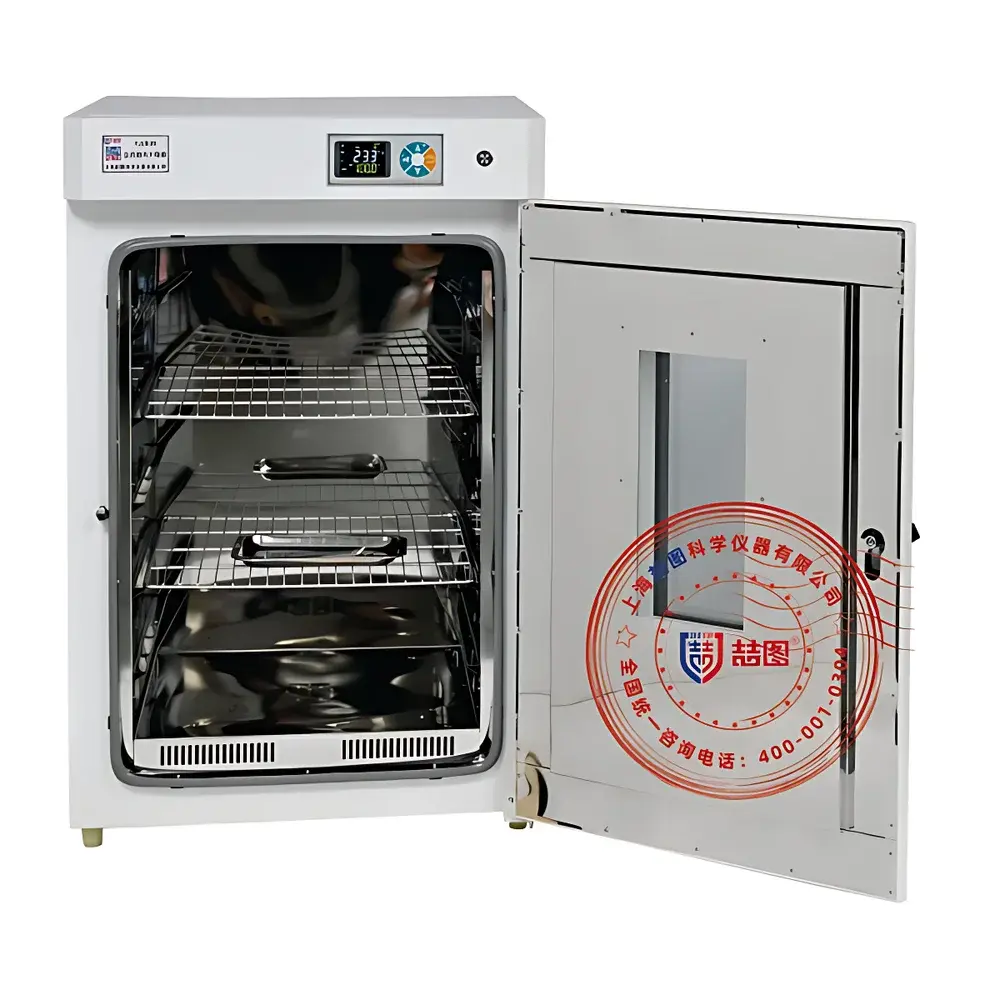
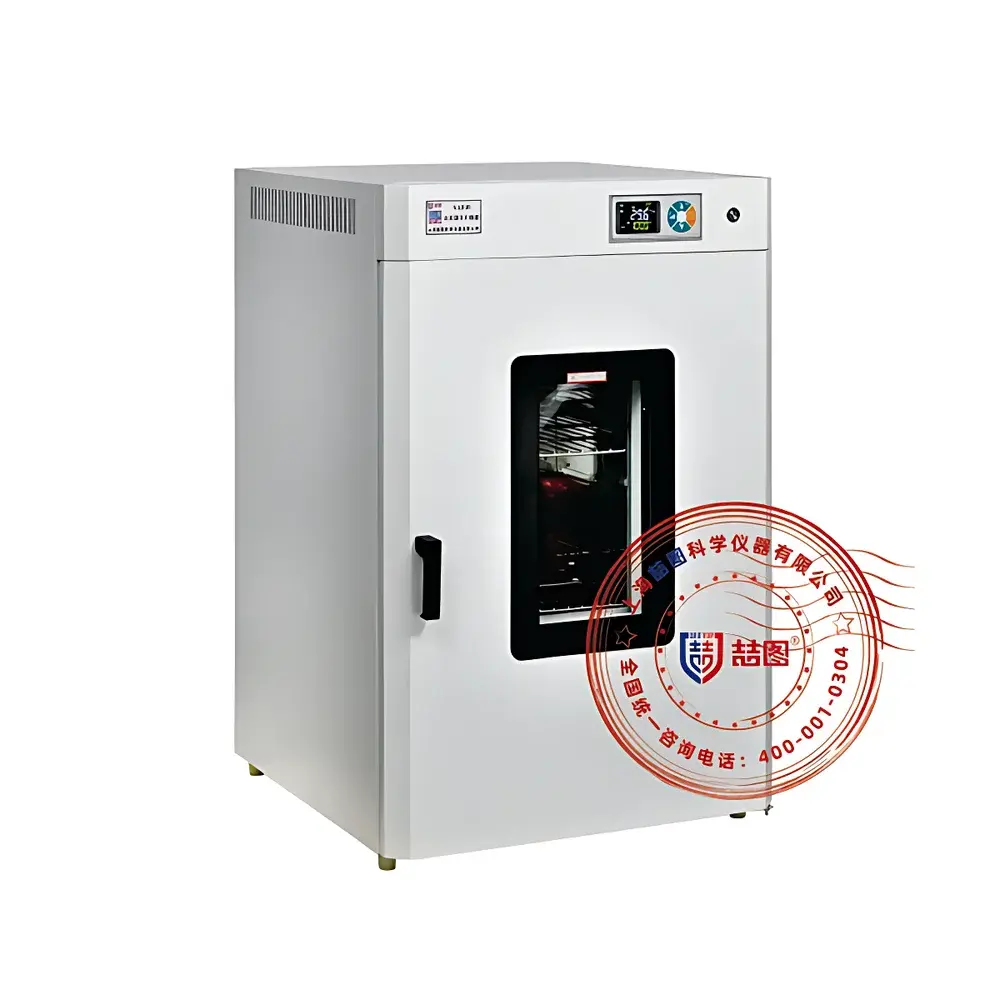
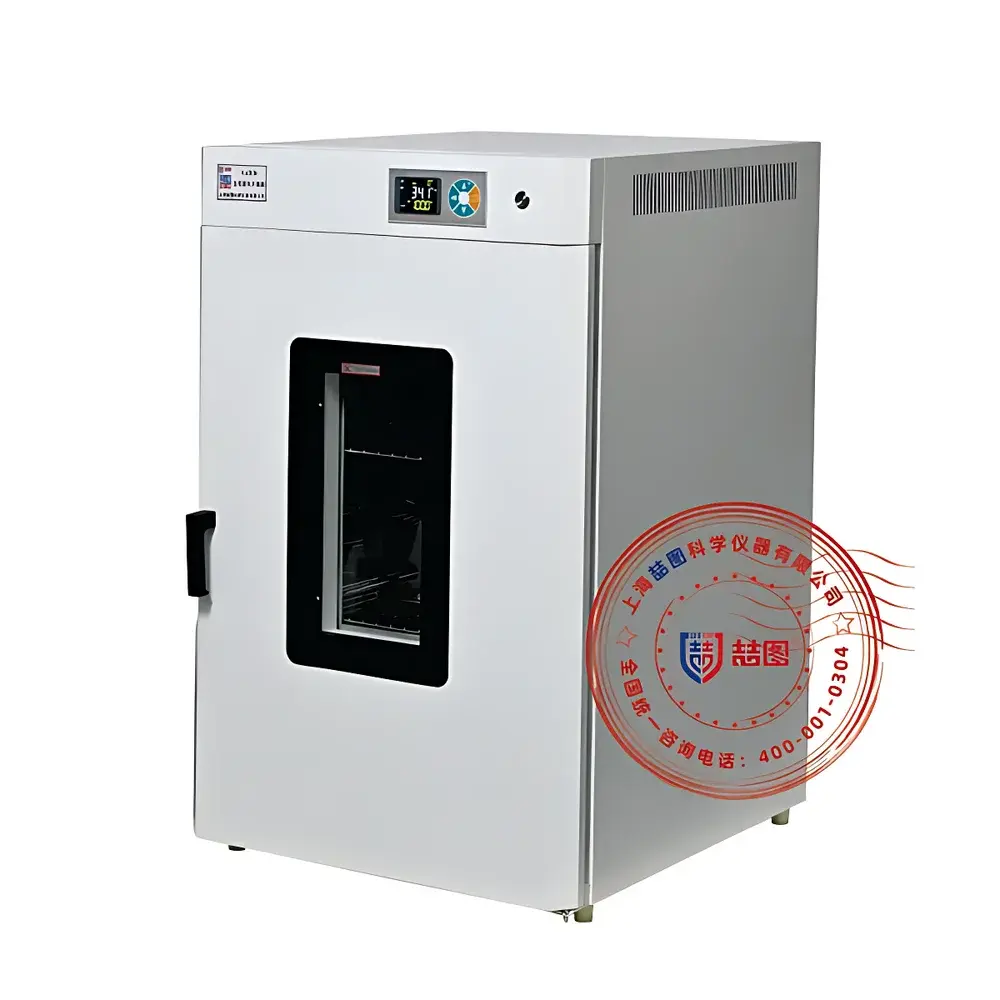
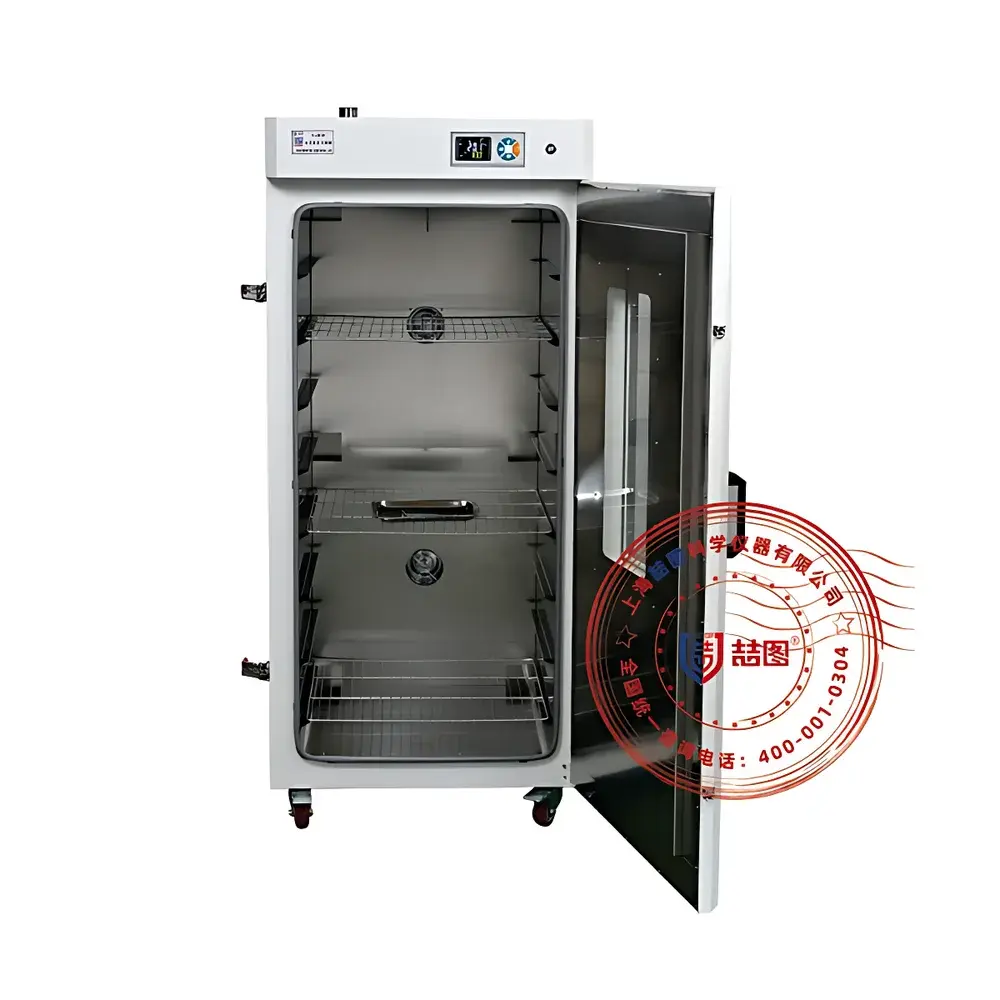
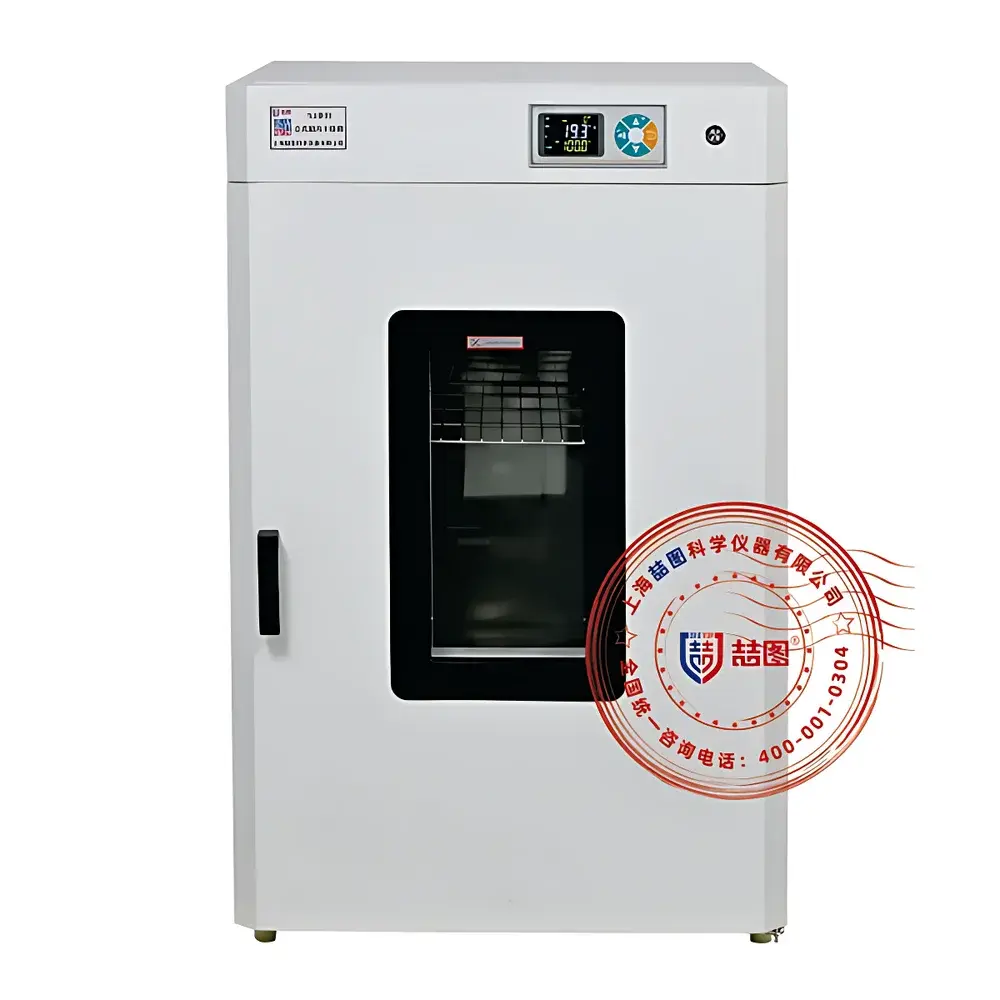
DRETOP TLG-9965A Vertical Forced-Air Drying Oven
| Brand | DRETOP |
|---|---|
| Origin | Shanghai, China |
| Manufacturer Type | Direct Manufacturer |
| Product Category | Domestic |
| Model | TLG-9965A |
| Instrument Type | Standard Bench/Free-Standing Oven |
| Temperature Range | RT+10°C to 300°C |
| Temperature Uniformity | ±2.5°C (empty chamber @ 100°C) |
| Temperature Fluctuation | ±0.5°C |
| Temperature Resolution | 0.1°C |
| External Dimensions | 1185 × 880 × 1950 mm |
| Internal Chamber Dimensions | 1000 × 600 × 1600 mm |
| Operating Ambient Temperature | 5–45°C |
| Interior Material | Stainless Steel (SUS304) |
| Heating Method | Forced-Air Circulation with High-Temperature Fan and Optimized Airflow Duct Design |
Overview
The DRETOP TLG-9965A Vertical Forced-Air Drying Oven is an engineered solution for precise, repeatable thermal processing in research laboratories, quality control environments, and industrial R&D settings. Designed around the principle of convection-driven heat transfer, this oven utilizes a high-efficiency axial fan capable of continuous operation at elevated temperatures, coupled with a thermally optimized airflow channel system that ensures uniform heat distribution throughout the working chamber. Unlike natural convection ovens, the TLG-9965A employs forced-air circulation to minimize thermal gradients—critical for applications requiring strict adherence to ASTM E145, ISO 17025, or internal SOPs governing drying, curing, baking, and stabilization protocols. Its vertical free-standing architecture accommodates large-volume samples while maintaining footprint efficiency, making it suitable for integration into GLP-compliant labs where spatial constraints and operational traceability are key considerations.
Key Features
- Microprocessor-based P.I.D. temperature controller with LCD display, offering real-time three-color parameter visualization (setpoint, actual temperature, elapsed time) and intuitive menu navigation.
- Self-diagnostic system with fault-code readout on the display panel, enabling rapid identification of sensor drift, heater failure, or fan interruption without external instrumentation.
- Dual-stage door locking mechanism with zinc-alloy handle and high-temperature silicone rubber gasket (rated to 350°C), ensuring consistent chamber sealing and minimizing thermal leakage during extended dwell cycles.
- Double-layer tempered glass observation window with integrated anti-fog coating, allowing non-intrusive visual monitoring while preserving thermal integrity and operator safety.
- Adjustable, slide-out stainless steel shelving system (SUS304) with tool-free height repositioning; all trays are removable for autoclaving or chemical decontamination.
- Back-mounted exhaust port compatible with standard 50 mm ducting, supporting controlled venting of volatile compounds or moisture-laden air—particularly relevant for polymer curing, solvent evaporation, or pharmaceutical stability testing per ICH Q1 guidelines.
Sample Compatibility & Compliance
The TLG-9965A accommodates a broad range of sample types—including electronic components, metal alloys, polymer specimens, ceramic powders, food matrices, and coated substrates—without risk of cross-contamination or thermal degradation. Its stainless-steel interior and seamless chamber construction meet basic hygienic design requirements outlined in FDA 21 CFR Part 11 for data-integrity-critical operations when paired with optional USB logging or RS485 communication modules. The unit complies with CE marking directives (2014/30/EU EMC and 2014/35/EU LVD), and its electrical insulation and grounding architecture conform to IEC 61010-1 for laboratory equipment safety. While not certified for Class I Division 1 hazardous locations, it is routinely deployed in non-explosive ambient conditions meeting ISO 14644-1 Class 8 cleanroom support roles.
Software & Data Management
The base configuration includes a built-in timer (1–9999 minutes) and over-temperature cut-off protection with audible/visual alarm. Optional upgrades expand digital functionality: a programmable multi-segment controller supports up to 30 ramp-hold cycles for complex thermal profiles; a USB data export interface enables direct CSV file transfer to external PCs for post-test analysis in Excel or MATLAB; and an RS485 serial port permits integration into centralized lab management systems via Modbus RTU protocol. When equipped with the optional color touchscreen module, the oven supports audit-trail-enabled operation logs—including user ID, timestamp, setpoint changes, and alarm events—aligned with ALCOA+ principles for data reliability under GMP/GLP frameworks.
Applications
This drying oven serves validated thermal processes across multiple sectors: moisture content determination per AOAC 950.46 and USP ; pre-conditioning of test coupons prior to tensile or adhesion testing (ASTM D638, D3359); aging studies for elastomers and composites (ASTM D573, D865); residual solvent removal from pharmaceutical intermediates; drying of filter papers and chromatography media; and thermal stabilization of calibration standards. Its stable ±0.5°C fluctuation and ±2.5°C uniformity at 100°C make it appropriate for routine QC workflows where reproducibility—not ultra-high precision—is the primary performance criterion.
FAQ
What is the maximum operating temperature and corresponding thermal class rating?
The TLG-9965A is rated for continuous operation up to 300°C. Its heating elements, insulation, and fan motor are classified for Class H (180°C) insulation, with derated performance margins ensuring long-term reliability at peak load.
Can the oven be validated for IQ/OQ/PQ protocols?
Yes—the unit supports third-party validation through accessible PT100 sensor ports (optional), mechanical timer verification, and documented temperature mapping using calibrated reference probes per ISO/IEC 17025-accredited methods.
Is the stainless-steel interior electropolished or passivated?
The SUS304 chamber undergoes standard acid pickling and passivation per ASTM A967, providing corrosion resistance suitable for repeated exposure to mildly acidic or saline residues.
Does the forced-air system include variable-speed fan control?
No—the fan operates at fixed speed to maintain consistent airflow velocity across the specified temperature range; however, airflow direction and duct geometry are optimized to prevent localized turbulence or cold spots.
What documentation is provided for regulatory submissions?
DRETOP supplies a Factory Acceptance Test (FAT) report, electrical safety certification summary, material compliance statement (RoHS/REACH), and English-language operation manual with maintenance schedules—all essential for lab accreditation audits.



