
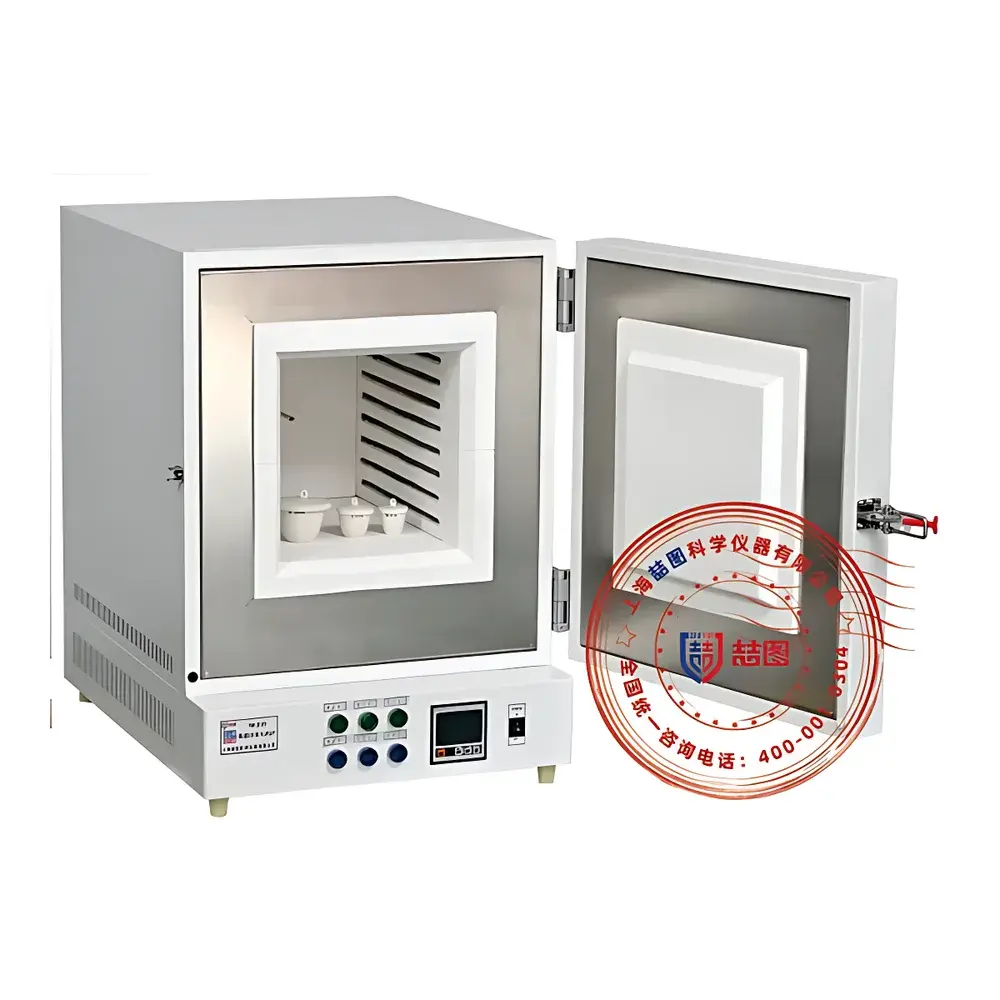
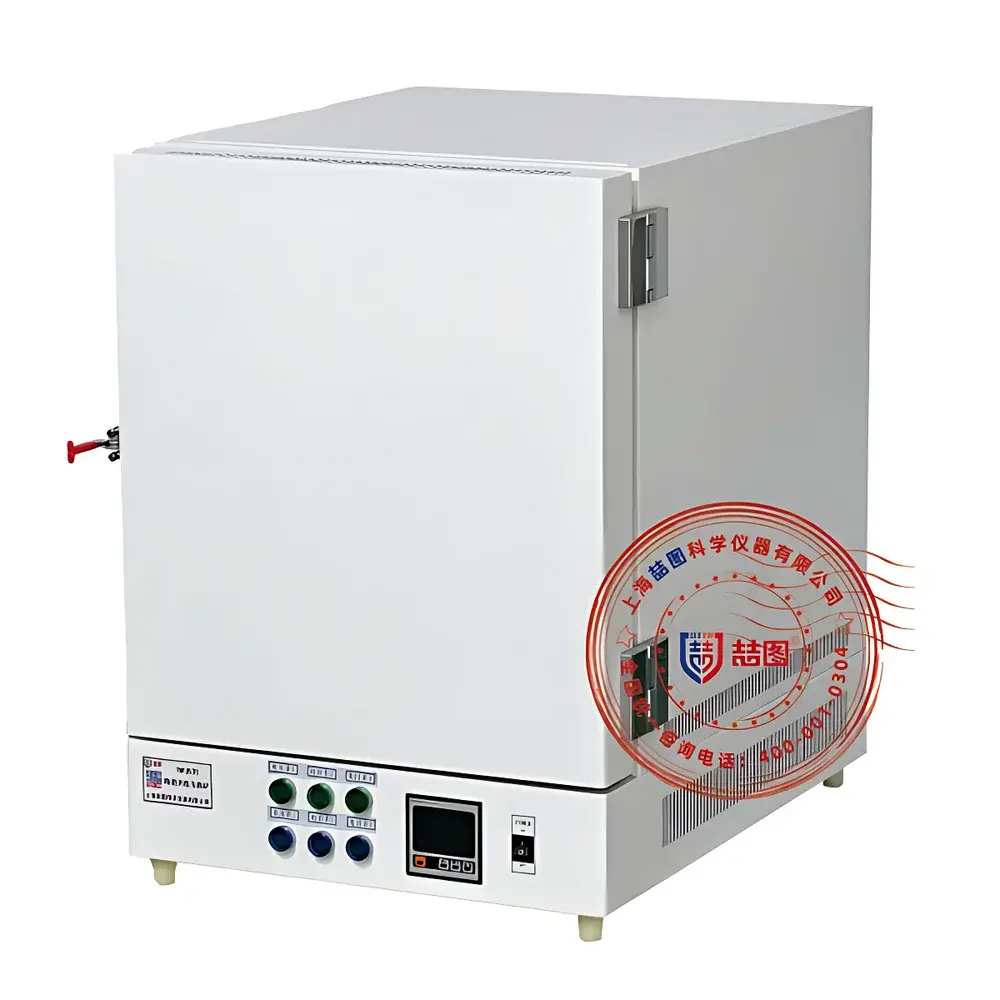
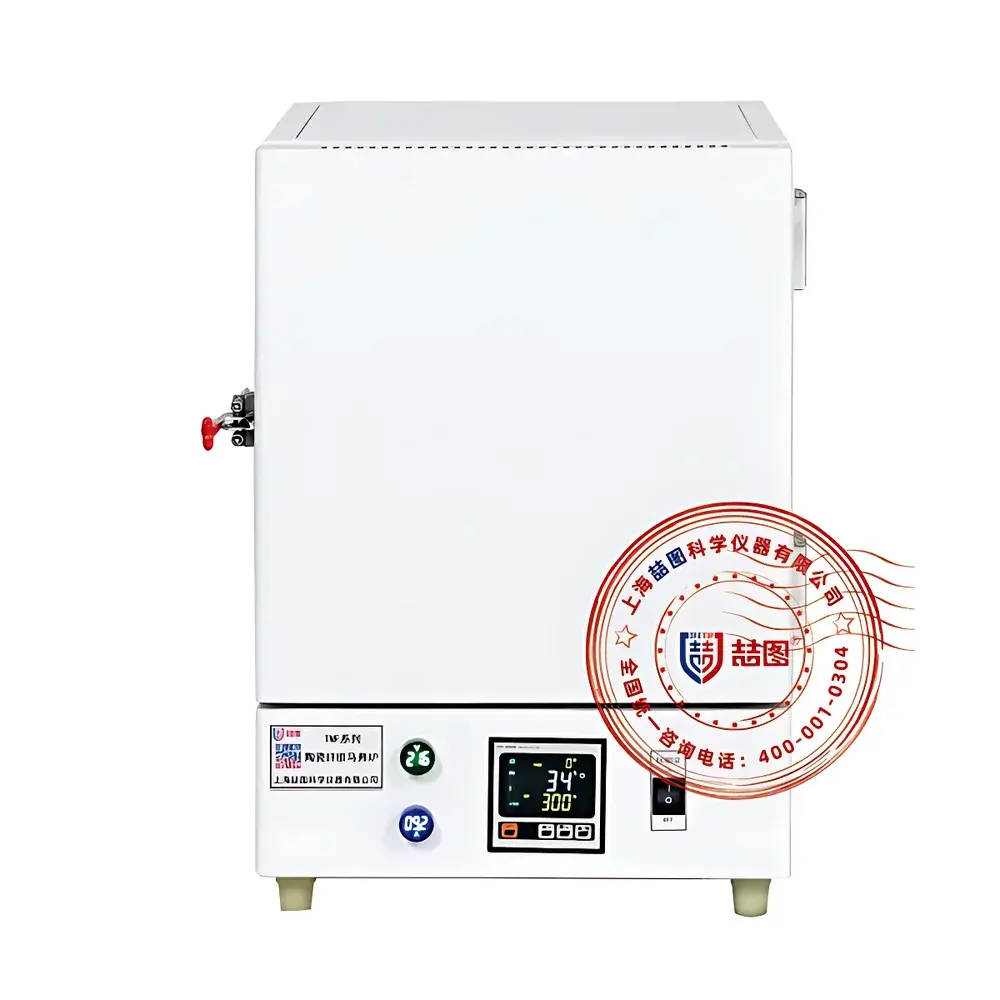
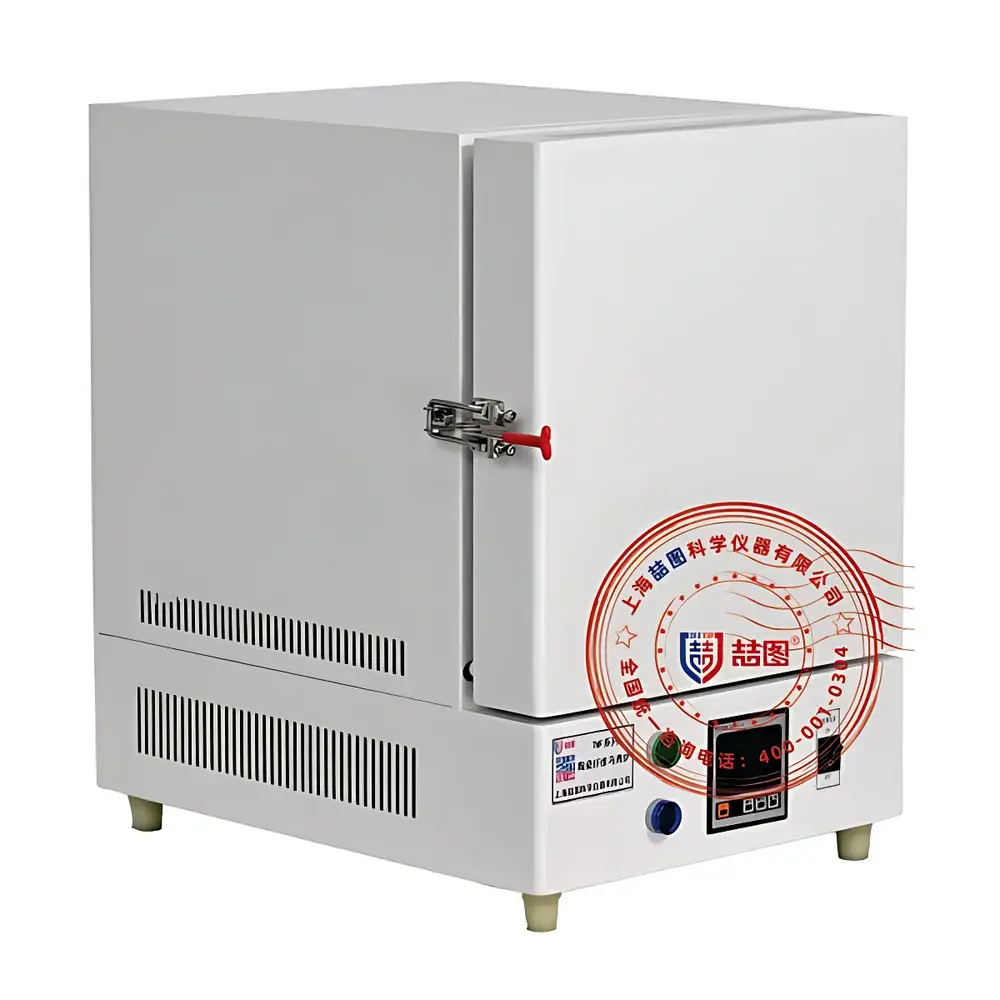
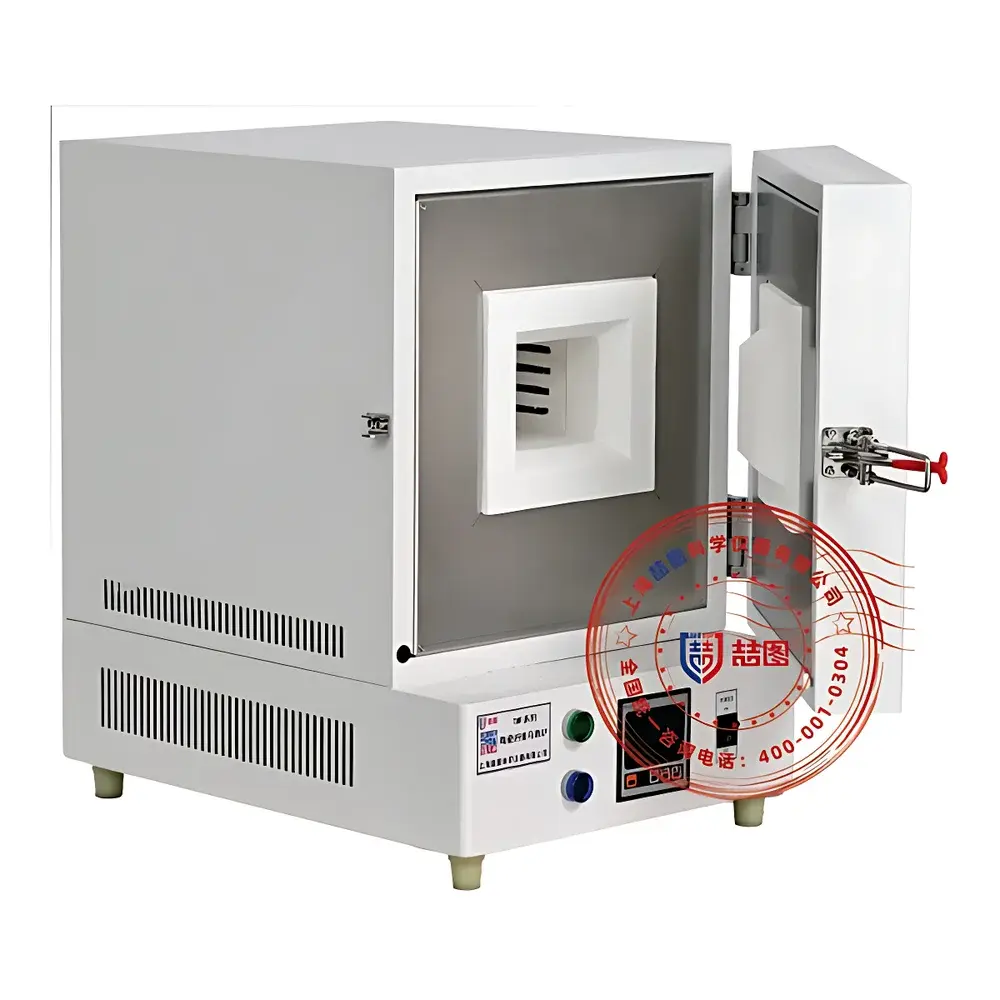
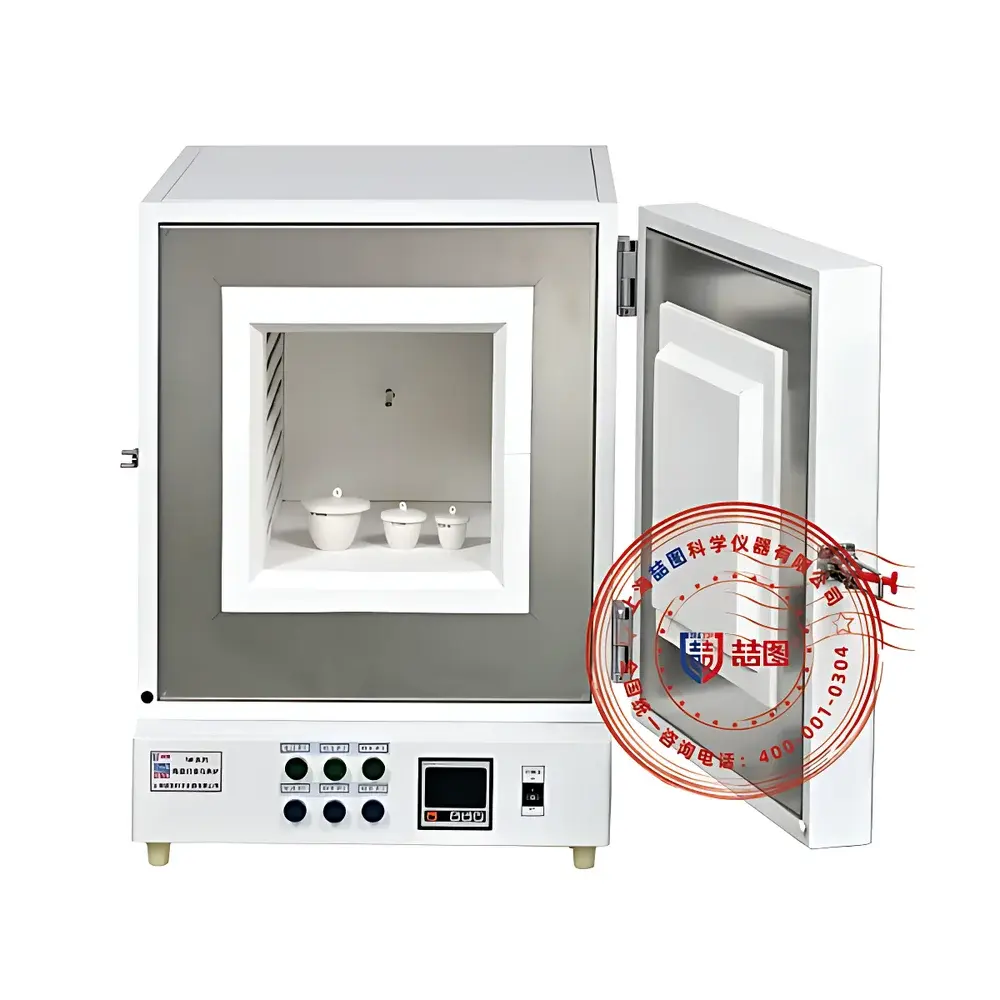
DRETOP TMF-16-10TP Ceramic Fiber Muffle Furnace
| Brand | DRETOP |
|---|---|
| Origin | Shanghai, China |
| Manufacturer Type | Direct Manufacturer |
| Product Category | Domestic |
| Model | TMF-16-10TP |
| Instrument Type | Box-Type Muffle Furnace |
| Maximum Temperature | 1000 °C |
| Temperature Control Accuracy | ±1 °C |
| Rated Power | 8 kW |
| Heating Rate to Max Temp | ≤30 min |
| Heating Element | Nickel-Chromium Resistance Wire |
| Internal Chamber Dimensions | 250 × 400 × 160 mm |
| Control System | Microcomputer-Based PID Controller |
| Nominal Volume | 16 L |
Overview
The DRETOP TMF-16-10TP Ceramic Fiber Muffle Furnace is a high-performance laboratory box furnace engineered for rapid, uniform, and repeatable thermal processing up to 1000 °C. Unlike traditional refractory brick furnaces, it employs vacuum-formed ceramic fiber insulation—offering exceptional thermal efficiency, reduced thermal mass, and accelerated heating/cooling cycles. Its design follows established principles of convective and radiative heat transfer within an insulated cavity, with triple-wall heating configuration ensuring symmetrical thermal distribution across the chamber. The furnace is widely deployed in academic research labs, materials science departments, metallurgical QA/QC facilities, and R&D centers requiring precise thermal treatment under controlled ambient conditions—particularly where rapid ramp rates, tight temperature stability, and low energy consumption are critical operational parameters.
Key Features
- Triple-surface heating architecture using coiled nickel-chromium resistance wire embedded in ceramic fiber walls—enabling uniform radial and axial heat flux and minimizing thermal gradients.
- Microcomputer-based PID temperature controller with large backlit LCD interface; supports 30-segment programmable ramp-soak profiles (TP-series), including automatic shutdown upon completion.
- Dual-stage overtemperature protection: primary electronic cut-off at user-defined limit + secondary independent mechanical safety limiter compliant with IEC 61000-4-5 surge immunity standards.
- Integrated door interlock system: power to heating elements is instantly disabled upon door opening, resuming automatically after closure—ensuring operator safety and process integrity during sample insertion/removal.
- Structural reinforcement via phosphate-conversion coated steel casing with high-temp electrostatic polyester powder coating; front panel features ergonomic latch mechanism ensuring gas-tight seal and minimal heat leakage (<1.5 kW/m² surface loss at 1000 °C).
- Internal chamber lined with low-density (≤220 kg/m³), high-purity alumina-silica ceramic fiber board (≥95% Al₂O₃ + SiO₂), rated for continuous service at 1200 °C with negligible shrinkage or cracking after repeated thermal cycling.
Sample Compatibility & Compliance
The TMF-16-10TP accommodates standard crucibles (alumina, quartz, stainless steel, graphite) and custom fixtures up to 250 mm wide × 400 mm deep × 160 mm high. Its inert atmosphere compatibility—via optional inert gas inlet valve (N₂, Ar)—supports oxidation-sensitive processes such as sintering of nanomaterials, annealing of thin-film substrates, and controlled pyrolysis. The furnace meets essential safety and electromagnetic compatibility requirements per EN 61000-6-2 (immunity) and EN 61000-6-4 (emission), and its control architecture supports audit-ready operation under GLP and GMP environments when paired with optional RS485 Modbus RTU interface and timestamped data logging.
Software & Data Management
While the base TP-series model operates via standalone PID controller, optional upgrades include color TFT touchscreen interface (TC-series) with real-time temperature curve visualization, multi-level password-protected user access (Engineer / Operator / Viewer), and built-in USB export for CSV-formatted time-temperature datasets. All programmable variants support event-triggered data capture—including door open/close events, alarm activations, and segment transitions—with optional integration into LIMS or SCADA systems via RS485 serial communication. Firmware complies with FDA 21 CFR Part 11 requirements for electronic records when used with validated software extensions and external audit trail modules.
Applications
- Thermal analysis sample preparation: ashing, LOI (loss on ignition), and pre-treatment of geological, environmental, and biological samples per ASTM D3175 and ISO 1171.
- Ceramic and glass engineering: glaze firing, nucleation-controlled devitrification, and stress-relief annealing of optical components.
- Metallurgy & powder processing: sintering of metal oxides, binder burnout in MIM (metal injection molding), and tempering of tool steels.
- Nanomaterial synthesis: calcination of precursors for Li-ion cathode materials (e.g., NMC, LFP), MOF activation, and carbonization of polymer-derived ceramics.
- Calibration and reference material conditioning: thermal stabilization of SRMs (Standard Reference Materials) prior to XRD or SEM-EDS analysis.
FAQ
What is the typical service life of the ceramic fiber insulation under continuous 1000 °C operation?
Ceramic fiber boards in this furnace are rated for ≥10,000 hours at 1000 °C with proper thermal cycling management (≤5 °C/min ramp rate recommended for longevity). Degradation is primarily observed as gradual density reduction—not catastrophic failure—allowing predictive maintenance scheduling.
Can the furnace be operated under vacuum or reducing atmospheres?
No. This model is designed for ambient air or inert gas purging only. Vacuum or hydrogen-containing atmospheres require specialized construction (e.g., water-cooled flanges, reinforced seals) and are not supported by the TMF-16-10TP’s structural or safety certification.
Is the ±1 °C control accuracy verified traceably to NIST standards?
Yes. Each unit undergoes factory calibration using dual-reference thermocouples (Type K, certified to ±0.5 °C) and includes a calibration certificate compliant with ISO/IEC 17025 requirements. Field recalibration is supported via accessible thermocouple terminals and documented procedures.
Does the 30-segment program controller retain settings during power interruption?
Yes. Non-volatile memory preserves all programmed profiles and current setpoints. Upon power restoration, the controller resumes operation from the last active segment with configurable restart behavior (continue / hold / abort).
What maintenance intervals are recommended for optimal performance?
Visual inspection of door gasket integrity and heating element continuity every 200 operating hours; full thermocouple verification and PID tuning every 1,000 hours or annually—whichever occurs first. No routine lubrication or consumable replacement is required beyond periodic cleaning of exterior surfaces.



