
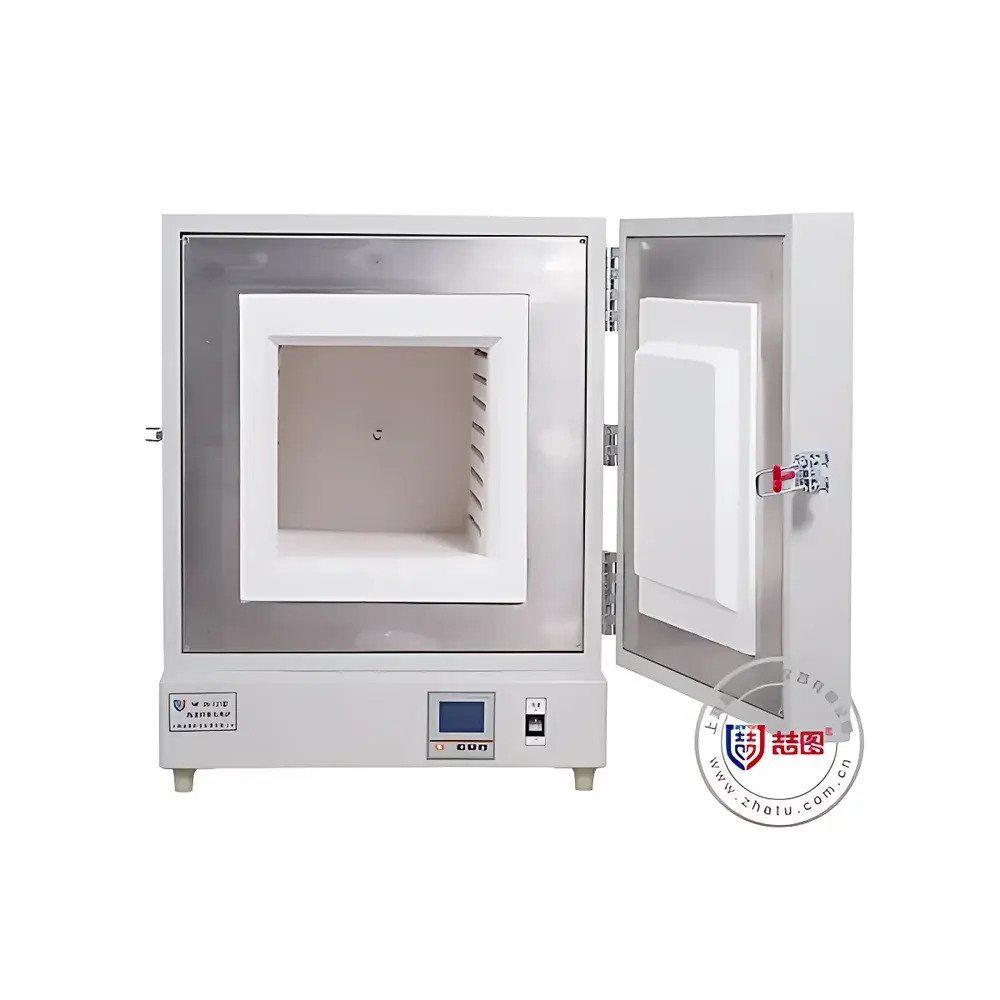
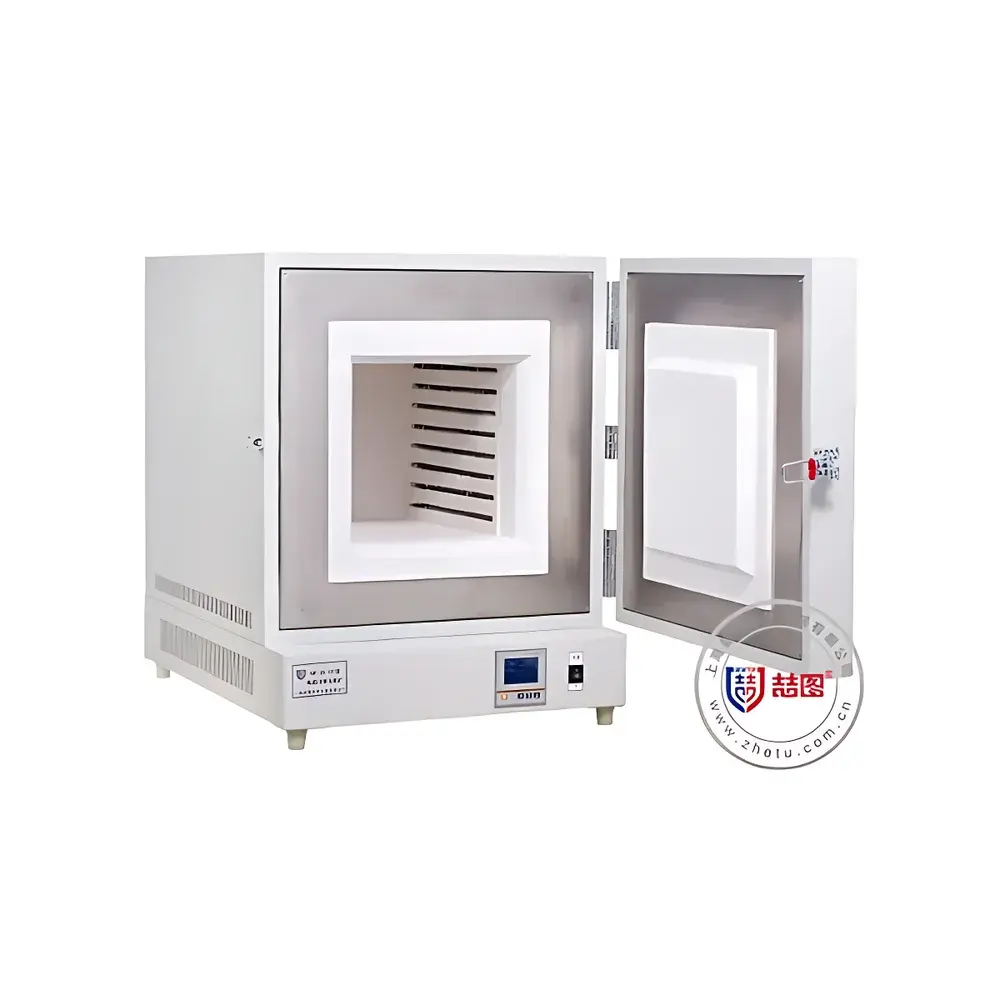
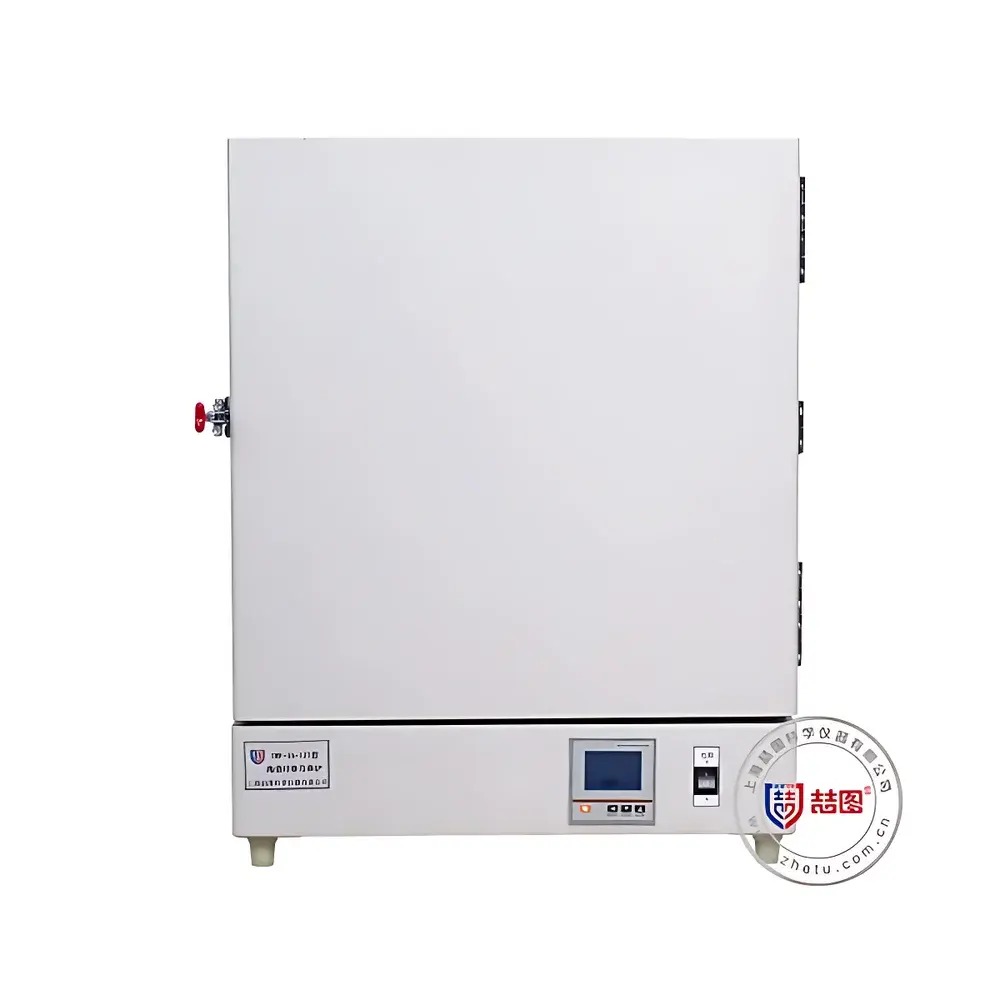
DRETOP TMF-210-14AI Ceramic Fiber Muffle Furnace
| Brand | DRETOP |
|---|---|
| Origin | Shanghai, China |
| Manufacturer Type | Direct Manufacturer |
| Product Category | Domestic |
| Model | TMF-210-14AI |
| Instrument Type | Box-Type Muffle Furnace |
| Maximum Temperature | 1400 °C |
| Temperature Control Accuracy | ±1 °C |
| Rated Power | 40 kW |
| Heating Time to Max Temp | ≤60 min |
| Heating Element | Silicon Carbide Rods |
| Internal Chamber Dimensions | 600 × 600 × 600 mm |
| Control Interface | Color Touchscreen Controller (AI Series) |
| Nominal Volume | 210 L |
Overview
The DRETOP TMF-210-14AI is a high-performance ceramic fiber box-type muffle furnace engineered for precision thermal processing in research laboratories, materials science facilities, and industrial quality control environments. It operates on resistive heating via high-stability silicon carbide (SiC) rods, delivering uniform radiant heat distribution across a large 210 L chamber. Unlike traditional refractory brick furnaces, its vacuum-microporous ceramic fiber insulation achieves rapid thermal response—reaching 1400 °C in under 60 minutes—while maintaining external surface temperatures below 50 °C at full operating temperature, minimizing energy loss and enhancing operator safety. The furnace complies with fundamental thermal stability requirements for ASTM E1142 (Standard Practice for Calibration of High-Temperature Furnaces) and supports GLP/GMP-aligned workflows through traceable temperature logging, programmable ramp/soak profiles, and audit-ready system diagnostics.
Key Features
- High-efficiency ceramic fiber insulation (density: ~128 kg/m³) enables low thermal mass and superior heat retention—reducing power consumption by up to 40% compared to conventional brick-lined units.
- Robust silicon carbide heating elements with uniform diameter and advanced sintering process ensure long service life, minimal resistance drift over time, and stable thermal output across repeated cycles.
- AI-series intelligent controller with 30-segment programmable logic supports complex thermal profiles: linear ramps, step holds, multi-slope approximations, and automatic shutdown upon completion.
- Integrated dual-stage overtemperature protection (mechanical + electronic), auto-recall memory function after power interruption, and ambient temperature compensation algorithm optimize process repeatability and equipment longevity.
- Ergonomic front-loading design with stainless steel inner door frame and refractory ceramic baffle minimizes heat leakage at the chamber opening, improving axial and radial temperature uniformity (±3 °C within working zone per ISO 9001 calibration guidelines).
- Industrial-grade cold-rolled steel housing with phosphate conversion coating and electrostatic powder finish (computer gray) resists corrosion and mechanical wear under continuous lab use.
Sample Compatibility & Compliance
The TMF-210-14AI accommodates diverse sample forms—including crucibles (alumina, quartz, graphite), ceramic tiles, metal alloys, powdered oxides, and composite preforms—within its 600 × 600 × 600 mm chamber. Its inert atmosphere compatibility (via optional N₂/Ar inlet valve) supports oxidation-sensitive processes such as sintering of Ti-based alloys or annealing of Fe–Ni soft magnetic materials. The furnace meets structural and electrical safety standards per IEC 61010-1:2010 (Safety Requirements for Electrical Equipment for Measurement, Control, and Laboratory Use). Optional RS485 Modbus RTU interface enables integration into centralized lab management systems compliant with FDA 21 CFR Part 11 when paired with validated data acquisition software.
Software & Data Management
The AI-series color touchscreen interface provides real-time visualization of setpoint, actual temperature, elapsed time, and active program segment. Built-in non-volatile memory stores up to 10 user-defined programs, each with independent ramp rates (0.1–30 °C/min), hold durations (1–9999 min), and cooling logic. Historical temperature curves are displayed graphically; data can be exported via USB to CSV format for post-processing in MATLAB, Excel, or LIMS platforms. An optional embedded thermal printer (model TP-210) generates hard-copy records with timestamp, operator ID, and deviation alerts—supporting ISO/IEC 17025 documentation requirements.
Applications
This furnace serves critical roles in thermal analysis and materials processing workflows: ash content determination (ASTM D3174, ISO 1171), ceramic sintering and glaze firing, glass annealing and nucleation studies, powder metallurgy densification, nanomaterial calcination (e.g., LiCoO₂ cathode precursors), metal heat treatment (annealing, stress relieving, austempering), and residue quantification in pharmaceutical excipients (USP ). Its rapid heating capability and tight thermal uniformity make it suitable for DOE-driven optimization of firing schedules in advanced ceramics R&D.
FAQ
What is the maximum recommended continuous operating temperature?
The furnace is rated for continuous operation at 1300 °C; 1400 °C is the absolute upper limit for short-term use (≤2 hours per cycle) to preserve insulation integrity and element lifespan.
Is inert gas purging supported out-of-the-box?
No—gas inlet ports and flow regulators are optional accessories; standard configuration includes sealed chamber only.
Does the controller support remote monitoring or network connectivity?
RS485 Modbus RTU is available as an add-on; Ethernet or Wi-Fi interfaces require third-party gateway integration.
Can the furnace be used for carbonization of organic polymers?
Yes—but exhaust chimney (optional accessory) is mandatory to evacuate volatile pyrolysis byproducts and prevent internal sooting or sensor contamination.
What maintenance intervals are recommended for optimal performance?
Visual inspection of SiC rods and ceramic fiber joints every 200 operational hours; thermocouple calibration annually or per ISO/IEC 17025 internal audit schedule.



