
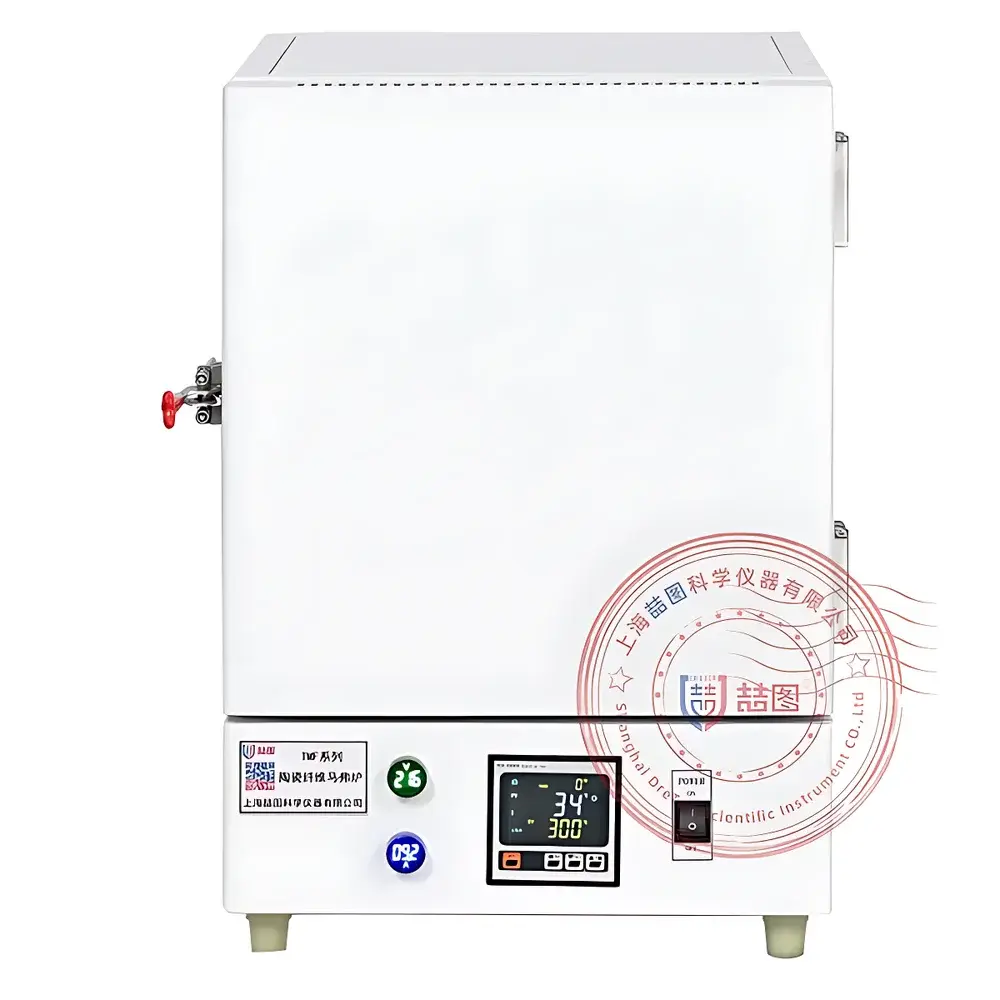
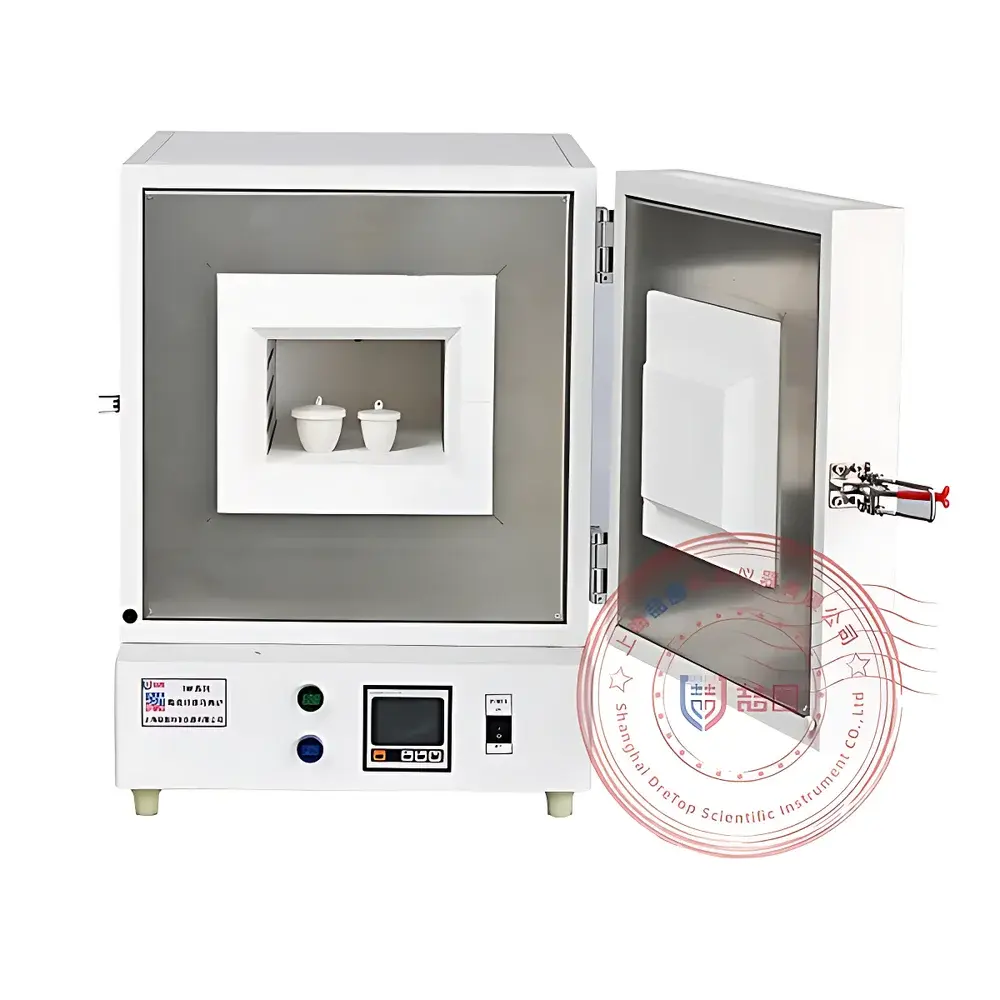
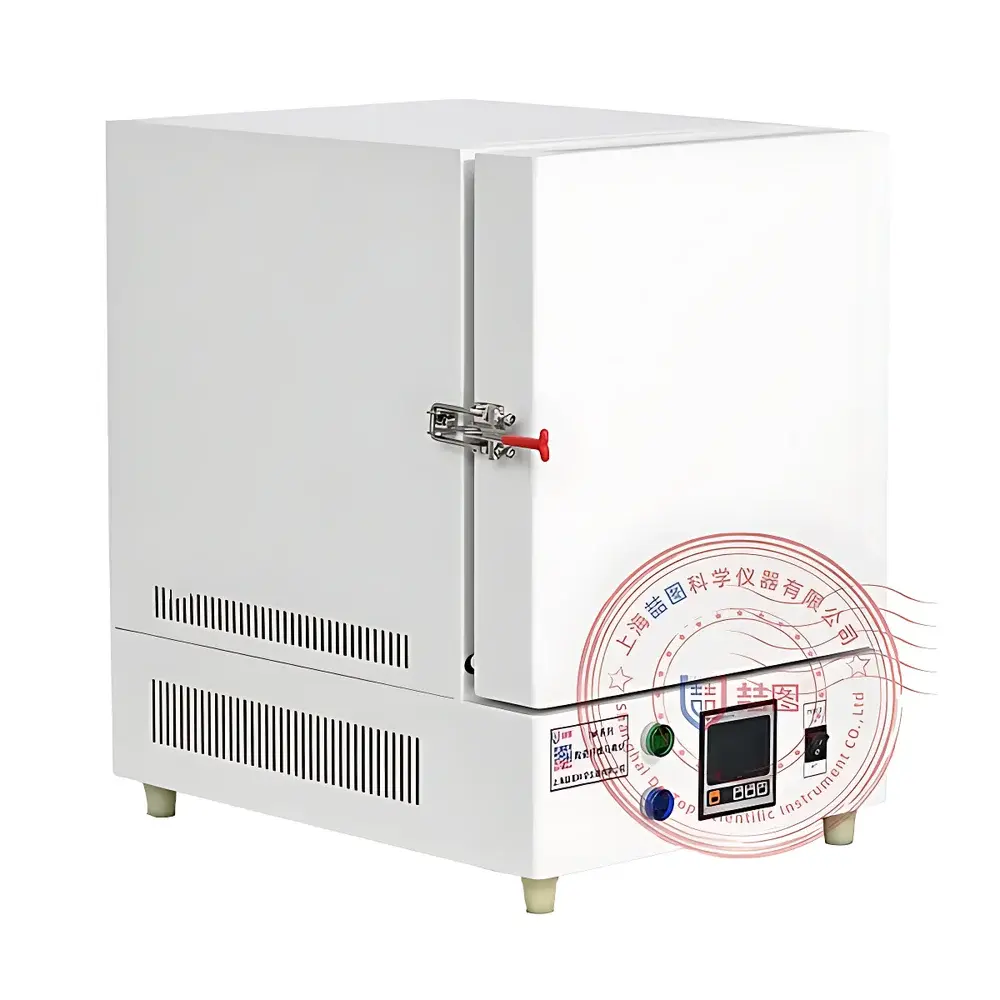
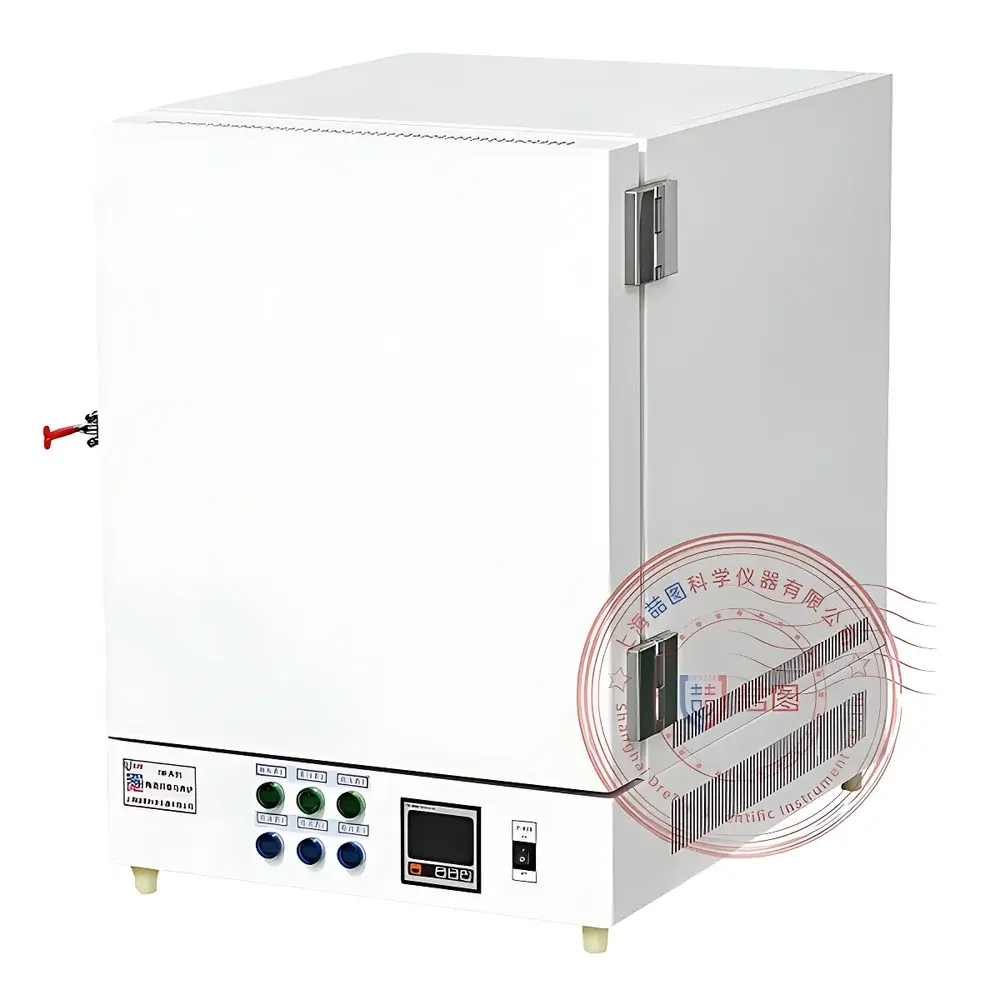
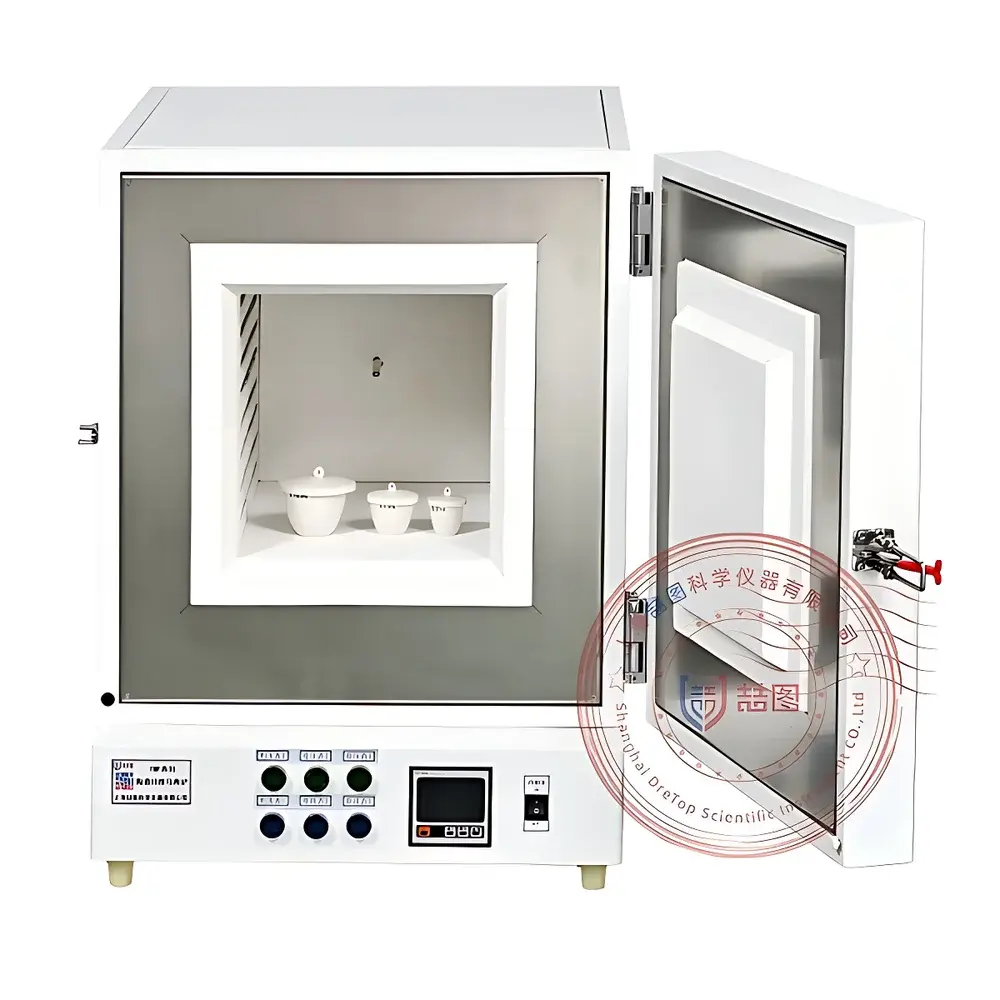
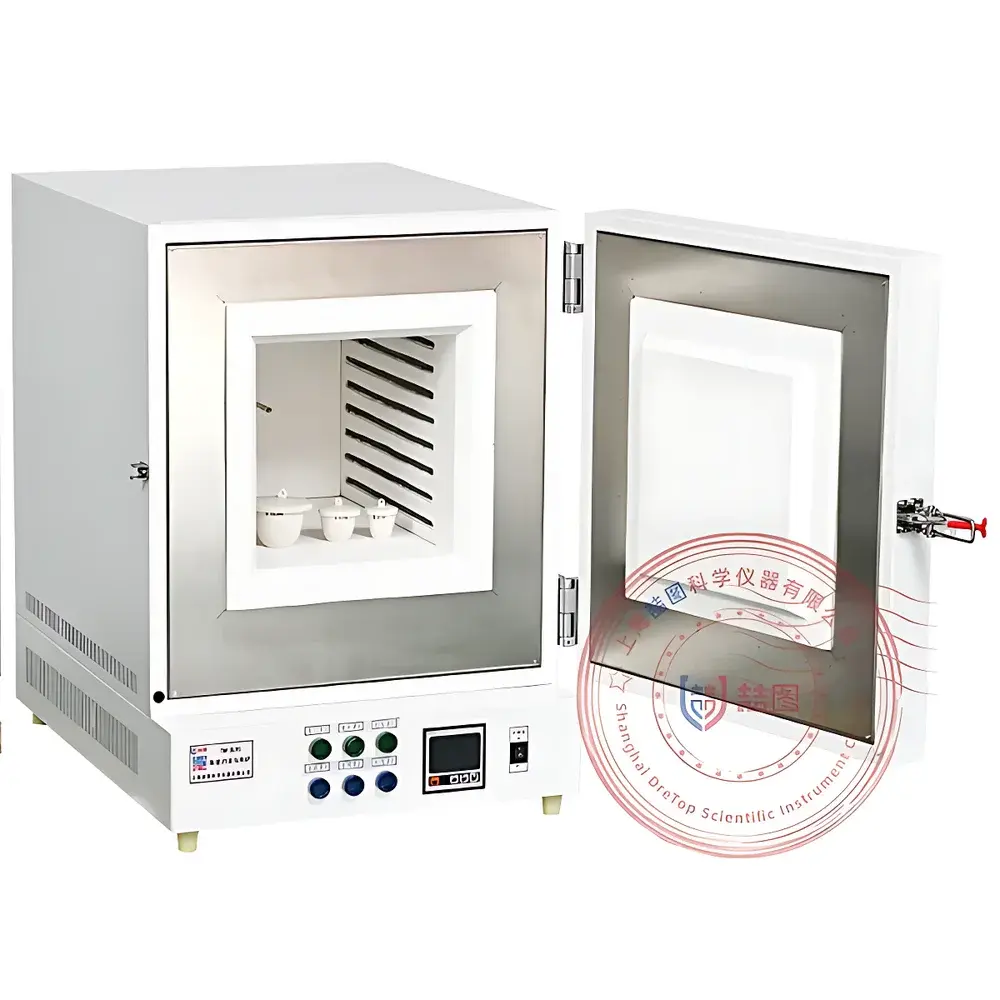
DRETOP TMF-63-12TP Ceramic Fiber Muffle Furnace
| Brand | DRETOP |
|---|---|
| Origin | Shanghai, China |
| Model | TMF-63-12TP |
| Type | Box-Type Muffle Furnace |
| Max Temperature | 1200 °C |
| Temperature Control Accuracy | ±1 °C |
| Rated Power | 20 kW |
| Heating Element | High-Temperature Alloy |
| Control System | Programmable PID Controller (30-Stage) |
| Internal Construction | Vacuum-Microporous Ceramic Fiber Insulation |
| Chamber Configuration | Triple-Wall Radiant Heating |
| Safety Features | Dual-Stage Over-Temperature Protection, Door-Interlocked Power Cut-off, Real-Time Voltage/Current Monitoring |
| Compliance | Designed for GLP-compliant thermal processing environments |
Overview
The DRETOP TMF-63-12TP is a high-performance ceramic fiber box-type muffle furnace engineered for precision thermal treatment in research laboratories, materials science facilities, and quality control departments. Unlike traditional refractory brick furnaces, it employs vacuum-microporous ceramic fiber insulation—offering exceptional thermal efficiency, rapid heat-up response, and superior temperature uniformity across the working chamber. Its triple-wall radiant heating architecture, with high-resistivity alloy heating elements helically wound along all three internal walls, ensures symmetrical heat distribution and minimizes axial and radial thermal gradients. The furnace operates within a calibrated range of ambient +50 °C to 1200 °C, meeting critical requirements for controlled sintering, annealing, ashing, calcination, and heat-treatment protocols where reproducibility and thermal stability are non-negotiable.
Key Features
- Triple-wall radiant heating system with high-temperature alloy elements embedded in ceramic fiber walls—enabling fast ramp rates and <±1 °C temperature uniformity across the chamber volume.
- 30-segment programmable PID controller with independent ramp/soak profiles, automatic shutdown upon cycle completion, and power-loss memory retention for uninterrupted process continuity.
- Door-interlocked safety circuit: heating halts immediately upon door opening and resumes automatically after closure—critical for intermittent sample handling without thermal drift.
- Dual-stage over-temperature protection: primary controller-based limit + independent mechanical backup relay—compliant with IEC 61000-4-5 surge immunity and EN 60519-2 electrical safety standards for industrial heating equipment.
- Vacuum-microporous ceramic fiber chamber (density ≤0.2 g/cm³) reduces thermal mass by >60% versus conventional firebrick, cutting energy consumption and enabling sub-30-minute stabilization at 1200 °C.
- Integrated digital voltage/current monitoring—real-time display of line parameters aids preventive maintenance and detects early signs of element degradation or phase imbalance.
- Phosphate-conversion coated steel enclosure with high-temp epoxy-polyester finish—resistant to thermal cycling-induced oxidation and laboratory chemical exposure.
- Front-accessible terminal block with compensation-grade thermocouple wiring (Type K, Class 1)—ensuring accurate cold-junction compensation and long-term signal integrity.
Sample Compatibility & Compliance
The TMF-63-12TP accommodates standard crucibles (alumina, quartz, silicon carbide), ceramic setters, and metal substrates up to 450 × 600 × 450 mm (W×D×H), with customizable chamber dimensions available per ASTM E1113 and ISO 8501-1 dimensional tolerancing. Its inert, oxidation-resistant chamber environment supports air, nitrogen, and argon atmospheres when fitted with optional gas inlet valves (ISO 10297-compliant fittings). All control logic and data logging functions comply with FDA 21 CFR Part 11 requirements when paired with TC-series touchscreen controllers—including audit trail generation, electronic signatures, and role-based access control. The furnace meets CE marking requirements under the Low Voltage Directive (2014/35/EU) and Electromagnetic Compatibility Directive (2014/30/EU), and is routinely validated per IQ/OQ protocols in GMP-regulated labs.
Software & Data Management
The TP-series controller includes RS485 Modbus RTU interface (standard) and optional Ethernet/WiFi modules for integration into centralized LabVantage or Thermo Fisher SampleManager LIMS platforms. Temperature profiles, real-time curves, and alarm logs are exportable as CSV or PDF via USB or network share. TC-series touchscreen variants support multi-level user authentication (engineer/operator/auditor), configurable alarm escalation (email/SMS via SMTP), and automated report generation aligned with ISO/IEC 17025 clause 7.8. Data integrity safeguards include write-protected storage, SHA-256 hash verification of archived cycles, and tamper-evident timestamping synchronized to NTP servers.
Applications
- Thermal analysis of advanced ceramics: sintering kinetics studies of alumina, zirconia, and silicon nitride under controlled ramp/hold conditions per ASTM C1161.
- Metallurgical heat treatment: solution annealing, stress-relief, and tempering of stainless steels and superalloys—validated against AMS 2750E pyrometry requirements.
- Geochemical sample preparation: LOI (Loss on Ignition) and ash content determination per ASTM D3174 and ISO 1171.
- Nanomaterial synthesis: controlled calcination of metal-organic frameworks (MOFs) and lithium-ion cathode precursors (e.g., NMC, LFP) with minimal particle agglomeration.
- Glass science: precision annealing of optical components and microcrystallization trials per ISO 10110-3.
- Environmental testing: heavy metal digestion in EPA Method 3050B and soil residue ashing per ISO 11466.
FAQ
What is the typical time-to-temperature for 1200 °C?
Typical stabilization at 1200 °C is achieved in ≤28 minutes from ambient, depending on chamber loading and ambient airflow. Full validation data per ASTM E220 is available upon request.
Can this furnace operate under inert gas purge?
Yes—when equipped with the optional inert gas inlet valve (ISO 10297), it supports continuous N₂ or Ar purging at flow rates up to 5 L/min, maintaining O₂ levels <50 ppm inside the chamber.
Is calibration traceable to NIST standards?
All factory calibrations are performed using Fluke 1523 reference thermometers and dry-block calibrators traceable to NIST SRM 1750; full calibration certificates (ISO/IEC 17025-accredited) are available as an add-on service.
What maintenance intervals are recommended?
Heating elements require inspection every 500 operating hours; ceramic fiber integrity should be verified annually per visual and density assessment (ASTM C177). No lubrication or consumable replacement is required for the control system.
Does the furnace support remote monitoring via SCADA systems?
Yes—the RS485 interface supports Modbus RTU protocol for seamless integration with Siemens Desigo, Honeywell Experion, or Emerson DeltaV DCS platforms using standard gateway configurations.



