
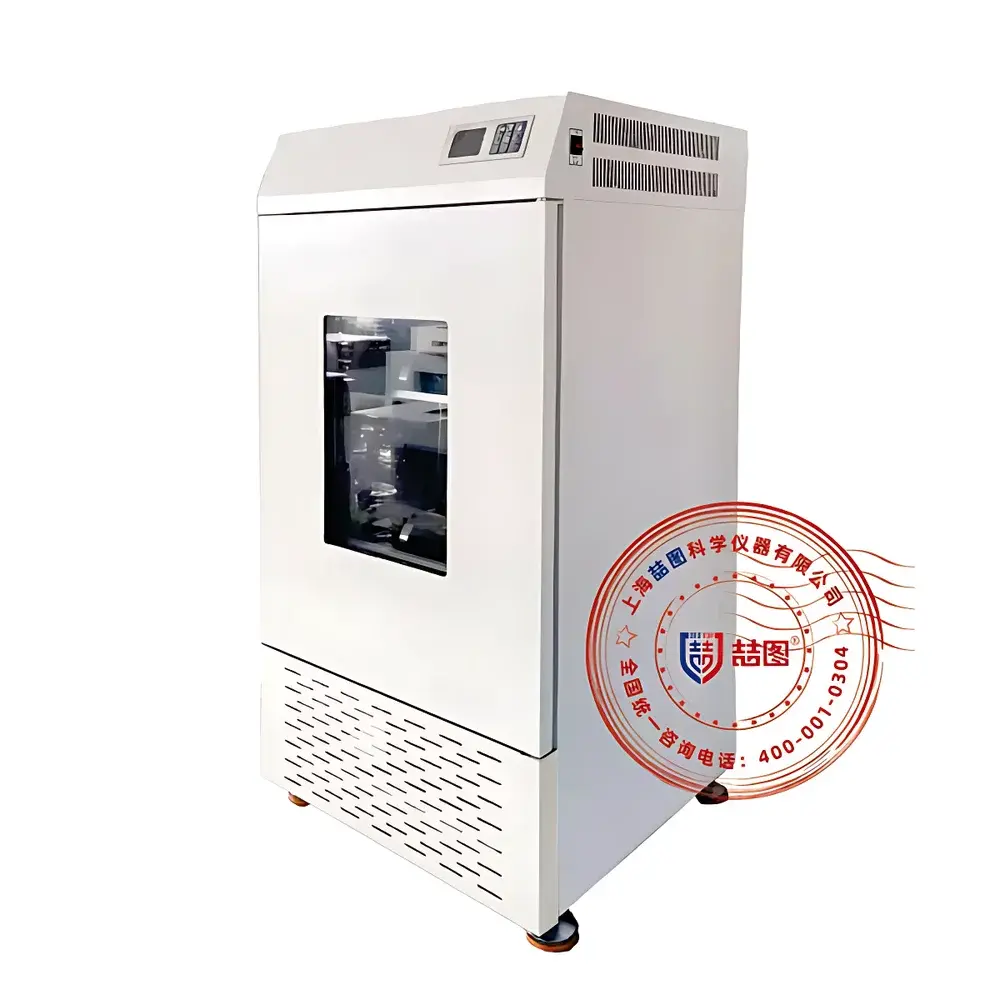
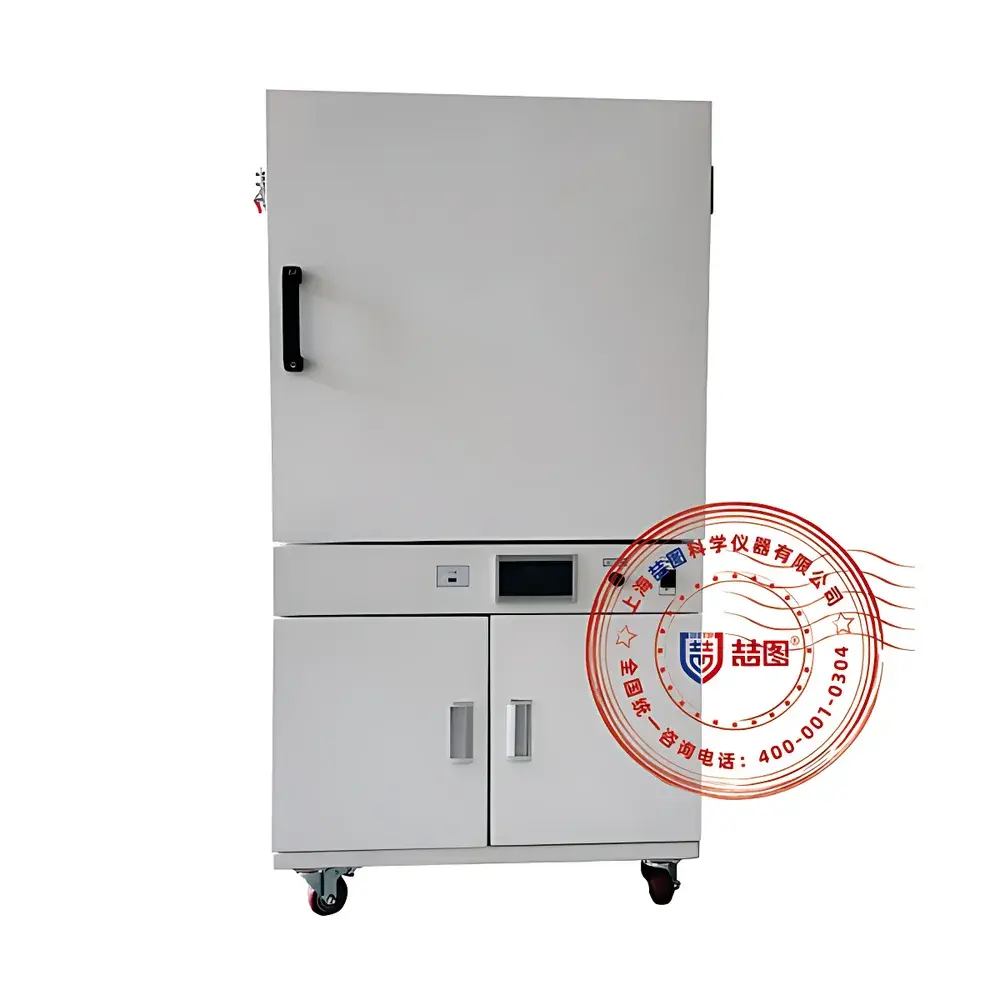
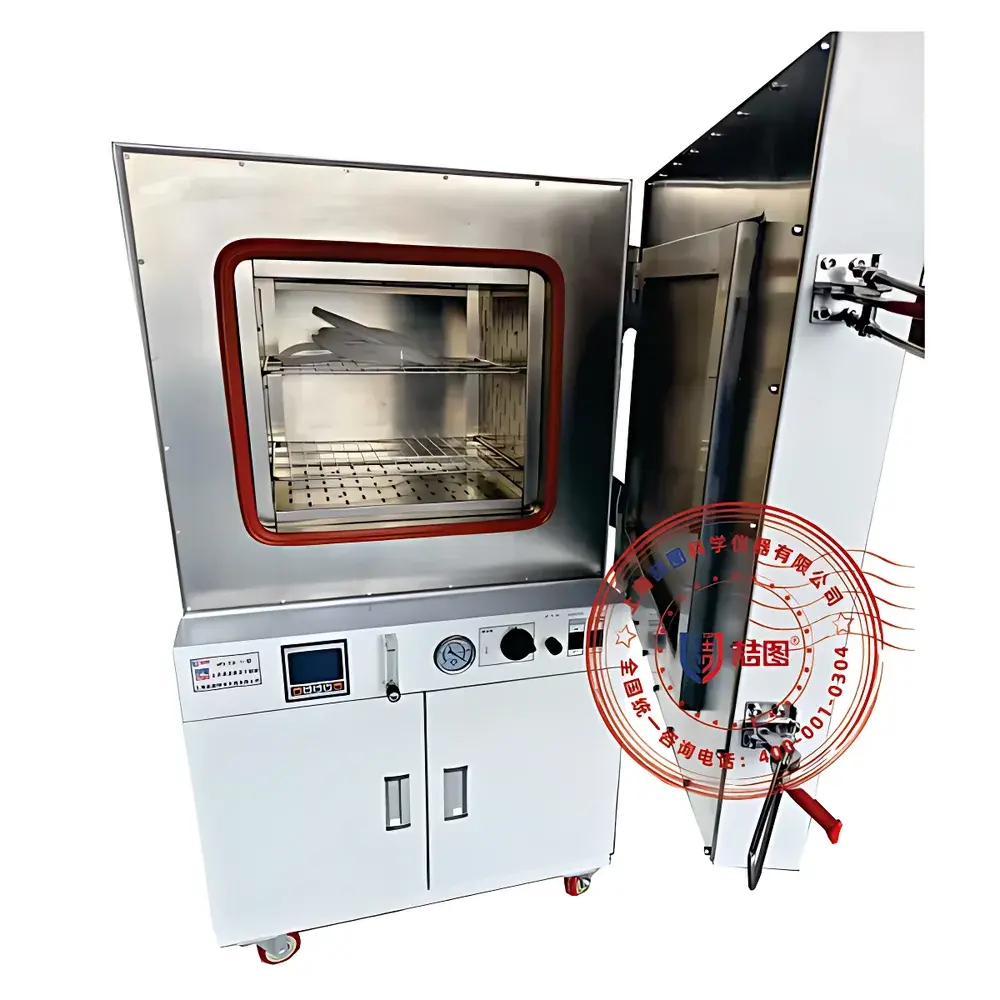
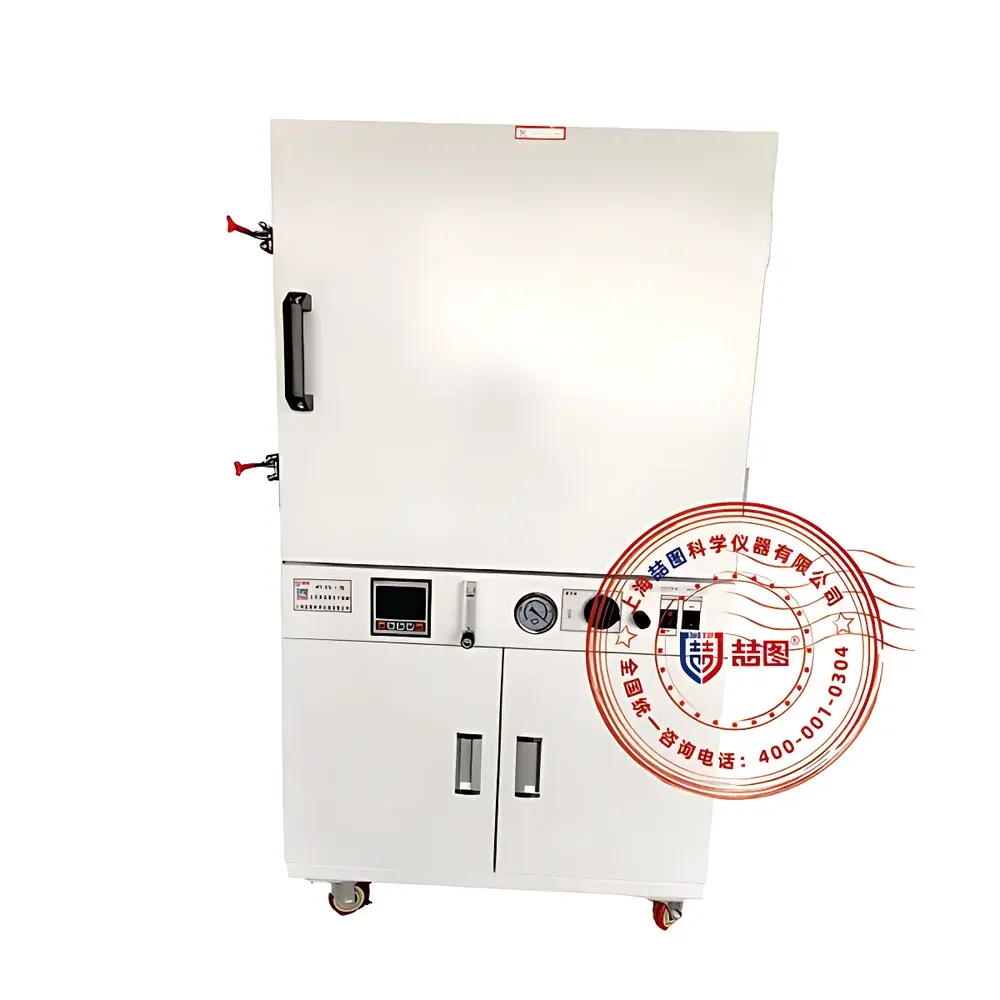
DRETOP TNF-6050V Vertical Vacuum Drying Oven
| Brand | DRETOP |
|---|---|
| Origin | Shanghai, China |
| Manufacturer Type | Direct Manufacturer |
| Product Category | Domestic |
| Model | TNF-6050V |
| Instrument Type | Vacuum Drying Oven |
| Temperature Range | RT +10 to 250°C |
| Temperature Uniformity | ±1°C |
| Temperature Fluctuation | ±0.5°C |
| Temperature Resolution | 0.1°C |
| Vacuum Degree | ≤133 Pa |
| Internal Chamber Dimensions (W×D×H) | 415 × 370 × 345 mm |
| External Dimensions (W×D×H) | 606 × 570 × 1116 mm |
| Inner Chamber Material | 304 Stainless Steel |
| Heating Method | Internal Heating |
| Working Ambient Temperature | 5–40°C |
| Insulation Material | Glass Fiber |
Overview
The DRETOP TNF-6050V Vertical Vacuum Drying Oven is an internally heated, precision-engineered vacuum thermal processing system designed for applications requiring oxygen-sensitive, thermally labile, or chemically reactive sample handling. Operating on the principle of reduced-pressure thermal desorption, the oven evacuates ambient air via integrated vacuum interface (compatible with optional 20L/min or D8/D16/D24 rotary vane pumps), lowering the boiling point of solvents and moisture while suppressing oxidation, decomposition, and surface contamination. Unlike forced-air or convection ovens, this model eliminates convective heat transfer — relying instead on conductive heating through stainless steel chamber walls and adjustable shelves — thereby ensuring minimal particle displacement, zero cross-contamination risk, and exceptional thermal stability essential for pharmaceutical intermediates, nanomaterials, battery electrode slurries, and biological macromolecules.
Key Features
- Internally heated architecture with embedded resistance elements in 304 stainless steel chamber walls — enabling rapid thermal response (<15 min to stabilize at 100°C), high spatial uniformity (±1°C across chamber volume), and precise setpoint control (±0.5°C fluctuation)
- Large-format dual-layer tempered glass observation window with silicone-sealed double-door locking mechanism — providing real-time visual monitoring without vacuum interruption
- Microprocessor-based PID temperature controller with 0.1°C resolution, programmable timer (1–9999 minutes), over-temperature alarm & cut-off protection, and self-diagnostic fault code display
- Electrostatically coated carbon steel outer casing with 304 stainless steel interior — corrosion-resistant, non-porous, and compliant with ISO 14644-1 Class 8 cleanroom-compatible surface finish
- Energy-efficient insulation using high-density glass fiber between chamber and shell — reducing standby heat loss by >40% versus standard mineral wool designs
- Integrated safety suite: earth leakage circuit breaker (ELCB), overcurrent protection, short-circuit isolation, and power-fail parameter retention memory
Sample Compatibility & Compliance
The TNF-6050V accommodates powders, granules, thin-film coatings, porous ceramics, lyophilized biologics, and delicate electronic substrates — all without mechanical agitation or airflow-induced dispersion. Its internal heating configuration eliminates protruding heating elements, preserving unobstructed shelf space and enabling flat-bottomed container placement. The chamber’s 50 L usable volume (415 × 370 × 345 mm) supports stacked trays up to 2 pcs (standard), with optional reinforced shelves rated for 15 kg loading per level. Regulatory alignment includes support for GLP-compliant workflows via audit-trail-capable data logging (when paired with RS485-enabled external recorders), compatibility with USP sterile drying validation protocols, and adherence to IEC 61010-1:2010 safety requirements for laboratory electrical equipment. Vacuum integrity meets ISO 27427-2012 specifications for low-pressure thermal processing systems.
Software & Data Management
While the base unit features a stand-alone LCD controller with intuitive menu navigation, optional digital upgrades include RS485 serial communication for integration into centralized lab management platforms (e.g., LabArchives, DeltaTrak ValidatorLink). When configured with a compatible data logger, the system records timestamped temperature and vacuum pressure values at user-defined intervals (1–60 sec), generating CSV-formatted logs traceable to NIST-traceable reference standards. For regulated environments, optional Ethernet-enabled controllers provide 21 CFR Part 11-compliant electronic signatures, role-based access control, and immutable audit trails — supporting FDA inspection readiness and internal quality audits. All firmware versions undergo version-controlled release testing per ISO/IEC 17025 clause 5.9.2.
Applications
This vacuum drying oven serves critical functions across multiple technical domains: in lithium-ion battery R&D, it removes residual NMP solvent from cathode/anode coatings under inert gas backfill (with optional inlet valve); in semiconductor packaging labs, it performs pre-bond dehydration of die-attach adhesives to prevent void formation; in analytical chemistry, it dries gravimetric filters without oxidizing metal oxides or volatile organometallics; in pharmaceutical development, it stabilizes peptide conjugates and mRNA-LNP formulations prior to lyophilization cycle initiation. Additional validated use cases include moisture content determination per ASTM E1868, residual solvent analysis per ICH Q3C, and thermal aging studies under controlled partial pressures per MIL-STD-883 Method 1008.
FAQ
What distinguishes internal heating from external heating in vacuum ovens?
Internal heating embeds resistive elements directly into the chamber wall, delivering faster ramp rates, superior temperature homogeneity, and zero air movement — ideal for powders and sensitive biomolecules.
Can this oven be used under inert gas atmosphere?
Yes — optional inert gas inlet valves (N₂, Ar) allow controlled backfilling to ≤10 mbar, enabling passivation of oxide-prone materials such as lithium metal anodes or transition metal catalysts.
Is the chamber geometry optimized for vacuum integrity?
The rectangular 304 stainless steel chamber features fully welded seams, corner-radius machining, and fluorosilicone door gaskets rated for continuous operation at ≤133 Pa — validated per ISO 10110-7 vacuum leak rate standards.
How is temperature calibration verified?
A dedicated 2-point calibration port accepts PT100 probes traceable to NIST SRM 1750; factory calibration certificates include uncertainty budgets per ISO/IEC 17025 Annex A.
What vacuum pump compatibility is supported?
Standard configuration interfaces with 20 L/min single-stage rotary vane pumps; optional D8/D16/D24 dual-stage oil-sealed pumps achieve ultimate pressures down to 0.1 Pa for ultra-low-residue drying of optical thin films.



