

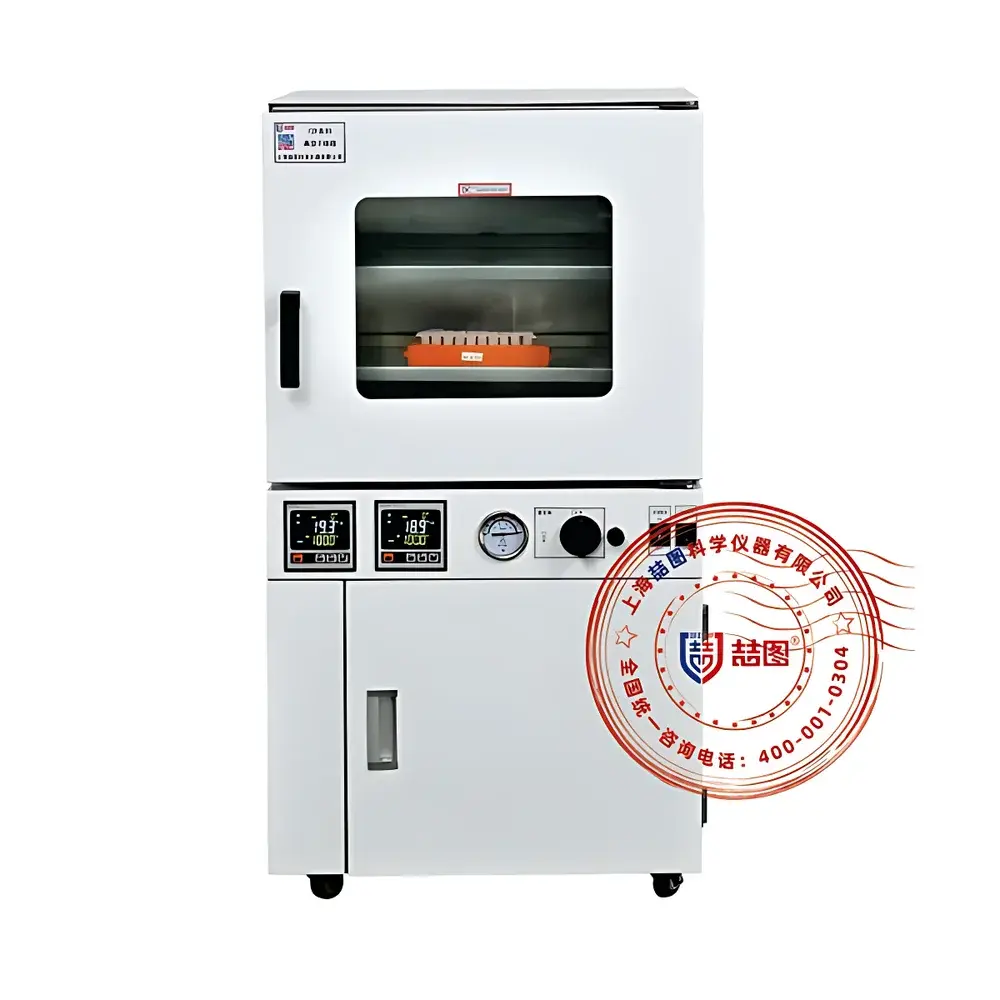
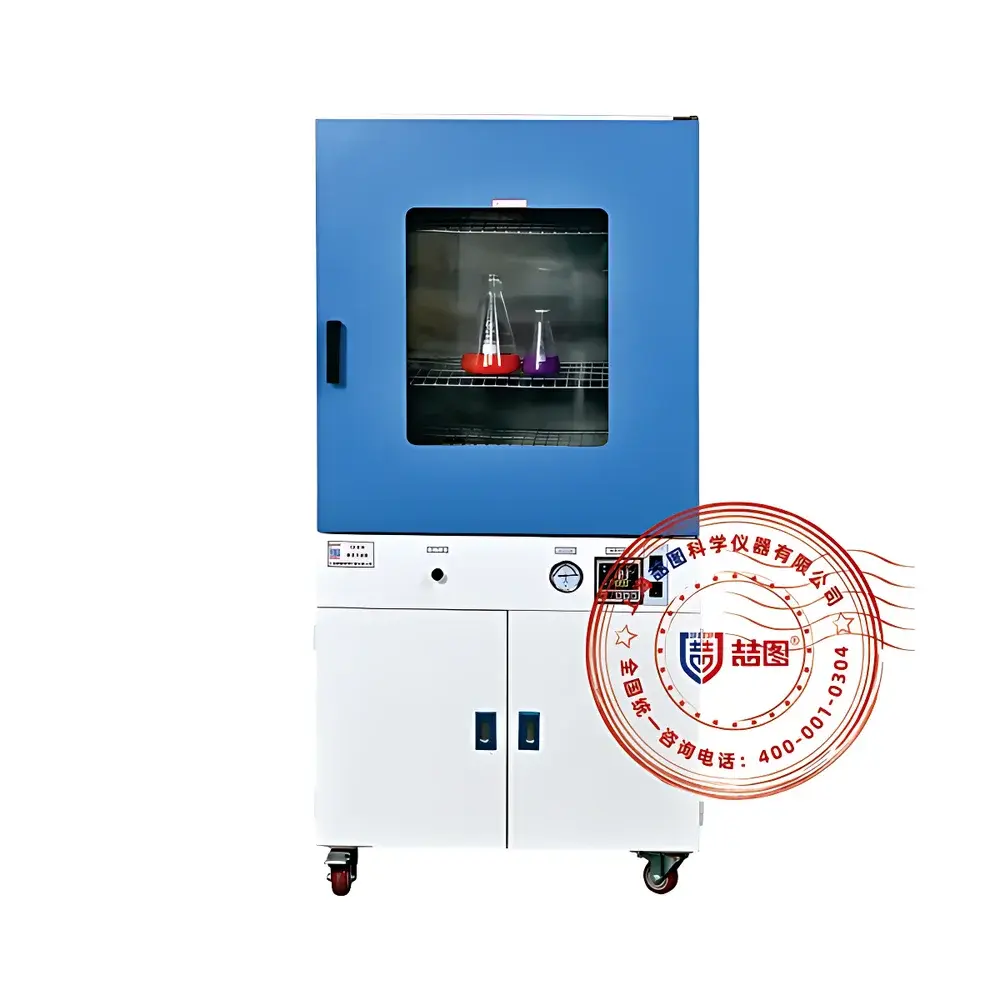
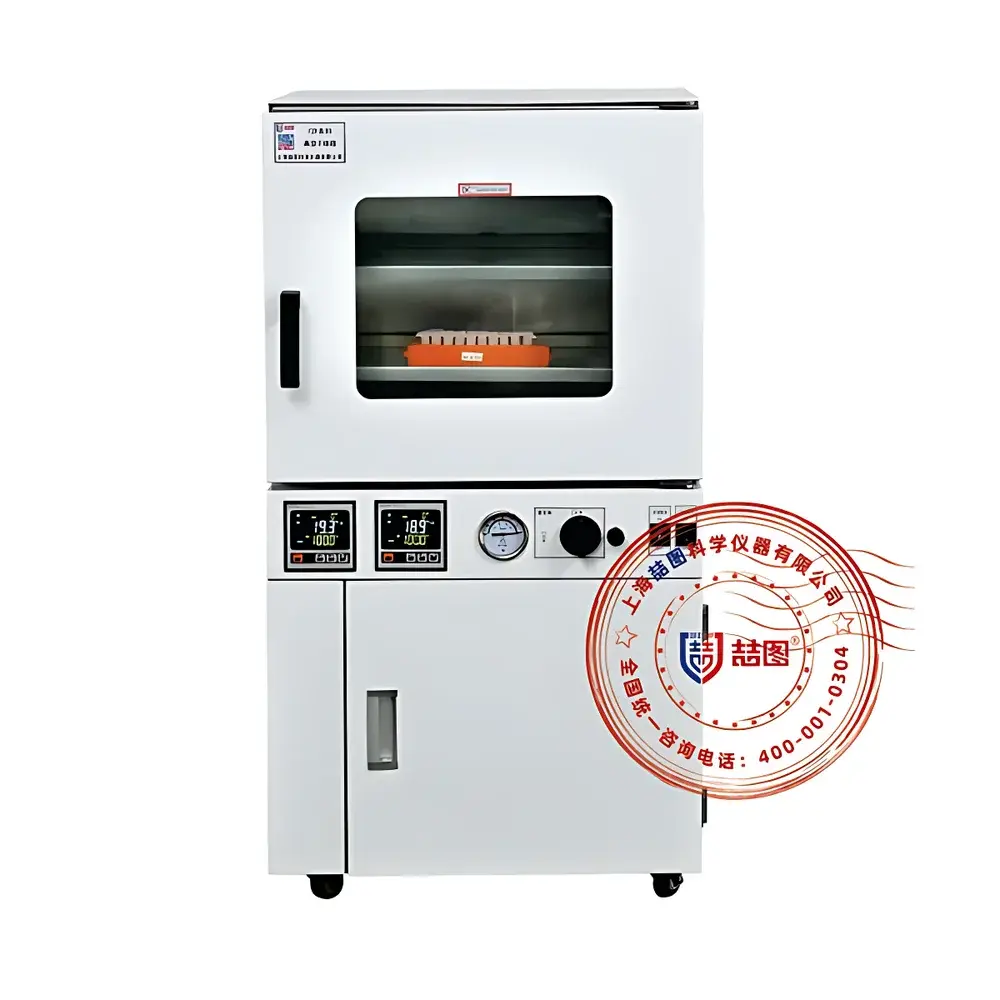
DRETOP TNF-6250LV Vertical Vacuum Drying Oven
| Brand | DRETOP |
|---|---|
| Origin | Shanghai, China |
| Manufacturer Type | Direct Manufacturer |
| Product Category | Domestic |
| Model | TNF-6250LV |
| Instrument Type | Vacuum Oven |
| Temperature Range | RT+10 to 250 °C |
| Temperature Uniformity | ±0.5 °C |
| Temperature Resolution | 0.1 °C |
| Vacuum Level | ≤133 Pa |
| Internal Chamber Dimensions | 600 × 600 × 700 mm (W×D×H) |
| External Dimensions | 791 × 809 × 1530 mm (W×D×H) |
| Inner Chamber Material | 304 Stainless Steel |
| Heating Method | Internal Heating |
| Operating Ambient Temperature | +5 to 40 °C |
| Power Supply | AC 220 V, 50 Hz |
Overview
The DRETOP TNF-6250LV is a vertically oriented, internally heated vacuum drying oven engineered for precision thermal processing under controlled low-pressure environments. It operates on the principle of vacuum-assisted desiccation—removing ambient air via a mechanical vacuum pump to reduce partial pressure, thereby lowering the boiling point of volatile components and enabling gentle, oxidation-free drying of thermally sensitive, hygroscopic, or chemically unstable materials. Unlike conventional convection ovens, this system eliminates convective heat transfer and atmospheric oxidation, making it essential for applications where sample integrity, purity, and reproducibility are critical—such as semiconductor wafer baking, lithium-ion battery electrode conditioning, pharmaceutical lyophilization support, and high-purity material synthesis. The TNF-6250LV features a robust stainless-steel chamber (304 grade), double-layer tempered glass observation window with silicone-sealed dual-stage locking mechanism, and integrated PID temperature control architecture compliant with ISO 17025 laboratory environmental requirements.
Key Features
- Internal heating configuration with embedded heating elements beneath each shelf—ensuring rapid thermal response, minimal temperature gradient across the chamber, and precise layer-wise thermal profiling.
- Microprocessor-based PID temperature controller with 0.1 °C resolution, ±0.5 °C uniformity, and programmable timer (1–9999 minutes); includes over-temperature alarm, auto-shutdown, and fault-code diagnostics displayed on a large backlit LCD interface.
- Double-sealed vertical door with zinc-alloy rotary latch and high-compression silicone gasket—validated to maintain ≤133 Pa vacuum stability over extended cycles without leakage drift.
- Chamber insulation composed of high-density ceramic fiber blanket between inner 304 stainless steel and outer electrostatically coated steel housing—reducing standby heat loss by >40% compared to standard mineral wool alternatives.
- Full compliance with IEC 61000-4 electromagnetic immunity standards and EN 61010-1 safety requirements for laboratory electrical equipment; includes dual redundant overcurrent protection, ground-fault interruption, and thermal cutout safeguards.
Sample Compatibility & Compliance
The TNF-6250LV accommodates samples up to 250 L total volume (600 × 600 × 700 mm internal), supporting diverse geometries including wafers, pouch cells, glass vials, polymer films, and porous ceramic substrates. Its oxygen-free vacuum environment prevents surface oxidation during annealing or solvent removal—critical for LiCoO₂ cathode drying per ASTM F3012 and moisture-sensitive OLED encapsulation per JEDEC J-STD-033. The unit meets general requirements for GLP/GMP-aligned laboratories: data integrity is preserved through non-volatile parameter memory (retains settings after power failure), and optional RS485 serial interface enables audit-trail-capable integration into LabVantage or Thermo Fisher SampleManager LIMS platforms. While not certified to FDA 21 CFR Part 11 out-of-the-box, the system supports validation documentation packages—including IQ/OQ protocols—and can be configured with optional embedded printers and inert gas purge inlets (N₂ or Ar) for enhanced process control.
Software & Data Management
The standard control interface provides real-time display of chamber temperature, setpoint, elapsed time, and vacuum status (via analog vacuum gauge input). For advanced process automation, optional upgrades include a color touchscreen HMI with recipe storage (up to 100 programs), ramp-soak profiles, and USB data export (CSV format). When paired with DRETOP’s optional VGM-series corrosion-resistant diaphragm vacuum pump and digital vacuum transducer, the system supports closed-loop vacuum regulation—enabling multi-step gradient drying sequences (e.g., 10⁴ Pa → 10² Pa → 133 Pa) aligned with USP packaging integrity testing guidelines. All firmware versions undergo version-controlled release cycles with documented change logs, satisfying traceability requirements under ISO/IEC 17025 Clause 7.7.
Applications
- Semiconductor manufacturing: Pre-bake of photomasks, wafer dehydration prior to sputtering, and residual solvent removal from spin-coated resist layers.
- Lithium-ion battery R&D: Electrode drying under inert atmosphere to suppress LiPF₆ decomposition and minimize SEI layer variability.
- Pharmaceutical development: Final drying of sterile APIs where water activity (aw) must remain <0.2; compatible with ISO 14644-1 Class 5 cleanroom integration via optional HEPA-filtered inert gas inlet.
- Materials science: Thermal aging studies of polymer nanocomposites, outgassing characterization of space-grade adhesives (per ECSS-Q-ST-70-02C), and catalyst activation under controlled reducing atmospheres.
- Academic research: Low-temperature dehydration of biological tissues for SEM preparation, and solvent exchange in aerogel synthesis protocols.
FAQ
What vacuum level does the TNF-6250LV achieve, and how is it measured?
The chamber achieves a base pressure of ≤133 Pa (1 Torr) using a standard rotary vane pump; measurement is performed via calibrated analog Bourdon-tube vacuum gauge referenced to local atmospheric pressure.
Can the oven operate under inert gas purging?
Yes—optional inert gas inlet kits (N₂ or Ar) with mass flow control and pressure relief valve are available for creating positive-pressure inert environments during cooldown or storage phases.
Is the internal heating design suitable for uniform drying of stacked samples?
Yes—the layered internal heating elements provide independent thermal zones per shelf, minimizing vertical temperature stratification and ensuring consistent drying kinetics across multi-tier loads.
Does the unit support regulatory-compliant data logging?
With the optional RS485 interface and DRETOP DataBridge software, users can generate time-stamped, tamper-evident CSV logs meeting ALCOA+ principles for raw data retention in regulated environments.
What maintenance intervals are recommended for long-term reliability?
Vacuum seal inspection every 6 months; pump oil replacement every 500 operational hours (for oil-lubricated pumps); chamber cleaning with pH-neutral stainless-steel cleaner after each use involving organic solvents or salts.
Related Products



