

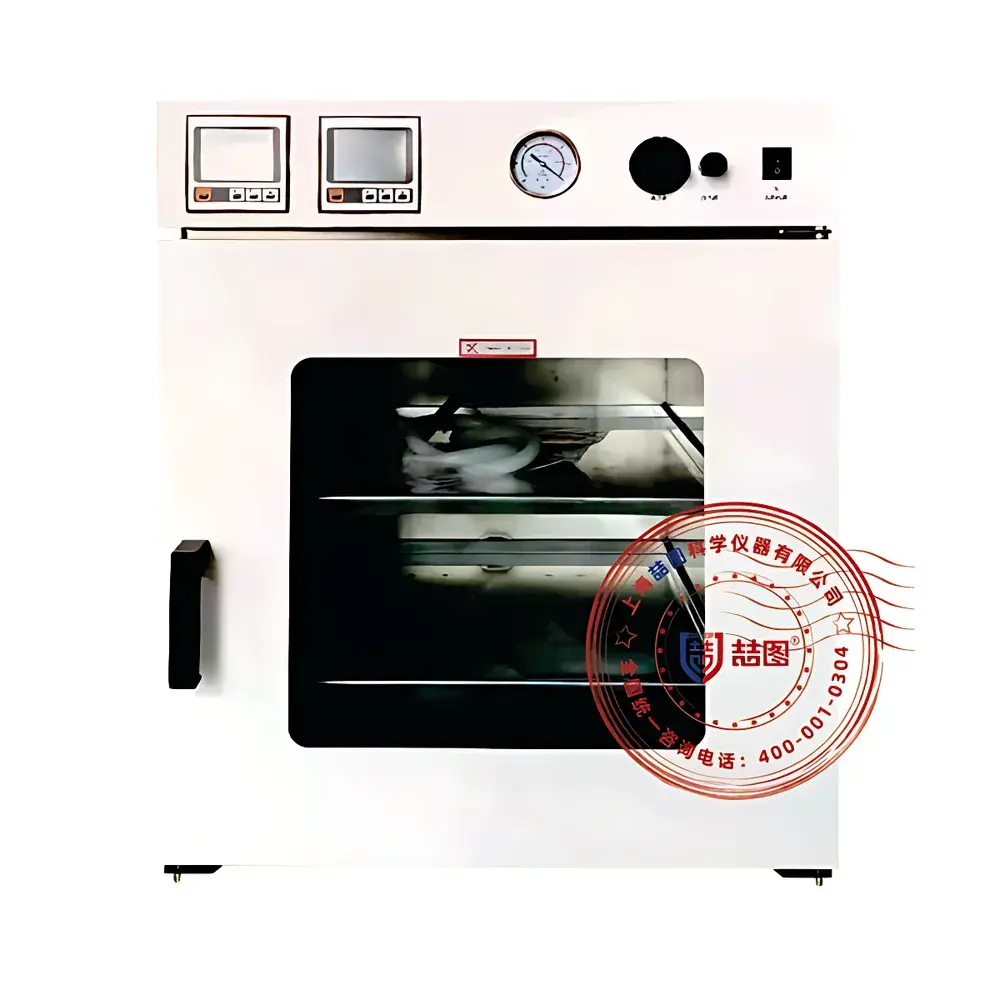
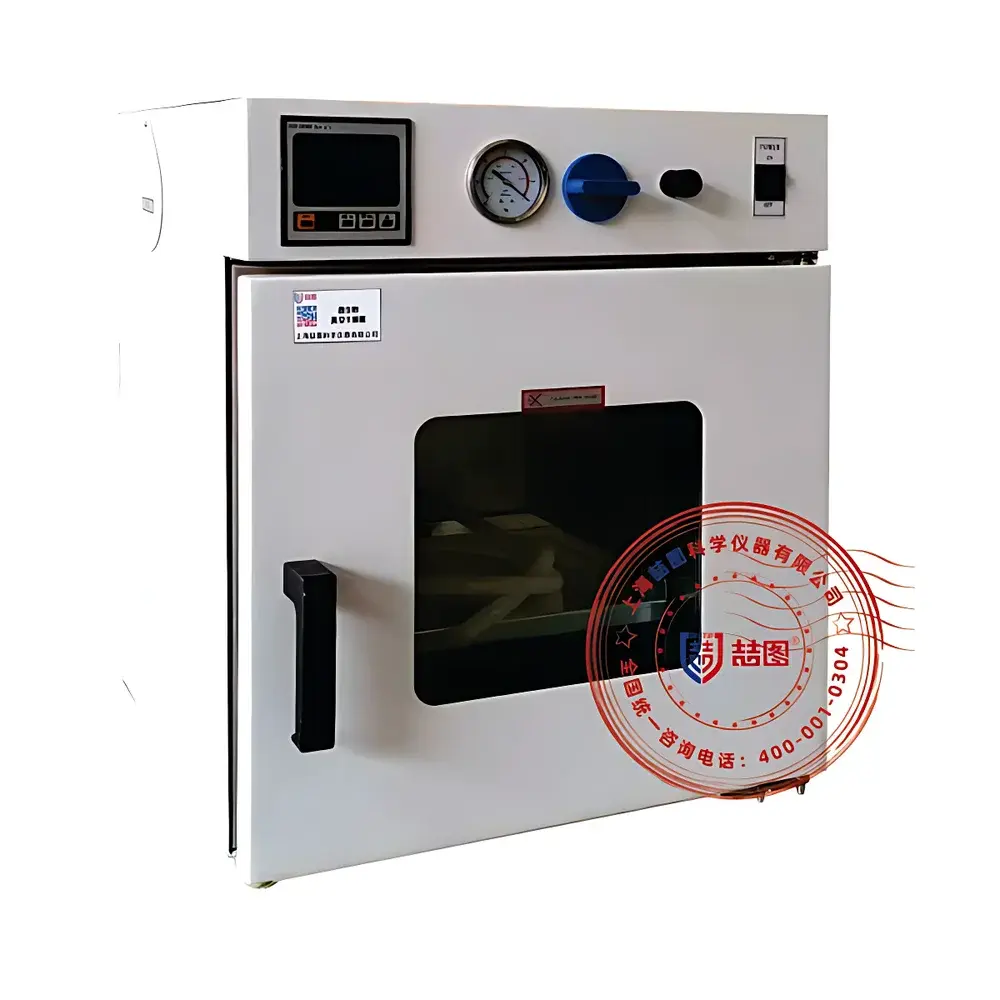
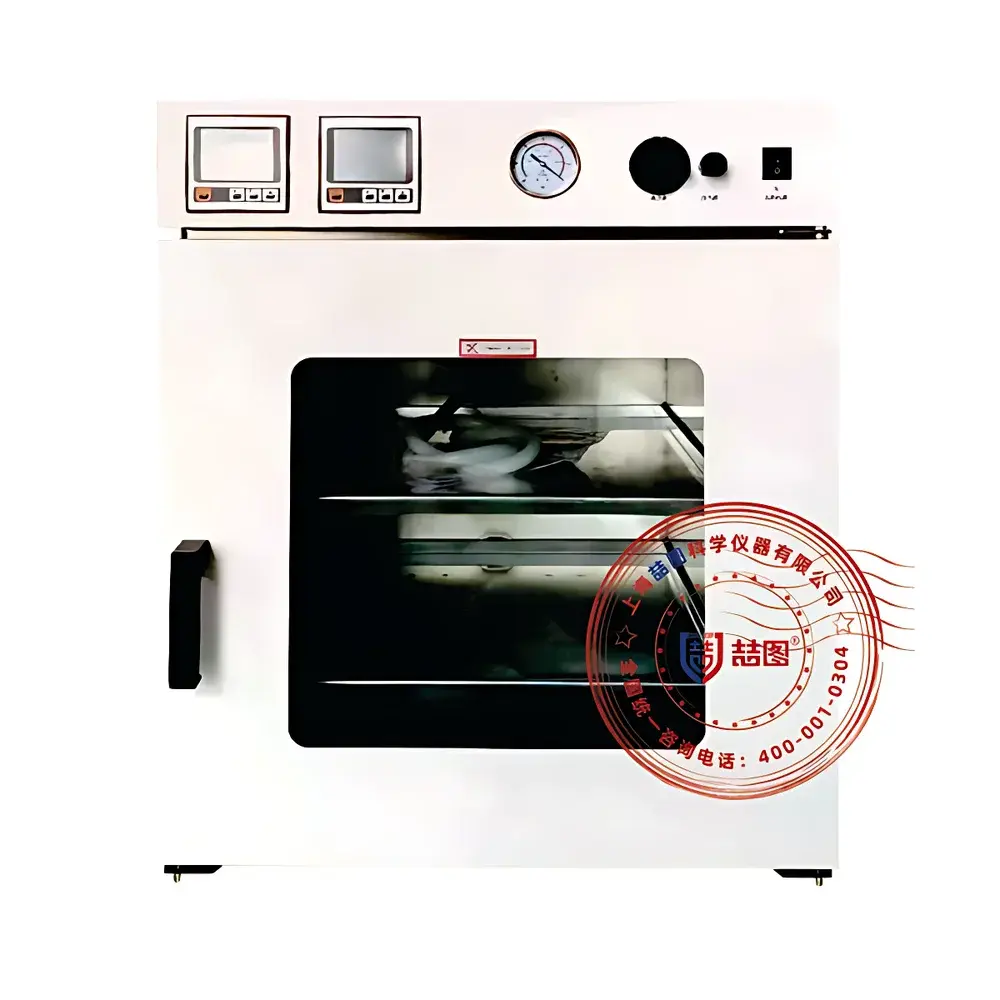
DRETOP TWF-6030V Microbial Vacuum Drying Oven
| Brand | DRETOP |
|---|---|
| Origin | Shanghai, China |
| Manufacturer Type | Direct Manufacturer |
| Product Category | Domestic |
| Model | TWF-6030V |
| Instrument Type | Vacuum Drying Oven |
| Temperature Range | RT+10°C to 65°C |
| Temperature Fluctuation | ±0.5°C |
| External Dimensions (W×D×H) | 615×500×505 mm |
| Internal Chamber Dimensions (W×D×H) | 320×320×300 mm |
| Temperature Resolution | 0.1°C |
| Operating Ambient Temperature | 5–45°C |
| Interior Material | 304 Stainless Steel |
| Heating Method | Internal Heated Walls with Forced Convection |
| Temperature Uniformity | ±2.5°C |
| Vacuum Level | ≤133 Pa (achievable with standard included rotary vane pump) |
Overview
The DRETOP TWF-6030V Microbial Vacuum Drying Oven is a precision-engineered laboratory vacuum drying system designed specifically for the gentle, low-temperature dehydration of biologically sensitive materials under controlled reduced-pressure conditions. It operates on the fundamental principle that lowering ambient pressure reduces the boiling point of solvents—particularly water—enabling effective moisture removal at temperatures significantly below atmospheric boiling points. This capability is critical for preserving thermolabile compounds such as proteins, enzymes, vaccines, microbial cultures, and live-cell suspensions, where conventional hot-air drying would induce denaturation, oxidation, or metabolic inactivation. The unit integrates internal wall heating with forced convection within a fully sealed 304 stainless steel chamber, ensuring rapid thermal response and minimizing temperature gradients across the load. Unlike jacket-heated ovens—which rely on inefficient radiative and conductive transfer through vacuum-depleted air—the TWF-6030V delivers heat directly to the chamber walls and interior volume, enabling uniform energy distribution even under deep vacuum (≤133 Pa). Its operational envelope (RT+10°C to 65°C) is optimized for microbiological integrity, aligning with ISO 11133:2014 requirements for culture media preparation and USP guidelines for sterile product drying validation.
Key Features
- Internal heating architecture with integrated 304 stainless steel chamber walls for direct conductive and radiant heat transfer—maximizing efficiency and eliminating cold spots under vacuum
- PID-based digital temperature controller with 0.1°C resolution and ±0.5°C stability, supporting reproducible process execution across multiple drying cycles
- Chamber temperature uniformity maintained at ±2.5°C (measured per ASTM E2207-19 at 50°C under vacuum), verified using calibrated PT100 sensors at nine spatial locations
- Robust safety system including over-temperature cut-off, vacuum leak detection alarm, and pressure-relief valve compliant with EN 61010-1:2019 for laboratory electrical equipment
- Front-loading vertical design with reinforced double-glazed observation window and silicone-sealed door gasket to ensure long-term vacuum integrity
- Standard inclusion of a 2L/s rotary vane vacuum pump with oil mist filter, capable of achieving ≤133 Pa base pressure within 15 minutes (load-dependent)
Sample Compatibility & Compliance
The TWF-6030V accommodates a broad spectrum of biological and pharmaceutical samples, including but not limited to: lyophilization-prep microbial pellets, freeze-dried vaccine intermediates, enzymatic assay reagents, clinical specimen swabs, agar-based culture media, and sterilized labware (e.g., Petri dishes, pipette tips). Its stainless-steel interior meets FDA-recommended surface finish standards (Ra ≤ 0.8 µm) for cleanability and residue-free operation. All wetted surfaces are electropolished and passivated per ASTM A967-23, supporting routine cleaning validation under GLP and GMP environments. The system supports compliance with ISO 13485:2016 (medical device manufacturing), EU Annex 1 (sterile processing), and USP for container closure integrity testing when used with optional inert gas purge kits (N₂ or Ar inlet valve available as add-on). Vacuum performance is validated per ISO 2787:2020 for volumetric flow consistency and pressure decay rate.
Software & Data Management
While the base configuration features a standalone microprocessor controller with real-time display of chamber temperature and elapsed time, optional RS485 serial interface enables integration into centralized lab data acquisition systems (e.g., LabVIEW, DeltaV, or custom SCADA platforms). When paired with DRETOP’s optional data logger module (sold separately), the unit records timestamped temperature and vacuum pressure values at user-defined intervals (1–60 sec), generating CSV-formatted audit trails compliant with FDA 21 CFR Part 11 requirements—including electronic signatures, user access control, and immutable record retention. All calibration parameters are stored in non-volatile memory and protected by password-level authentication. Firmware updates are performed via USB port without hardware modification, ensuring long-term regulatory alignment.
Applications
- Low-temperature desiccation of bacterial and fungal cultures for long-term strain preservation (e.g., ATCC protocols)
- Drying of diagnostic reagent strips and lateral flow assay components without compromising antibody binding affinity
- Removal of residual solvents from biopolymer scaffolds and hydrogel precursors prior to cytocompatibility testing
- Post-sterilization drying of surgical instruments and single-use bioprocessing components under ISO 17665-1 validated conditions
- Rapid moisture reduction in food-grade probiotic powders while maintaining ≥90% viable CFU recovery (validated per ISO 15214:2023)
- Pre-analytical sample conditioning for MALDI-TOF MS analysis of intact protein complexes
FAQ
What vacuum level can the TWF-6030V achieve with the included pump?
The standard 2L/s rotary vane pump achieves ≤133 Pa (1 Torr) base pressure within 15 minutes under no-load conditions. Actual performance depends on chamber loading, outgassing rates, and seal integrity.
Is the chamber suitable for use with corrosive solvents like chloroform or acetone?
Yes—the 304 stainless steel construction resists mild organic solvents; however, prolonged exposure to halogenated or strong acidic vapors requires optional PTFE-coated chamber lining (available upon request).
Can the unit be operated continuously for extended periods (e.g., >72 h)?
Yes—designed for unattended operation with thermal cutoff, vacuum monitoring, and auto-shutdown on fault detection. Recommended maximum continuous run time is 120 hours per cycle per IEC 61000-4-30 EMC stability testing.
Does the system support inert gas backfilling for oxygen-sensitive samples?
An optional inert gas inlet valve (N₂/Ar compatible) is available as an accessory, allowing programmable backfill sequences to maintain anaerobic conditions post-drying.
How is temperature uniformity verified during IQ/OQ qualification?
DRETOP provides a 9-point sensor mapping template aligned with ASTM E2207-19; users may perform qualification using traceable Class A PT100 probes and NIST-traceable dry-block calibrators. Factory IQ/OQ documentation packages are available upon order.



