
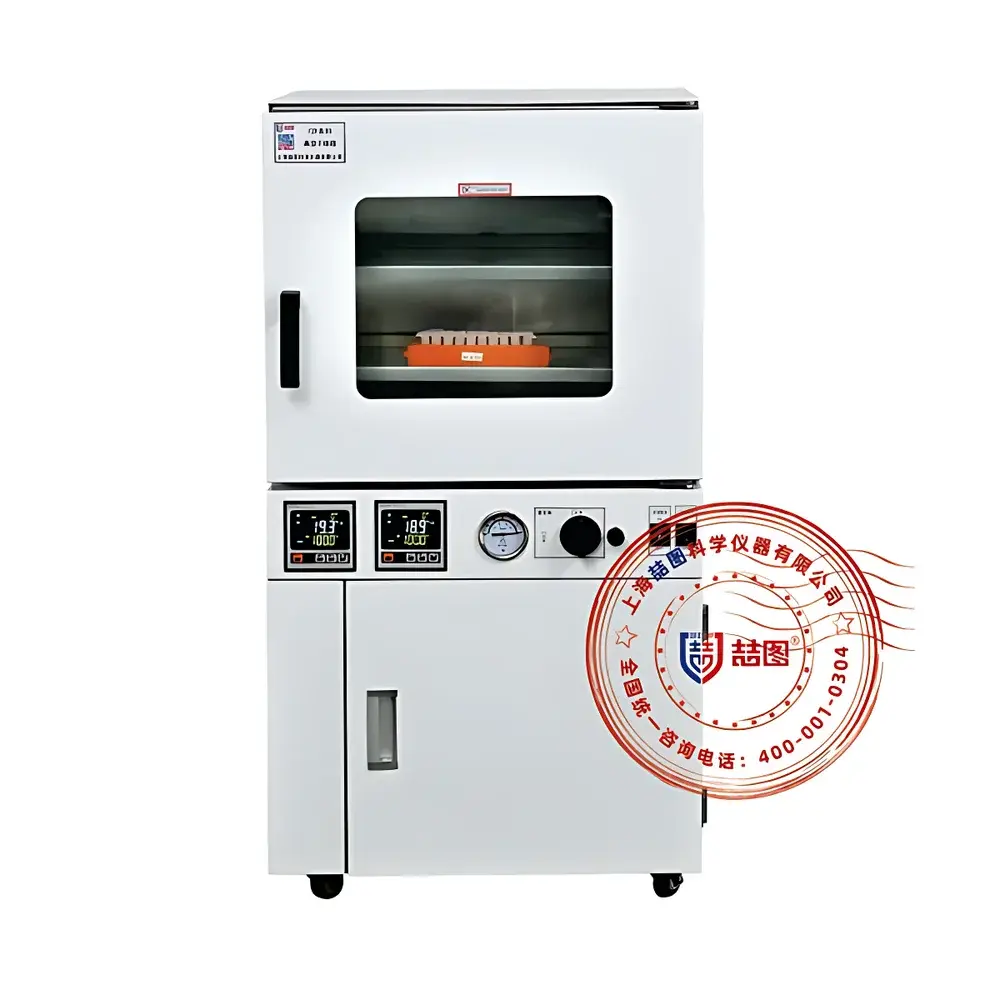
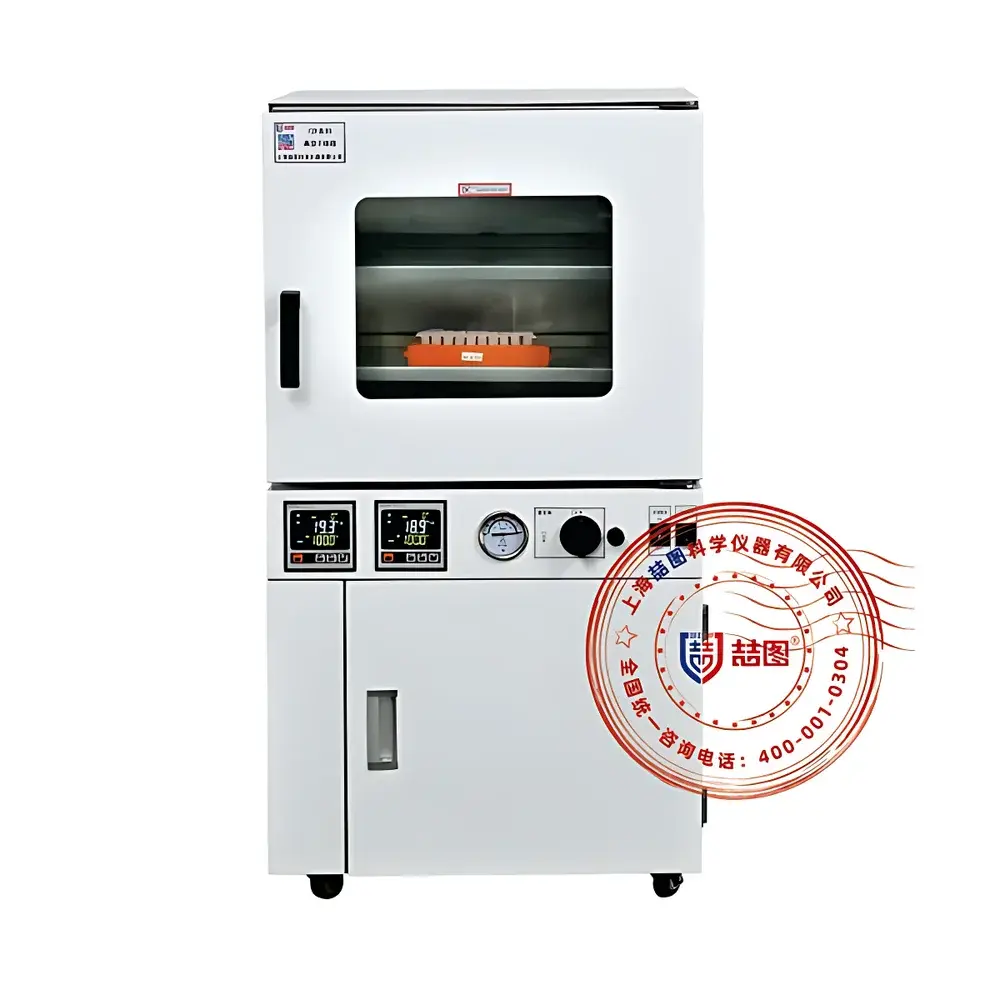
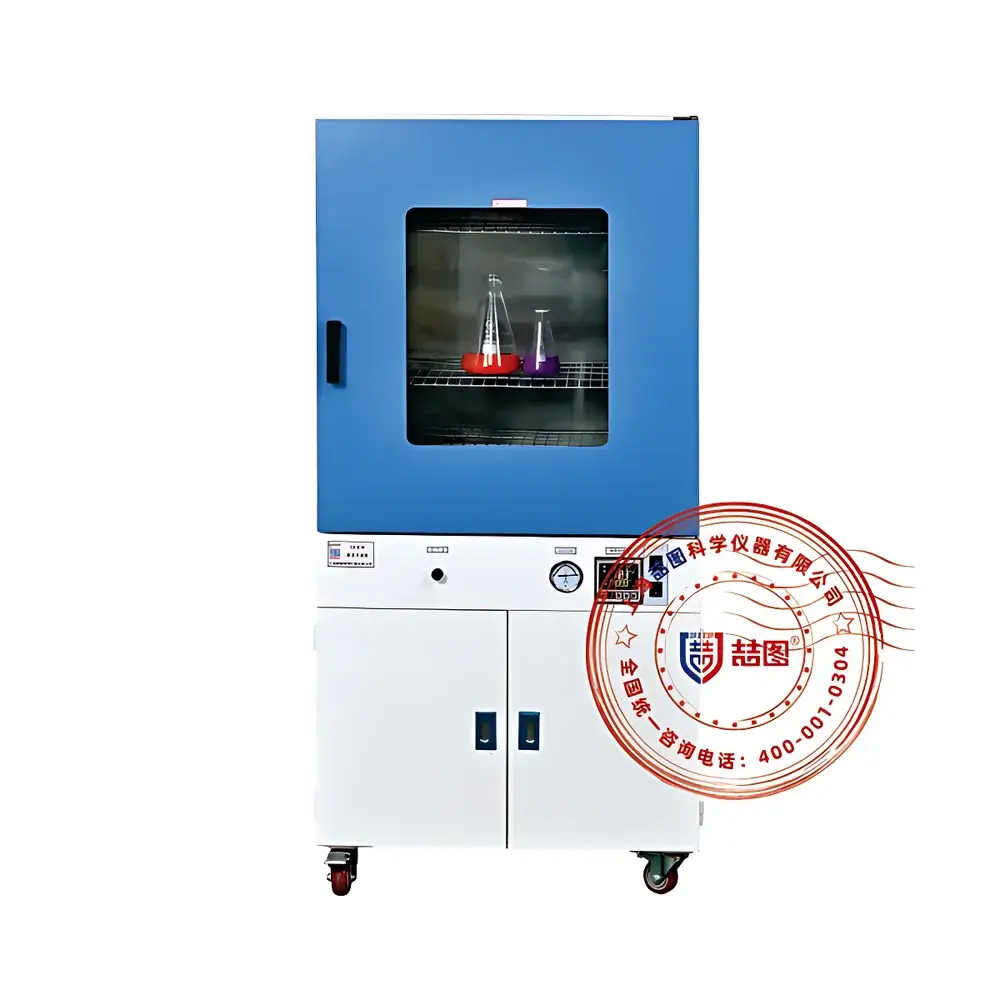
DRETOP TZF-6050LV Vertical Vacuum Drying Oven
| Brand | DRETOP |
|---|---|
| Origin | Shanghai, China |
| Manufacturer Type | Direct Manufacturer |
| Product Category | Domestic |
| Model | TZF-6050LV |
| Instrument Type | Vacuum Oven |
| Temperature Range | RT+10 to 250 °C |
| Temperature Uniformity | ±1 °C |
| Temperature Fluctuation | ±0.5 °C |
| Temperature Resolution | 0.1 °C |
| Vacuum Level | ≤133 Pa |
| Internal Chamber Dimensions (W×D×H) | 415 × 370 × 345 mm |
| External Dimensions (W×D×H) | 597 × 560 × 1140 mm |
| Inner Chamber Material | 304 Stainless Steel |
| Heating Method | External Four-Side Radiant Heating |
| Operating Ambient Temperature | +5 to 40 °C |
| Insulation | Glass Fiber |
| Control System | Microprocessor-Based PID Controller with Timer and Over-Temperature Protection |
Overview
The DRETOP TZF-6050LV Vertical Vacuum Drying Oven is an engineered solution for controlled thermal processing under reduced-pressure conditions. It operates on the principle of vacuum-assisted drying—removing ambient air via a vacuum pump to lower the partial pressure of water vapor, thereby reducing the boiling point of solvents and moisture and enabling gentle, low-temperature dehydration. This method prevents thermal degradation, oxidation, and structural collapse in heat-sensitive materials such as polymers, pharmaceutical intermediates, lithium-ion battery cathode/anode slurries, semiconductor wafers, and biological specimens. Designed for laboratory-scale R&D and pilot production environments, the TZF-6050LV delivers stable temperature control across its full operating range (RT+10 °C to 250 °C) while maintaining a vacuum level of ≤133 Pa—sufficient for medium-vacuum applications where molecular collision frequency is significantly reduced but system integrity and operational safety remain uncompromised.
Key Features
- External four-side radiant heating architecture eliminates internal heating elements from the chamber, preventing vacuum arcing, carbon deposition, or localized hot spots—critical for cleanroom-compatible processes and long-term reliability.
- 304 stainless steel interior chamber and drawer-style perforated stainless steel shelves ensure corrosion resistance, ease of cleaning, and mechanical stability under repeated vacuum cycling.
- Large-format LCD controller with tri-color display provides simultaneous readout of setpoint temperature, actual chamber temperature, vacuum level (when equipped), and timer status—enabling intuitive, error-resistant operation.
- Self-diagnostic microprocessor PID controller includes programmable timer (1–9999 minutes), over-temperature alarm with independent hardware cutoff, and automatic parameter retention after power interruption.
- Double-layer tempered glass observation window with silicone-sealed dual-latch zinc alloy door mechanism ensures consistent vacuum integrity and visual monitoring without compromising seal performance.
- High-efficiency glass fiber insulation between outer shell and inner chamber minimizes thermal loss and supports energy-efficient operation within ambient conditions of +5 °C to 40 °C.
- Comprehensive electrical protection suite includes over-current, short-circuit, ground-fault, and over-temperature safeguards compliant with IEC 61000-4 immunity standards.
Sample Compatibility & Compliance
The TZF-6050LV accommodates a broad spectrum of sample formats—including powders, granules, thin films, coated wafers, gel matrices, and porous ceramics—without risk of dispersion or oxidation during drying. Its vacuum environment eliminates convective heat transfer, making it suitable for ASTM E145-22 Class II vacuum ovens and aligned with ISO 554:1976 (standard atmospheres for conditioning and testing) and USP (drying of pharmaceutical materials). The unit’s construction and control architecture support GLP/GMP documentation requirements when integrated with optional RS485 communication and audit-trail-capable data loggers. All electrical components meet CE marking directives (2014/30/EU EMC, 2014/35/EU LVD), and the stainless steel chamber complies with FDA 21 CFR Part 11 guidelines for material contact surfaces in regulated manufacturing.
Software & Data Management
While the base model features a stand-alone microprocessor controller, optional upgrades include color touchscreen HMI modules with embedded data logging (up to 10,000 records), USB export capability, and configurable alarm thresholds. For networked lab environments, the RS485 interface enables Modbus RTU integration with SCADA systems or centralized LIMS platforms. Optional inert gas inlet valves (with mass flow control) allow purging with nitrogen or argon prior to vacuum draw—supporting inert-atmosphere drying protocols required in battery electrode processing per IEEE 1625 and JIS C 8714. Vacuum gauge options span analog Bourdon-tube meters to digital capacitance manometers (KF25/KF40 compatible), ensuring traceable pressure measurement across medium-vacuum regimes.
Applications
This vacuum oven serves critical functions across multiple technical domains: in semiconductor packaging, it performs post-die-attach curing and moisture removal from encapsulated devices; in lithium battery R&D, it dries slurry-coated electrodes at <120 °C under ≤133 Pa to preserve binder integrity and minimize residual solvent; in biopharma, it stabilizes lyophilized protein formulations and excipient blends without denaturation; in materials science, it removes solvents from MOFs, aerogels, and nanocomposite precursors while retaining nanostructure. Its vertical form factor optimizes floor space in high-density lab layouts, and compatibility with external oil-free diaphragm pumps (e.g., VGM series) ensures oil-free operation for ultra-clean applications.
FAQ
What vacuum level does the TZF-6050LV achieve, and how is it measured?
The unit achieves a base pressure of ≤133 Pa using a standard rotary vane pump (V-series, optional); pressure is monitored via analog or digital vacuum gauge connected to the KF16 or KF25 port.
Can this oven be used for inert-gas purging before vacuum draw?
Yes—optional inert gas inlet valves with precision flow regulators enable pre-purge cycles with N₂ or Ar, essential for oxygen-sensitive materials such as Li-metal anodes or catalytic nanoparticles.
Is the temperature uniformity validated per ASTM E2207?
Temperature uniformity of ±1 °C across the working volume is verified during factory calibration using nine calibrated PT100 sensors per IEC 60068-3-5; full validation reports are available upon request.
How does external heating improve process repeatability compared to internal heating designs?
External radiant heating avoids direct contact between heating elements and samples, eliminating hot-spot formation, thermal radiation asymmetry, and contamination risks—resulting in higher batch-to-batch reproducibility in GMP-compliant drying protocols.
What maintenance intervals are recommended for long-term vacuum integrity?
Silicone door gaskets should be inspected quarterly; vacuum pump oil (if oil-lubricated) replaced every 500 operating hours; and chamber interior cleaned with ethanol after each use when processing volatile organics or salts.



