
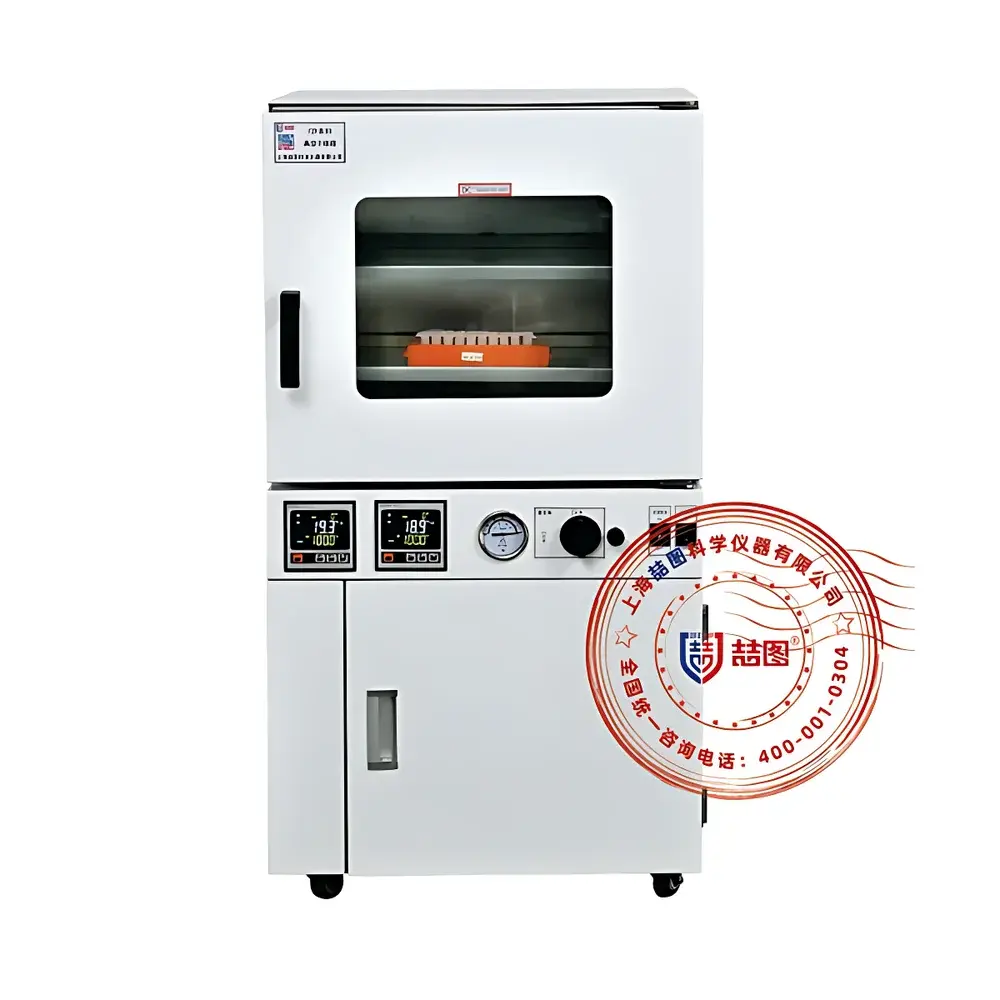
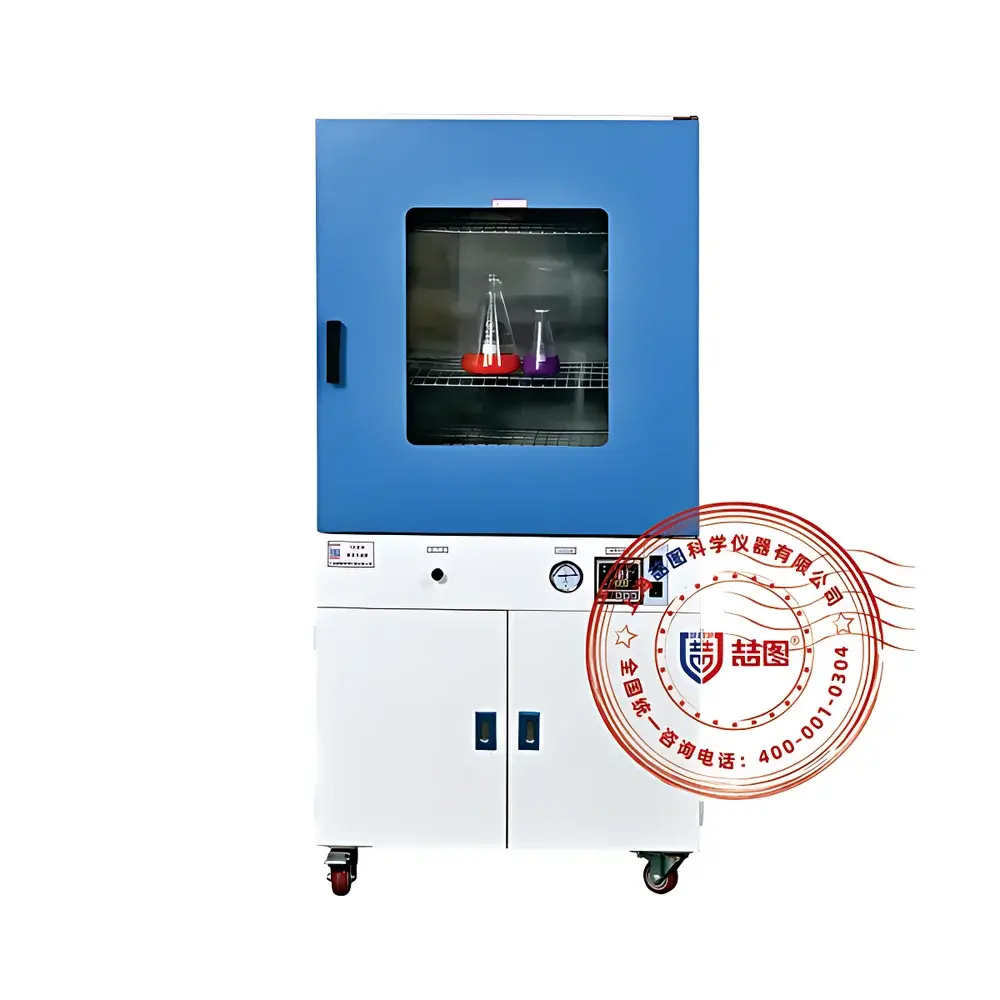
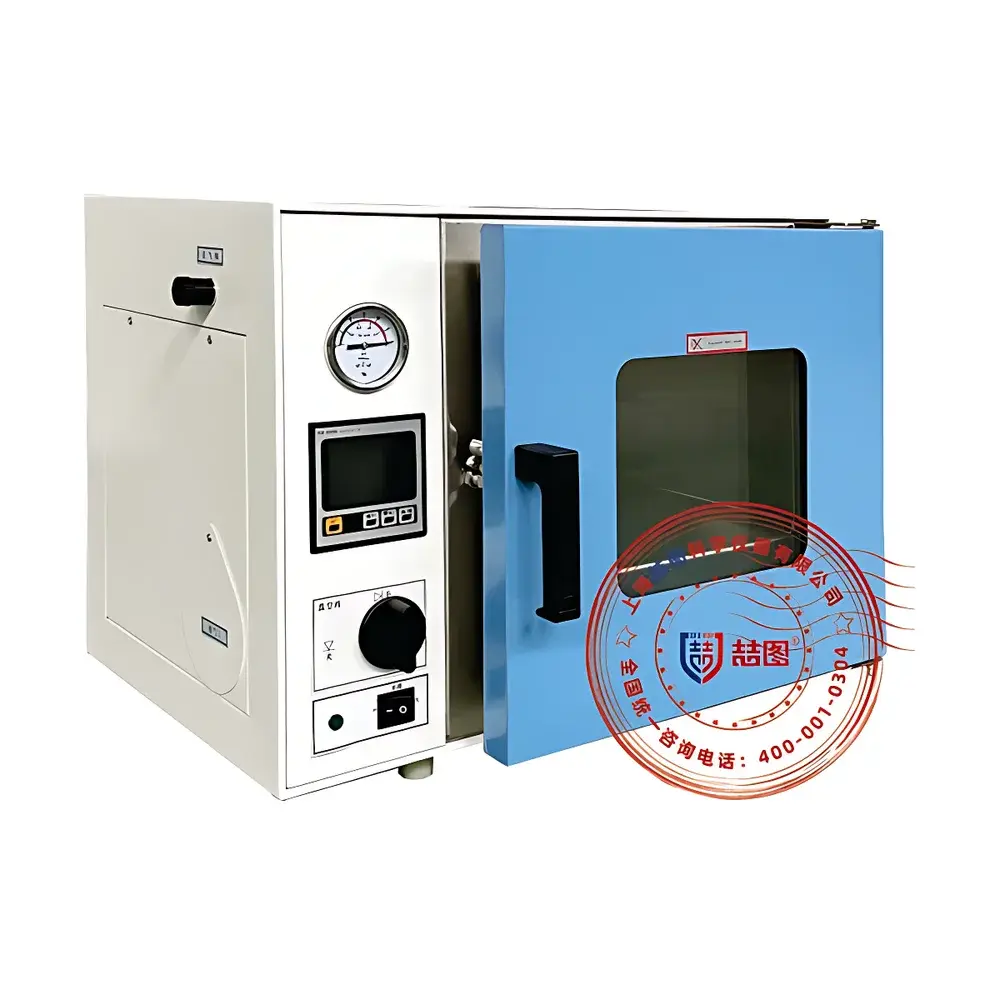
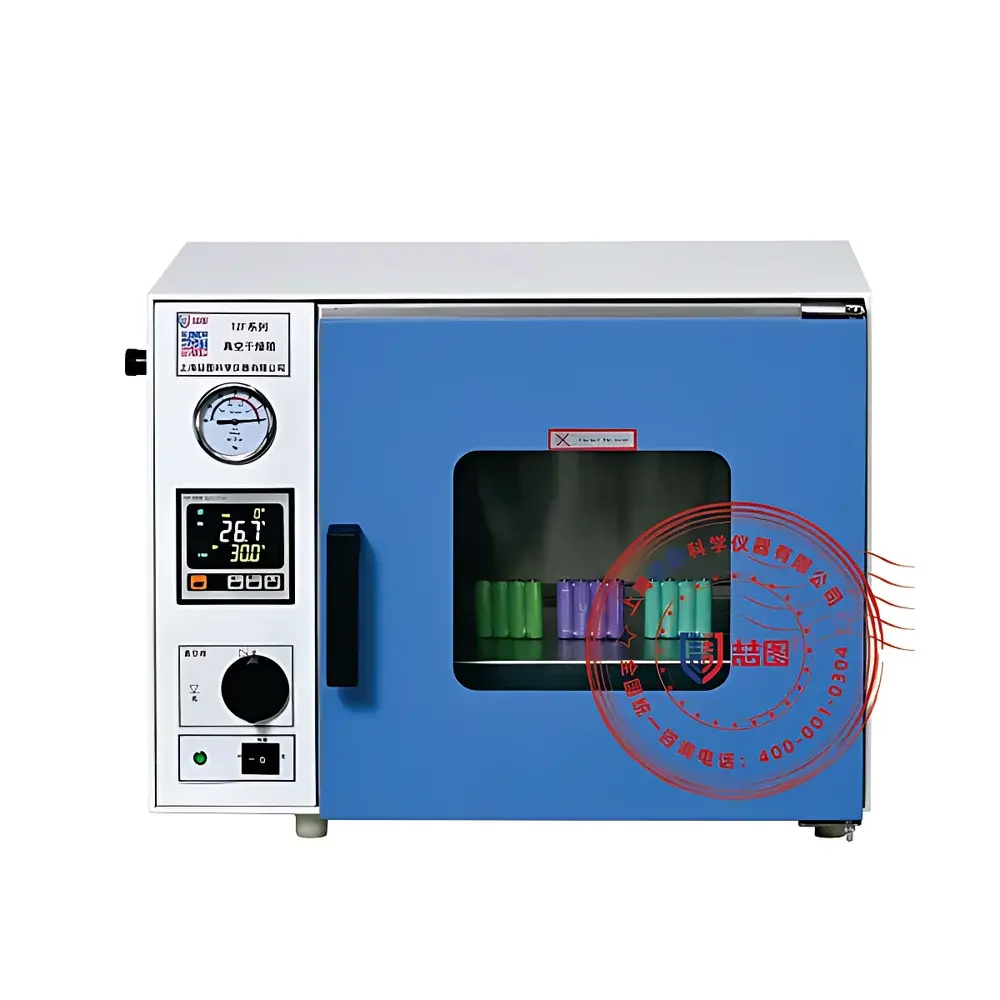
DRETOP TZF-6090 Vacuum Drying Oven
| Brand | DRETOP |
|---|---|
| Origin | Shanghai, China |
| Model | TZF-6090 |
| Instrument Type | Vacuum Oven |
| Temperature Range | RT+10 to 250 °C |
| Temperature Uniformity | ±2 °C to ±5 °C |
| Temperature Fluctuation | ±0.5 °C |
| Temperature Resolution | 0.1 °C |
| Vacuum Level | ≤133 Pa |
| Internal Chamber Dimensions (W×D×H) | 450×450×450 mm |
| External Dimensions (W×D×H) | 775×580×720 mm |
| Chamber Material | 304 Stainless Steel |
| Heating Method | External Heated Wall (Standard), Optional Internal Heating |
| Insulation | Glass Fiber |
| Working Ambient Temperature | RT+10 to 45 °C |
| Power Supply | AC 220 V, 50 Hz |
| Input Power | 1800 W |
| Timer Range | 1–9999 min |
| Safety Features | Over-Temperature Alarm & Protection, Leakage/Short-Circuit/Overload Protection, Data Memory on Power Failure |
Overview
The DRETOP TZF-6090 Vacuum Drying Oven is an engineered laboratory-grade thermal processing system designed for precise, oxidation-free drying, curing, and degassing under controlled low-pressure environments. Operating on the fundamental principle of vacuum-assisted thermal desorption, the unit evacuates ambient air via an external vacuum pump (optional or user-supplied), reducing internal pressure to ≤133 Pa. This depressurization lowers the boiling point of solvents and moisture, enabling efficient removal at significantly reduced temperatures—critical for preserving structural integrity and chemical stability of thermally sensitive materials. Unlike conventional forced-air ovens, the TZF-6090 eliminates convective heat transfer and oxygen exposure during operation, thereby preventing oxidation, decomposition, and cross-contamination. Its robust stainless-steel chamber, external heating architecture (standard configuration), and PID-controlled temperature regulation make it suitable for applications demanding reproducible process conditions across semiconductor fabrication, lithium-ion battery electrode conditioning, pharmaceutical lyophilization support, and advanced material synthesis.
Key Features
- External heating design with smooth-walled 304 stainless-steel chamber—facilitates rapid cleaning, accommodates irregularly shaped or oversized samples (e.g., optical components, molds, large substrates), and eliminates in-chamber heating elements that could disturb powder integrity.
- Microprocessor-based PID temperature controller with 0.1 °C resolution, ±0.5 °C fluctuation tolerance, and programmable timer (1–9999 minutes); includes over-temperature alarm, auto-shutdown, and non-volatile parameter memory to retain settings after power interruption.
- Double-layer tempered glass observation window with silicone-sealed dual-stage rotary latch door—ensures reliable vacuum integrity and real-time visual monitoring without process interruption.
- High-efficiency glass fiber insulation between outer shell and inner chamber minimizes thermal loss, improves energy efficiency, and maintains stable chamber wall temperatures within ambient limits (RT+10 to 45 °C).
- Comprehensive safety architecture: integrated ground-fault circuit interrupter (GFCI), short-circuit protection, overload cutoff, and thermal fuse—certified for continuous duty in GLP-compliant laboratories and ISO 17025-accredited testing facilities.
Sample Compatibility & Compliance
The TZF-6090 supports diverse sample geometries and chemistries due to its configurable heating mode (external standard; internal heating available upon request) and inert chamber environment. Powdered, granular, or nanostructured materials remain undisturbed during drying—eliminating aerosolization risks common in convection ovens. The ≤133 Pa vacuum level meets ASTM E145-22 requirements for vacuum drying procedures and aligns with USP guidelines for sterile product drying validation. Chamber construction adheres to ISO 9001 manufacturing standards; all electrical components comply with IEC 61010-1 for laboratory equipment safety. Optional accessories—including inert gas inlet valves (N₂ or Ar), cold traps, oil mist filters, and RS485 communication modules—enable integration into automated workflows compliant with FDA 21 CFR Part 11 data integrity requirements.
Software & Data Management
While the base model features a high-contrast LCD interface with tri-color status indicators and intuitive menu navigation, optional upgrades include full-color touch-screen controllers supporting multi-step temperature ramp-soak profiles and real-time vacuum/temperature logging. All digital variants record timestamped operational data—including setpoints, actual chamber temperature, vacuum pressure, elapsed time, and fault codes—with audit-trail capability. Export formats include CSV and PDF for traceability in quality assurance documentation. When paired with optional embedded printers or SCADA-compatible RS485 interfaces, the system supports electronic batch records (EBR) and long-term trend analysis per GMP Annex 11 and ISO/IEC 17025 clause 7.7.
Applications
- Semiconductor manufacturing: post-lithography bake, photoresist hardening, and wafer-level degassing prior to thin-film deposition.
- Lithium-ion battery R&D: electrode slurry drying, separator moisture removal, and electrolyte impregnation stabilization under inert vacuum.
- Pharmaceutical development: excipient drying, API crystallization support, and pre-lyophilization conditioning of heat-labile biologics.
- Materials science: polymer film annealing, MOF activation, aerogel solvent exchange, and ceramic green-body debinding.
- Environmental testing labs: soil/sediment moisture analysis per EPA Method 5035A, and pesticide residue stabilization prior to GC-MS extraction.
FAQ
What is the difference between external and internal heating configurations?
External heating uses perimeter-mounted heaters behind the chamber walls—ideal for large, irregular, or easily contaminated samples, with superior vacuum stability at ultra-low pressures. Internal heating employs embedded plate heaters beneath shelves—offering tighter temperature uniformity (±1 °C typical) and faster response for powders and high-precision thermal protocols.
Can the TZF-6090 be used for inert-atmosphere processing?
Yes—when equipped with the optional inert gas inlet valve, users can backfill the chamber with nitrogen or argon after evacuation, enabling controlled purge-dry cycles essential for oxygen-sensitive catalysts or pyrophoric compounds.
Is vacuum pump included with the unit?
No—the TZF-6090 requires an external vacuum pump (e.g., 20 m³/h two-stage rotary vane pump); DRETOP offers compatible models as configurable accessories with oil mist filtration and noise-dampening enclosures.
How is temperature uniformity validated across the chamber volume?
Per IEC 60068-3-5, uniformity is measured using nine calibrated PT100 sensors placed at standardized locations (center + eight corners); reported values (±2 °C to ±5 °C) reflect worst-case deviation at 100 °C and 200 °C setpoints under steady-state vacuum conditions.
Does the unit support regulatory compliance for pharmaceutical manufacturing?
With optional IQ/OQ documentation packages, 21 CFR Part 11-compliant software, and audit-ready calibration logs, the TZF-6090 supports qualification in GMP environments—particularly for non-sterile intermediate drying steps governed by ICH Q5C and Q7 guidelines.



