
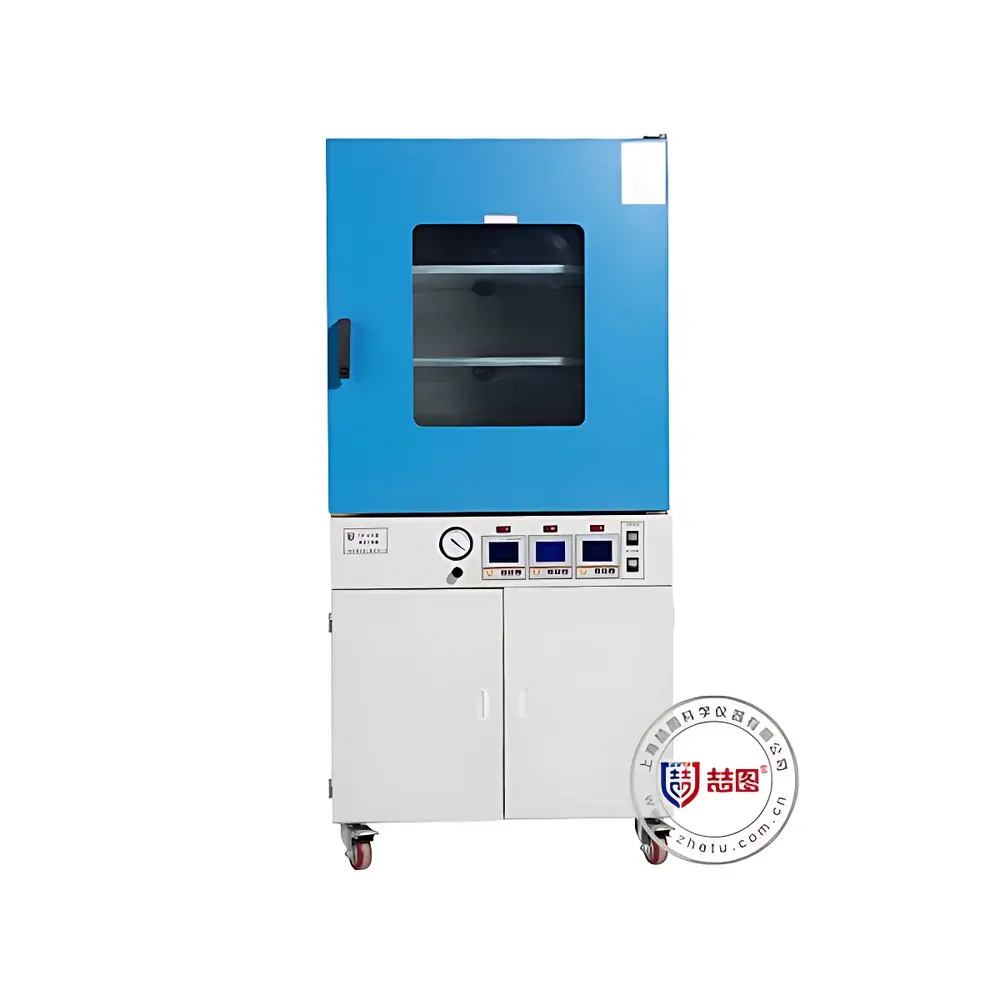
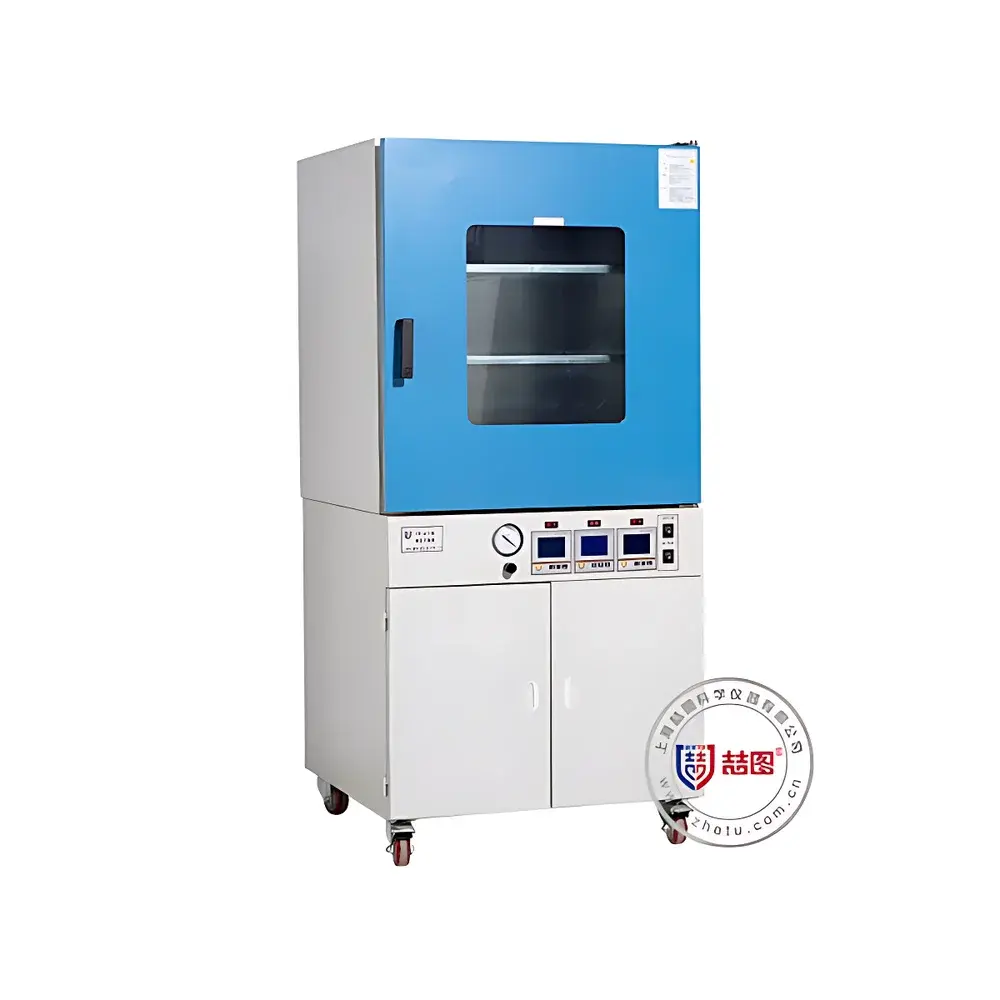
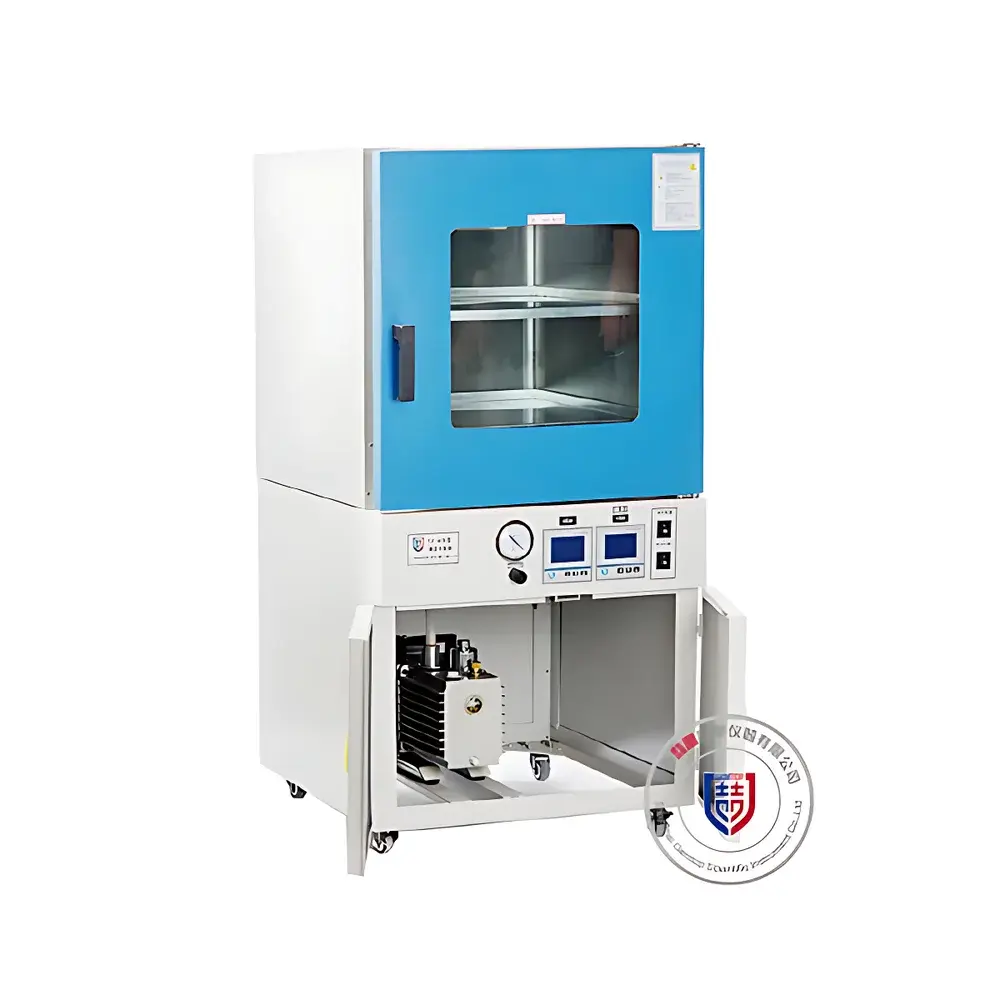
DRETOP TZF-6210L Vertical Vacuum Drying Oven
| Brand | DRETOP |
|---|---|
| Origin | Shanghai, China |
| Manufacturer Type | Direct Manufacturer |
| Product Category | Domestic |
| Model | TZF-6210L |
| Instrument Type | Vacuum Oven |
| Temperature Range | RT+10 to 250 °C |
| Temperature Fluctuation | ±0.5 °C |
| External Dimensions | 720 × 735 × 1560 mm |
| Control Temperature Range | RT+10 to 250 °C |
| Internal Chamber Dimensions | 560 × 600 × 640 mm |
| Temperature Resolution | 0.1 °C |
| Operating Ambient Temperature | +5 to 40 °C above ambient |
| Inner Chamber Material | 304 Stainless Steel |
| Heating Method | External (Perimeter) Heating |
| Temperature Uniformity | ±1 °C |
| Ultimate Vacuum Level | ≤133 Pa |
Overview
The DRETOP TZF-6210L Vertical Vacuum Drying Oven is an engineered solution for controlled thermal processing under reduced-pressure conditions. It operates on the principle of vacuum-assisted moisture removal: by evacuating air from the chamber using an integrated or externally coupled rotary vane vacuum pump, the boiling point of volatile solvents and water is significantly lowered—enabling efficient drying at lower temperatures without thermal degradation. This physical mechanism is essential for preserving structural integrity and chemical stability in thermally sensitive materials such as lithium-ion battery electrode slurries, semiconductor packaging resins, pharmaceutical actives, and biological macromolecules. Unlike conventional convection ovens, the TZF-6210L eliminates oxidative pathways during heating, preventing surface oxidation, discoloration, or decomposition—critical for applications requiring high-purity end products and reproducible process outcomes in R&D and pilot-scale manufacturing environments.
Key Features
- Vertically oriented stainless steel chamber (560 × 600 × 640 mm) with 210 L usable volume, optimized for high-throughput sample loading while minimizing floor space footprint;
- External perimeter heating system with embedded heating elements in all four chamber walls—eliminates internal hot spots, prevents vacuum arcing, and ensures uniform thermal distribution (±1 °C across chamber volume);
- Microprocessor-based PID temperature controller with 0.1 °C resolution, programmable ramp-soak profiles, and dual-stage overtemperature protection compliant with IEC 61000-4-2 ESD immunity standards;
- Reinforced dual-stage mechanical door lock with zinc-alloy handle and fluorosilicone gasket—maintains vacuum integrity down to ≤133 Pa and supports repeated cycling without seal fatigue;
- Triple-layer thermal insulation: inner 304 stainless steel wall, intermediate glass fiber blanket (density ≥80 kg/m³), and outer electrostatically sprayed cold-rolled steel casing—reduces standby heat loss by >40% versus standard designs;
- Integrated diagnostics engine with alphanumeric fault code display (e.g., E01 = sensor open circuit, E03 = heater short) enabling rapid root-cause identification and field service;
- Comprehensive safety architecture including earth leakage protection (30 mA RCD), overcurrent cutoff, thermal cutout fuses, and non-volatile parameter memory that retains setpoints after power interruption.
Sample Compatibility & Compliance
The TZF-6210L accommodates diverse sample geometries—from stacked wafers and coated foils to porous ceramic substrates and lyophilized biomaterials—without risk of displacement or particle dispersion, owing to its static vacuum environment. Its 304 stainless steel chamber meets ASTM A240 requirements for corrosion resistance in non-aggressive atmospheres. For applications involving acidic vapors (e.g., HF etching residues) or alkaline electrolytes, optional 316L stainless steel construction or PTFE-coated interior surfaces are available per ISO 15190:2020 laboratory safety guidelines. The system supports GLP/GMP-aligned workflows through configurable audit trails (when paired with LT-series touchscreen controllers), time-stamped event logging, and user-access-level management—facilitating compliance with FDA 21 CFR Part 11 electronic record requirements when validated per IQ/OQ protocols.
Software & Data Management
While the base model features a dedicated LCD interface with real-time dual-channel display (chamber temperature + vacuum level), optional upgrades include the LT-series 7-inch color touchscreen controller. This unit integrates temperature and vacuum control into a single programmable logic platform supporting up to 32 segment ramp-hold cycles, data export via USB 2.0 (CSV format), RS485 Modbus RTU communication for SCADA integration, and optional embedded printer output. All firmware adheres to IEC 62443-3-3 cybersecurity principles, with password-protected configuration modes and write-locked calibration parameters. Data logs are timestamped with millisecond precision and stored in non-volatile memory with 12-month retention capacity—ensuring traceability for quality audits and process validation reports.
Applications
- Lithium-ion battery manufacturing: solvent removal from cathode/anode coatings prior to calendaring, eliminating bubble formation and ensuring interfacial adhesion;
- Semiconductor packaging: curing of epoxy molding compounds under vacuum to suppress voiding in QFN and BGA assemblies;
- Pharmaceutical development: drying of amorphous solid dispersions and spray-dried powders while maintaining polymorphic stability;
- Materials science research: thermal aging studies of polymer nanocomposites under inert gas backfill (optional N₂/Ar inlet valve);
- Environmental testing labs: moisture content analysis of soil samples per ASTM D2216, avoiding hydrolytic degradation during gravimetric determination;
- Academic laboratories: dehydration of delicate botanical specimens, enzyme immobilization matrices, and MOF precursors without framework collapse.
FAQ
What vacuum level is achievable with the standard configuration?
The TZF-6210L achieves ≤133 Pa (1 Torr) using the included 2 L/s rotary vane pump; optional high-vacuum configurations with dual-stage pumps reach ≤5 Pa.
Can inert gas purging be integrated?
Yes—optional mass-flow-controlled inert gas inlets (N₂, Ar) enable positive-pressure purging before vacuum drawdown or backfilling post-drying, critical for oxygen-sensitive processes.
Is the chamber suitable for corrosive vapor exposure?
The standard 304 stainless steel chamber resists mild organic solvents and ambient humidity; for aggressive media (e.g., concentrated HCl, HF), specify 316L or PTFE-coated variants.
How is temperature uniformity verified?
Uniformity is validated per ISO 14644-3 Annex B using nine calibrated PT100 probes placed at standardized locations (center + six face centers + two corners), with results documented in factory test reports.
Does the system support automated vacuum regulation?
When equipped with the LT-series controller and optional vacuum transducer (capacitance manometer), the system maintains user-defined setpoints within ±5 Pa via closed-loop feedback—enabling isobaric drying protocols.



