
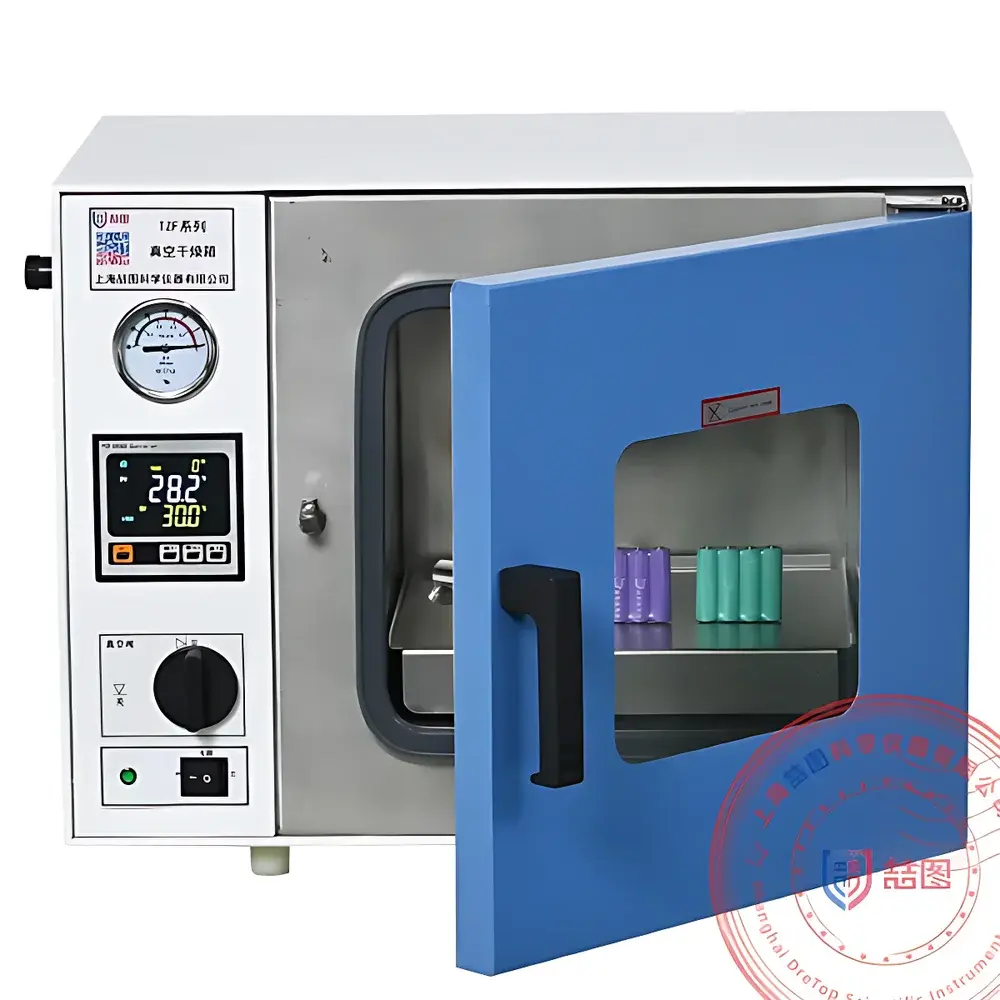
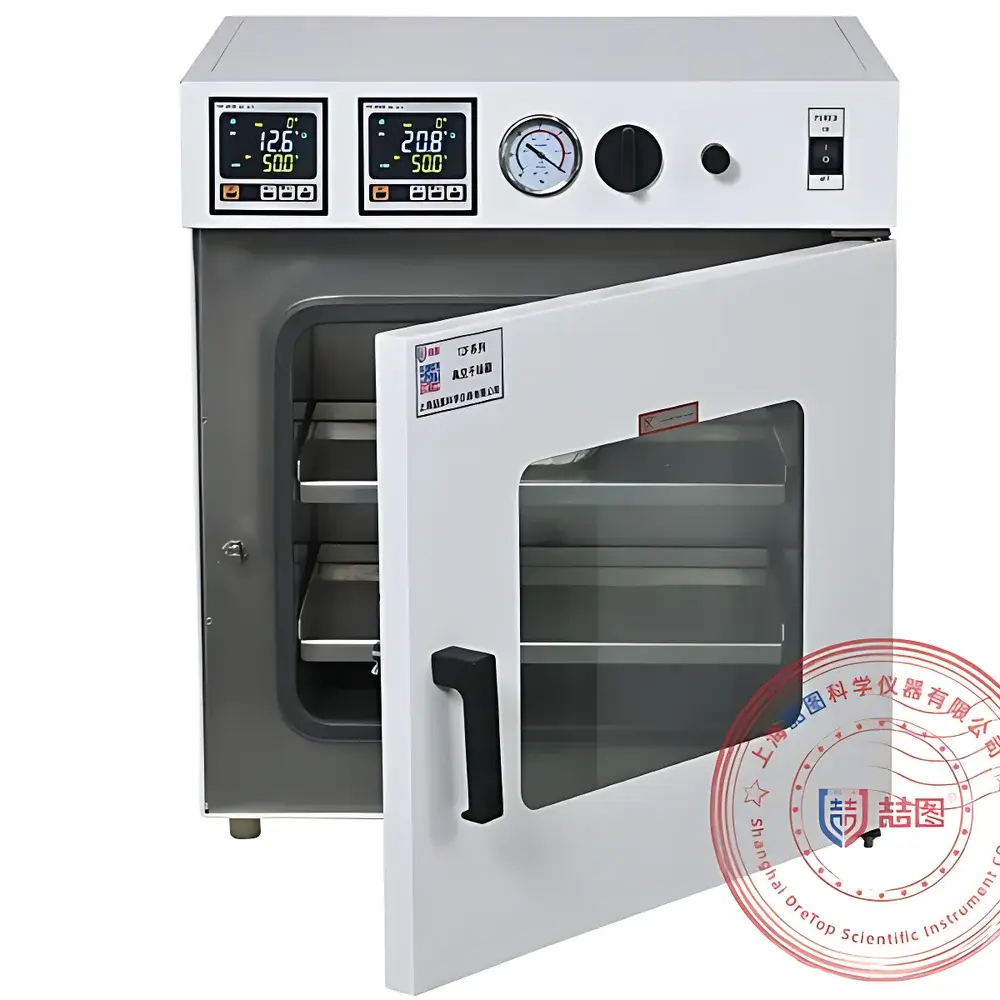
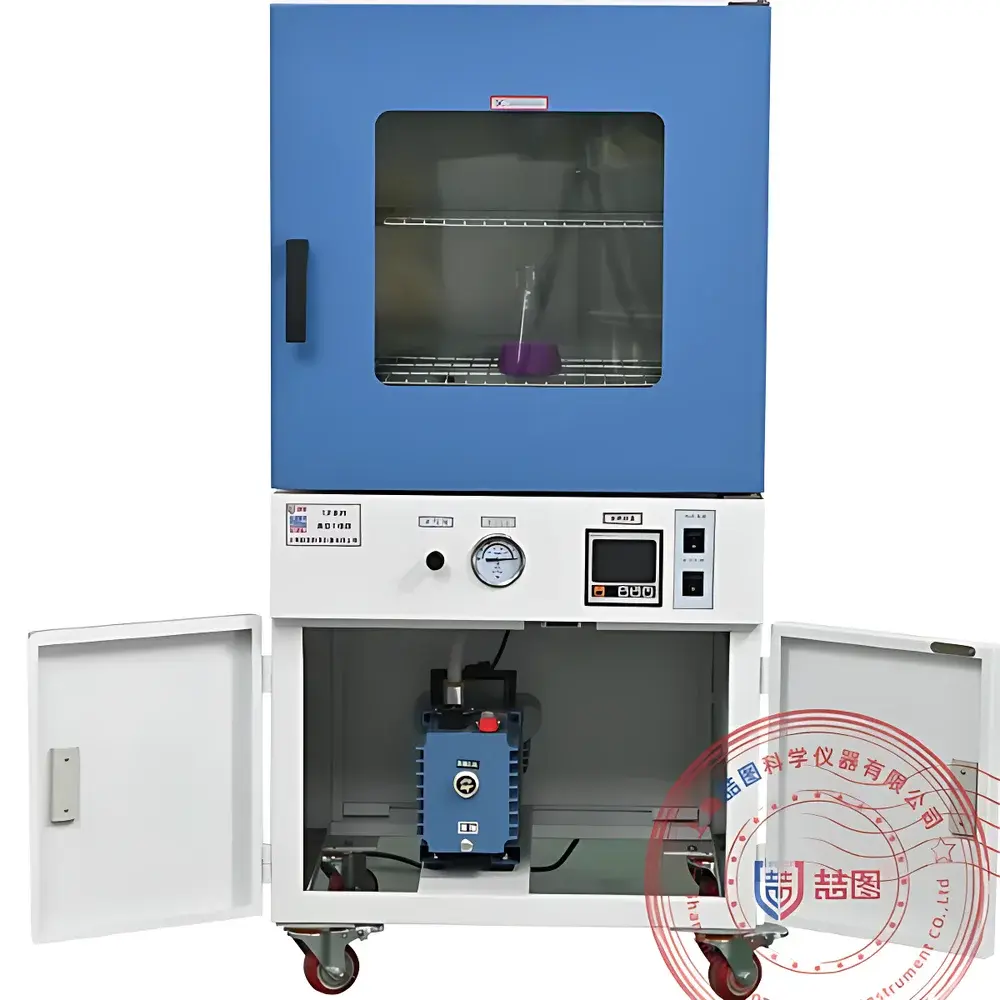
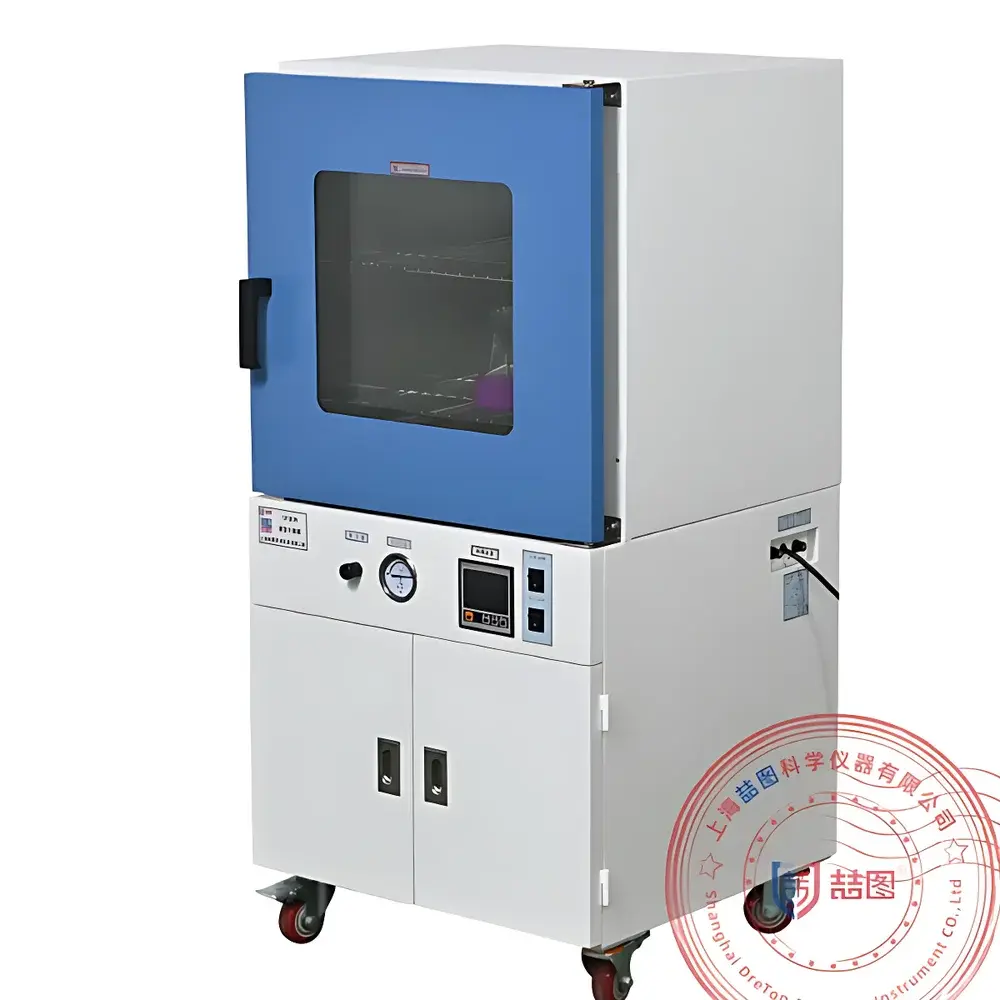
DRETOP TZK-L1331 Vacuum Drying Oven
| Brand | DRETOP |
|---|---|
| Origin | Shanghai, China |
| Model | TZK-L1331 |
| Instrument Type | Vacuum Oven |
| Temperature Range | RT+10°C to 250°C |
| Temperature Fluctuation | ±0.5°C |
| Chamber Dimensions (W×D×H) | 1100 mm × 1100 mm × 1100 mm |
| External Dimensions (W×D×H) | 1500 mm × 1500 mm × 1600 mm |
| Temperature Resolution | 0.1°C |
| Temperature Uniformity | ±2.5°C |
| Ultimate Vacuum Level | ≤133 Pa |
| Chamber Material | 304 Stainless Steel |
| Heating Method | Dual External & Internal Heating |
| Insulation | Glass Fiber Blanket |
| Power Supply | AC 220 V / 50 Hz |
| Operating Ambient Temperature | 5–35°C |
Overview
The DRETOP TZK-L1331 Vacuum Drying Oven is an industrial-grade, large-capacity vacuum thermal processing system engineered for precise, oxidation-free drying of thermally sensitive, hygroscopic, or chemically unstable materials under controlled low-pressure environments. Operating on the principle of reduced-pressure vapor pressure depression, the oven lowers the boiling point of solvents and moisture—enabling efficient removal at significantly lower temperatures than atmospheric drying. This mitigates thermal degradation, prevents surface oxidation, inhibits decomposition of labile compounds, and eliminates risks associated with volatile solvent exposure or explosive off-gassing. Designed for high-reproducibility batch processing in R&D and production settings, the TZK-L1331 integrates robust vacuum architecture with dual-mode heating (external radiant + internal plate heating), PID-based temperature regulation, and structural compliance with international safety and operational standards including IEC 61010-1 (Electrical Safety for Laboratory Equipment) and ISO 14644-1 (Cleanroom Classification).
Key Features
- Large working chamber (1.1 m³ internal volume) fabricated from electropolished 304 stainless steel—resistant to corrosion, non-reactive, and compliant with GLP/GMP cleanroom-compatible surface finish requirements.
- Dual heating configuration: external four-wall radiation heating ensures uniform thermal distribution; optional internal heated shelves provide rapid, localized energy transfer—ideal for heterogeneous or high-mass-load samples.
- High-fidelity microprocessor PID temperature controller with 0.1°C resolution, ±0.5°C fluctuation tolerance, and programmable ramp-soak profiles up to 9999 minutes.
- Integrated vacuum system with ultimate pressure ≤133 Pa (≤1 Torr), compatible with standard rotary vane oil-sealed pumps (V-series) or corrosion-resistant diaphragm pumps (VG-series) via KF16/KF25/KF40 quick-connect flanges.
- Double-layer tempered glass observation window with anti-fog coating and ergonomic zinc-alloy dual-stage locking mechanism—ensuring leak-tight seal integrity and long-term vacuum retention.
- Comprehensive safety architecture: over-temperature cut-off, short-circuit protection, ground-fault interruption, thermal fuse backup, and parameter memory retention during power interruption.
- Energy-efficient insulation using high-density glass fiber blanket between chamber and outer shell—reducing standby heat loss by >40% compared to mineral wool alternatives.
Sample Compatibility & Compliance
The TZK-L1331 accommodates diverse sample forms—including powders, granules, thin-film coatings, semiconductor wafers, lithium-ion battery electrodes, LED substrates, pharmaceutical lyophilates, and biological tissue specimens—without particle displacement or surface delamination. Its vacuum environment eliminates convective airflow, preventing cross-contamination and preserving delicate microstructures. The system supports ASTM E145-22 (Standard Specification for Gravity-Convection and Forced-Ventilation Ovens) and aligns with USP (Sterile Product Manufacturing) guidelines for moisture-sensitive process validation. Optional 316L stainless steel chambers or PTFE-coated interiors are available for applications involving aggressive acids (e.g., concentrated H₂SO₄, HCl) or alkaline media per ISO 15156-3 (Materials for Oil & Gas—Corrosion Resistant Alloys). All electrical components meet CE marking requirements and RoHS Directive 2011/65/EU.
Software & Data Management
While the base model features a multi-color LCD interface with real-time three-parameter display (chamber temperature, setpoint, vacuum level), optional upgrades include programmable LP-series controllers or integrated LT-series color touchscreen HMI units supporting full vacuum-temperature co-control logic. These enable user-defined multi-step protocols (e.g., hold-at-50°C under 50 Pa for 2 h → ramp to 120°C at 5°C/min → hold at 133 Pa for 4 h), automatic data logging (timestamped temp/vacuum values at 10-s intervals), and export via USB or RS485 to LIMS or SCADA platforms. Audit-trail functionality complies with FDA 21 CFR Part 11 requirements when paired with password-protected administrator access and electronic signature modules. Optional embedded thermal printers provide hard-copy batch records traceable to operator ID and session timestamp.
Applications
- Semiconductor manufacturing: post-lithography resist baking, wafer dehydration prior to sputtering, and MEMS device cavity sealing.
- Lithium-ion battery R&D: electrode drying under inert gas purge (N₂/Ar), cathode/anode slurry solvent removal, and pouch cell preconditioning.
- Pharmaceutical development: active pharmaceutical ingredient (API) stabilization, excipient drying per ICH Q5C stability protocols, and sterile powder conditioning.
- Materials science: graphene oxide reduction, MOF activation, aerogel supercritical drying precursor treatment, and polymer film degassing.
- Environmental testing labs: soil/sediment moisture analysis (EPA Method 5035A), particulate filter drying prior to gravimetric analysis, and VOC-free sample preparation.
FAQ
What vacuum level is required for optimal drying of lithium-ion battery cathodes?
For NMC or LFP cathode slurries, a stable vacuum of ≤50 Pa is recommended during initial solvent evaporation (NMP/DMC), followed by gradual ramp to ≤133 Pa for final residual moisture removal—achievable using optional vacuum gauges with analog output and closed-loop feedback control.
Can the TZK-L1331 operate continuously under GMP conditions?
Yes—when equipped with 316L chamber, HEPA-filtered inert gas inlet (optional), and Part 11-compliant software package, it meets Annex 11 (EU GMP) and FDA Process Validation Guidance for sustained operation in regulated environments.
Is external cooling water required for the vacuum pump?
Not for standard rotary vane pumps operating below 40°C ambient; however, for extended high-vacuum cycles (>8 h) or elevated ambient temperatures (>30°C), integration with a recirculating chiller (e.g., E-series pump protector with condenser loop) is strongly advised to maintain pump oil viscosity and prevent thermal breakdown.
How is temperature uniformity validated across the full chamber volume?
Per ISO 17025-accredited procedures, 9-point mapping (3×3 grid at mid-height) is performed using calibrated Pt100 sensors traceable to NIST standards; results consistently demonstrate ≤±2.5°C deviation at 120°C and ≤±1.8°C at 60°C.
What maintenance intervals are recommended for long-term reliability?
Vacuum pump oil change every 500 operational hours; door gasket inspection quarterly; chamber interior passivation annually; and PID controller calibration biannually using certified reference thermometers.



