
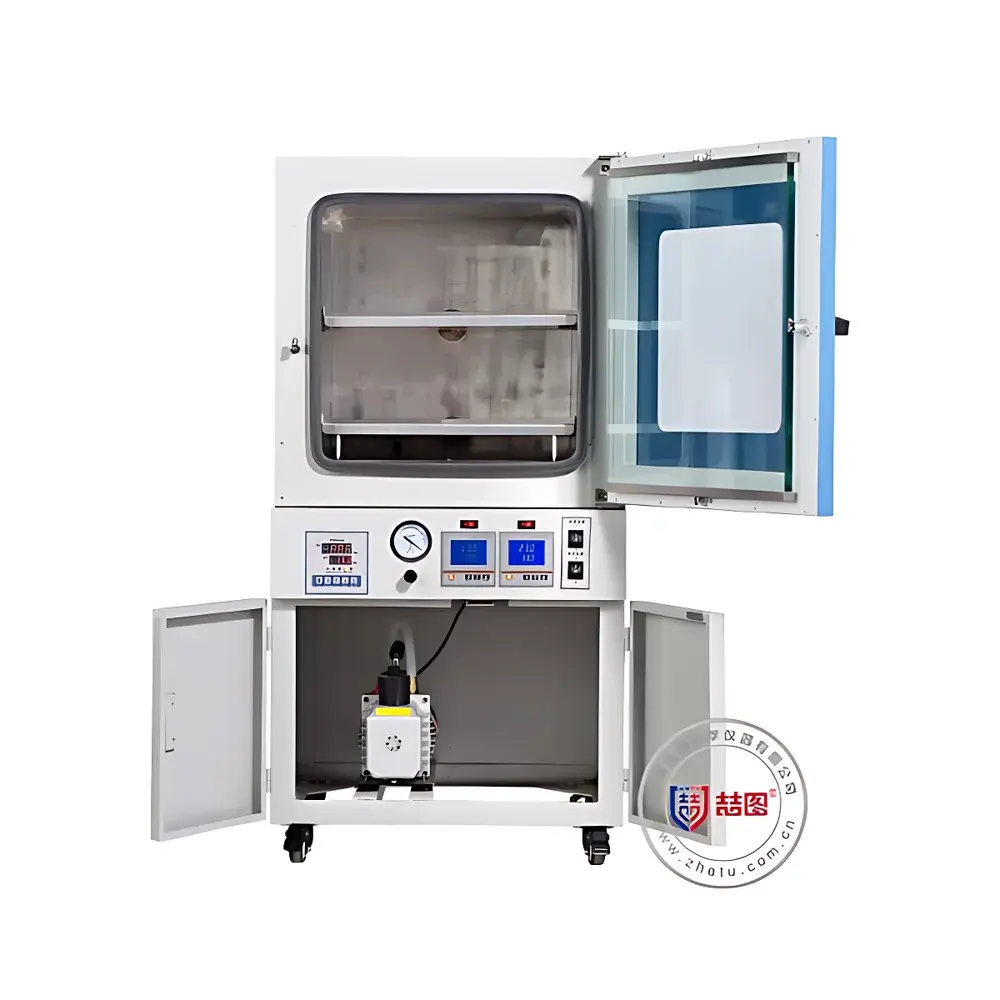
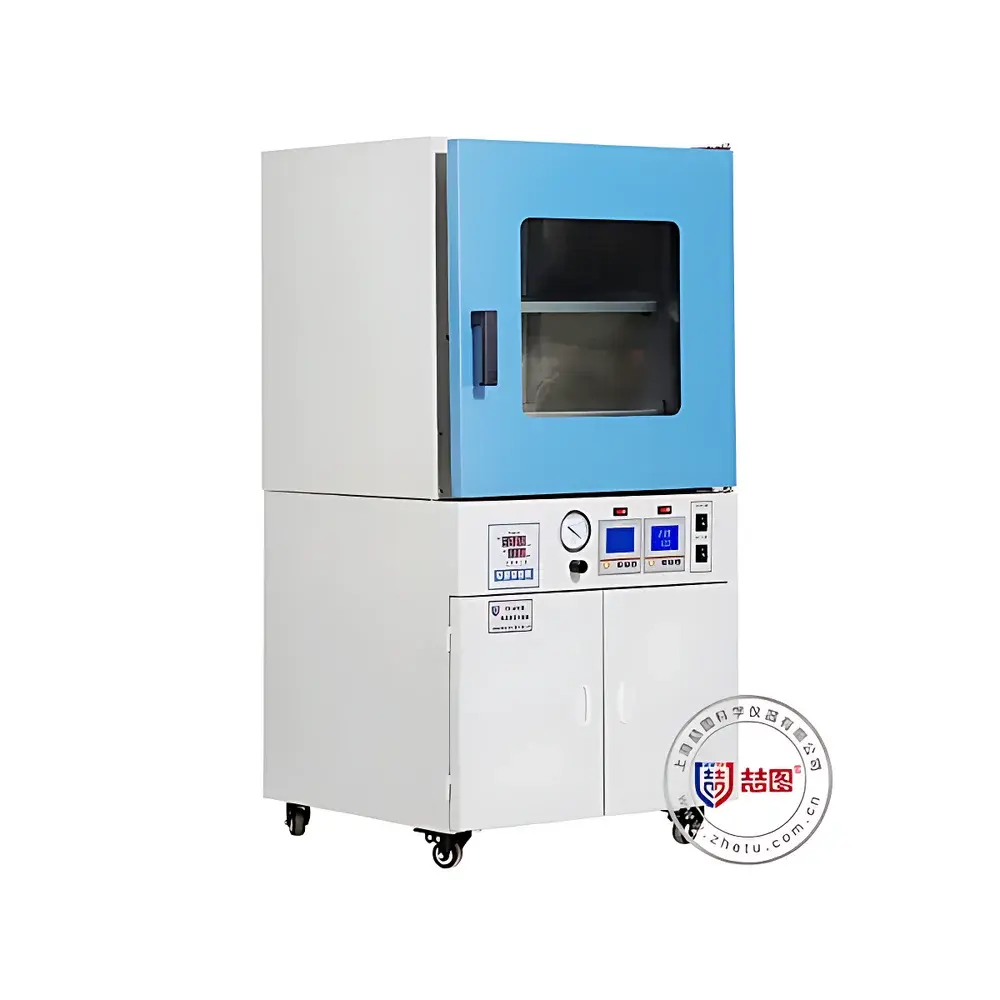
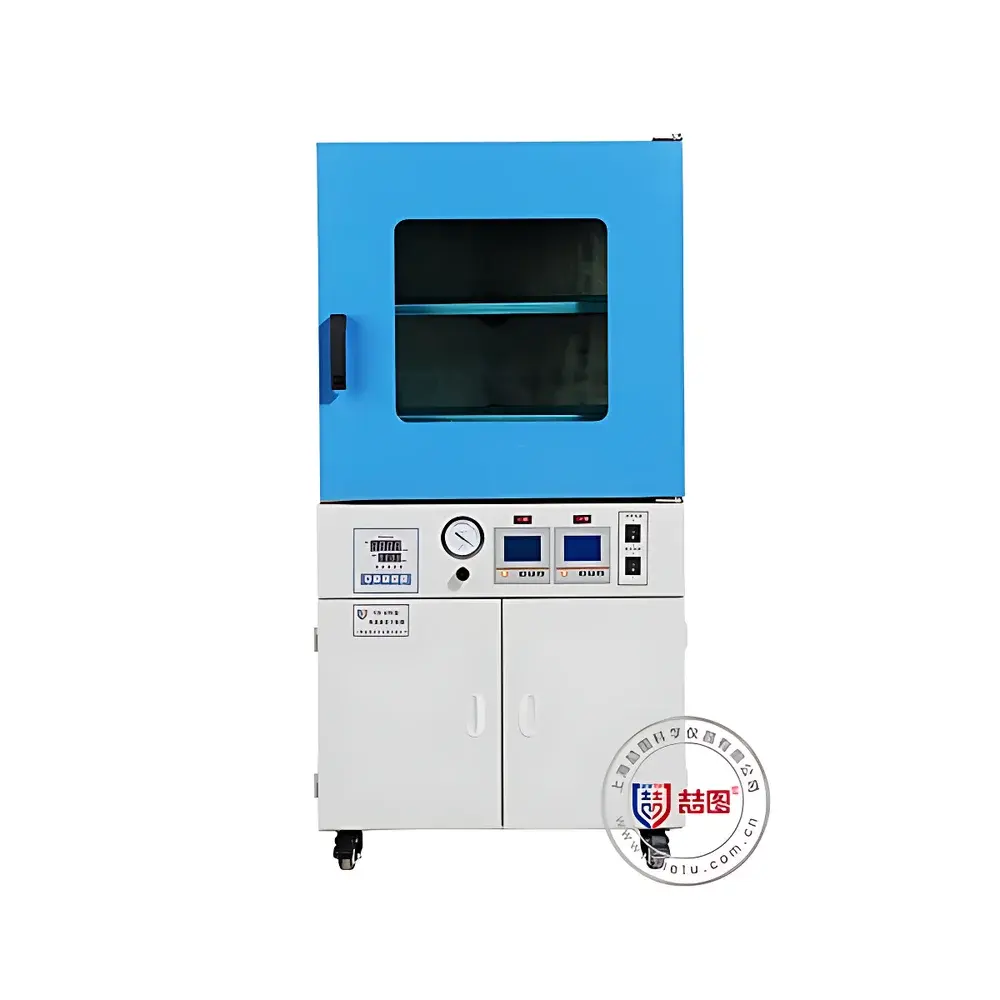
DRETOP TZS-6125L Digital Vacuum Drying Oven
| Brand | DRETOP |
|---|---|
| Origin | Shanghai, China |
| Manufacturer Type | Manufacturer |
| Product Category | Domestic |
| Model | TZS-6125L |
| Instrument Type | Vacuum Oven |
| Temperature Range | RT+10 to 250 °C |
| Temperature Fluctuation | ±0.5 °C |
| External Dimensions | 660 × 640 × 1290 mm |
| Control Temperature Range | RT+10 to 250 °C |
| Internal Chamber Dimensions | 500 × 500 × 500 mm |
| Temperature Resolution | 0.1 °C |
| Operating Ambient Temperature | 5–45 °C |
| Chamber Material | Stainless Steel (304) |
| Heating Method | External Radiant Heating |
| Temperature Uniformity | ±1 °C |
| Ultimate Vacuum Level | ≤133 Pa |
Overview
The DRETOP TZS-6125L Digital Vacuum Drying Oven is an engineered solution for precise thermal processing under controlled low-pressure environments. It operates on the principle of vacuum-assisted drying—removing ambient air via a mechanical vacuum pump to reduce partial pressure of water vapor, thereby lowering the boiling point of solvents and enabling gentle, oxidation-free dehydration of thermally sensitive materials. Unlike conventional convection ovens, this system eliminates convective heat transfer and atmospheric oxidation risks, making it essential for applications where chemical stability, structural integrity, and residual solvent control are critical. Designed for laboratory-scale R&D and pilot production workflows, the TZS-6125L delivers reproducible thermal profiles across its 125 L working volume, supporting ISO/IEC 17025-compliant calibration practices and aligning with GLP documentation requirements for traceable process validation.
Key Features
- Microprocessor-based PID temperature controller with programmable timer (1–9999 minutes), real-time deviation alarm, and dual-stage overtemperature protection to ensure operational safety and compliance with IEC 61000-4 electromagnetic compatibility standards.
- High-visibility double-layer tempered glass observation window with anti-fog coating, enabling continuous visual monitoring without compromising vacuum integrity or thermal stability.
- Externally mounted radiant heating elements surrounding the stainless steel (AISI 304) chamber—eliminating internal hotspots, arcing, or carbon deposition common in internal-heating configurations; supports uniform thermal distribution (±1 °C) and avoids direct contact between samples and heating surfaces.
- Integrated diagnostic interface displaying fault codes (e.g., E01 for sensor open circuit, E02 for overtemperature), facilitating rapid troubleshooting and minimizing instrument downtime during regulated operations.
- Electrostatically coated carbon steel outer casing with high-density fiberglass insulation between chamber and shell—reducing standby heat loss by >35% compared to standard mineral wool alternatives and contributing to energy-efficient operation per ISO 50001 benchmarks.
- Two-stage rotary zinc alloy door latch with compression-sealed silicone gasket ensures long-term vacuum retention (<133 Pa) and thermal insulation performance over repeated cycling, validated per ASTM E145 Class II specifications.
- Dual independent safety circuits: hardware-based thermal cutoff (separate from main controller) and ground-fault interrupter (GFI) protection compliant with UL 61010-1 and EN 61010-1.
Sample Compatibility & Compliance
The TZS-6125L accommodates diverse sample geometries—including powders, thin-film substrates, battery electrode coatings, polymer composites, and biological tissue sections—without risk of particle dispersion or oxidative degradation. Its inert stainless steel chamber resists mild organic solvents and aqueous residues, meeting material compatibility requirements outlined in USP for pharmaceutical packaging component testing. While not certified for Class I Division 1 hazardous locations, the unit complies with CE marking directives (2014/30/EU EMC, 2014/35/EU LVD) and supports audit-ready documentation for FDA 21 CFR Part 11 when paired with optional RS485 data logging or embedded printer modules. Optional PTFE-coated chambers (TZS-6125A variant) extend compatibility to aggressive media such as concentrated phosphoric acid or sodium hydroxide solutions per ASTM B117 salt spray testing protocols.
Software & Data Management
Standard configuration includes a dual-display LCD interface showing real-time chamber temperature and vacuum level (digital pressure readout). For advanced process control, optional LT-series color touchscreen controllers integrate temperature and vacuum setpoints into a single HMI platform, supporting up to 32-step ramp-soak profiles with automatic vacuum hold sequencing. All programmable variants log timestamped temperature/vacuum data internally (10,000-point buffer) and export via USB or RS485 to external SCADA systems. Audit trail functionality—including user login, parameter changes, and alarm events—is available with firmware version 2.4+, satisfying ALCOA+ data integrity principles for GMP-regulated environments.
Applications
- Electronics manufacturing: moisture removal from PCB assemblies prior to conformal coating (IPC-J-STD-033), desiccation of lithium-ion cathode slurries, and stress-relief annealing of LED die attach adhesives.
- Pharmaceutical development: lyophilization pre-drying of sterile APIs, residual solvent analysis (ICH Q3C), and stability testing of hygroscopic excipients per USP .
- Materials science: outgassing of optical lens coatings, thermal aging of aerospace-grade epoxies, and controlled pyrolysis of MOF precursors under inert gas purge (optional N₂ inlet).
- Academic research: dehydration of cryo-sectioned histological specimens, solvent exchange in supercritical fluid processing, and catalyst activation under reducing atmospheres.
- Quality control labs: gravimetric moisture content determination (ASTM D2298), ash content validation (ASTM D3174), and binder burnout in ceramic green bodies.
FAQ
What vacuum pump is recommended for optimal performance with the TZS-6125L?
A 2–4 L/s two-stage rotary vane pump (e.g., DRETOP V-2S or equivalent) is recommended. For moisture-rich samples, pairing with a W-series liquid trap (3 L condensate capacity) extends pump service life and maintains ultimate vacuum stability.
Can the chamber be purged with inert gas?
Yes—optional KF25 inert gas inlet valve (part #IGV-KF25) enables controlled N₂ or Ar backfilling to ≤10 mbar, supporting oxygen-sensitive reactions and preventing re-oxidation post-drying.
Is the unit suitable for GMP manufacturing environments?
When equipped with audit-trail-capable controllers, calibrated sensors (NIST-traceable certificates available), and electronic signature functionality, the TZS-6125L meets baseline requirements for Annex 11 and EU GMP Chapter 4 process equipment qualification.
How is temperature uniformity verified?
Uniformity is validated using nine calibrated PT100 probes placed at standardized positions (center + six face centers + two corners) per ISO 14644-3 Annex B, with results documented in the Factory Acceptance Test (FAT) report supplied with each unit.
What maintenance intervals are recommended?
Vacuum gauge calibration annually; door gasket inspection every 6 months; pump oil change every 500 operating hours; full thermal sensor verification every 12 months or after 2000 cycles—per DRETOP Maintenance Protocol MP-TZS-2023.
Related Products



