
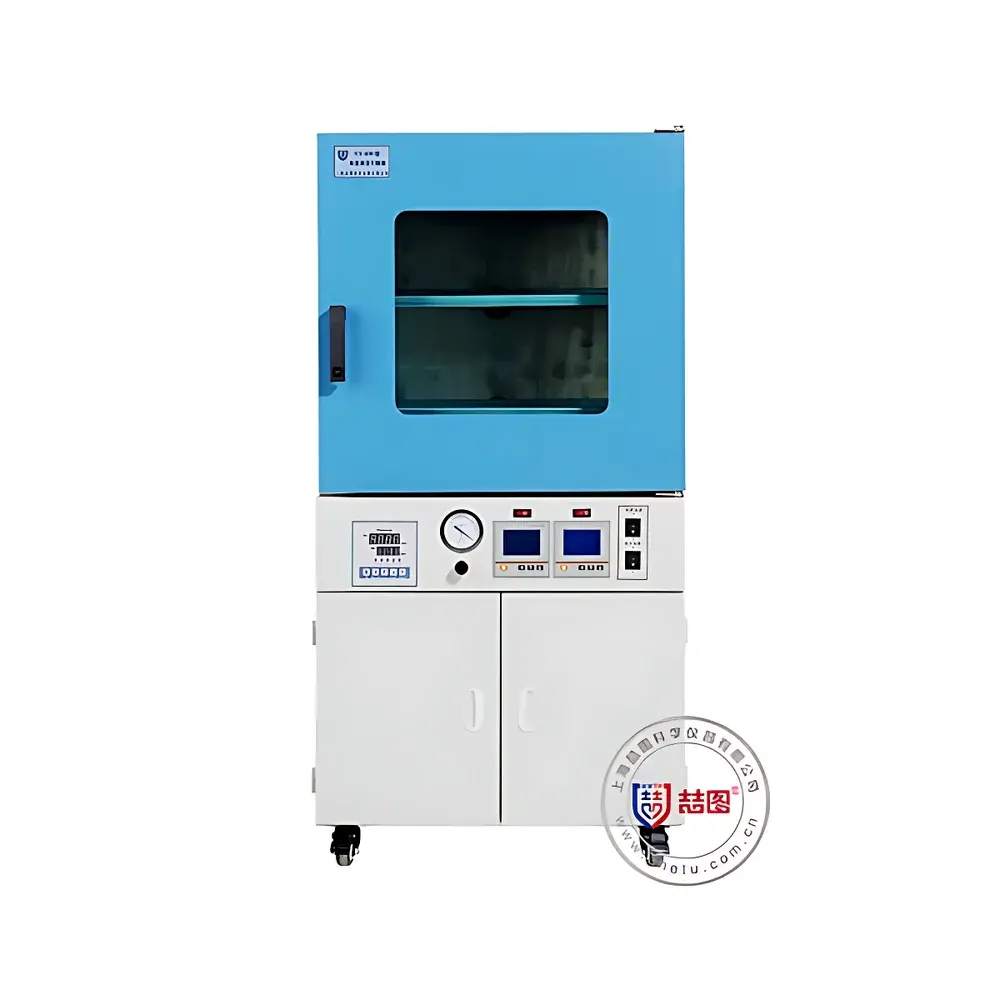
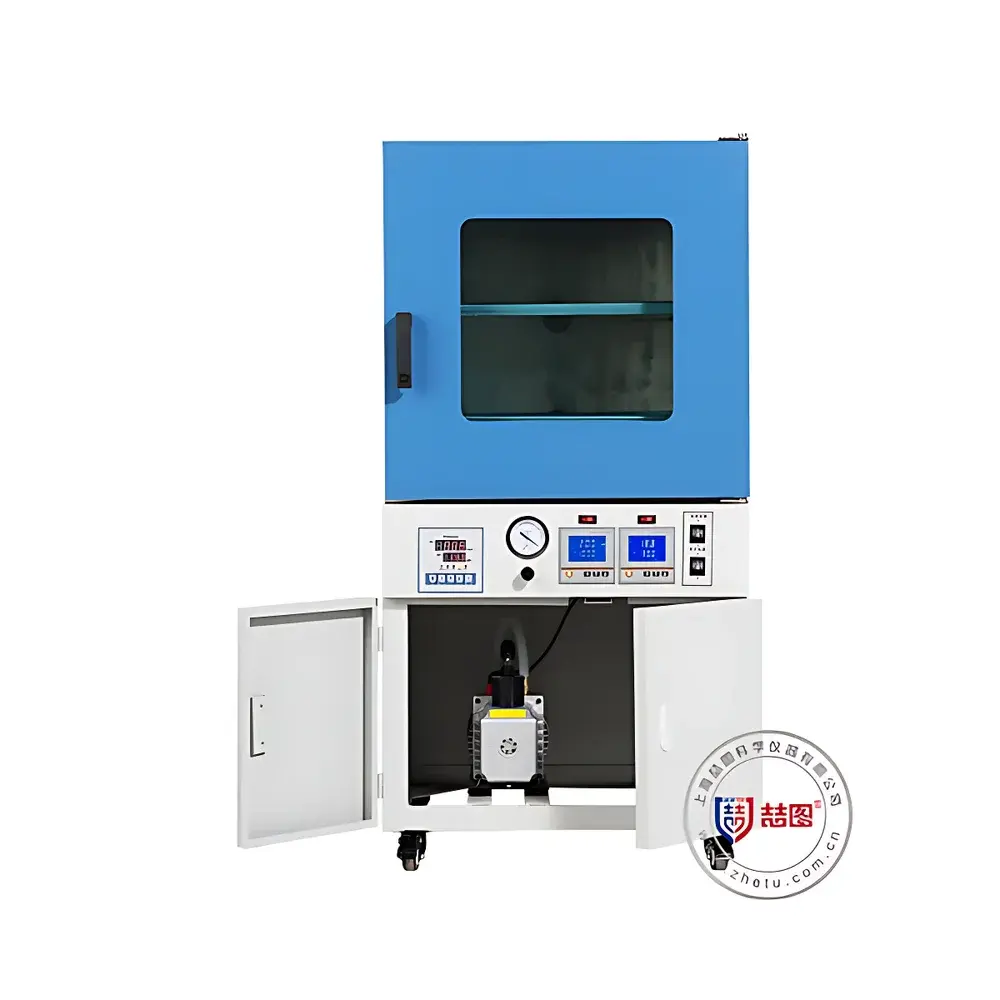
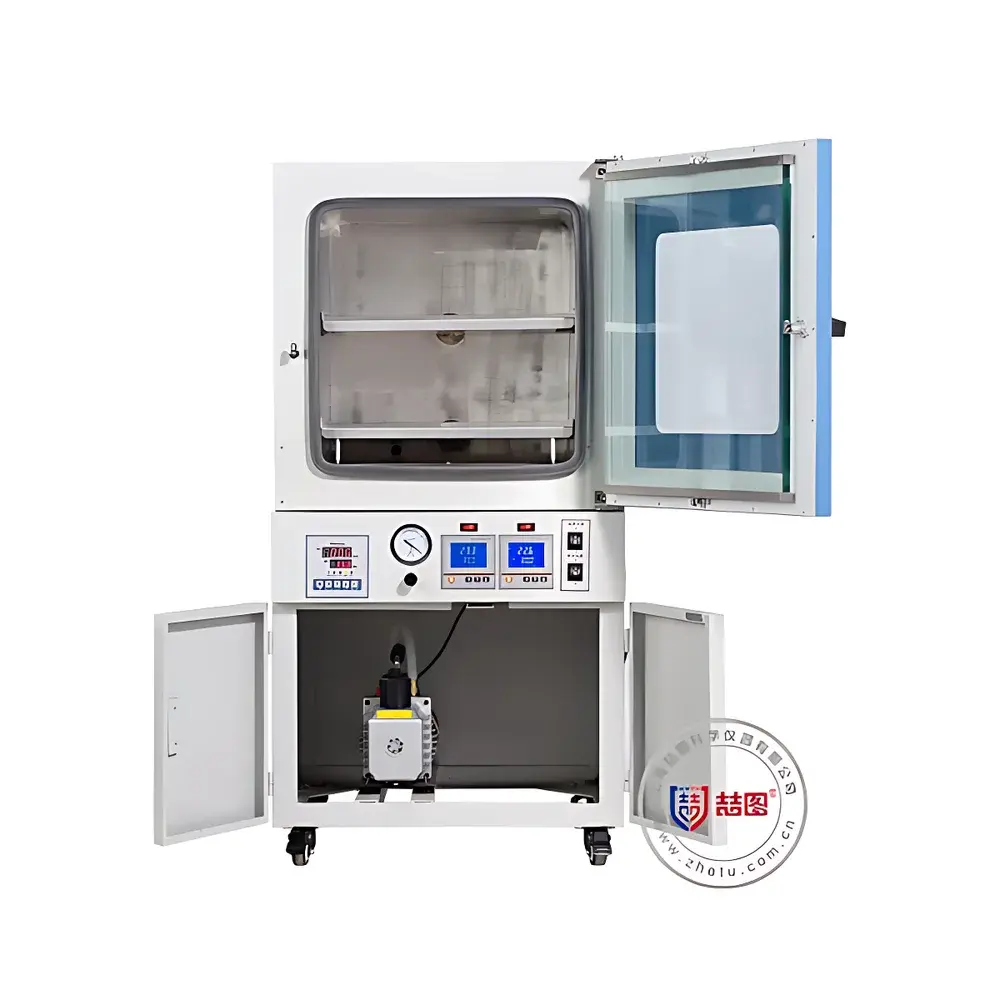
DRETOP TZS-6125LP Programmable Digital Vacuum Drying Oven
| Brand | DRETOP |
|---|---|
| Origin | Shanghai, China |
| Manufacturer Type | Direct Manufacturer |
| Product Category | Domestic |
| Model | TZS-6125LP |
| Instrument Type | Vacuum Oven |
| Temperature Range | RT+10 to 250 °C |
| Temperature Fluctuation | ±0.5 °C |
| External Dimensions | 660 × 640 × 1400 mm |
| Control Temperature Range | RT+10 to 250 °C |
| Internal Chamber Dimensions | 500 × 500 × 500 mm |
| Temperature Resolution | 0.1 °C |
| Operating Ambient Temperature | 5–45 °C |
| Inner Chamber Material | Stainless Steel (304) |
| Heating Method | External Radiant Heating |
| Temperature Uniformity | ±1 °C |
| Ultimate Vacuum Level | ≤133 Pa |
Overview
The DRETOP TZS-6125LP is a programmable digital vacuum drying oven engineered for precision thermal processing under controlled low-pressure environments. It operates on the principle of vacuum-assisted dehydration: by evacuating ambient air via an integrated or externally connected rotary vane vacuum pump, the chamber pressure is reduced below atmospheric levels—typically to ≤133 Pa—thereby lowering the boiling point of volatile components and enabling gentle, oxidation-free drying of thermally sensitive, hygroscopic, or chemically reactive materials. Unlike conventional convection ovens, this system eliminates convective heat transfer and oxygen exposure, mitigating risks of thermal degradation, oxidation, polymerization, or explosive off-gassing during solvent removal. Its design complies with fundamental requirements for GLP-compliant laboratory workflows, supporting repeatable, traceable, and auditable drying protocols in regulated R&D and QC settings.
Key Features
- Programmable microprocessor-based PID temperature controller with 0.1 °C resolution, adjustable setpoint range from RT+10 °C to 250 °C, and ±0.5 °C temperature fluctuation tolerance across the full operating range.
- Integrated digital vacuum display (optional upgrade to color touchscreen interface with dual-parameter programming for simultaneous vacuum hold and temperature ramping).
- Stainless steel (AISI 304) interior chamber (500 × 500 × 500 mm) with reinforced double-layer tempered glass observation window and silicone-sealed, dual-stage zinc alloy latch door ensuring long-term vacuum integrity.
- Externally mounted radiant heating elements surrounding the chamber walls—eliminating internal hot spots, arcing, or carbon buildup common in internal-heating configurations; compatible with inert gas purging via optional inlet valve.
- High-efficiency thermal insulation using fiberglass wool between inner chamber and outer cabinet, achieving ≤1 °C temperature uniformity and minimizing standby energy consumption.
- Comprehensive safety architecture: over-temperature alarm & cut-off, short-circuit protection, ground-fault detection, thermal fuse backup, and power-loss data retention with non-volatile parameter memory.
- Ergonomic drawer-style stainless steel sample trays with height-adjustable, removable mesh shelves optimized for airflow distribution and residue-free cleaning.
Sample Compatibility & Compliance
The TZS-6125LP accommodates diverse sample forms—including powders, granules, thin-film coatings, semiconductor wafers, lithium-ion battery electrodes, pharmaceutical excipients, and biological tissue sections—without particle displacement or surface oxidation. Its vacuum environment prevents moisture reabsorption during cooling and inhibits Maillard reactions or enzymatic activity in bio-samples. The unit meets mechanical and electrical safety requirements per IEC 61010-1 and supports validation under ISO/IEC 17025 for calibration traceability. When equipped with optional RS485 communication and audit-trail-enabled controllers, it satisfies data integrity prerequisites aligned with FDA 21 CFR Part 11 for electronic records in GMP-regulated laboratories.
Software & Data Management
Standard configuration includes a programmable LCD controller supporting up to 99 segments of time-temperature-vacuum profiles, with real-time logging of chamber temperature and vacuum level (via analog or digital input). Optional upgrades include a 7-inch color touchscreen HMI with embedded PLC logic, USB export of CSV-formatted logs, password-protected user levels, and event-driven alarms (e.g., vacuum breach, temperature deviation >±2 °C). All firmware versions support firmware update via SD card and retain historical run data even after unexpected power interruption. Optional integration with LIMS or MES platforms is available via Modbus RTU or TCP/IP protocols.
Applications
This vacuum drying oven serves critical functions across multiple technical domains: residual solvent removal from OLED encapsulation layers; pre-bake conditioning of MEMS sensors; moisture desorption from LiCoO₂ cathode slurries prior to roll-to-roll coating; stabilization of lyophilized enzyme formulations; outgassing of optical adhesives before UV curing; and controlled dehydration of plant extracts for HPLC-grade standard preparation. In electronics manufacturing, it enables void-free epoxy curing and conformal coating degassing without delamination. In academic research, it supports reproducible gravimetric analysis of hygroscopic salts (e.g., CaCl₂, MgSO₄) and kinetic studies of desorption isotherms per ASTM E1868.
FAQ
What vacuum pump is recommended for optimal performance with the TZS-6125LP?
A 2–4 L/s single-stage rotary vane pump (e.g., DRETOP VP-2000 series) is standard; for moisture-laden samples, pairing with a W-series cold trap is advised to prevent oil contamination and extend pump service life.
Can the chamber be purged with inert gas?
Yes—optional KF-25 or KF-40 inert gas inlet valves enable nitrogen or argon backfilling to <1 mbar, supporting oxygen-sensitive processes such as lithium metal anode handling.
Is the unit suitable for USP residual solvents testing?
When validated with NIST-traceable temperature and vacuum sensors and operated under documented SOPs, it fulfills apparatus qualification requirements for Method II (vacuum drying) in pharmacopeial compliance.
How is temperature uniformity verified across the working volume?
Per ISO 14644-3, uniformity is confirmed using nine calibrated PT100 probes placed at standardized locations (center + six face centers + two corners); results are logged and archived as part of IQ/OQ documentation.
Does the system support remote monitoring and control?
With the LT-series touchscreen option and RS485/Ethernet module, users can monitor real-time parameters, trigger manual overrides, and download run history remotely via secure web interface or SCADA integration.
Related Products



