
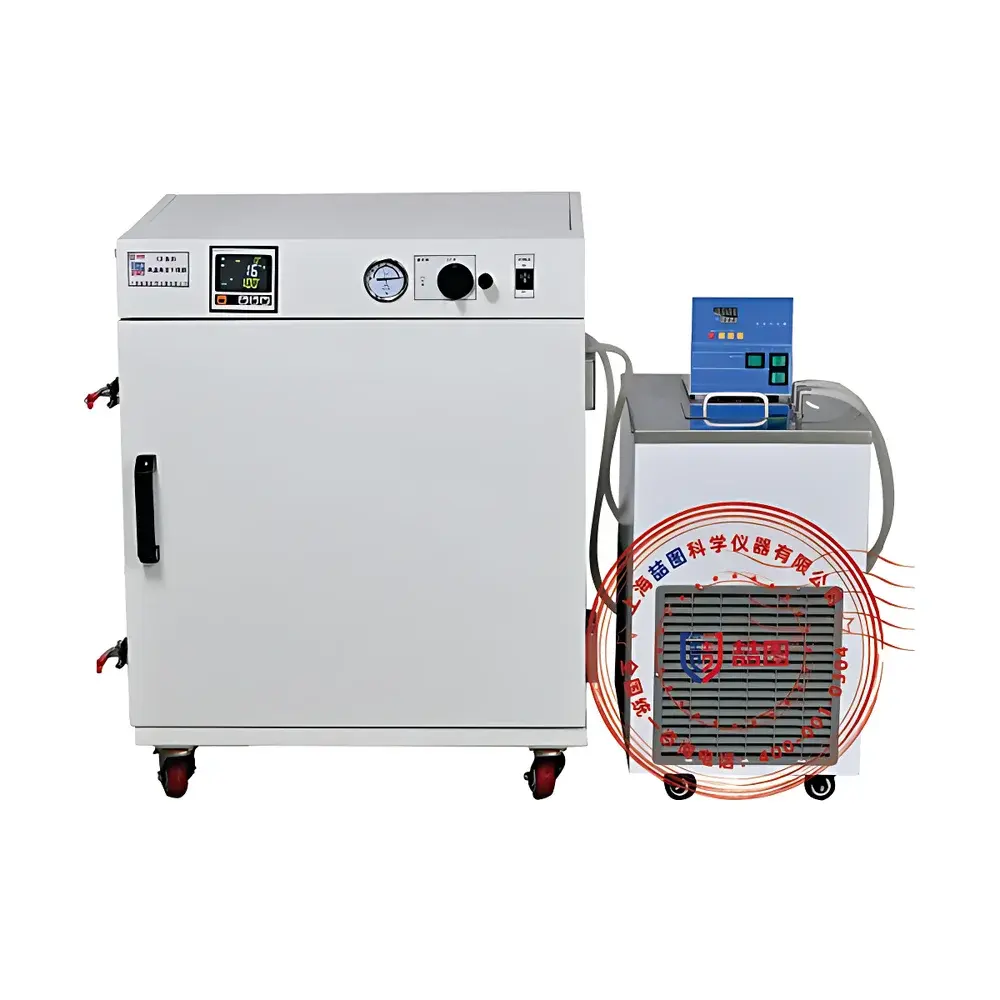
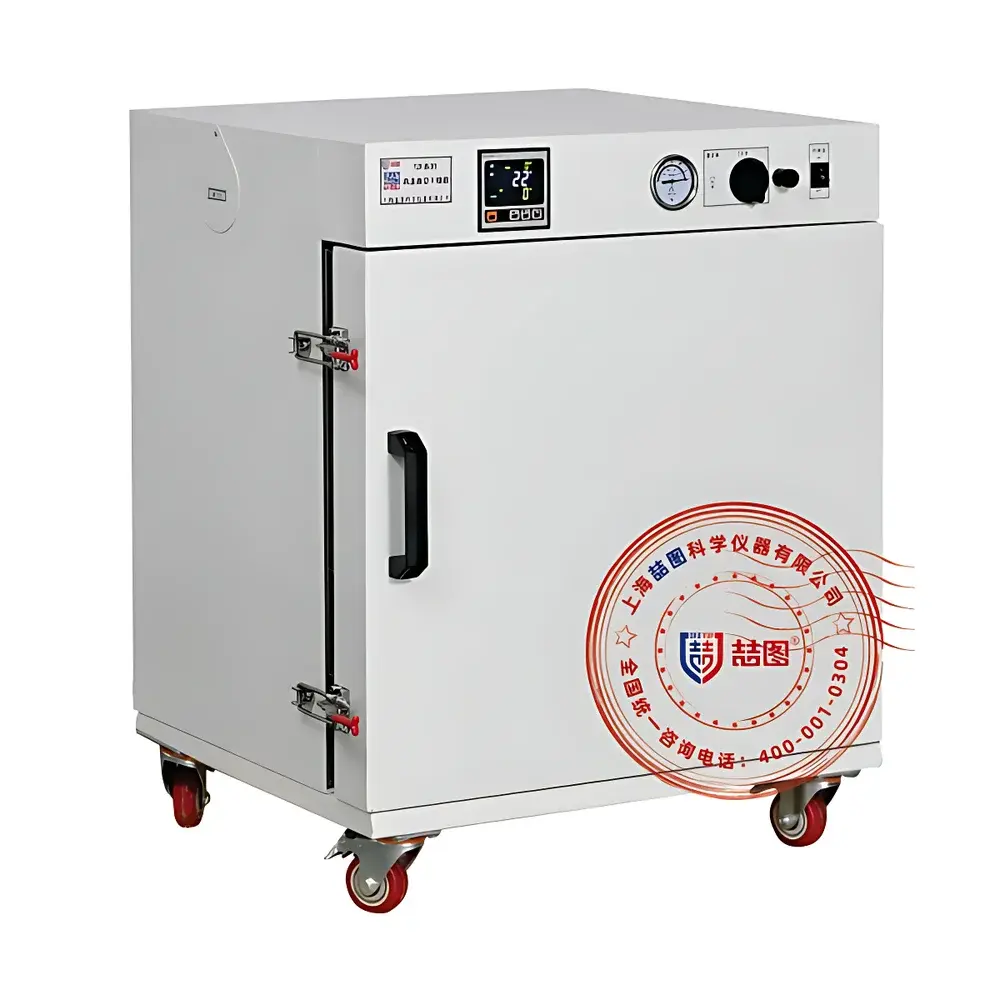
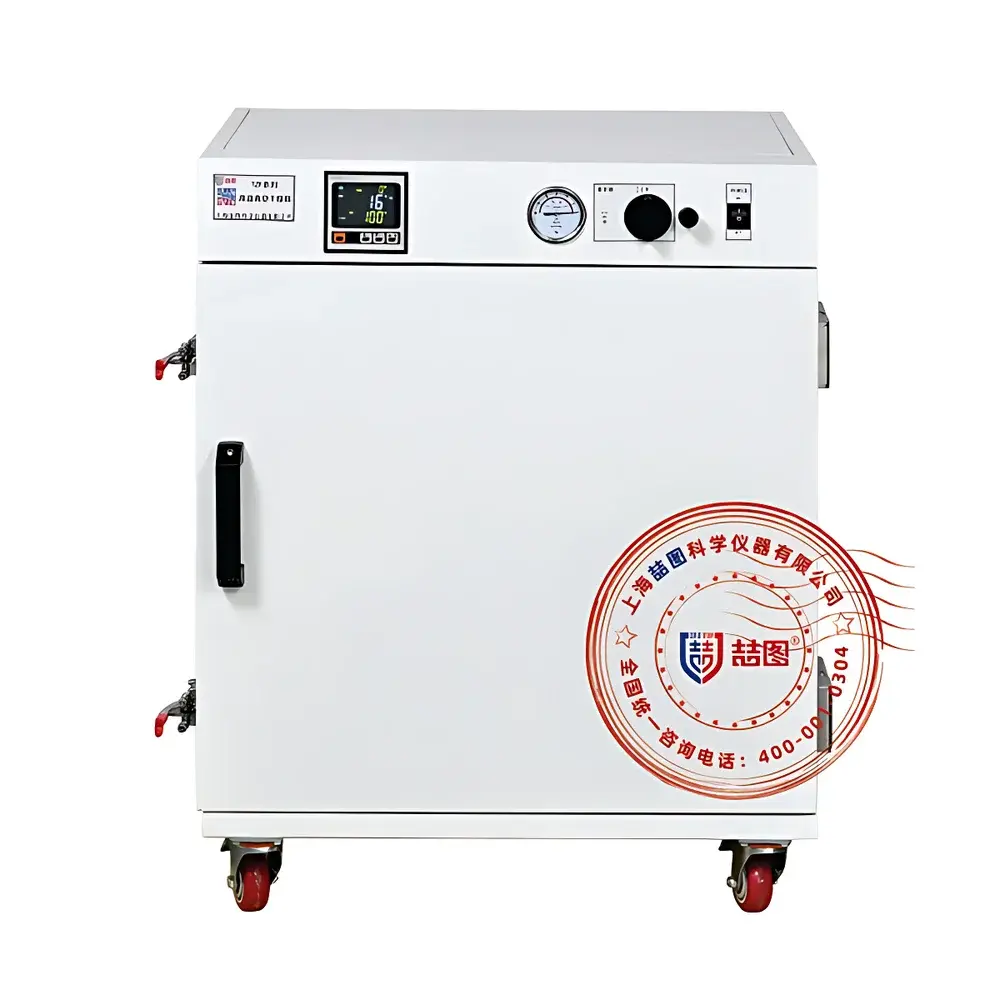
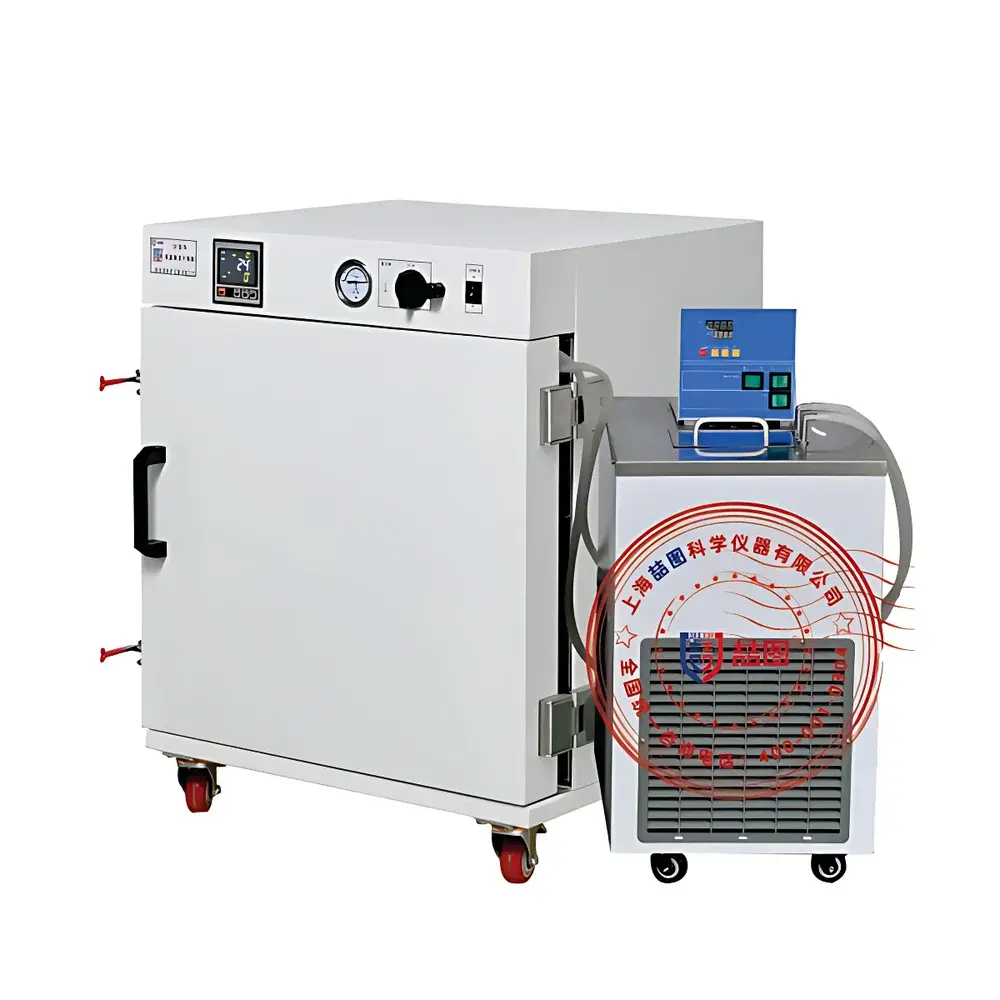
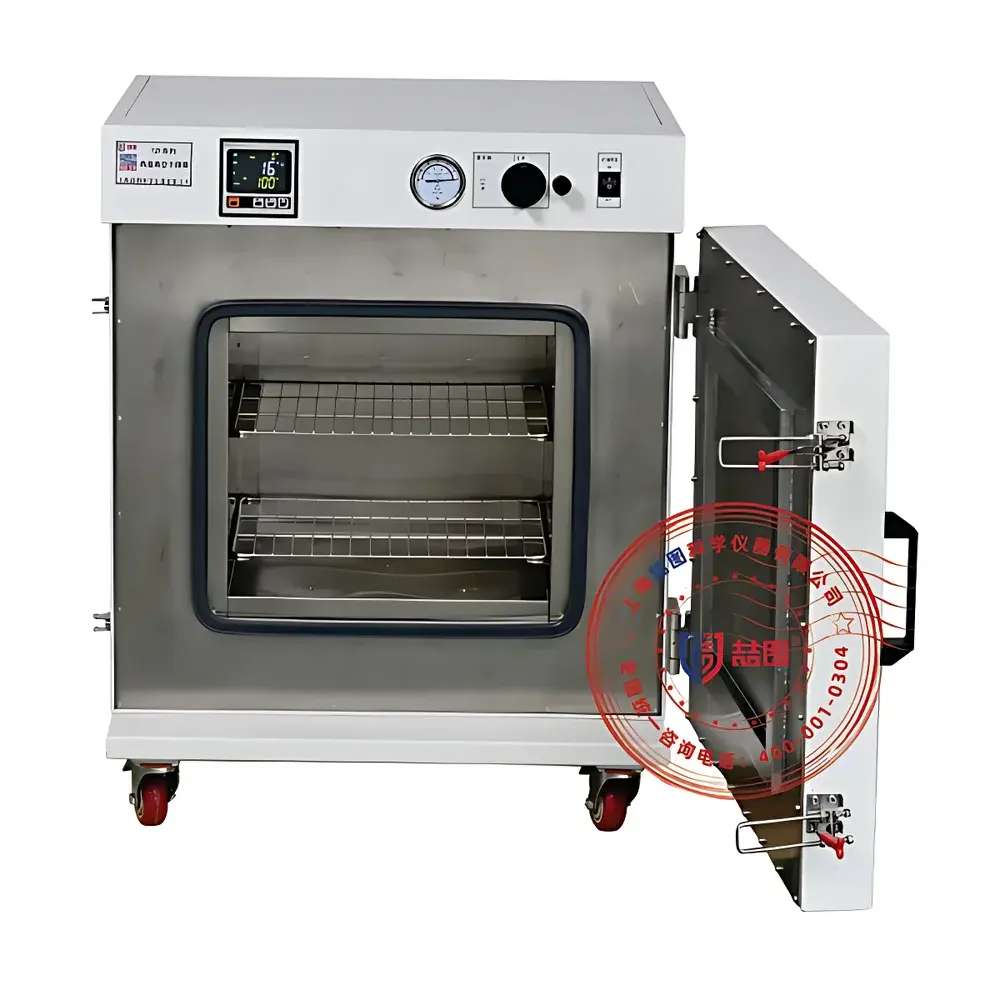
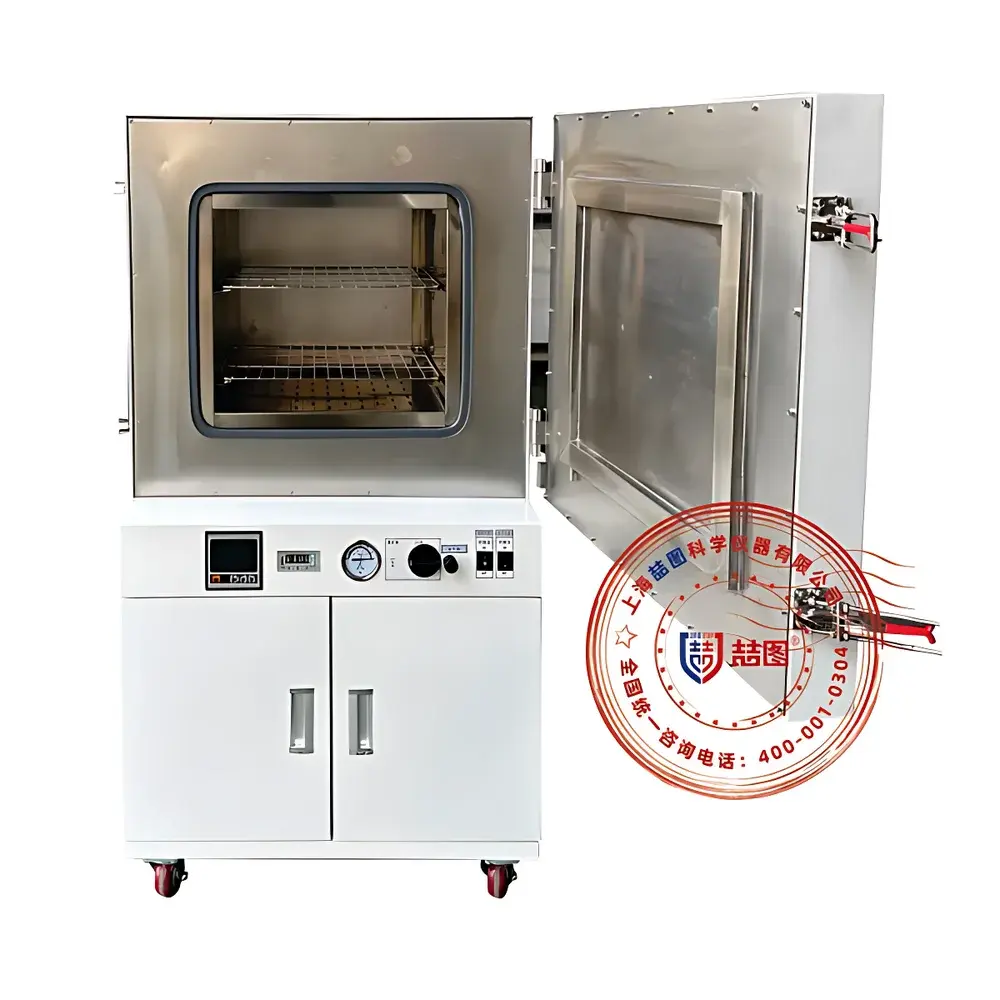
DRETOP UR4-125JVT Programmable High-Temperature Vacuum Drying Oven
| Brand | DRETOP |
|---|---|
| Origin | Shanghai, China |
| Manufacturer Type | Direct Manufacturer |
| Product Category | Domestic |
| Model | UR4-125JVT |
| Instrument Type | Vacuum Oven |
| Temperature Range | RT+10 to 400 °C |
| Temperature Uniformity | ±1 °C |
| Temperature Fluctuation | ±1 °C |
| Temperature Resolution | 0.1 °C |
| Vacuum Level | ≤133 Pa |
| Internal Chamber Dimensions (W×D×H) | 500×500×500 mm |
| Chamber Material | Stainless Steel (AISI 304) |
| Heating Method | Forced-Air Circulation |
| Operating Ambient Temperature | 5–40 °C |
| Power Supply | AC 220 V / 50 Hz or AC 380 V / 50 Hz |
| Rated Power | 5000 W |
| Standard Accessories | Recirculating Water Cooling Unit, Carbon Steel Soundproof Enclosure, Rotary Vane Vacuum Pump, J-Type Intermediate Condensate Trap |
Overview
The DRETOP UR4-125JVT Programmable High-Temperature Vacuum Drying Oven is an engineered solution for precision thermal processing under controlled low-pressure environments. Designed for applications requiring oxidation-sensitive, moisture-sensitive, or thermally labile material handling, this oven operates on the physical principle of boiling point depression under vacuum—enabling efficient solvent removal, degassing, annealing, and post-curing at temperatures up to 400 °C without atmospheric oxidation or mechanical disturbance. Its robust stainless steel double-walled chamber, water-cooled door seal, and argon-welded seams ensure long-term vacuum integrity and thermal stability. The system conforms to fundamental requirements of ISO 17025-compliant laboratories and supports GLP/GMP-aligned workflows through programmable multi-step protocols, audit-ready parameter logging, and hardware-level safety interlocks.
Key Features
- Programmable T-type multifunctional color touchscreen controller integrating digital vacuum monitoring, real-time temperature profiling, and multi-stage ramp-soak-hold sequences;
- High-fidelity temperature control via PID algorithm with ±1 °C uniformity and 0.1 °C resolution across the full RT+10 to 400 °C operating range;
- Dual-layer tempered safety observation window with inert gas purge capability for in-process visual inspection without vacuum loss;
- Water-jacketed door sealing system with high-temperature silicone gasket (rated to 450 °C), actively cooled via recirculating water unit to prevent thermal degradation and maintain ≤133 Pa ultimate vacuum;
- Stainless steel (AISI 304) interior chamber and adjustable, removable stainless steel shelving—designed for corrosion resistance, cleanability, and repeatable load configuration;
- Comprehensive safety architecture including over-temperature alarm, leakage current protection, short-circuit cutoff, thermal overload shutdown, and non-volatile parameter memory to retain settings after power interruption.
Sample Compatibility & Compliance
The UR4-125JVT accommodates a broad spectrum of sample formats—including powders, thin-film substrates, battery electrode wafers, ceramic green bodies, semiconductor packaging assemblies, and aerospace composite preforms—without particle displacement or surface oxidation. Its vacuum-sealed, fanless drying environment eliminates convective turbulence, making it suitable for fragile or fine particulate materials where airflow-induced segregation is unacceptable. The chamber’s 125 L capacity (500×500×500 mm internal dimensions) supports batch processing per ASTM E145 and ISO 291 environmental conditioning standards. All electrical components meet IEC 61000-6-3 EMC emission limits; structural design aligns with CE Machinery Directive 2006/42/EC. Optional Q-type dual-stage condensate trap enables reliable operation with high-moisture-content samples, satisfying USP extractables testing prerequisites.
Software & Data Management
The integrated T-type controller provides native data logging at user-defined intervals (1–600 seconds), storing time-stamped temperature, vacuum pressure, and program step status directly to internal flash memory. Export is supported via USB 2.0 to CSV format for traceable analysis in Excel or LIMS platforms. Audit trail functionality records operator ID (via optional RFID login), parameter changes, alarm events, and cycle completion timestamps—meeting FDA 21 CFR Part 11 requirements for electronic records when deployed with validated user access controls. Remote monitoring is achievable via Modbus RTU (RS485) interface for integration into centralized lab automation systems.
Applications
- Thermal debinding and sintering support for metal injection molding (MIM) and ceramic injection molding (CIM) feedstocks;
- Electrode drying and electrolyte impregnation in lithium-ion and solid-state battery R&D;
- Outgassing of optical components, vacuum chamber components, and space-grade adhesives per ECSS-Q-ST-70-02C;
- Moisture removal from hygroscopic polymers prior to FTIR or DSC analysis;
- Controlled pyrolysis of organic matrices in composite material development;
- Heat treatment of MEMS devices and photovoltaic thin films under nitrogen or argon blanket conditions.
FAQ
What vacuum level can the UR4-125JVT achieve, and how is it maintained during heating?
The system achieves and sustains ≤133 Pa (1 Torr) at room temperature and maintains ≥200 Pa under full 400 °C load, verified by built-in digital vacuum transducer calibrated to NIST-traceable standards. Water-jacketed door seals and argon-welded chamber seams minimize outgassing and leakage.
Is the oven compatible with inert gas purging?
Yes—dual gas inlet ports (N₂ and Ar) are standard; mass flow controllers and pressure-regulated purge cycles can be added as factory-installed options.
Can the controller store multiple process recipes?
Up to 16 independent multi-segment programs (each with up to 32 steps) may be saved, recalled, and executed with password-protected editing rights.
Does the system support validation documentation?
DRETOP provides IQ/OQ documentation templates, as-built drawings, material certifications (EN 10204 3.1), and calibration certificates for temperature sensors and vacuum gauges—facilitating GxP qualification.
What maintenance is required for long-term vacuum performance?
Routine checks include vacuum pump oil replacement every 500 hours, door gasket inspection quarterly, and condensate trap cleaning after each high-moisture run—procedures detailed in the bilingual (English/Chinese) service manual.



