

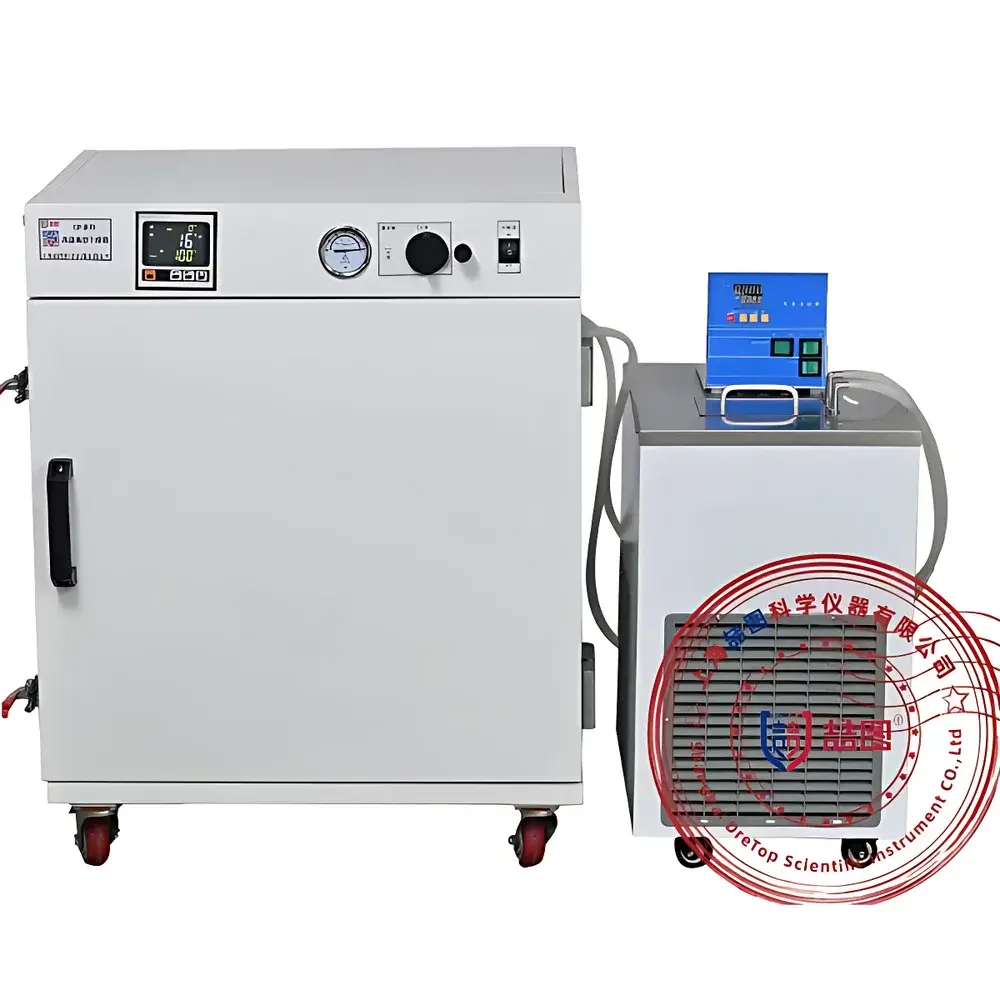
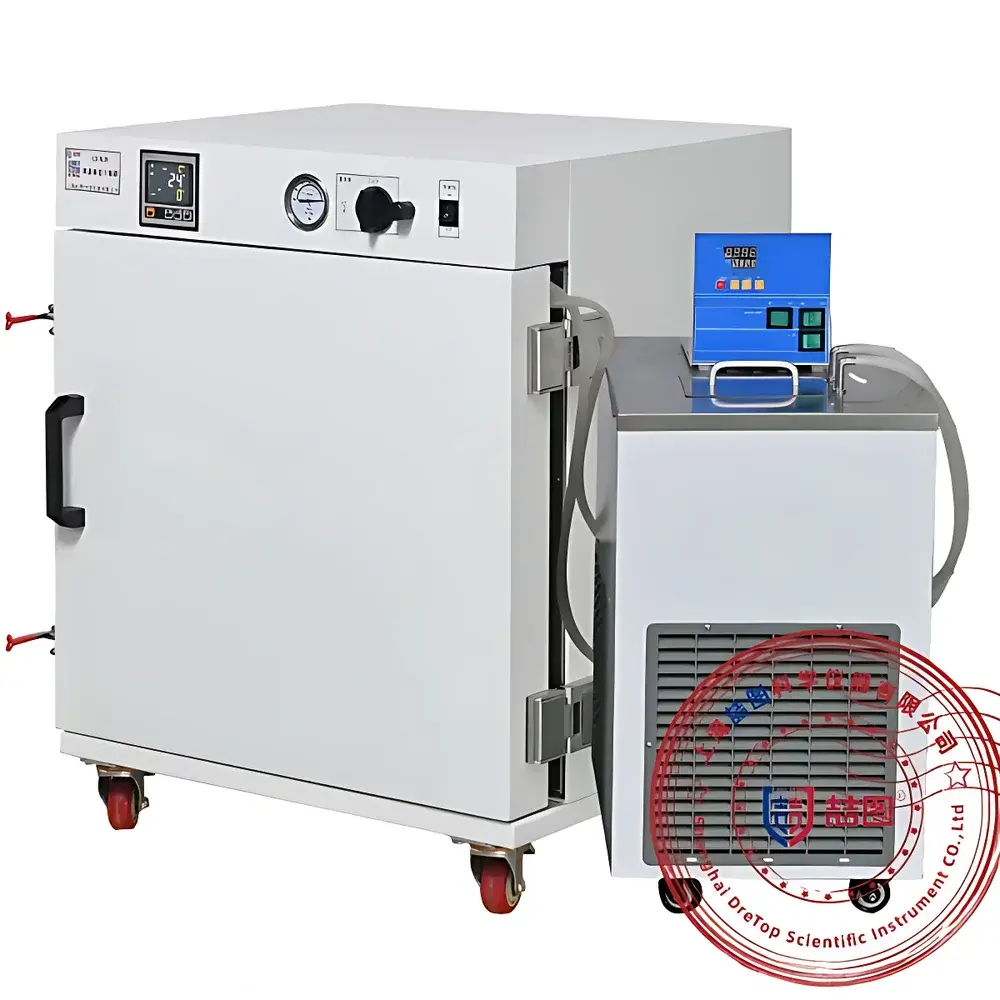
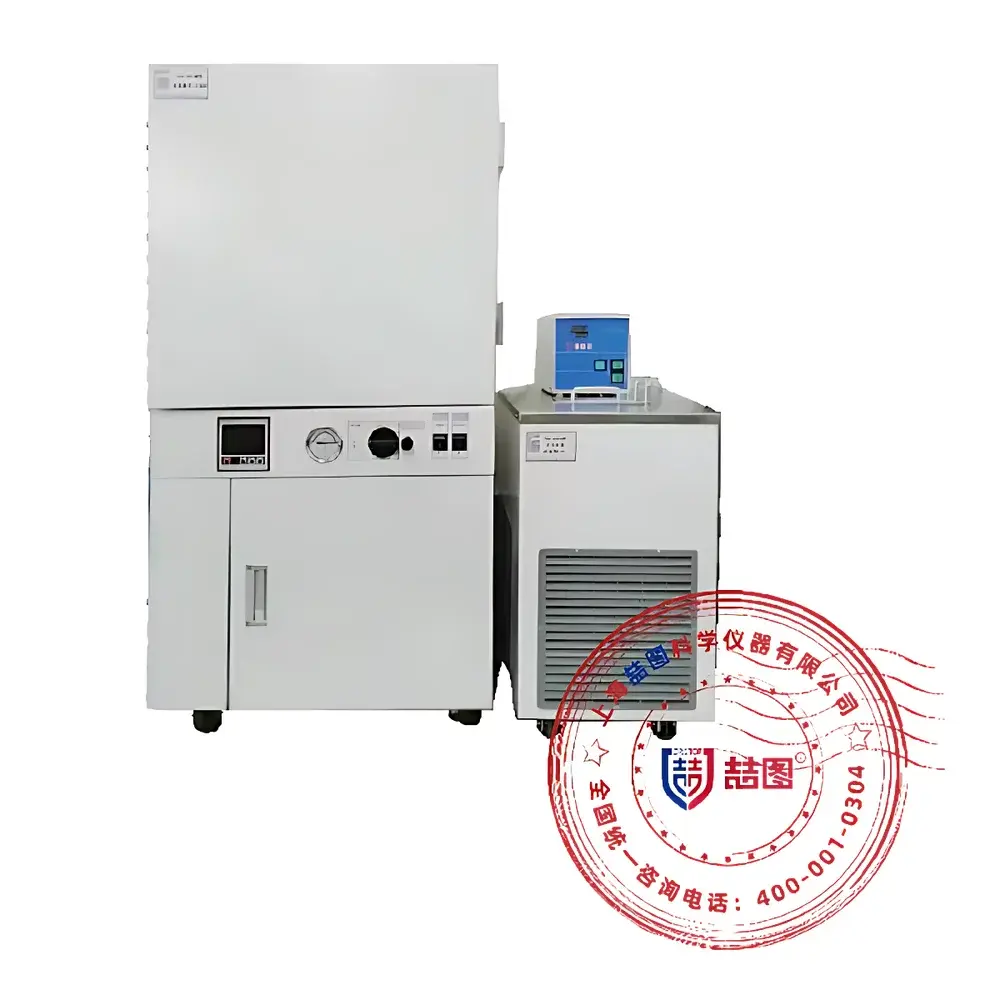
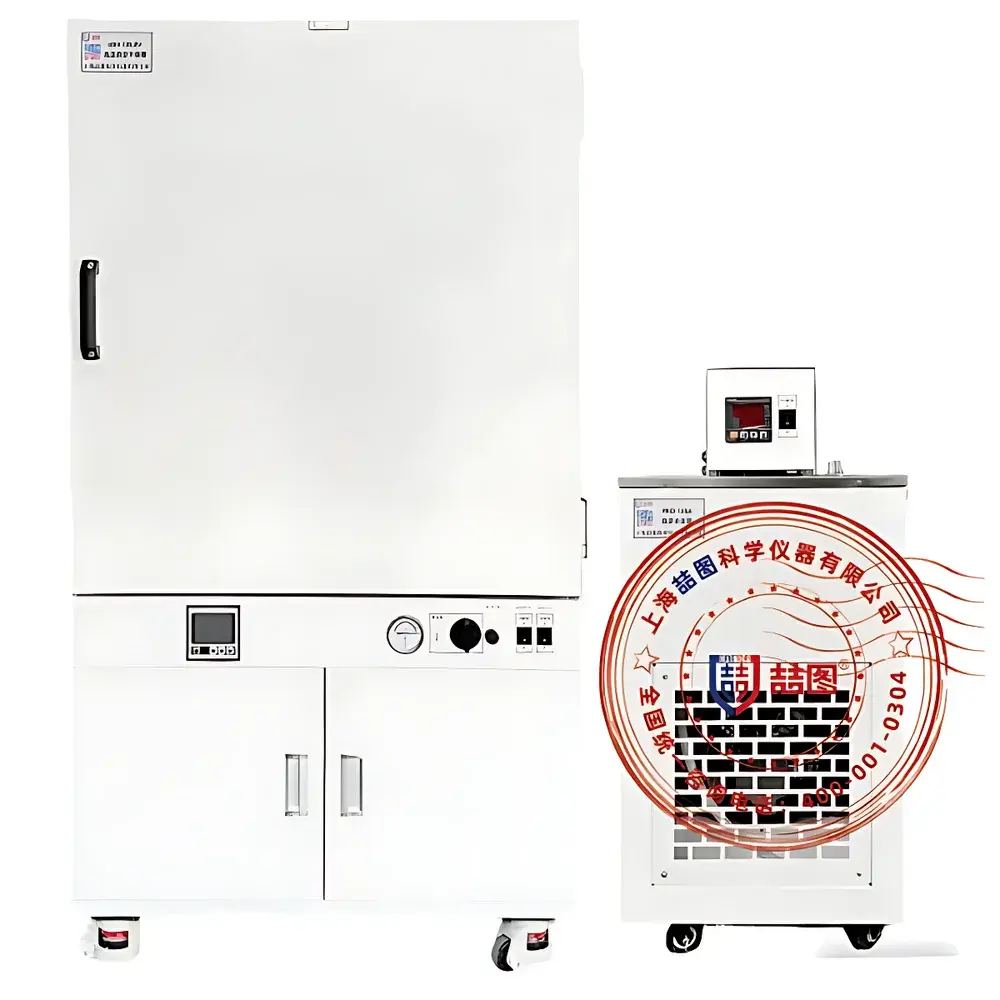
DRETOP UR4-50LBV High-Temperature Vacuum Drying Oven
| Brand | DRETOP |
|---|---|
| Origin | Shanghai, China |
| Manufacturer Type | Direct Manufacturer |
| Model | UR4-50LBV |
| Instrument Type | Vacuum Oven |
| Temperature Range | RT+10–400 °C |
| Temperature Uniformity | Not specified |
| Temperature Fluctuation | ±1 °C |
| Temperature Resolution | 0.1 °C |
| Vacuum Degree | ≤133 Pa |
| Internal Chamber Dimensions | 415 × 370 × 345 mm (W×D×H) |
| Inner Chamber Material | Stainless Steel |
| Heating Method | External Heating |
| Working Environment Temperature | 5–45 °C |
| Insulation Material | Glass Fiber |
| Power Supply | AC 220 V / 50 Hz |
| Rated Power | 3200 W |
| Standard Accessories | Circulating Water Cooling Unit, Carbon Steel Soundproof Cabinet, Rotary Vane Vacuum Pump, B-type or E-type Vacuum Pump Protection Device |
Overview
The DRETOP UR4-50LBV High-Temperature Vacuum Drying Oven is a precision-engineered thermal processing system designed for controlled dehydration, thermal stabilization, and inert-atmosphere annealing under deep vacuum conditions. Operating on the principle of vapor pressure depression—where reduced ambient pressure lowers the boiling point of solvents and moisture—the oven enables rapid, low-thermal-stress drying of heat-sensitive, oxidation-prone, or high-purity materials. Unlike forced-air convection ovens, this unit maintains a static vacuum environment (≤133 Pa), eliminating convective turbulence that could displace fine powders or compromise structural integrity of delicate samples. Its operational range spans from ambient +10 °C to 400 °C, making it suitable for applications demanding elevated thermal stability without atmospheric oxidation—such as semiconductor wafer baking, cathode/anode material conditioning in lithium-ion battery R&D, aerospace composite outgassing, and pre-sintering of ceramic precursors.
Key Features
- Stainless steel double-walled chamber with argon arc welding joints ensures long-term vacuum integrity and resistance to thermal cycling fatigue.
- Externally mounted heating elements minimize internal radiation hotspots and improve temperature uniformity across the 50 L working volume (415 × 370 × 345 mm).
- Two-stage rotary latch door mechanism with high-temperature silicone sealing gasket and water-cooled jacket maintains consistent vacuum seal performance even at 400 °C.
- Microprocessor-based PID temperature controller with 0.1 °C resolution, ±1 °C fluctuation tolerance, and programmable ramp/soak profiles supports GLP-compliant process repeatability.
- Integrated self-diagnostic system displays fault codes directly on the LCD interface, enabling rapid troubleshooting of sensor drift, heater failure, or vacuum leakage events.
- Dual-layer tempered safety glass observation window allows real-time visual monitoring without compromising vacuum integrity or thermal insulation.
- Configurable vacuum pump protection architecture: B-type (integrated condenser for low-moisture loads) and E-type (3 L external condensate trap for high-humidity applications) prevent oil contamination and thermal degradation of vacuum pumps.
Sample Compatibility & Compliance
The UR4-50LBV accommodates a broad spectrum of sample forms—including powders, thin films, coated substrates, porous ceramics, polymer composites, and electronic assemblies—without mechanical disturbance. Its oxygen-free vacuum environment mitigates surface oxidation during thermal treatment, preserving stoichiometry in metal oxide cathodes and preventing carbonization in organic-inorganic hybrids. The system complies with core laboratory safety and quality standards: construction adheres to IEC 61010-1 for electrical safety; thermal insulation meets ISO 8502-3 requirements for surface cleanliness prior to coating; and vacuum integrity testing aligns with ASTM E595 for outgassing assessment in space-grade materials. Optional RS485/USB interfaces support 21 CFR Part 11–compliant audit trails when paired with validated data acquisition software.
Software & Data Management
The standard configuration includes a multi-parameter LCD controller displaying real-time chamber temperature, setpoint, elapsed time, and vacuum level (via optional digital vacuum gauge). For advanced process control, the UR4-50LBV-II variant integrates a full-color touchscreen HMI with up to 32 programmable segments, event logging (timestamped temperature/vacuum records), and password-protected parameter locking. All configurations support data export via USB (FAT32 formatted drives only) and offer optional Ethernet or RS485 Modbus RTU connectivity for integration into centralized lab management systems (LIMS). Built-in parameter memory retains user settings after power interruption, satisfying continuity-of-operation requirements in regulated environments.
Applications
- Battery R&D: Electrode slurry drying, separator film degassing, solid-state electrolyte densification under N₂-backfilled vacuum.
- Semiconductor fabrication: Photoresist pre-bake, wafer desiccation prior to sputtering, MEMS packaging moisture removal.
- Materials science: Thermal aging studies of polymers and composites, catalyst activation, metal-organic framework (MOF) solvent exchange.
- Pharmaceutical development: Active pharmaceutical ingredient (API) crystallization under controlled partial pressure, lyophilized intermediate stabilization.
- Aerospace engineering: Composite layup outgassing, adhesive curing verification, thermal vacuum cycling of avionics housings.
- Environmental analysis: Soil/sediment moisture extraction for gravimetric water content determination per ISO 11465.
FAQ
What vacuum level can the UR4-50LBV achieve, and how is it maintained?
The system achieves and sustains ≤133 Pa (1 Torr) using a certified rotary vane vacuum pump, supported by optional B-type or E-type condensate traps to protect pump longevity during high-moisture operations.
Is the chamber atmosphere controllable beyond vacuum?
Yes—optional inert gas inlet valves (N₂ or Ar) enable backfilling to defined partial pressures, supporting processes requiring controlled oxidative potential or rapid quenching.
How does the water-cooled door jacket improve operational reliability?
It reduces thermal load on the sealing gasket by up to 40 °C during 400 °C operation, extending gasket service life and minimizing vacuum decay rates over extended dwell cycles.
Can the UR4-50LBV be validated for GMP use?
With documented IQ/OQ protocols, calibrated reference sensors (traceable to NIST), and audit-trail-capable controllers (UR4-50LBV-II), the system supports qualification in FDA-regulated laboratories.
What maintenance intervals are recommended for sustained vacuum performance?
Vacuum pump oil replacement every 500 operating hours; gasket inspection every 6 months or after 100 thermal cycles above 300 °C; calibration of temperature sensors annually or per internal SOP.



