
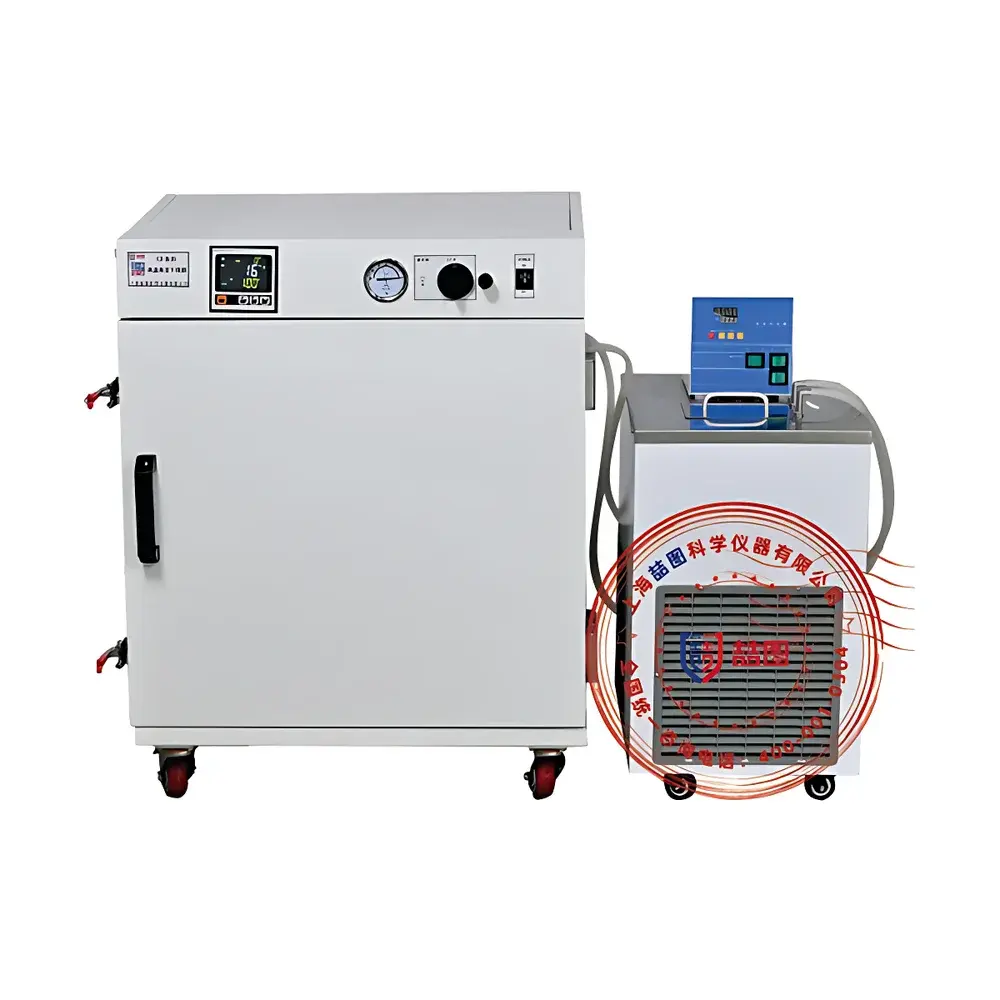
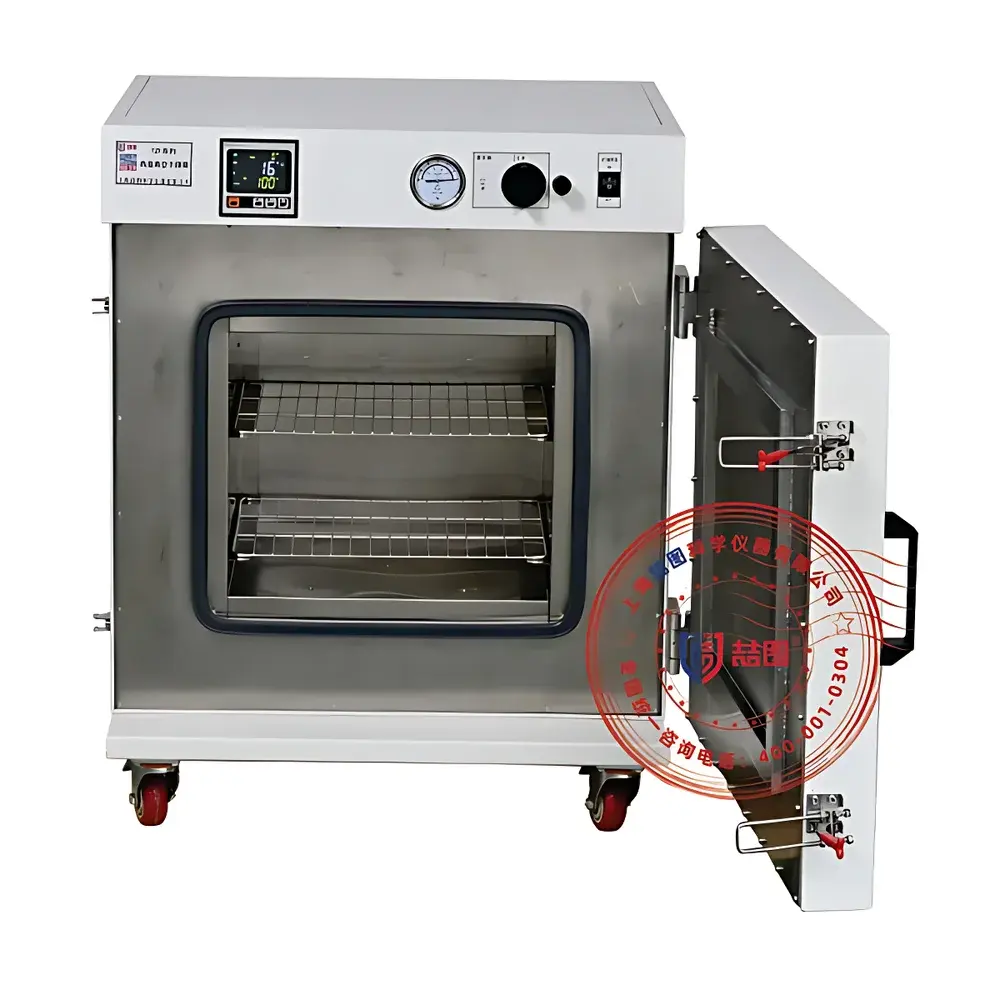
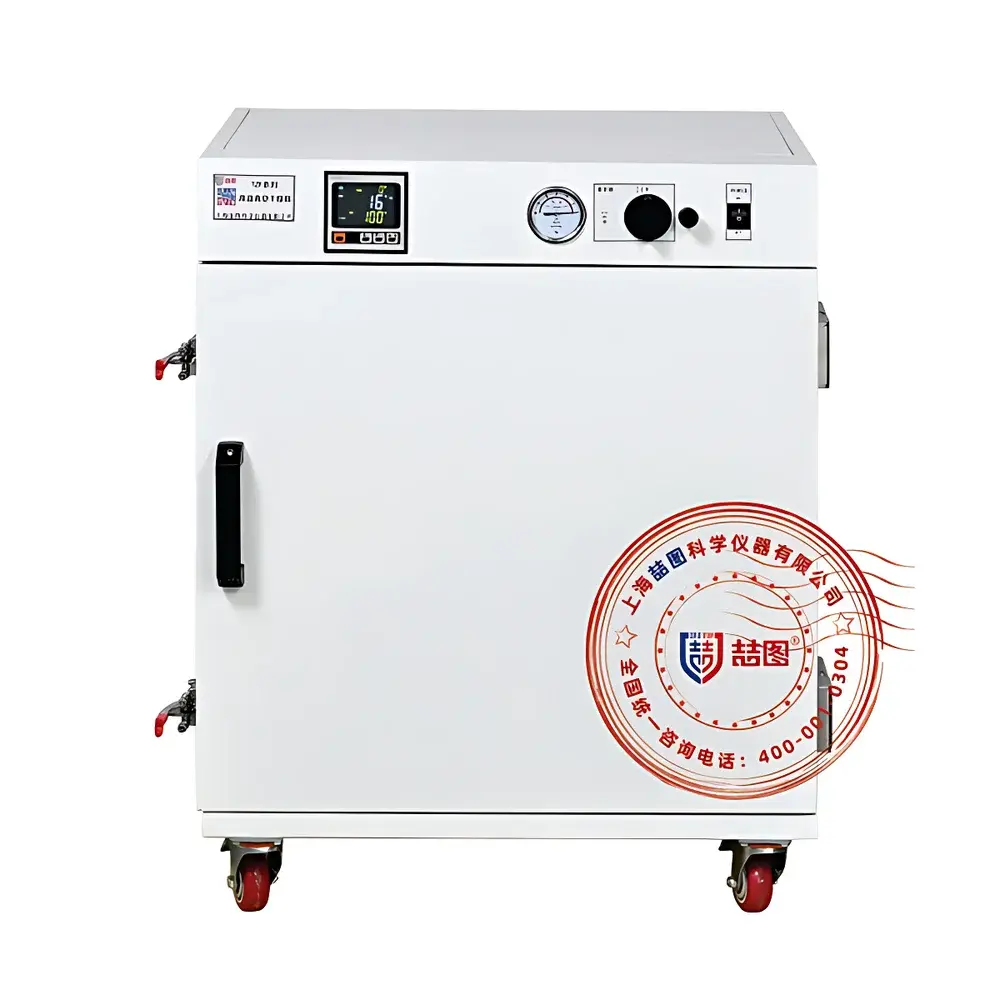
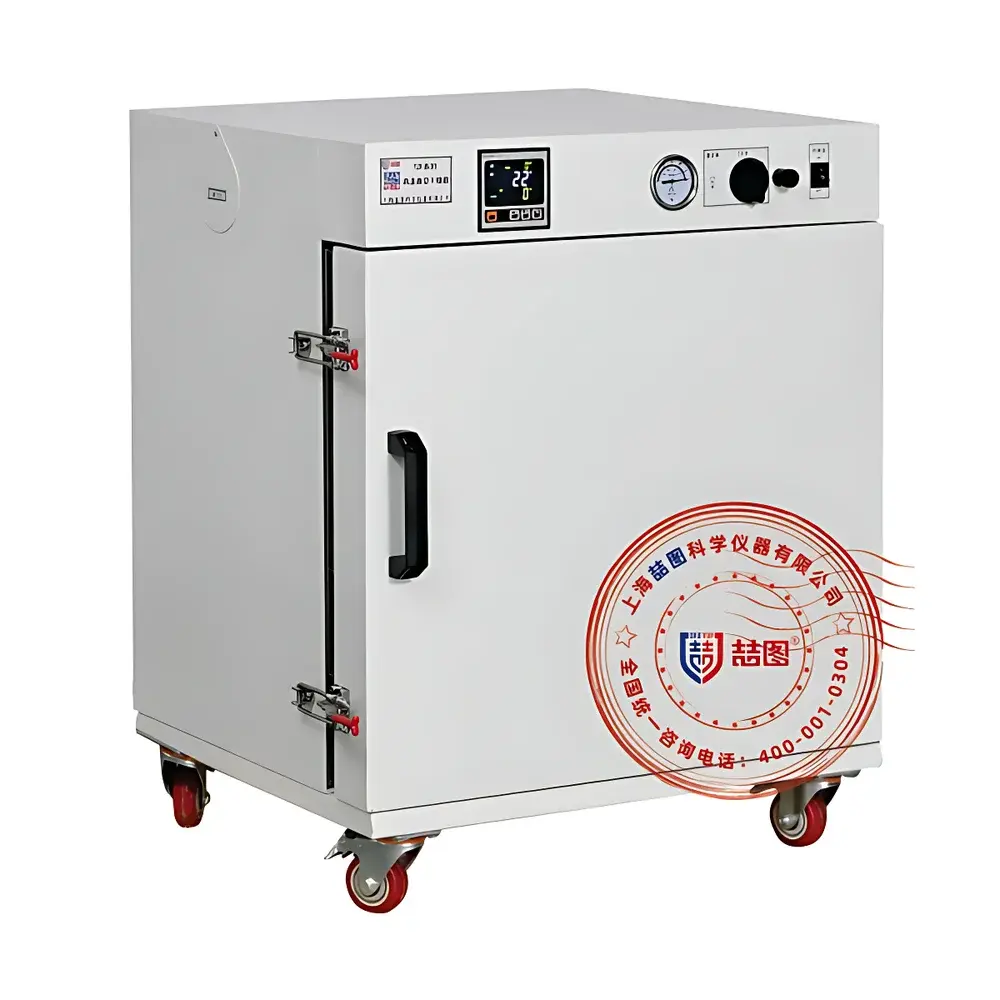
DRETOP UR4-50V High-Temperature Vacuum Drying Oven
| Brand | DRETOP |
|---|---|
| Origin | Shanghai, China |
| Manufacturer Type | Direct Manufacturer |
| Product Category | Domestic |
| Model | UR4-50V |
| Instrument Type | Vacuum Oven |
| Temperature Range | RT+10 to 400 °C |
| Temperature Uniformity | Not Specified |
| Temperature Fluctuation | ±1 °C |
| Control Range | RT+10 to 400 °C |
| Chamber Dimensions (W×D×H) | 415 × 370 × 345 mm |
| Temperature Resolution | 0.1 °C |
| Operating Ambient Temperature | 5–40 °C |
| Chamber Material | Stainless Steel (AISI 304) |
| Heating Method | Forced-Air Circulation |
| Vacuum Level | ≤133 Pa |
Overview
The DRETOP UR4-50V High-Temperature Vacuum Drying Oven is a precision-engineered thermal processing system designed for controlled dehydration, thermal stabilization, degassing, and annealing under reduced-pressure conditions. Operating on the fundamental principle of vacuum-assisted drying—where lowering ambient pressure reduces the boiling point of volatile solvents and moisture—the UR4-50V enables efficient, low-oxidation thermal treatment of sensitive materials. Unlike conventional convection ovens, this unit eliminates convective airflow within the chamber, preventing particle displacement and oxidation during heating. It is widely deployed in semiconductor fabrication, lithium-ion battery R&D (electrode drying, separator conditioning), aerospace component outgassing, electronic encapsulant curing, and high-purity material synthesis where inert or vacuum environments are mandatory per ASTM E145, ISO 16890, and IEC 60068-2-66 test protocols.
Key Features
- Stainless steel (AISI 304) double-walled chamber with argon arc welding at all seams, ensuring structural integrity and long-term vacuum integrity;
- Two-stage rotary latch door mechanism with high-temperature silicone gasket and water-cooled jacket interface, maintaining consistent sealing performance up to 400 °C;
- Forced-air circulation heating system with rear-mounted fan and baffle-guided airflow, optimized for uniform thermal distribution across the 50 L working volume;
- Microprocessor-based PID temperature controller with digital LCD display, real-time deviation alarm, over-temperature cut-off, and programmable ramp-soak profiles;
- Integrated vacuum monitoring via analog vacuum gauge (calibrated to ≤133 Pa), compatible with external digital vacuum controllers for process logging;
- Dual-layer tempered safety glass observation window with anti-fog coating, enabling unobstructed visual monitoring without compromising vacuum seal;
- Modular shelving system: two adjustable stainless steel trays with tool-free height positioning and full drawer-style extraction for safe sample handling;
- Comprehensive safety architecture including overcurrent protection, ground-fault interruption, thermal fuse backup, and non-volatile parameter memory for power-loss recovery.
Sample Compatibility & Compliance
The UR4-50V accommodates powders, thin-film substrates, ceramic green bodies, polymer composites, and coated wafers—particularly suited for applications requiring oxygen exclusion and minimal thermal stress. Its vacuum-tight chamber meets Class 100 cleanroom-compatible construction standards when operated with optional nitrogen purge kits. The system supports GLP-compliant workflows through traceable temperature and vacuum event logging (when paired with external data acquisition modules). It conforms to electrical safety requirements per IEC 61010-1 and electromagnetic compatibility per EN 61326-1. For pharmaceutical and medical device manufacturing, the oven may be validated per USP and FDA 21 CFR Part 11 when integrated with compliant software and audit-trail-enabled controllers.
Software & Data Management
While the base UR4-50V model features standalone microcontroller operation, it is fully compatible with optional S-type (split-display digital vacuum + LCD temperature controller) and T-type (full-color touchscreen HMI) upgrade packages. These enable multi-step vacuum-temperature profiling, real-time graphing of chamber parameters, USB data export (CSV), and password-protected user access levels. All firmware versions support time-stamped event logs—including vacuum pump start/stop, temperature setpoint changes, alarm triggers, and door open/close cycles—facilitating retrospective analysis and regulatory documentation. Optional RS485 Modbus RTU interface allows integration into centralized lab management systems (LIMS) or SCADA platforms for automated batch reporting.
Applications
- Lithium-ion battery electrode drying: removal of NMP solvent residues under vacuum prior to calendaring, minimizing residual moisture (<20 ppm) critical for cell cycle life;
- Semiconductor packaging: pre-bake of leadframes and molding compounds to eliminate trapped moisture and prevent popcorn failure during reflow;
- Aerospace composite curing: outgassing of carbon fiber prepregs and adhesive films to eliminate voids and ensure interlaminar bond strength;
- Research-scale ceramic sintering: binder burnout stages under controlled vacuum and temperature ramp rates to prevent bloating or cracking;
- Optoelectronic device annealing: thermal treatment of OLED layers and perovskite thin films in inert/vacuum atmosphere to preserve stoichiometry and photoluminescence yield;
- Environmental testing labs: accelerated aging studies per MIL-STD-810H Method 507.6 (low-pressure storage) and IPC-TM-650 2.6.25 (moisture resistance).
FAQ
What vacuum level can the UR4-50V achieve, and how is it maintained?
The chamber achieves and sustains ≤133 Pa (1 Torr) using a standard included旋片式 vacuum pump (oil-lubricated single-stage); sustained vacuum stability is enhanced by the water-jacketed door seal and welded stainless construction.
Is the UR4-50V suitable for oxygen-sensitive materials?
Yes—operation under vacuum or with optional nitrogen/argon purge capability ensures an inert thermal environment, eliminating oxidation risks during heating up to 400 °C.
Can the oven be validated for GMP use?
With optional IQ/OQ documentation packages, calibrated PT100 sensors, and T-type touchscreen controller with 21 CFR Part 11 audit trail functionality, the system supports formal validation in regulated environments.
What maintenance is required for long-term vacuum performance?
Routine inspection of door gasket compression, periodic oil changes in the vacuum pump (every 500 operating hours), and annual verification of temperature sensor calibration are recommended per ISO/IEC 17025 guidelines.
Does the unit include vacuum pump and cooling accessories?
Yes—the standard configuration includes a rotary vane vacuum pump, recirculating water chiller unit for door seal cooling, acoustic isolation cabinet, and J-type intermediate condensate trap for high-moisture samples.



