
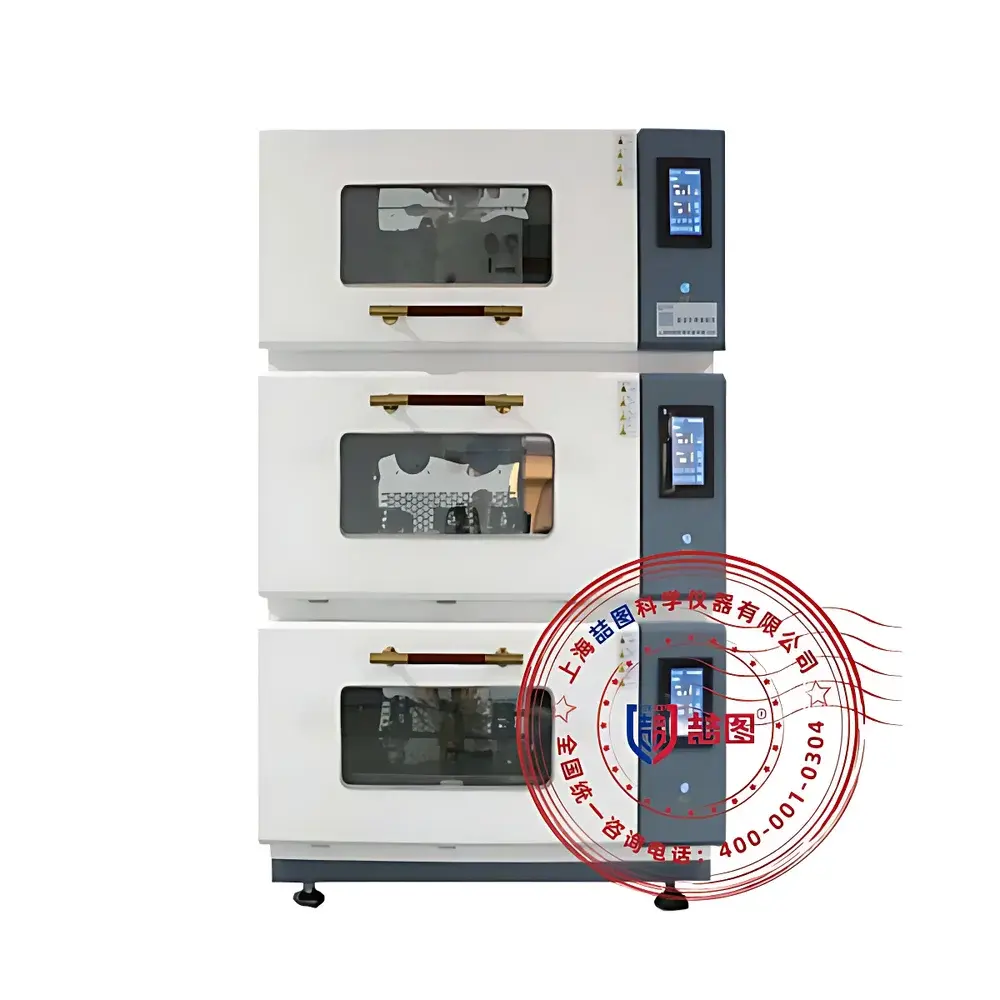
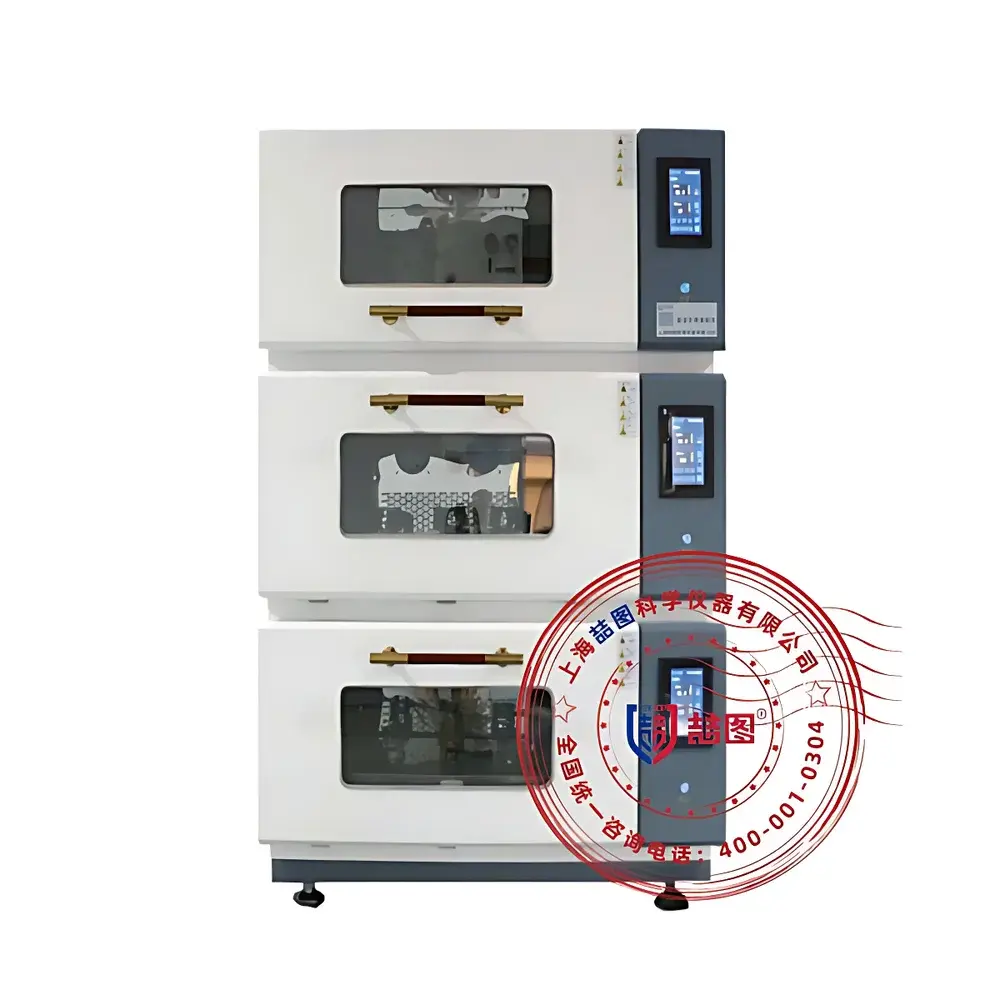
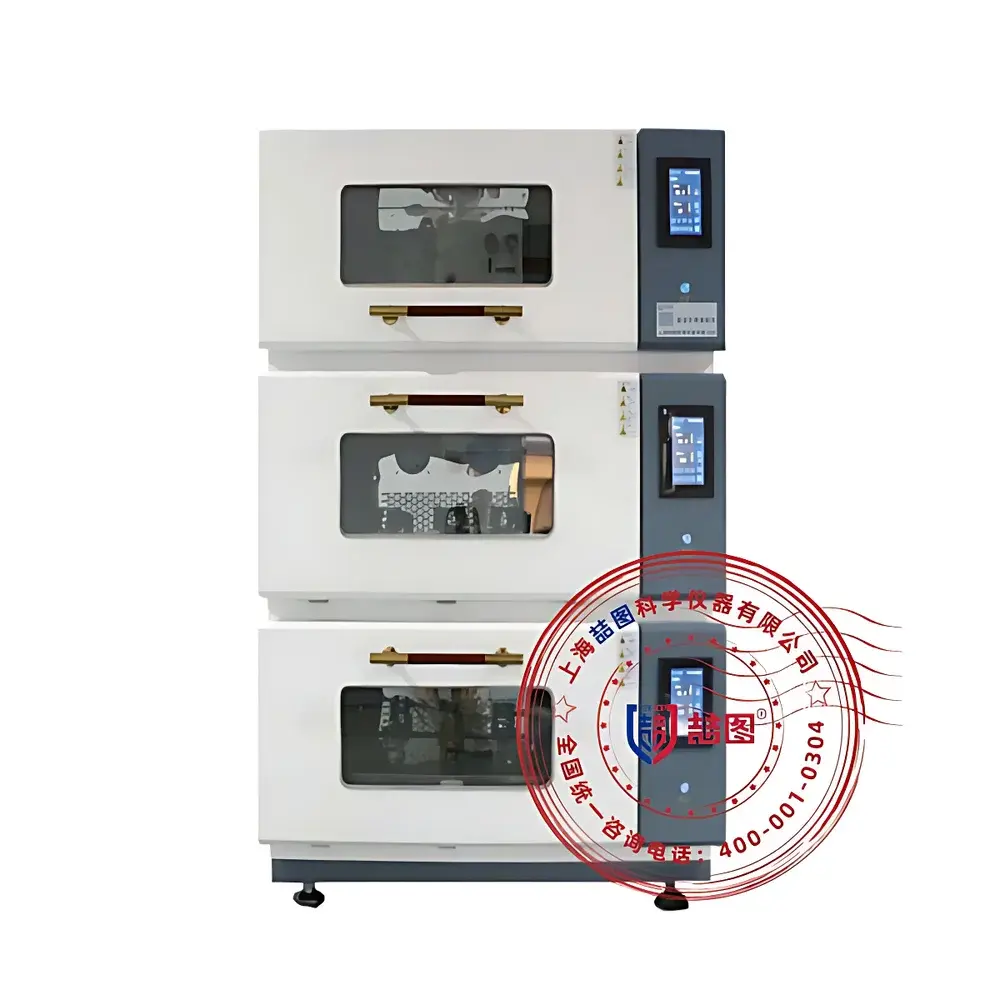
DRETOP XC & ZYL Series Stackable Incubator Shakers
| Brand | DRETOP |
|---|---|
| Origin | Shanghai, China |
| Model Series | XC & ZYL |
| Instrument Type | Stackable Incubator Shaker |
| Oscillation Frequency | 30–300 rpm |
| Oscillation Amplitude | 26 mm |
| Temperature Range | 4–60 °C (R-series with refrigeration) |
| Number of Shaking Platforms | 2 |
| Power Supply | AC 220 V, 50 Hz |
| Temperature Resolution | 0.1 °C |
| Temperature Uniformity | ±1 °C |
| Platform Dimensions | 520 × 420 mm (XC series) / 500 × 360 mm (ZYL series) |
| Control Interface | Color Touchscreen (XC) / LCD Display (ZYL) |
Overview
The DRETOP XC & ZYL Series Stackable Incubator Shakers integrate precise temperature control, programmable orbital shaking, and modular stacking architecture to support demanding applications in microbial cultivation, mammalian cell expansion, enzyme kinetics, fermentation optimization, and molecular biology workflows. These instruments operate on the principle of orbital shaking—generating controlled, circular motion at defined amplitude and frequency—to ensure homogeneous suspension of cells or reagents while maintaining stable thermal conditions across the culture volume. Unlike benchtop shakers with passive heating, the XC and ZYL series employ active Peltier-assisted or compressor-based cooling (R-series), enabling operation from near-ambient (4 °C) up to 60 °C with high thermal reproducibility. The dual-platform configuration supports independent parameter control per deck—allowing simultaneous experiments under distinct thermal and mechanical conditions—while minimizing laboratory footprint through vertical integration.
Key Features
- Modular stackable design: Up to three independently controllable decks (XC-35R, XC3-35R) with optional single/dual/triple configurations; each platform supports forward/reverse/alternating oscillation modes.
- PID-controlled temperature regulation with 0.1 °C resolution and ±1 °C uniformity; R-series models feature hermetically sealed refrigeration systems for sub-ambient operation down to 4 °C.
- Brushless DC motor drive delivering consistent torque across the full 30–300 rpm range; slow-start acceleration prevents sample splashing and ensures mechanical stability during ramp-up.
- Two-platform standard configuration with stainless steel trays (520 × 420 mm for XC; 500 × 360 mm for ZYL); all internal chambers constructed from electropolished 304 stainless steel for corrosion resistance and cleanability.
- Full-parameter encryption and auto-recovery function: Settings are retained after power interruption; system resumes prior operational state upon reboot without manual reconfiguration.
- Comprehensive safety suite including over-temperature cutoff, overspeed alarm, timed shutdown, voltage fluctuation compensation, and real-time deviation correction for both temperature and speed.
Sample Compatibility & Compliance
The XC and ZYL platforms accommodate standard laboratory vessels—including Erlenmeyer flasks (250–3000 mL), test tubes, multi-well plates, and custom bioreactor bags—via adjustable clamps and universal tray inserts. For photobiological applications, the ZYL.GC series integrates high-efficiency LED arrays emitting in the 400–700 nm PAR (Photosynthetically Active Radiation) spectrum, with programmable light intensity (up to 6000 lux) and diurnal cycling (1–24 segments per 24-h period). The ZYL.CP series incorporates NDIR CO₂ sensing with ≤±0.1% accuracy (0–20% v/v range), coupled with a 0.3 µm HEPA-grade inlet filter achieving ≥99.99% microbial particle retention. All units comply with IEC 61010-1 safety standards for laboratory equipment and support GLP-compliant documentation when paired with optional audit-trail-enabled software modules.
Software & Data Management
XC-series units feature an embedded color touchscreen interface supporting multistep program storage (≥100 protocols), real-time graphing of temperature/speed/time trajectories, and USB export of CSV-formatted log files. ZYL-series models utilize dedicated firmware with LCD-based navigation and segmented timer logic for light/CO₂/temperature scheduling. Optional PC connectivity enables remote monitoring via Ethernet or RS-485, with data synchronization compatible with LIMS environments. Firmware supports user-level access control (administrator/operator modes), electronic signature logging, and FDA 21 CFR Part 11–compliant audit trails when configured with time-stamped event recording and password-protected parameter modification.
Applications
These incubator shakers serve critical roles in upstream bioprocess development—including seed train expansion, media optimization, and oxygen transfer rate (OTR) studies—as well as in academic research involving circadian rhythm assays (ZYL.GC), CO₂-dependent cell line maintenance (e.g., primary neurons, stem cells), and anaerobic culture simulation (via nitrogen purge compatibility). In quality control laboratories, they support USP / microbial enumeration, ISO 11133 media performance validation, and AOAC-certified pathogen enrichment protocols. Industrial users leverage the stackable architecture for parallel strain screening, biocatalyst immobilization trials, and continuous perfusion system testing under controlled shear stress.
FAQ
Can the XC series operate without temperature control while maintaining shaking?
Yes—users may disable thermal regulation and run orbital agitation only, or conversely maintain static temperature without oscillation.
What is the maximum flask capacity per platform?
Standard configuration supports up to twenty-four 250 mL flasks or eleven 2000 mL flasks (XC-35R); ZYL.GC-7145-II accommodates twenty-eight 250 mL flasks per deck.
Is CO₂ calibration required after installation?
The NDIR sensor is factory-calibrated; field recalibration is optional and supported via built-in zero/span adjustment using certified gas standards.
Are replacement trays available for non-standard vessel formats?
Custom tray inserts—including microplate carriers, tube racks, and magnetic stir bar holders—are available as OEM accessories upon request.
Does the system meet electromagnetic compatibility (EMC) requirements for shared lab environments?
All models conform to EN 61326-1:2013 for emission and immunity, ensuring stable operation alongside sensitive analytical instrumentation such as HPLC and mass spectrometers.
Related Products



