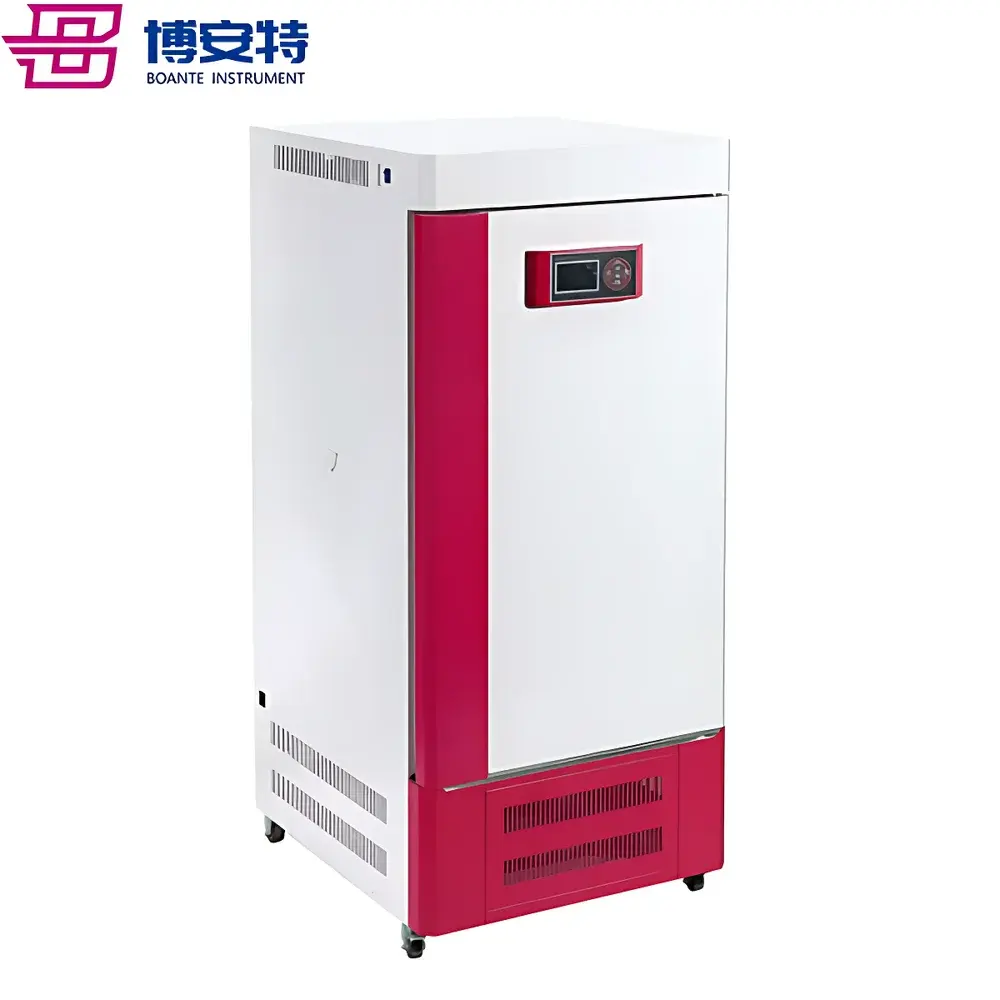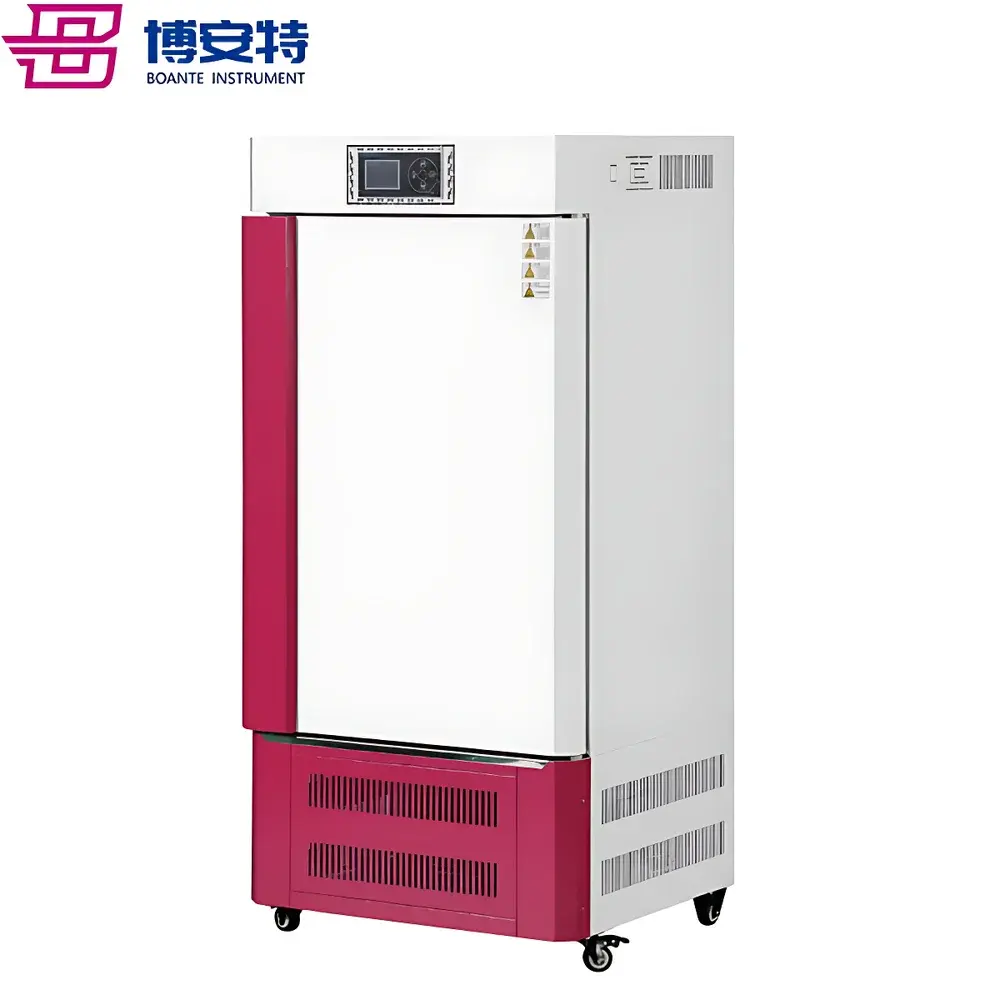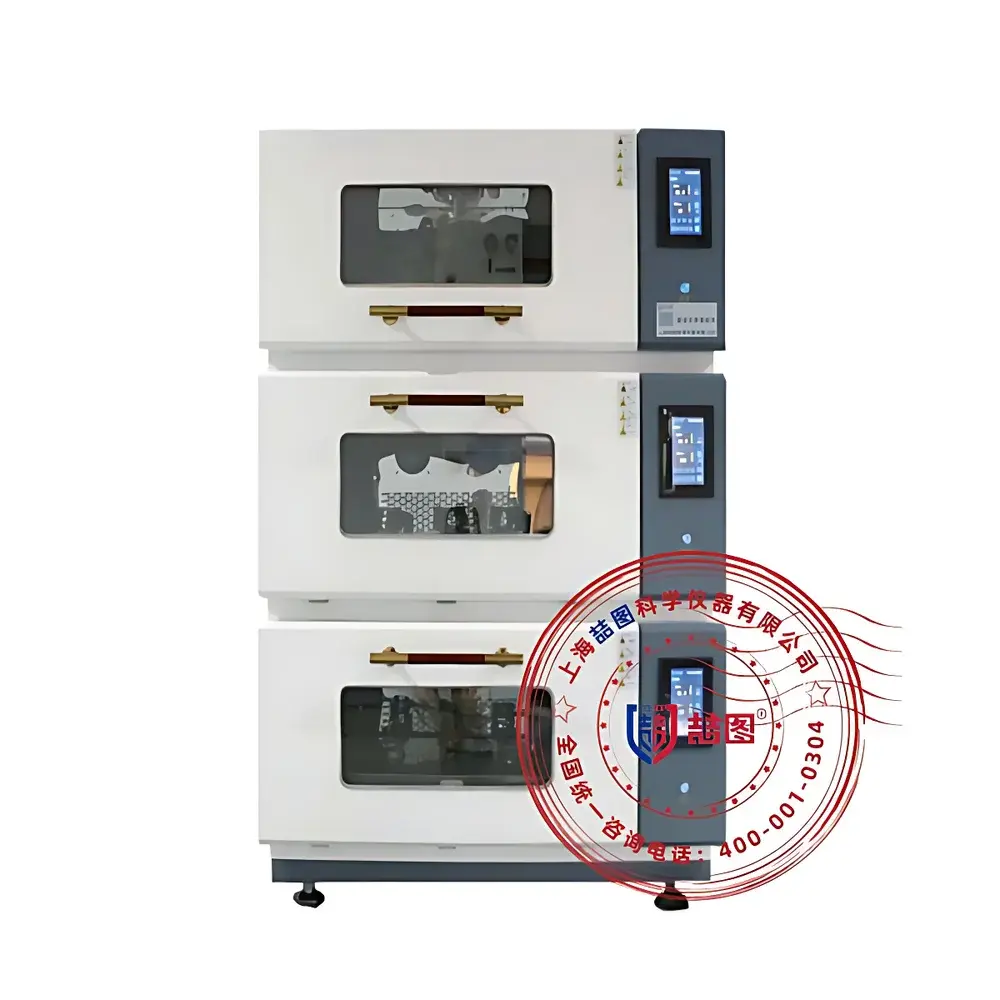
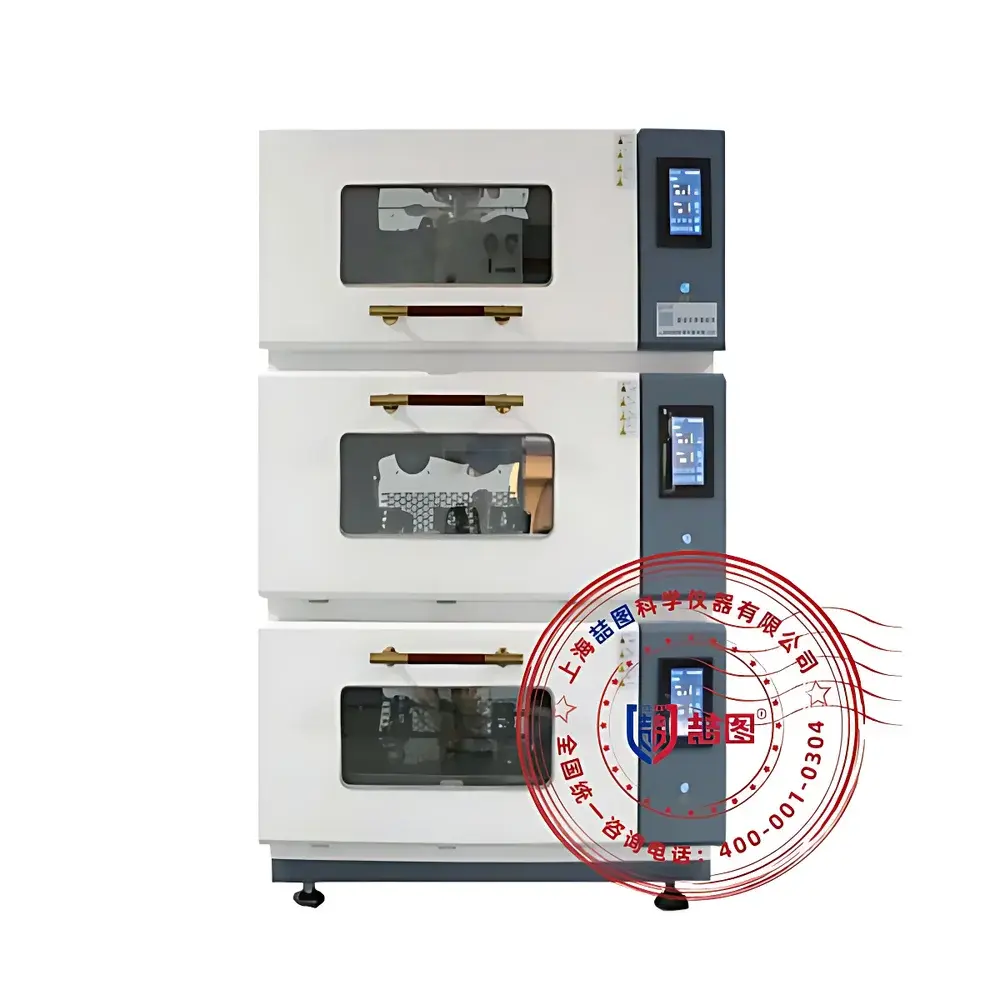
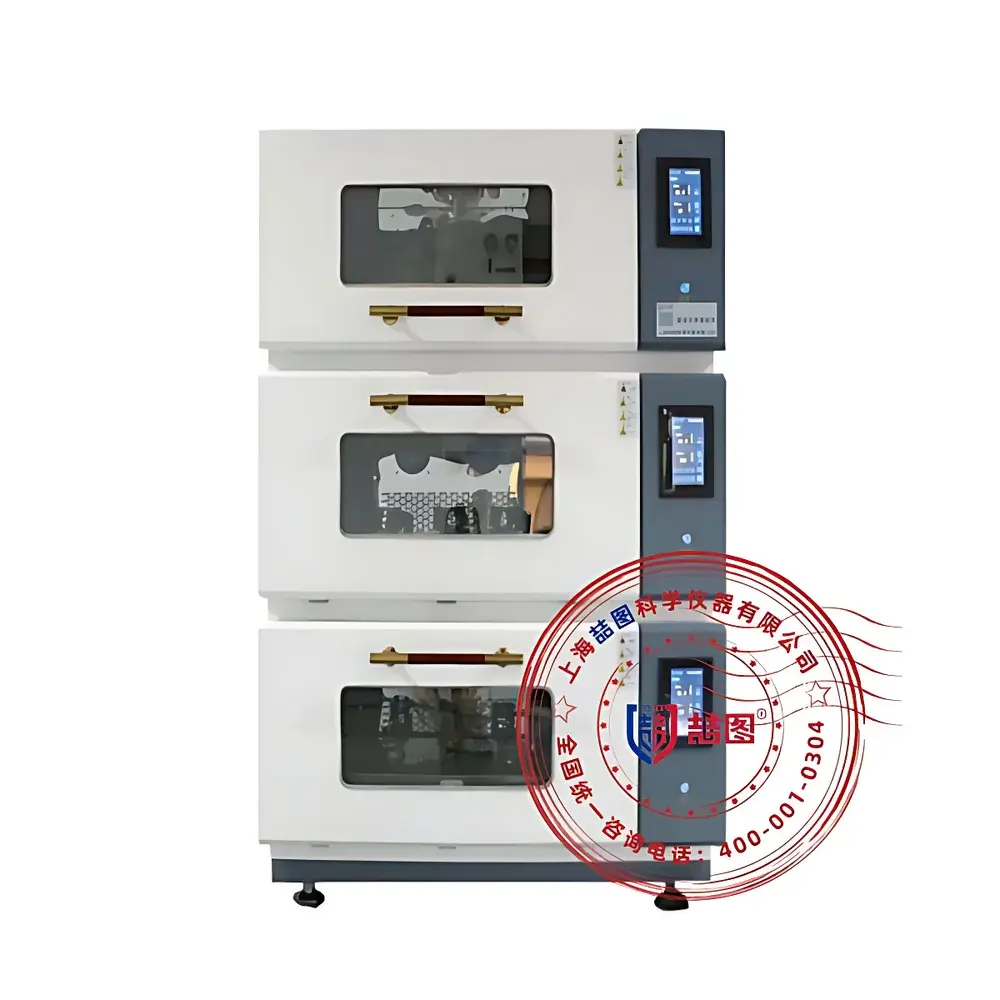
DRETOP XC3-35R Stackable Refrigerated Incubator Shaker
| Brand | DRETOP |
|---|---|
| Origin | Shanghai, China |
| Manufacturer Type | Authorized Distributor |
| Product Category | Domestic |
| Model | XC3-35R |
| Pricing Range | USD 5,600–21,000 (FOB) |
| Instrument Type | Stackable Refrigerated Incubator Shaker |
| Timer Range | 1–999 min |
| Oscillation Frequency | 30–300 rpm |
| Orbit Diameter | 26 mm |
| Temperature Range | 4–60 °C |
| Number of Shaking Platforms | 1 per layer |
| Power Supply | AC 220 V, 50 Hz |
| Temperature Resolution/Uniformity | 0.1 °C / ±1 °C |
| Platform Dimensions (W×D) | 520 × 420 mm |
| External Dimensions (W×D×H) | 1020 × 650 × 1830 mm |
| Standard Flask Capacity | 250 mL × 25, 500 mL × 12, 1000 mL × 9, 2000 mL × 4 |
Overview
The DRETOP XC3-35R Stackable Refrigerated Incubator Shaker is an engineered platform for simultaneous temperature-controlled incubation and orbital shaking—designed to meet the stringent requirements of modern life science laboratories. Based on a precision-engineered Cu–Al refrigeration system and PID-controlled thermal regulation, it maintains stable chamber conditions across a broad operational range (4–60 °C) while delivering consistent, low-vibration oscillation (30–300 rpm, 26 mm orbit). Its modular stackable architecture supports up to three independently controlled layers, enabling scalable throughput without compromising parameter fidelity. Unlike conventional single-layer shakers, the XC3-35R integrates incubator-grade thermal uniformity with bioreactor-level mechanical stability—making it suitable for applications where metabolic activity, oxygen transfer, and thermal homogeneity must be tightly coupled, such as microbial growth kinetics, recombinant protein expression, and suspension cell culture under controlled environmental stress.
Key Features
- Triple-layer stackable design with independent temperature and speed control per layer—enabling heterogeneous experimental conditions in a single footprint.
- Refrigerated operation via high-efficiency hermetic compressor and intelligent auto-tuning thermal management, ensuring rapid cooldown and stable sub-ambient performance down to 4 °C.
- Brushless DC motor drive with constant torque delivery across full speed range; zero carbon wear, no scheduled maintenance, and <±1% speed deviation at steady state.
- 7-inch color TFT touchscreen interface with intuitive multi-step protocol programming, real-time graphing of temperature/speed/time, and user-accessible calibration offsets (temperature & RPM).
- Full-spectrum LED interior lighting with one-touch activation and tempered glass viewing window—facilitating non-invasive monitoring of culture turbidity, pellet formation, or media clarity.
- Comprehensive safety architecture: over-temperature cut-off, overspeed lockout, timed shutdown, power-failure recovery with last-state retention, and dual-level parameter encryption (operator/admin levels).
Sample Compatibility & Compliance
The XC3-35R accommodates standard laboratory vessels—including Erlenmeyer flasks (250–3000 mL), deep-well plates, and custom bioreactor bags—on its stainless-steel, autoclavable platform (520 × 420 mm per layer). Platform clamping systems are configurable for asymmetric load distribution, supporting up to 25 kg per layer with <0.5 mm runout. The unit complies with IEC 61010-1:2010 for laboratory electrical safety and meets electromagnetic compatibility standards per EN 61326-1. While not certified for GMP manufacturing environments, its audit-ready data logging (timestamped, user-ID tagged) and parameter traceability align with GLP documentation practices. Temperature and speed calibration certificates are available upon request, traceable to NIST-certified reference standards.
Software & Data Management
The embedded firmware supports export of time-series datasets (CSV format) via USB port, including temperature setpoint/actual, RPM setpoint/actual, elapsed time, and alarm events. No proprietary software installation is required—data files are human-readable and compatible with MATLAB, Python (pandas), and common LIMS platforms. Audit trail functionality records all parameter changes with user ID, timestamp, and pre-/post-value—satisfying basic FDA 21 CFR Part 11 requirements for electronic records when used in conjunction with institutional access controls. Remote monitoring is not natively supported; however, optional RS-485 Modbus RTU integration enables third-party SCADA linkage for centralized lab infrastructure management.
Applications
- Molecular microbiology: aerobic/anaerobic bacterial culture, plasmid amplification, phage propagation, and antibiotic susceptibility testing under dynamic thermal stress.
- Cell biology: suspension-adapted mammalian cell expansion (e.g., CHO, HEK293), hybridoma cultivation, and stem cell aggregate formation in spinner flasks.
- Bioprocess development: small-scale fermentation optimization, media screening, and oxygen-transfer coefficient (kLa) determination using dissolved oxygen probes.
- Environmental microbiology: enrichment cultures for hydrocarbon-degrading consortia, wastewater biofilm studies, and soil slurry respiration assays.
- Pharmaceutical QC: stability-indicating dissolution testing, excipient compatibility screening, and accelerated degradation studies per ICH Q1A guidelines.
FAQ
Can the XC3-35R operate without refrigeration?
Yes—the cooling system can be disabled via software settings, allowing operation as a standard heated incubator shaker (RT+5 to 60 °C) using only Peltier-assisted heating.
Is the platform compatible with magnetic stir bars or orbital shaker adapters?
No—the platform is optimized for flask clamping and lacks ferromagnetic coupling or universal adapter mounts; third-party orbital adapters may compromise vibration isolation and thermal uniformity.
What is the maximum allowable load imbalance per layer?
Asymmetric loading up to 30% mass difference between opposing quadrants is permitted without triggering vibration compensation alarms, provided total load remains ≤25 kg.
Does the unit support validation protocols such as IQ/OQ/PQ?
Factory-installed IQ/OQ documentation packages are available as optional add-ons; PQ execution requires site-specific sensor mapping and is typically performed by qualified internal QA personnel.
How frequently should temperature and speed calibration be performed?
DRETOP recommends annual calibration against traceable standards; however, labs operating under ISO/IEC 17025 or GLP frameworks may implement quarterly verification based on risk assessment and usage intensity.