
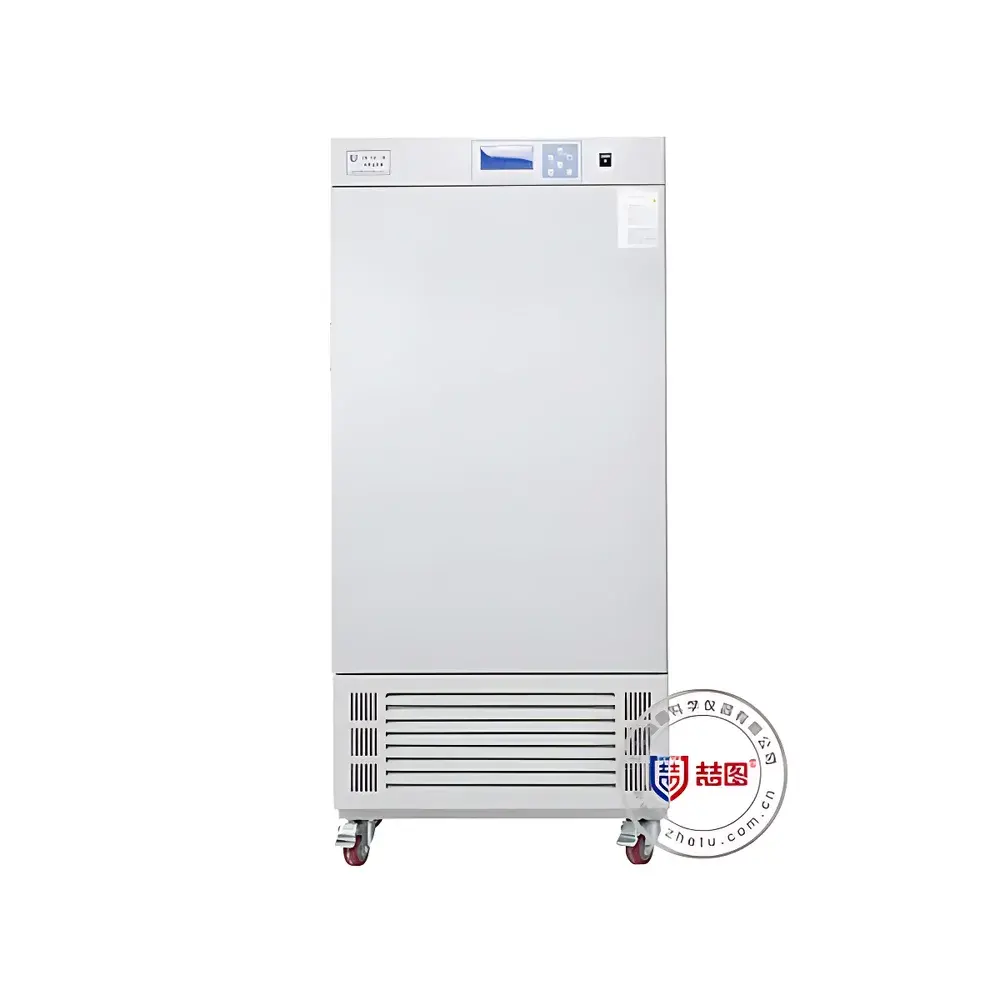
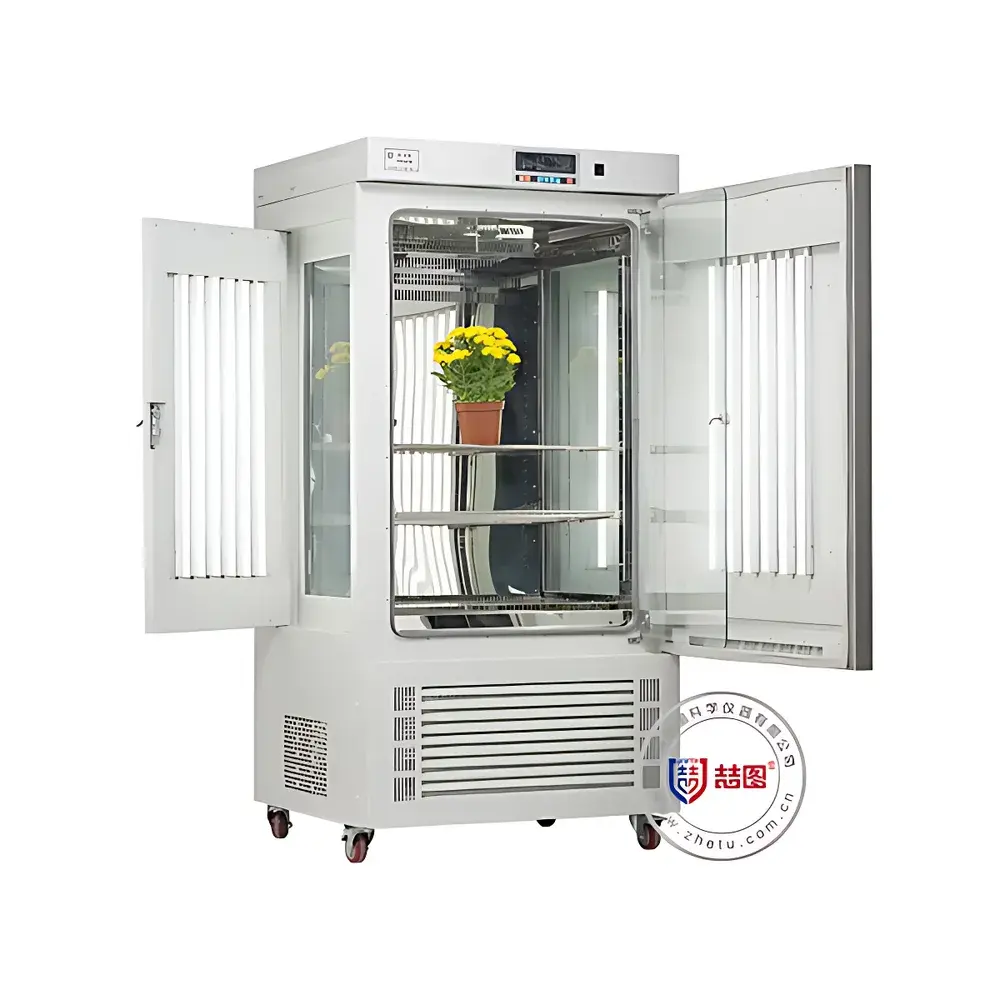
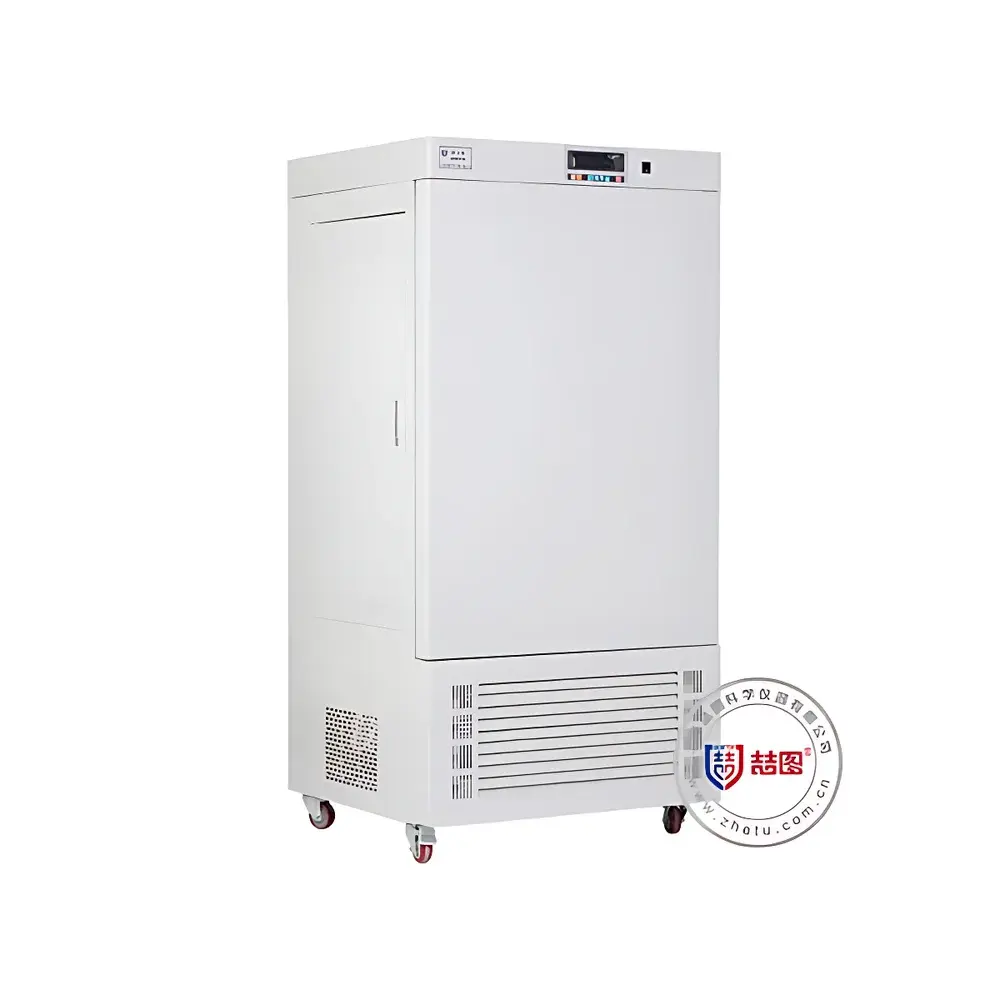
DRETOP ZGC.CP-400 Multifunctional CO₂ Incubator with Illumination
| Brand | DRETOP |
|---|---|
| Origin | Shanghai, China |
| Manufacturer Type | Direct Manufacturer |
| Instrument Type | Air-Jacketed CO₂ Incubator |
| CO₂ Detection | Infrared (IR) Sensor |
| Temperature Control Range | 10–50°C (with illumination) |
| CO₂ Concentration Range | 0–20% |
| Capacity | 400 L |
| External Dimensions (W×D×H) | 880 × 780 × 1810 mm |
| Insulation Material | Ceramic Fiber |
| Air Filtration | HEPA-grade filter (≥0.3 µm, 99.998% efficiency) |
| Door System | Dual-pane tempered glass with magnetic seal and nano-composite gasket |
| Cooling System | Modular compressor-based refrigeration with delayed start & cycle protection |
| Humidity Control | None (reservoir-based humidity recovery design, non-regulated) |
| Lighting | Adjustable LED cold-light source (0–25,000 lx, 6-level intensity, selectable red/blue spectra) |
| Control Interface | Optional color touchscreen or LCD display |
| Compliance | Designed for GLP-aligned cell culture workflows |
Overview
The DRETOP ZGC.CP-400 Multifunctional CO₂ Incubator with Illumination is an air-jacketed, microprocessor-controlled environmental chamber engineered for advanced mammalian cell culture, photobiological studies, and circadian rhythm research. Unlike standard CO₂ incubators, the ZGC.CP-400 integrates precise CO₂ regulation (0–20% range), programmable illumination (0–25,000 lx, six-step intensity, optional red/blue LED spectra), and dual-mode temperature control—enabling independent thermal setpoints for light-on and light-off phases. Its measurement architecture relies on a non-dispersive infrared (NDIR) CO₂ sensor, which delivers stable, temperature- and humidity-independent concentration readings even during frequent door openings. The air-jacketed thermal design—combined with ceramic fiber insulation and a heated inner door—ensures rapid recovery (<8 min to 37°C, <3 min to 5% CO₂ after 30-sec door opening) and high thermal stability (±0.5°C uniformity, per ISO 13732-1 methodology). This system meets the functional requirements of ISO 13408-1 (aseptic processing), ASTM E1265 (microbiological containment), and aligns with core elements of USP and EU GMP Annex 1 for controlled environment qualification.
Key Features
- Air-jacketed thermal architecture with ceramic fiber insulation and heated inner glass door to prevent condensation and microbial ingress
- Infrared (NDIR) CO₂ sensing technology—immune to ambient humidity and temperature drift, enabling reliable long-term calibration stability
- Programmable illumination module: LED cold-light source with adjustable spectral output (standard white; optional red/blue), 0–25,000 lx intensity (6-level), and programmable day/night cycling
- Dual-setpoint temperature control: distinct setpoints for illuminated vs. non-illuminated periods, supporting circadian and photoperiodic experimental protocols
- HEPA-grade inlet air filtration (≥0.3 µm, 99.998% efficiency) and integrated ozone-free UV lamp for continuous air and humidification reservoir sterilization
- Stainless steel mirror-finish interior with radius-corner construction, removable shelves, and anti-tilt shelf guides to prevent media spillage during handling
- Modular refrigeration system with compressor protection logic (startup delay, inter-cycle intervals, auto-defrost without energy consumption)
- Microprocessor-based P.I.D. temperature controller with 0.1°C resolution, 99-segment programmable cycle capability, and power-failure parameter retention
- Robust mechanical design: heavy-duty casters with locking mechanism, reinforced chassis, and vibration-damped mounting for uninterrupted 360+ hour continuous operation
Sample Compatibility & Compliance
The ZGC.CP-400 accommodates standard tissue culture formats—including T-flasks (up to T225), multiwell plates (6–96-well), Petri dishes, and roller bottles—within its 400 L working volume. Its stainless steel chamber (AISI 304 grade) and seamless interior geometry minimize microbial adhesion and support routine cleaning with ethanol, hydrogen peroxide vapor (HPV), or validated liquid disinfectants. The absence of active humidity control eliminates condensation-related contamination risks while retaining passive moisture recovery via its reservoir-based bottom pan design. For regulatory environments, the incubator supports audit-ready operation when configured with RS485/USB data export and optional embedded printer: logged parameters (temperature, CO₂, illumination status, door events) comply with ALCOA+ principles and may be archived for FDA 21 CFR Part 11–compliant review upon integration with validated third-party LIMS or ELN platforms. It is routinely deployed in ISO 13485-certified biomanufacturing labs and academic GLP facilities conducting stem cell expansion, organoid differentiation, and light-responsive pharmacology assays.
Software & Data Management
The ZGC.CP-400 operates via an embedded microcontroller with either monochrome LCD or optional full-color capacitive touchscreen interface. All operational parameters—including temperature (light-on/light-off), CO₂ setpoint, illumination intensity/duration, alarm thresholds, and timer functions—are configurable through intuitive menu navigation. Real-time monitoring includes graphical trend display for up to 72 hours of internal sensor history. When equipped with RS485 or USB communication ports (optional), the unit transmits timestamped sensor data at user-defined intervals (1 sec to 60 min) to external PCs running DRETOP’s proprietary data acquisition software or generic Modbus-compatible SCADA systems. Export formats include CSV and XML; data integrity is preserved via cyclic redundancy check (CRC) validation. Alarm events—including temperature deviation >±1.0°C, CO₂ excursion >±0.3%, door-open duration >60 sec, or UV lamp failure—are logged with timestamps and trigger audible/visual alerts. Optional wireless SMS notification modules provide remote fault escalation without requiring local network infrastructure.
Applications
- Mammalian cell culture under physiologically relevant CO₂ (5%) and temperature (37°C), with synchronized light-dark cycles for chronobiological modeling
- Photodynamic therapy (PDT) preclinical screening using wavelength-specific LED excitation (e.g., 630 nm red for porphyrin activation)
- Plant tissue culture and algal growth studies requiring controlled irradiance gradients and CO₂ enrichment
- Neuronal differentiation assays where circadian entrainment influences synaptic maturation
- Long-term stability testing of biologics in simulated ambient lighting conditions
- Microbial co-culture experiments involving light-sensitive symbionts (e.g., cyanobacteria–host systems)
- Regulatory-compliant seed train expansion in biopharma process development labs
FAQ
Does the ZGC.CP-400 provide active humidity control?
No. It features a passive reservoir-based humidity recovery system but lacks active humidification or dehumidification components. Relative humidity is not regulated or displayed.
What is the recovery time after door opening?
Following a 30-second door opening event, the chamber restores 37°C within ≤8 minutes and 5% CO₂ within ≤3 minutes, as verified per ISO 15223-1 Annex B test protocol.
Is the infrared CO₂ sensor factory-calibrated?
Yes. Each NDIR sensor undergoes two-point calibration (0% and 5% CO₂ in nitrogen balance gas) prior to shipment and maintains ±0.1% accuracy over 12 months under normal operating conditions.
Can the illumination spectrum be customized beyond red/blue options?
Custom narrowband LED arrays (e.g., 450 nm, 525 nm, 660 nm) are available under OEM agreement, subject to minimum order quantity and lead-time confirmation.
What safety certifications does the unit carry?
It complies with IEC 61010-1 (Safety Requirements for Electrical Equipment for Measurement, Control, and Laboratory Use) and IEC 61326-1 (EMC for Laboratory Equipment). CE marking is applied for EU market access.



