
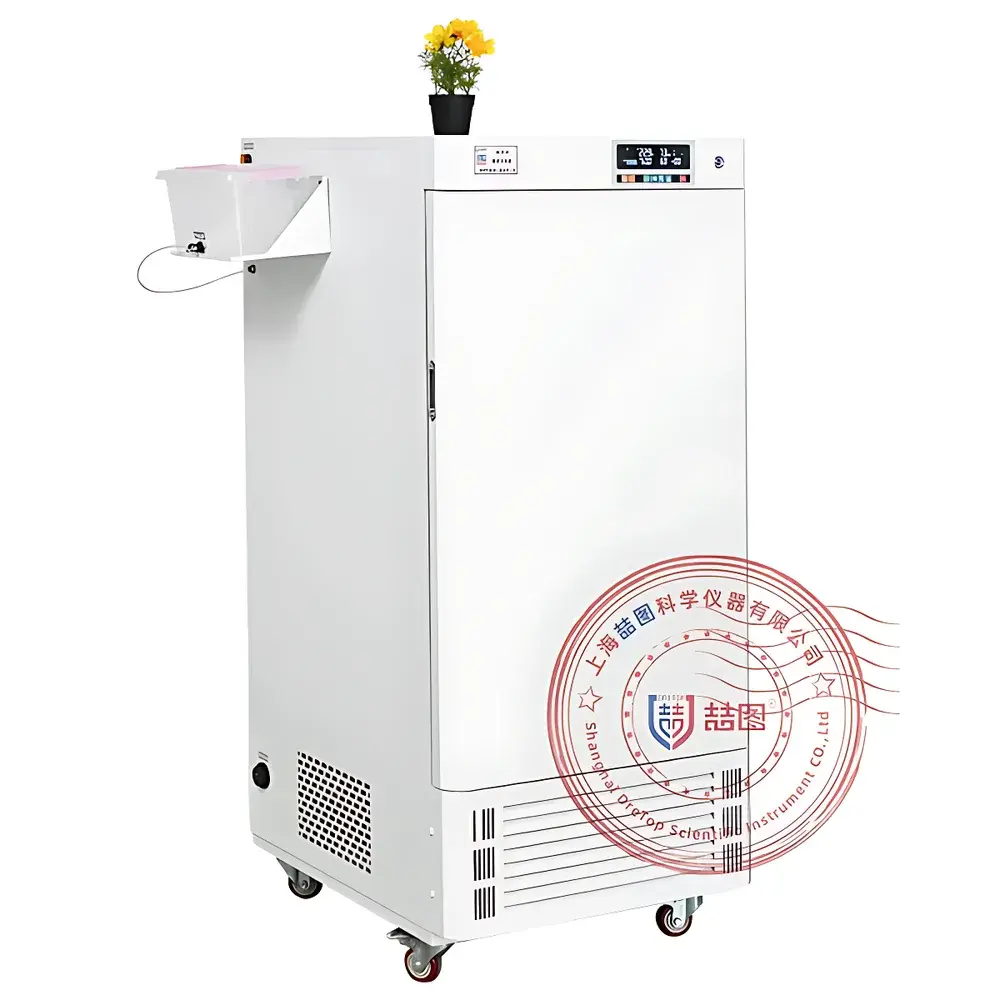
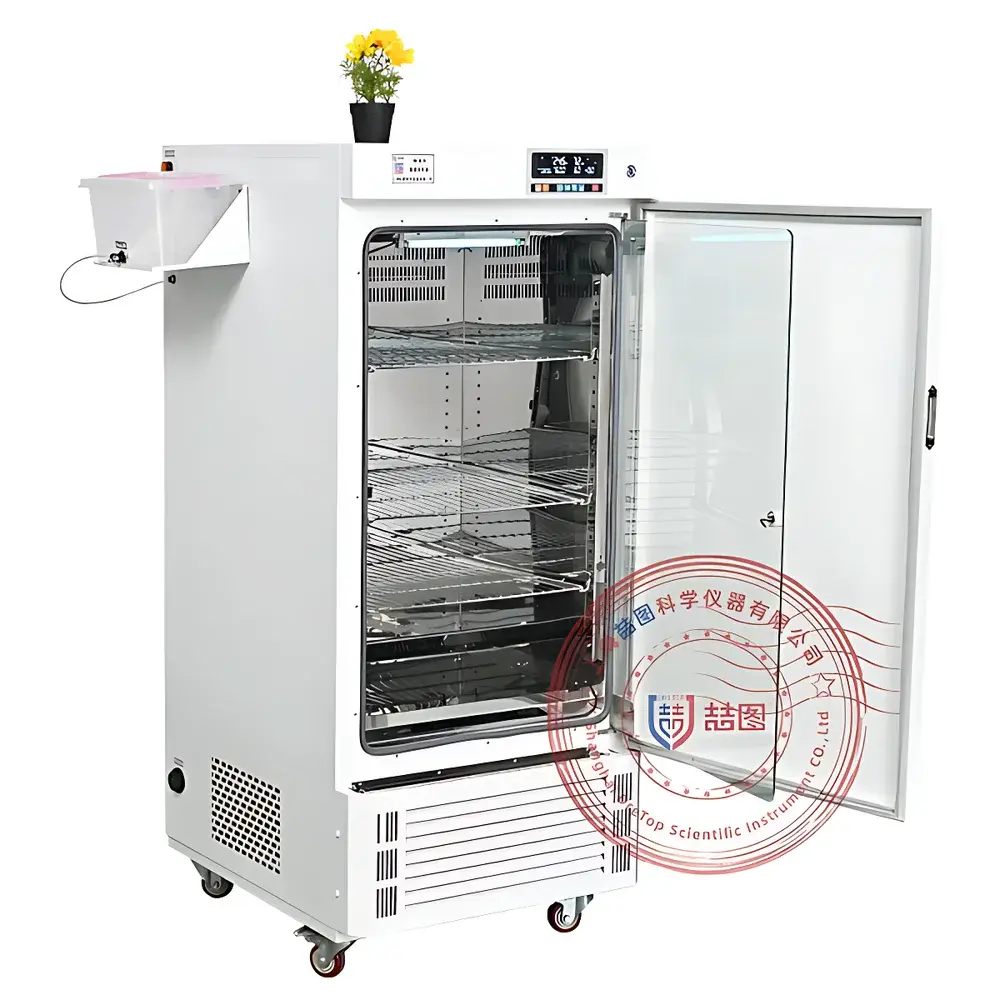
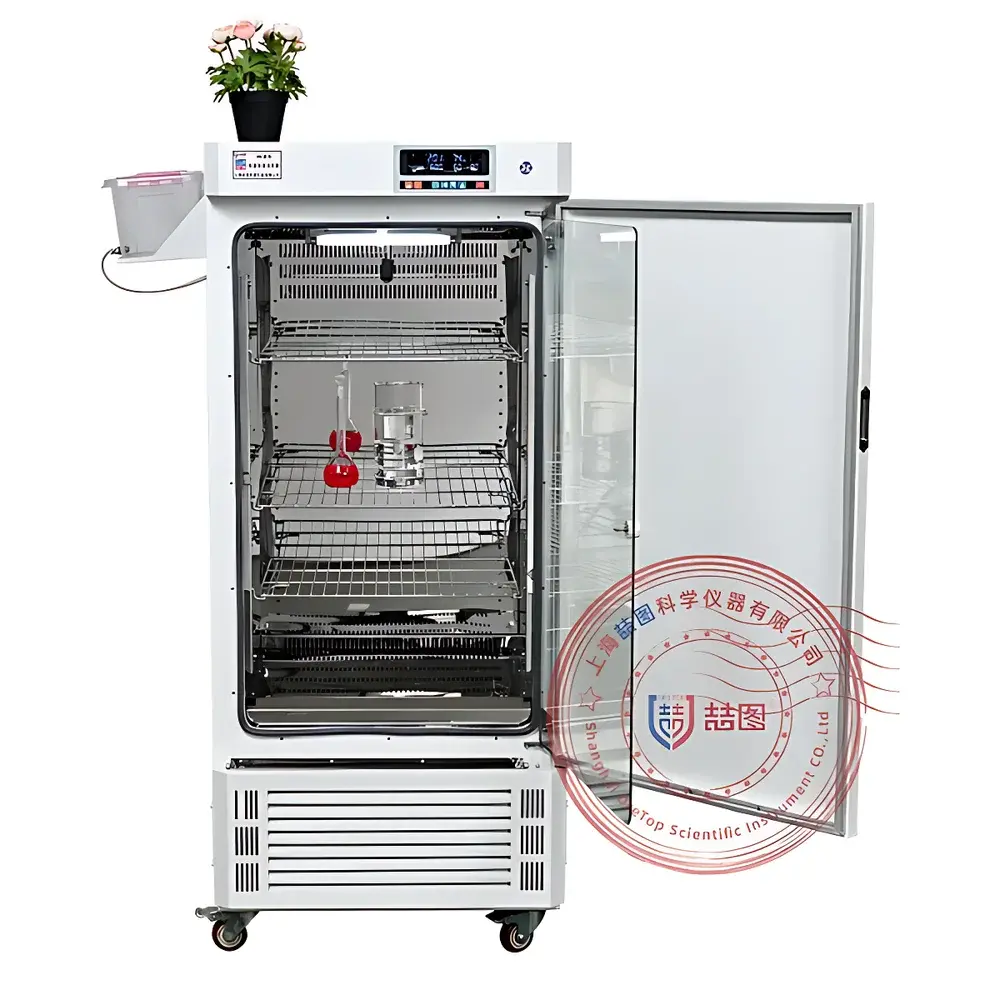
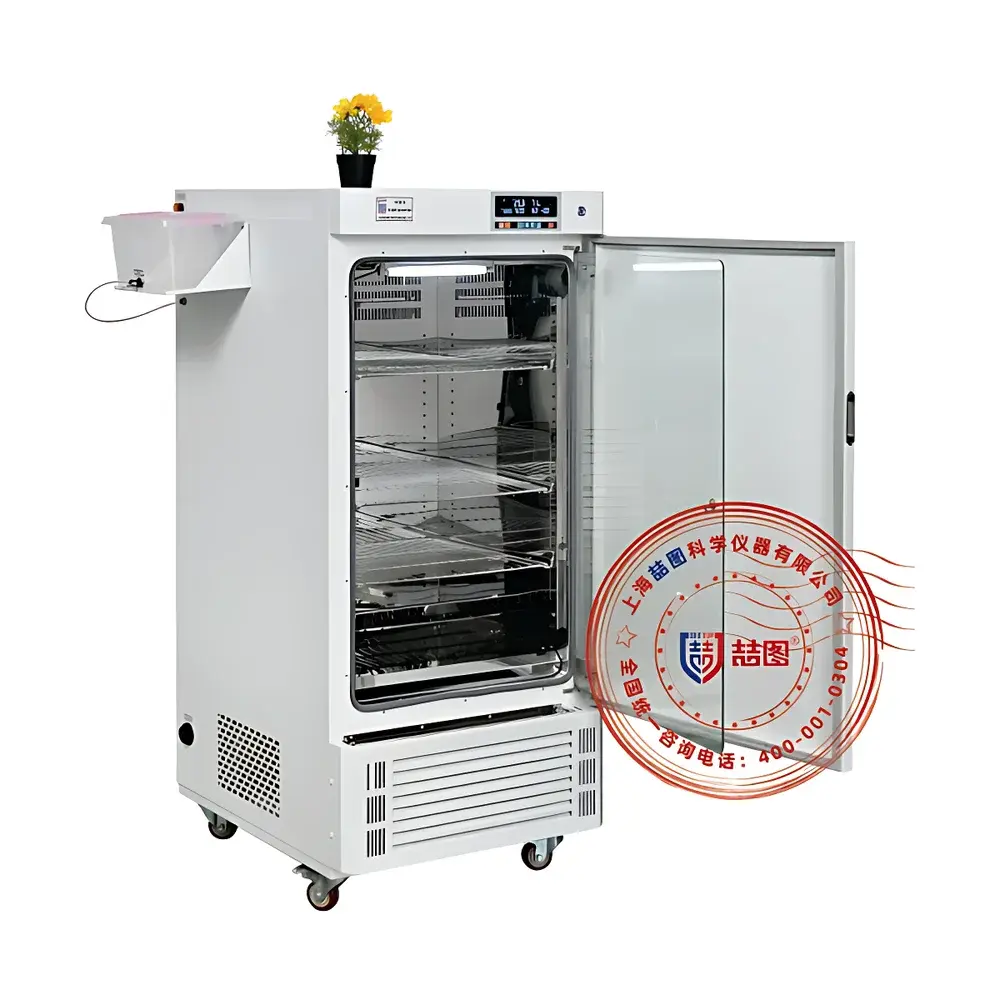
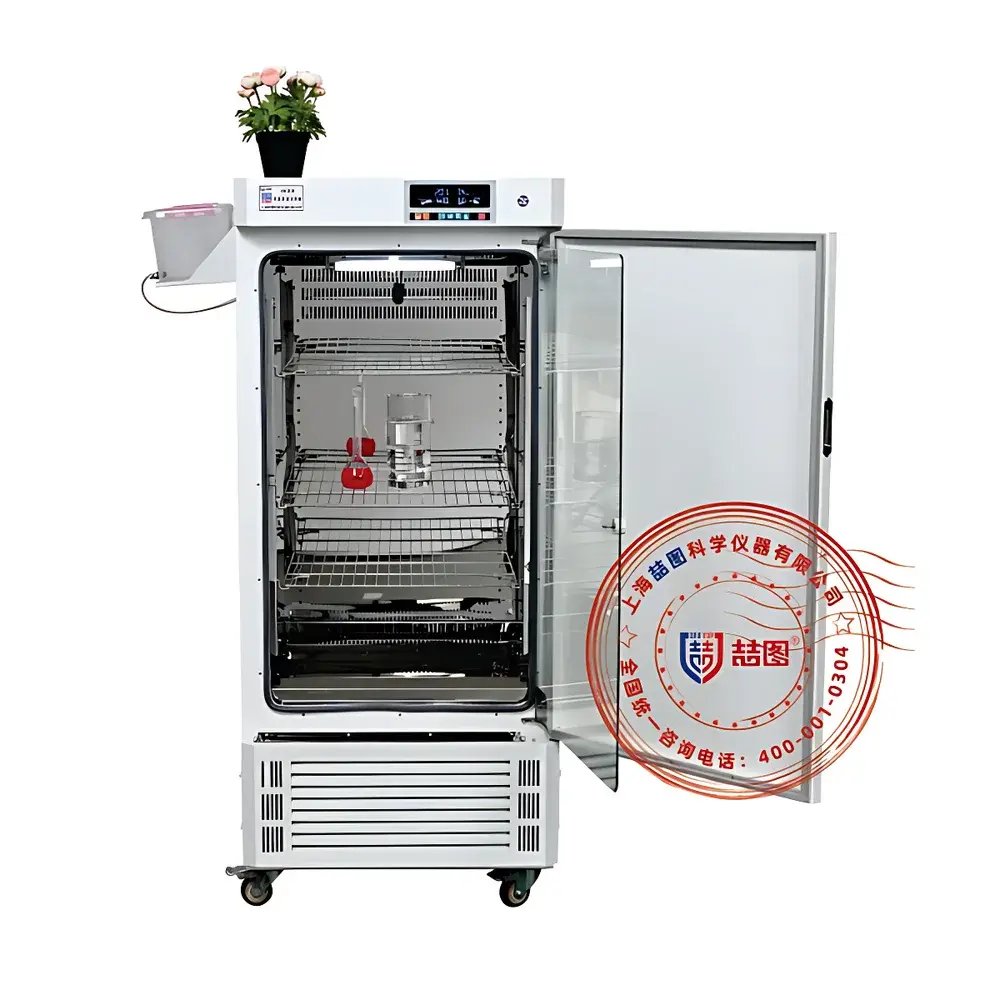
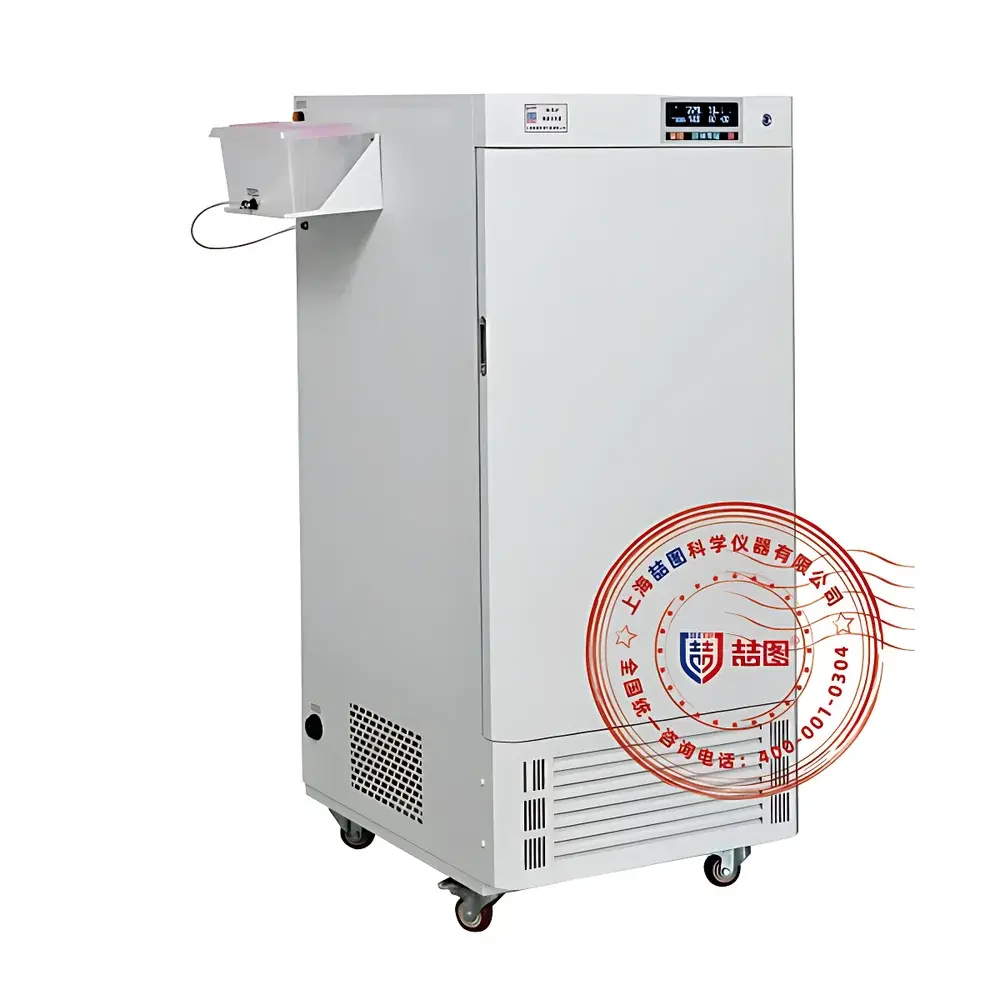
DRETOP ZHS-500HC Temperature and Humidity Controlled Incubator
| Brand | DRETOP |
|---|---|
| Origin | Shanghai, China |
| Model | ZHS-500HC |
| Heating Method | Air-jacketed |
| Cooling Method | Compressor-based refrigeration |
| Humidification Water Tank | External reservoir |
| Temperature Range (with humidification) | 15–45 °C |
| Temperature Range (without humidification) | 10–45 °C |
| Temperature Uniformity | ±0.5 °C at high setpoints, ±1.0 °C at low setpoints |
| Humidity Range | 40–95 % RH |
| Chamber Capacity | 500 L (standard configuration) |
| External Dimensions (W×D×H) | 720 × 650 × 1380 mm |
| Inner Chamber Material | Stainless steel (AISI 304) |
| Control System | Microprocessor-based PID controller with 30-segment programmable logic |
| Power Supply | 220 V AC, 50/60 Hz |
| Refrigerant | R134a (CFC-free) |
Overview
The DRETOP ZHS-500HC Temperature and Humidity Controlled Incubator is an engineered environmental simulation platform designed for precise, long-term maintenance of biological, pharmaceutical, and material specimens under tightly regulated thermal and hygroscopic conditions. Built upon air-jacketed heating architecture and compressor-driven refrigeration, the system delivers stable temperature control across a broad operational envelope—10–45 °C without humidification, and 15–45 °C when active humidity control is engaged. Its integrated microprocessor-based PID control system continuously monitors and adjusts both heating and cooling outputs in real time, minimizing thermal overshoot and ensuring high reproducibility across repeated experimental cycles. The incubator conforms to fundamental performance expectations outlined in ISO 14644-1 (cleanroom classification), ASTM E2928-22 (environmental chamber validation), and supports GLP-compliant workflows through configurable alarm thresholds, parameter logging, and power-failure recovery protocols.
Key Features
- Air-jacketed heating system with nickel-chromium alloy heaters ensures rapid thermal response and uniform heat distribution across the chamber volume.
- Compressor-based refrigeration circuit utilizes R134a refrigerant—non-ozone-depleting and compliant with EU F-Gas Regulation (EU No. 517/2014) and EPA SNAP requirements.
- External humidification reservoir minimizes internal condensation risk and simplifies routine maintenance; humidity is delivered via controlled vapor diffusion rather than direct steam injection.
- Stainless steel (AISI 304) interior chamber with removable, adjustable shelving enables complete accessibility for cleaning, autoclaving, or chemical decontamination per USP guidelines.
- Double-glazed observation window with tempered inner glass and magnetic door seal provides optical clarity while maintaining thermal integrity and minimizing moisture leakage.
- 30-segment programmable controller allows complex multi-step environmental profiles—including ramp-and-soak sequences—for stability testing per ICH Q1A(R2) and USP .
- Glossy LCD interface with touch-sensitive keys displays real-time temperature, relative humidity, elapsed time, and alarm status—no external software required for basic operation.
- Four-corner rounded interior design eliminates crevices where microbial accumulation may occur, supporting ISO 14698-1 biocontamination control principles.
- Modular refrigeration unit includes compressor start-delay logic and mandatory off-cycle intervals to reduce mechanical stress and extend service life beyond 15,000 operating hours.
Sample Compatibility & Compliance
The ZHS-500HC accommodates standard laboratory vessels including Petri dishes, multi-well plates, flasks, and sealed vials up to 500 mL capacity. Its uniform airflow pattern—engineered via axial贯流 (cross-flow) fan arrays and optimized internal ducting—maintains ≤±0.8 °C spatial temperature deviation (measured per ASTM E742-20 Annex A1) and ≤±3 % RH variation across the full working volume. The unit meets CE marking requirements under the EU Machinery Directive 2006/42/EC and Electromagnetic Compatibility Directive 2014/30/EU. While not certified to UL 61010-1 out-of-the-box, it complies with its core safety provisions—including overtemperature cutoff, ground-fault detection, and thermal fuse redundancy—and can be adapted for North American regulatory acceptance upon request.
Software & Data Management
Data logging is performed internally at user-selectable intervals (1–60 minutes), storing up to 30 days of timestamped temperature/humidity records in non-volatile memory. Optional RS-485 Modbus RTU or USB-C serial interface enables integration with third-party SCADA systems or LIMS platforms. All logged data include audit trail metadata (operator ID, event type, timestamp), satisfying FDA 21 CFR Part 11 requirements when paired with validated access controls and electronic signature modules. Parameter changes are automatically recorded with version stamping; system retains configuration history even after power interruption thanks to EEPROM-backed memory.
Applications
This incubator serves as a primary tool in pharmaceutical stability chambers (ICH Q5C), accelerated aging studies for packaging validation (ASTM D4332), microbiological growth assessment (ISO 21528-2), textile conditioning per ISO 139, and food product shelf-life modeling (AOAC 991.22). Its ability to sustain 40–95 % RH across biologically relevant temperatures makes it suitable for fungal culture propagation, seed germination assays, and polymer hydration kinetics—particularly where dew-point control is critical to avoid surface condensation on test specimens.
FAQ
What is the standard calibration interval recommended for the ZHS-500HC?
Annual calibration against NIST-traceable reference standards is advised; field verification using Class A platinum resistance thermometers and calibrated hygrometers should be conducted quarterly.
Can the unit operate continuously at 45 °C and 95 % RH?
Yes—continuous operation at maximum specified conditions is supported, provided ambient room temperature remains ≤25 °C and relative humidity ≤60 % RH.
Is remote monitoring available without additional hardware?
No—the base model requires optional communication modules for Ethernet or Wi-Fi connectivity; however, local USB export of CSV-formatted logs is natively supported.
Does the incubator meet GMP documentation requirements?
It supports GMP-aligned operations through configurable alarm logging, user-access levels, and electronic record retention—but formal qualification (IQ/OQ/PQ) must be executed by the end user or authorized service partner.
What is the warranty coverage period?
Standard coverage is 24 months from commissioning date, inclusive of parts and labor for defects in materials and workmanship under normal laboratory use.






