
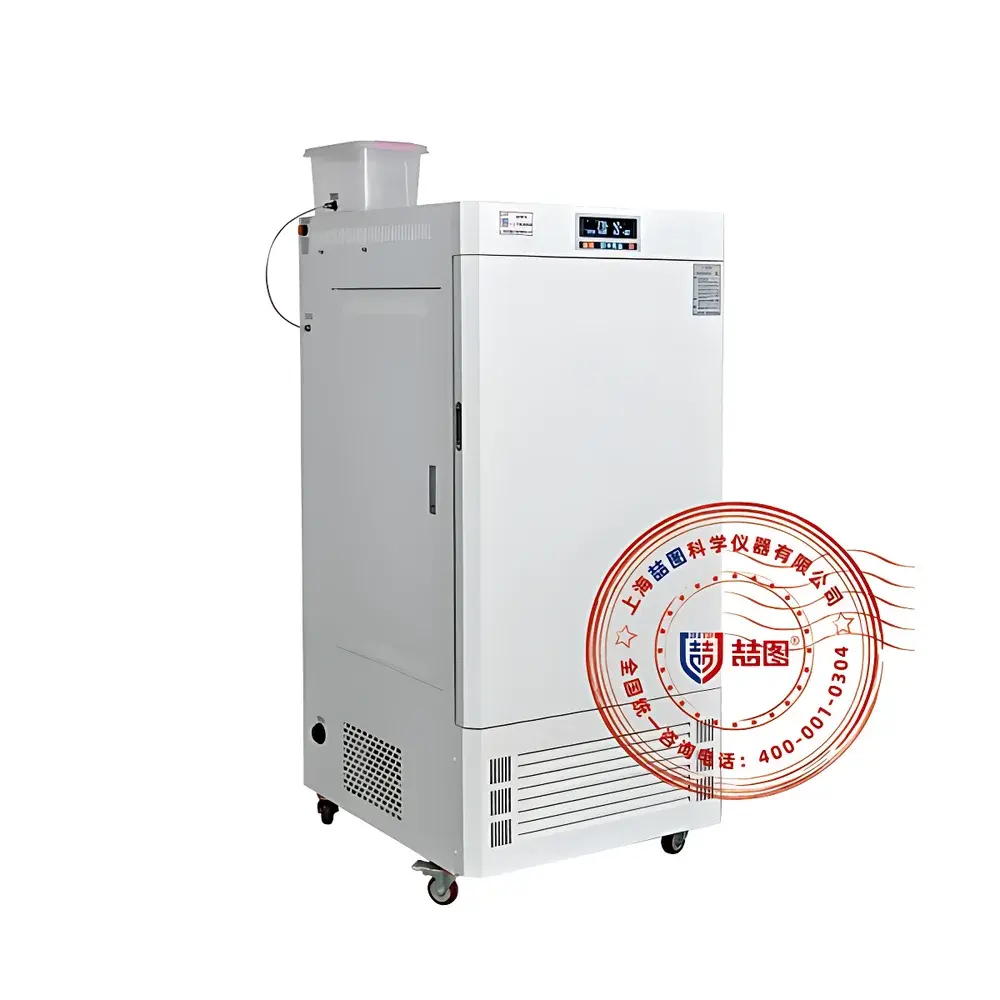
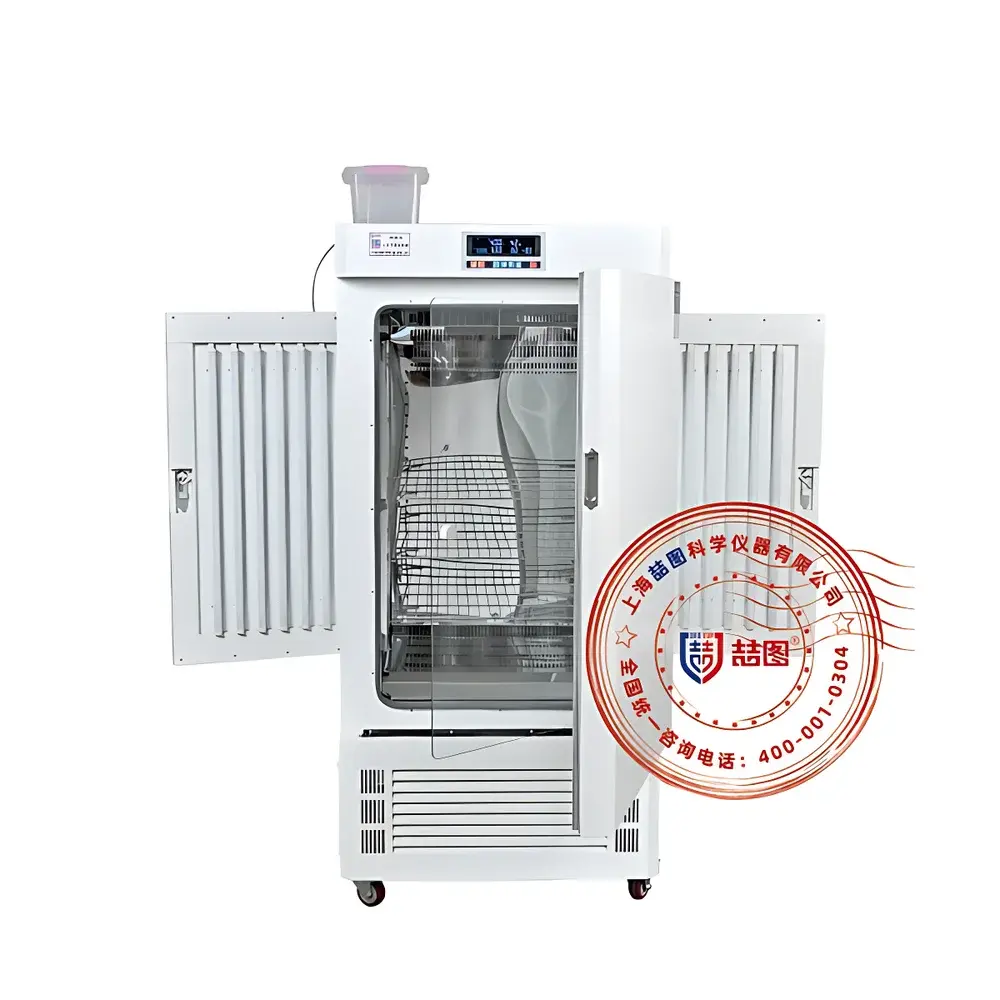
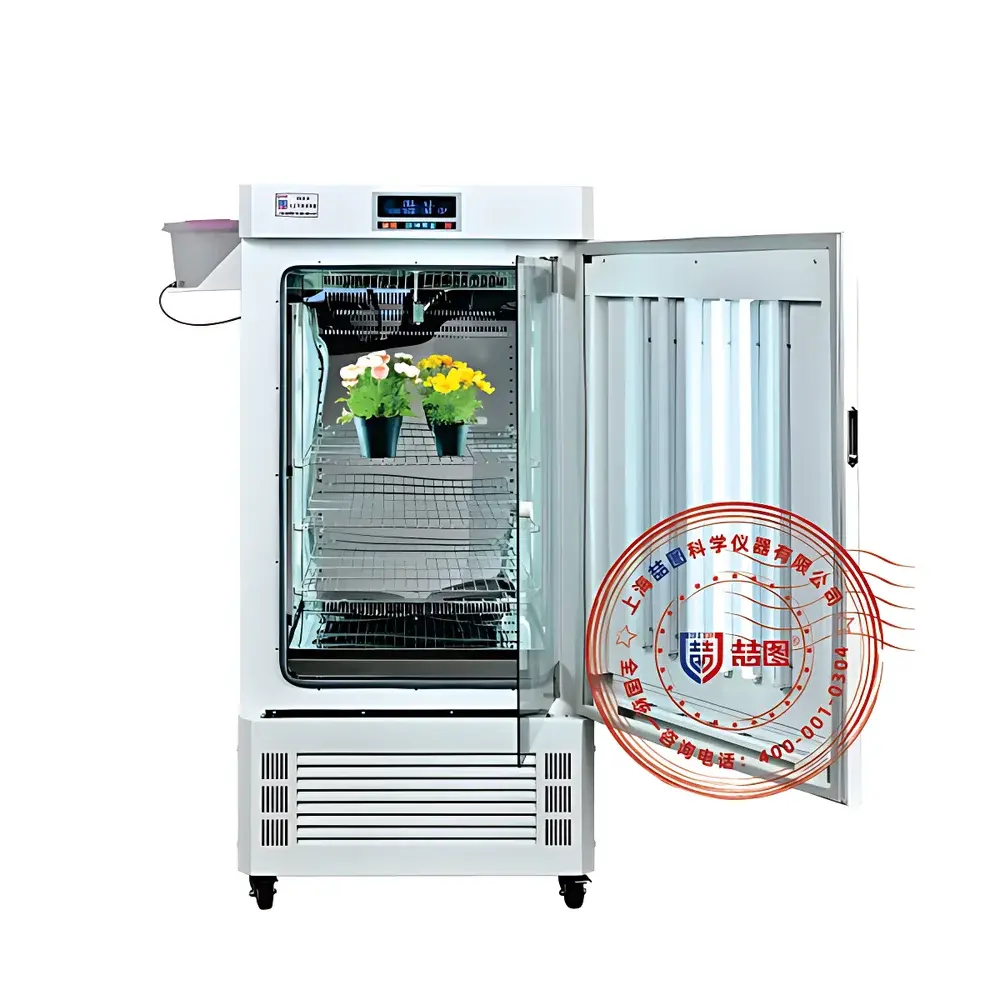
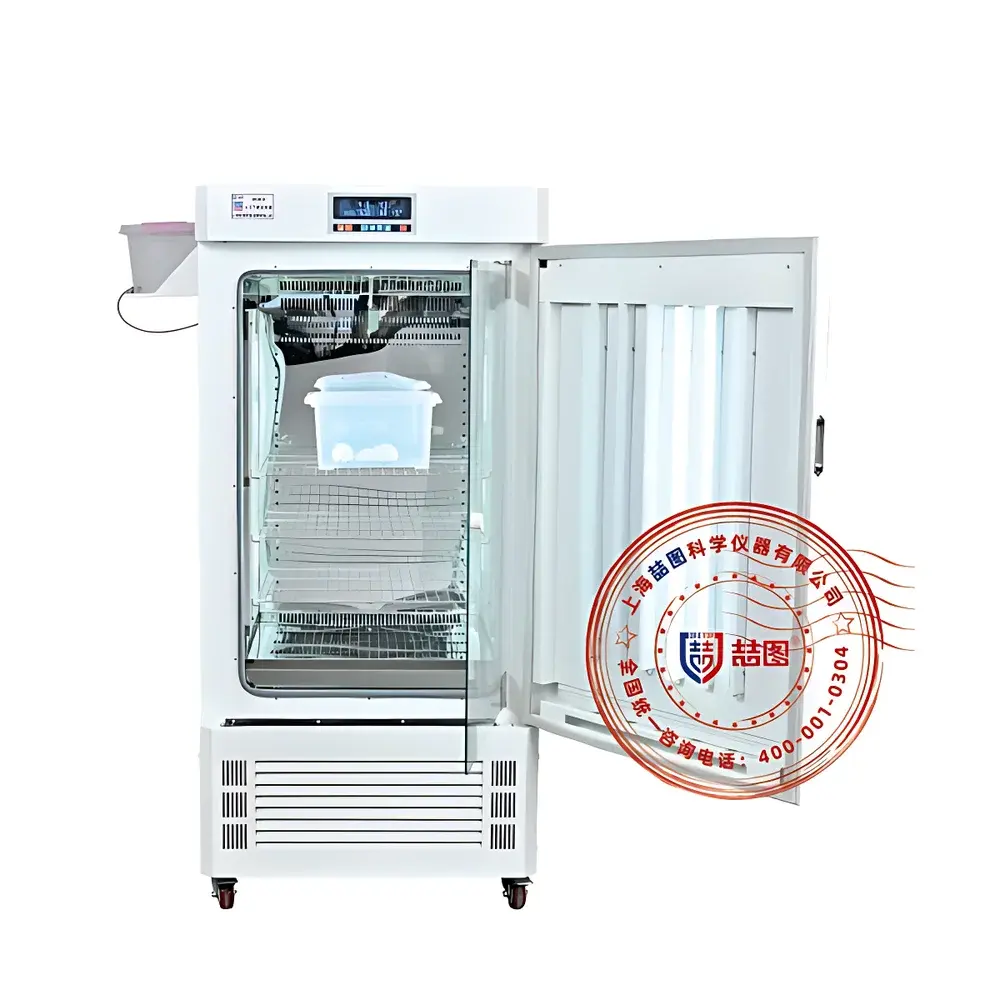
DRETOP ZRQ Series Artificial Climate Incubator with Glovebox Integration
| Brand | DRETOP |
|---|---|
| Origin | Shanghai, China |
| Manufacturer Type | Authorized Distributor |
| Regional Category | Domestic (China) |
| Model | ZRQ Series |
| Price Range | USD 3,000 – 18,000 |
| Instrument Type | Fully Automatic Programmable Incubator |
| Capacity | 150–1000 L |
| Temperature Range | 0–50 °C (dark), 10–65 °C (with illumination) |
| Temperature Uniformity | ±0.5 °C |
| Humidity Range | 30–95 %RH |
| Humidity Uniformity | ±3–5 %RH |
| Illumination Intensity | 0–25,000 lx (LED full-spectrum, three-side or vertical configuration) |
| Control Interface | LCD or color touchscreen |
| Lighting Modes | RGBWV multi-channel tunable LED array (red/blue ratio adjustable 4:1 to 9:1) |
| Power Supply | AC 220 V / 50 Hz or AC 380 V / 50 Hz |
| Refrigerant | CFC-free eco-friendly refrigerant |
Overview
The DRETOP ZRQ Series Artificial Climate Incubator with Glovebox Integration is a precision-engineered environmental control system designed for reproducible, long-term biological experimentation under tightly regulated temperature, humidity, and spectral illumination conditions. Unlike standard incubators, the ZRQ series integrates sealed glovebox-compatible access ports and inert-atmosphere readiness—enabling controlled handling of oxygen- or moisture-sensitive samples without compromising chamber integrity. Its core operational principle combines P.I.D.-regulated thermoelectric and compressor-based cooling, resistive heating via nickel-chromium alloy elements, ultrasonic or evaporative humidification, and digitally addressable LED lighting modules emitting discrete narrow-band spectra (e.g., 660 nm red, 450 nm blue, 525 nm green, 405 nm violet, and broad-spectrum white). This architecture supports photobiological studies compliant with ISO 21748 (plant growth chamber performance), ASTM E1822 (BOD incubation protocols), and GLP-relevant environmental monitoring requirements.
Key Features
- Triple-mode programmable controller: fixed-point, day/night cycle, and up to 30-segment time-temperature-humidity-illumination sequences—enabling simulation of diurnal, seasonal, or stress-induced environmental transitions.
- Glovebox-integrated front access: dual-door design with magnetic gasket seals and nano-composite insulation minimizes thermal leakage; inner tempered glass door permits full-field visual inspection without internal parameter disturbance.
- Full-spectrum tunable LED illumination: modular RGBWV arrays deliver calibrated irradiance (0–25,000 lx) with independent channel control; red:blue ratios configurable from 4:1 to 9:1 to match phytochrome and cryptochrome activation thresholds.
- High-fidelity environmental uniformity: axial-flow air circulation system with baffled ducting ensures ±0.5 °C temperature deviation and ±3–5 %RH humidity deviation across full working volume (per IEC 60068-3-5).
- Dual-layer stainless steel interior (304 grade) with tool-free adjustable shelving; rounded corner geometry eliminates microbial harborage zones and facilitates autoclave-compatible cleaning.
- Intelligent safety architecture: power-loss recovery with non-volatile memory retention, dual-stage over-temperature/humidity alarms, compressor delay protection, and automated defrost cycling—all logged with timestamped event records.
Sample Compatibility & Compliance
The ZRQ series accommodates diverse biological specimens—including plant tissue cultures (e.g., Arabidopsis thaliana callus, orchid protocorms), entomological models (Drosophila melanogaster, Tribolium castaneum), microbial isolates (Aspergillus niger, Bacillus subtilis), and aquatic microcosms (BOD5 test vials per ISO 5815-1). Its sealed construction allows optional nitrogen purging (<100 ppm O₂) for anaerobic or low-oxygen studies. The unit meets structural and electrical safety standards per GB/T 14710 (Chinese national standard for environmental test equipment) and incorporates design elements aligned with FDA 21 CFR Part 11 data integrity expectations—audit-trail-capable controllers, user-level access permissions, and electronic signature support on T-model variants.
Software & Data Management
All ZRQ-T and ZRQ-VTS models feature embedded Linux-based firmware with Ethernet/Wi-Fi connectivity and OPC UA-compatible data export. Real-time sensor telemetry (temperature, RH, lux, runtime) streams to local SCADA or cloud platforms (MQTT/HTTPS). Historical datasets are stored in CSV/SQLite format with ISO 8601 timestamps and include metadata on setpoint deviations, alarm triggers, and maintenance logs. Optional software add-ons provide statistical process control (SPC) charts, deviation root-cause tagging, and automated report generation compliant with ISO/IEC 17025 documentation workflows.
Applications
- Plant phenotyping: controlled photoperiod extension, spectral quality manipulation for secondary metabolite induction (e.g., anthocyanin synthesis under high R:FR ratios).
- Microbial BOD assessment: standardized 5-day incubation at 20 ± 0.5 °C per ISO 5815-1, with humidity stabilization preventing media desiccation.
- Tissue engineering: hypoxia-mimetic culture (via N₂ purge) combined with dynamic light dosing to modulate stem cell differentiation pathways.
- Insect development studies: precise diel temperature ramping (e.g., 25 °C day / 18 °C night) synchronized with circadian photic cues.
- Phytopathology: isolation of humidity-dependent fungal sporulation events (e.g., Botrytis cinerea conidiogenesis at >90 %RH).
- Algal bioreactor pre-conditioning: spectral tuning to optimize PSII/PSI excitation balance prior to photobioreactor transfer.
FAQ
Does the ZRQ series support inert gas purging for anaerobic applications?
Yes—standard glovebox ports accept ISO-KF25 or NW25 fittings; optional N₂ or CO₂ inlet kits enable O₂ reduction to <100 ppm with integrated residual O₂ monitoring.
Can illumination spectra be validated against PAR (Photosynthetically Active Radiation) metrics?
Each LED module includes factory-calibrated quantum sensor output (µmol·m⁻²·s⁻¹); spectral power distribution (SPD) reports are provided per unit upon request.
Is remote monitoring and control possible without proprietary software?
Yes—HTTP API endpoints expose real-time sensor values and accept JSON-formatted setpoint updates; no vendor lock-in required.
What is the maximum continuous runtime rating under full-load conditions?
Rated for uninterrupted operation ≥12 months at 25 °C / 60 %RH / 10,000 lx, verified per accelerated life testing (IEC 60068-2-64).
Are calibration certificates traceable to national metrology institutes available?
NIST-traceable temperature/humidity calibration certificates (ISO/IEC 17025 accredited) are offered as an optional service with annual recalibration scheduling.
Related Products




