
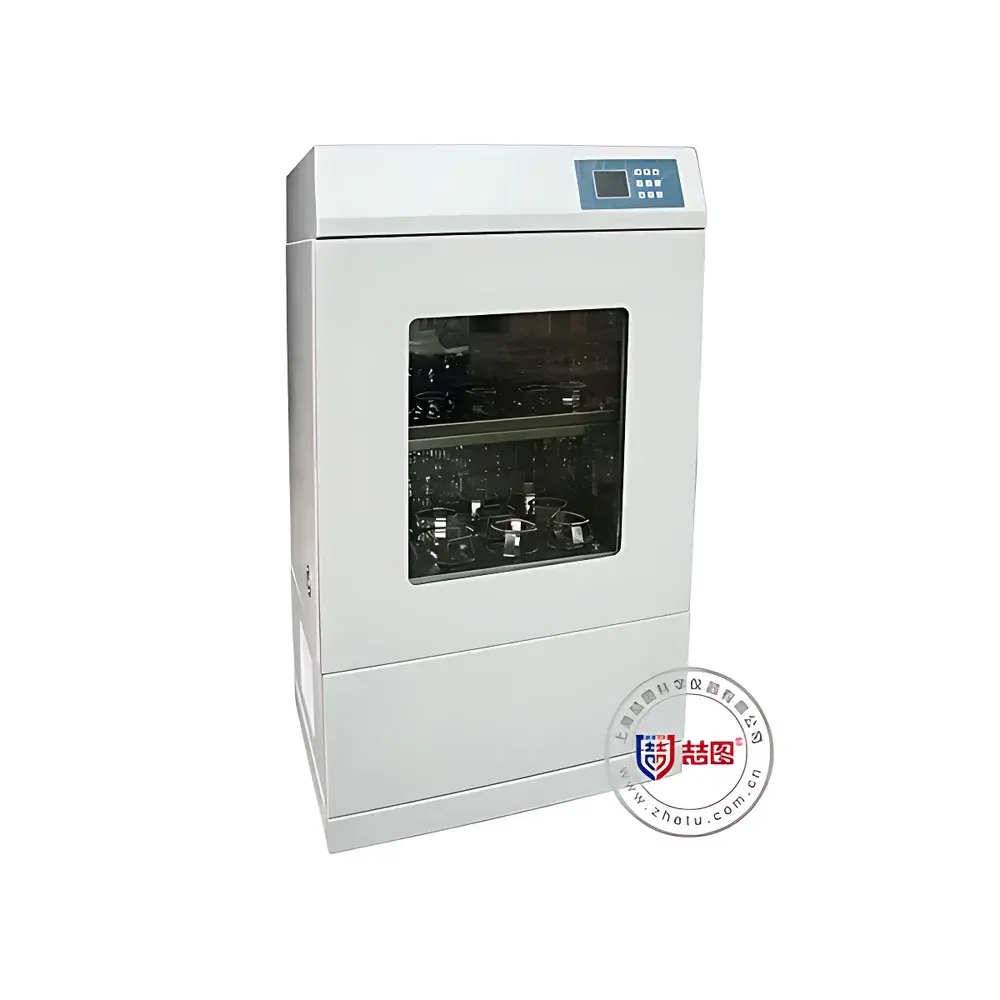
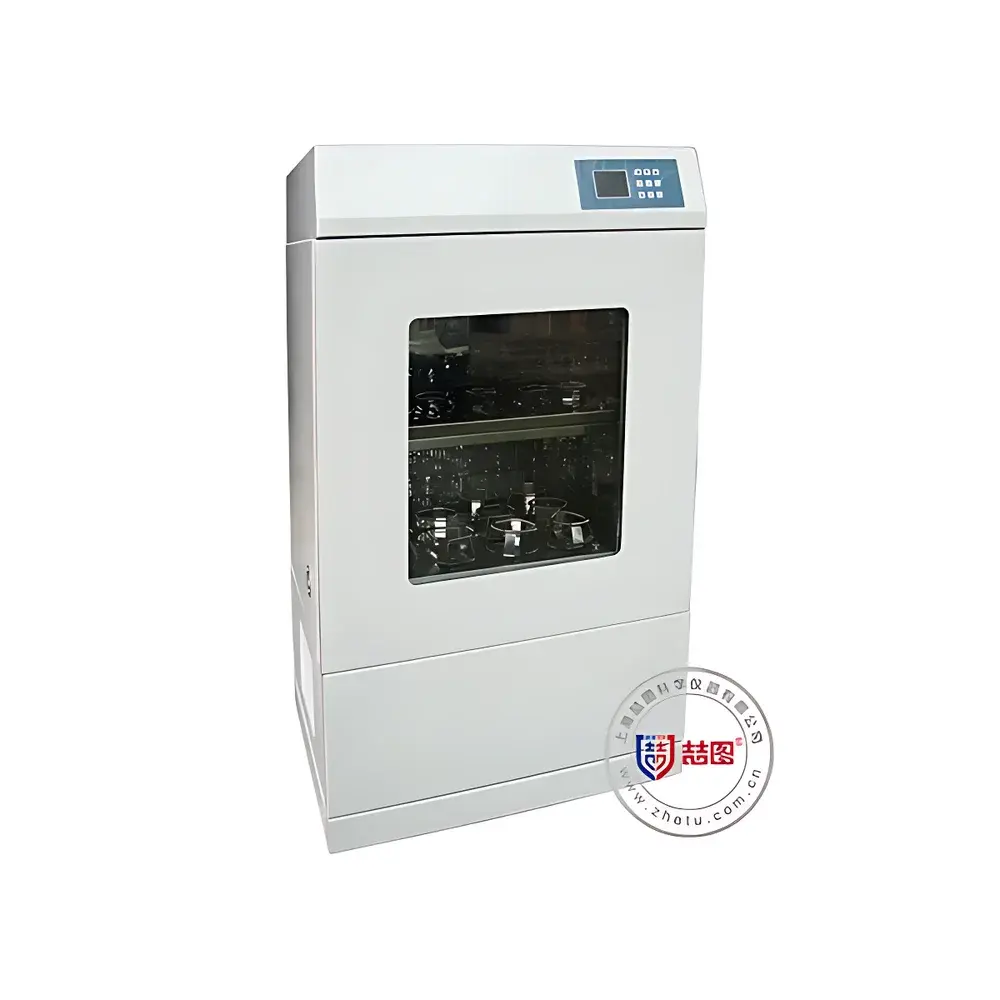
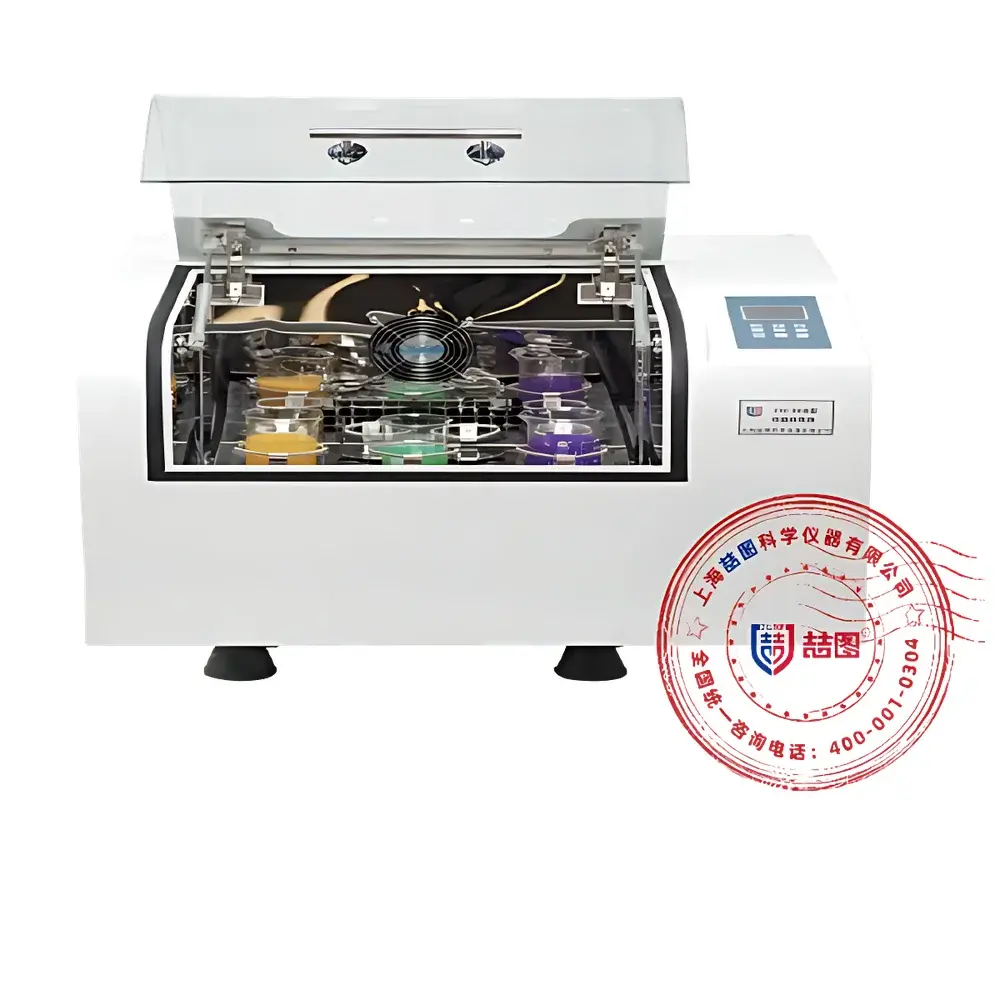
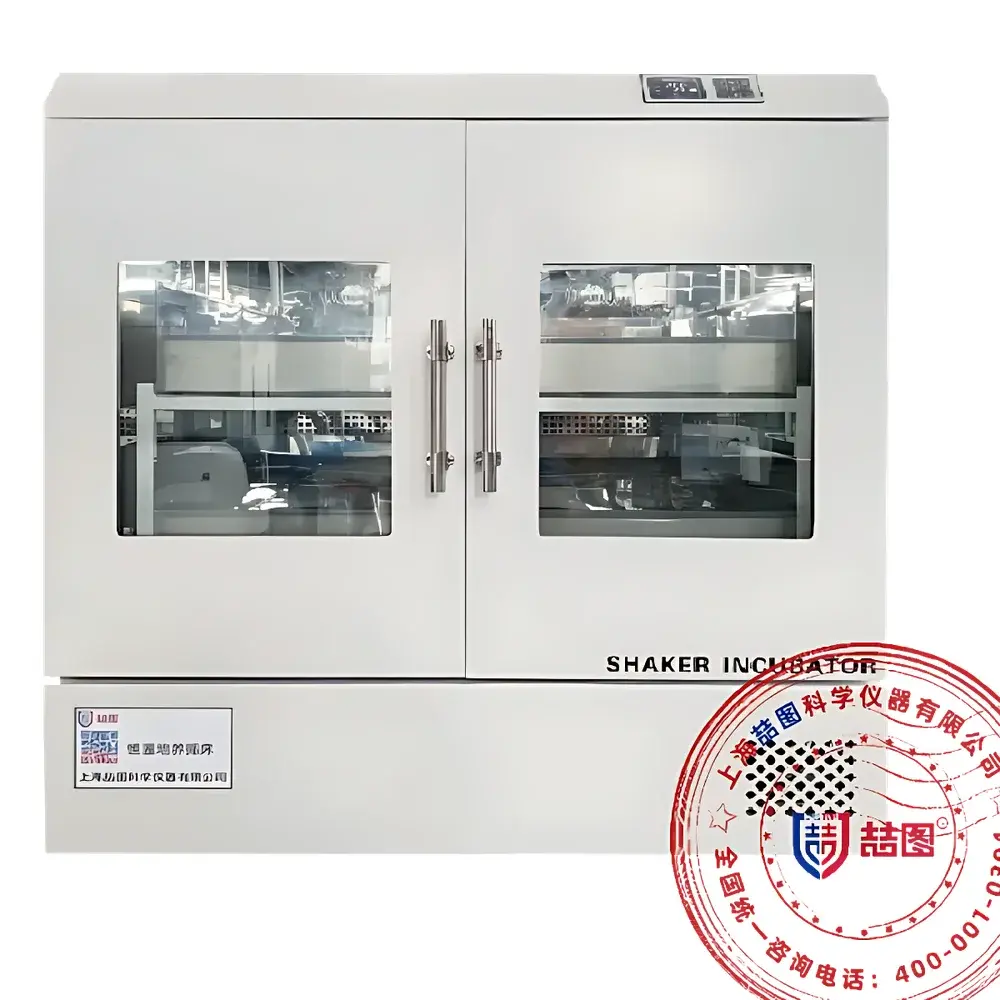
DRETOP ZYC-301LR Low-Temperature Air-Bath Orbital Shaker Incubator
| Brand | DRETOP |
|---|---|
| Origin | Shanghai, China |
| Manufacturer Type | Direct Manufacturer |
| Instrument Type | Air-Bath Constant-Temperature Orbital Shaker |
| Timer Range | 0–999 h |
| Oscillation Frequency | 0–300 rpm |
| Oscillation Amplitude | 26 mm |
| Temperature Range | 4–60 °C |
| Shelf Quantity | 2 shelves |
Overview
The DRETOP ZYC-301LR Low-Temperature Air-Bath Orbital Shaker Incubator is an integrated laboratory instrument engineered for simultaneous precise temperature control and uniform orbital agitation. It operates on the principle of forced-air convection heating and compression-based refrigeration, enabling stable thermal regulation across a wide low-to-moderate range (4–60 °C), while delivering consistent, low-shear orbital motion (0–300 rpm, 26 mm amplitude) ideal for sensitive biological cultures. Designed for applications requiring both thermal stability and mechanical homogeneity—such as aerobic microbial cultivation, enzyme kinetics assays, suspension cell expansion, and biochemical reaction optimization—the unit combines incubator-grade environmental containment with shaker-grade mechanical reproducibility. Its dual-shelf configuration supports parallel experimental conditions or staggered protocols without cross-contamination risk, making it suitable for GLP-compliant workflows in academic research labs, bioprocess development facilities, and quality control environments.
Key Features
- Microprocessor-based P.I.D. temperature and speed control system with real-time digital display (backlit LCD) showing setpoint/actual values for temperature (±0.1 °C resolution), rotational speed (±1 rpm accuracy), and elapsed time.
- Compressor-driven active cooling module enabling sub-ambient operation down to 4 °C, with automatic thermal load compensation and energy-efficient thermal management.
- Dual independent stainless-steel shelves (500 × 360 mm each), each equipped with adjustable universal spring clamps and compatible with standard Erlenmeyer flasks (50–500 mL), test tubes, and custom vessels.
- Three-dimensional eccentric drive mechanism with soft-start acceleration profile to minimize liquid splashing and ensure sample integrity during ramp-up and steady-state operation.
- Robust construction featuring electrophoretically coated steel exterior, 304 stainless-steel interior chamber and platform surfaces, and tempered glass double-door viewing window with internal LED illumination.
- Comprehensive safety architecture including over-temperature alarm, over-speed shutdown, timer auto-stop, power-failure recovery, and parameter encryption to prevent unauthorized setting changes.
- Optional accessories include UV-C germicidal lamp (254 nm) for periodic chamber decontamination, O₂ enrichment ports with manual shut-off valves, and USB data logging interface supporting timestamped CSV export for audit-ready recordkeeping.
Sample Compatibility & Compliance
The ZYC-301LR accommodates a broad spectrum of biological and biochemical sample formats—including liquid cultures in glass or PETG flasks, microtiter plates (with adapter), suspension cell lines, and enzymatic reaction mixtures—without compromising sterility or thermal uniformity. Chamber airflow is optimized to maintain ≤±0.5 °C temperature homogeneity across both shelves under full-load conditions (per ISO 13408-1 Annex C methodology). The device conforms to IEC 61010-1:2010 safety standards for laboratory equipment and supports traceability requirements under FDA 21 CFR Part 11 when used with validated USB data capture protocols. Its design facilitates cleaning validation per ASTM E2656-20 and routine maintenance in accordance with manufacturer-recommended intervals.
Software & Data Management
While the ZYC-301LR operates via embedded firmware without external PC dependency, its integrated USB port enables direct connection to Windows-based systems for real-time data mirroring and post-run analysis. Logged parameters include temperature setpoint/actual, RPM setpoint/actual, cumulative runtime, and alarm event timestamps. Exported datasets are structured in comma-separated format (.csv), compatible with Excel, MATLAB, or LIMS platforms. Audit trail functionality records user-initiated parameter modifications, power interruptions, and safety-triggered shutdowns—supporting regulatory review in GMP-aligned QC laboratories. Firmware updates are delivered via secure USB flash drive and require administrator-level authentication.
Applications
- Aerobic bacterial and yeast culture propagation under controlled hypothermic or mesophilic conditions (e.g., E. coli expression at 18 °C or S. cerevisiae fermentation at 30 °C).
- Protein solubilization and refolding studies requiring simultaneous agitation and cold-chain maintenance.
- Cell-based assay preparation, including suspension-adapted CHO or HEK293 cultures prior to transfection or harvesting.
- Environmental microbiology testing involving waterborne pathogen enrichment at regulated temperatures (e.g., ISO 9308-1 compliant E. coli growth at 44.5 °C).
- Stability-indicating dissolution testing of biopharmaceutical formulations under agitated, temperature-controlled conditions.
- Enzyme immobilization and kinetic profiling where substrate mixing uniformity directly impacts Vmax and Km determination reproducibility.
FAQ
What is the minimum operating temperature, and how is sub-ambient cooling achieved?
The unit achieves a stable 4 °C minimum using a sealed R134a refrigeration circuit with adaptive PID-controlled compressor modulation and insulated air ducting.
Can both shelves operate at different temperatures or speeds?
No—temperature and oscillation parameters are synchronized across both shelves; independent control is not supported.
Is the unit suitable for use with volatile organic solvents?
It is not rated for Class I Division 1 hazardous locations; solvent compatibility must be verified against chamber material resistance (304 SS, silicone gaskets, tempered glass) and ventilation provisions.
How is temperature uniformity validated within the chamber?
Uniformity is characterized per ISO 13408-1 using nine calibrated PT100 probes placed across both shelves at defined grid points during steady-state operation at 25 °C and 4 °C.
Does the USB interface support continuous real-time streaming to third-party software?
No—it provides batch download of logged session data only; live streaming requires optional RS-485 or Ethernet gateway modules (sold separately).



