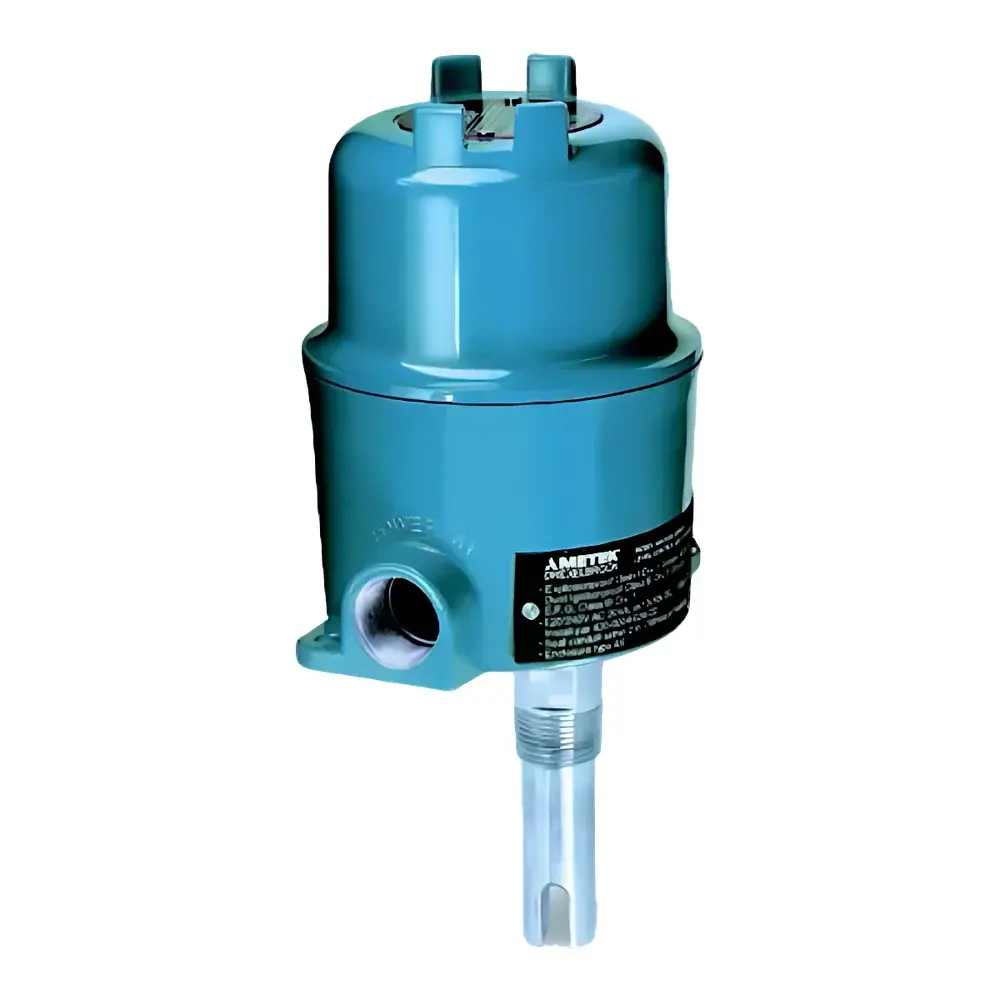
Drexelbrook Verigap Series Ultrasonic Level Switch
| Brand | Drexelbrook |
|---|---|
| Origin | Shanghai, China |
| Manufacturer Type | Authorized Distributor |
| Product Category | Domestic (China-sourced) |
| Model | Verigap Series Ultrasonic Level Switch |
| Product Type | Level Switch |
| Measurement Principle | Ultrasonic Time-of-Flight (ToF) |
| Sensor Configuration | Dual-point (two independent switching thresholds) |
| Calibration | Factory-calibrated |
| Fluid Compatibility | Clean, non-aerated, non-agitated liquids only |
| Housing Material | Stainless steel (316 SS standard) |
| Output | SPDT relay (250 VAC / 5 A resistive) |
| IP Rating | IP67 |
| Operating Temperature | –20 °C to +70 °C |
| Process Connection | NPT 1½" or G1½" (threaded, configurable per model) |
Overview
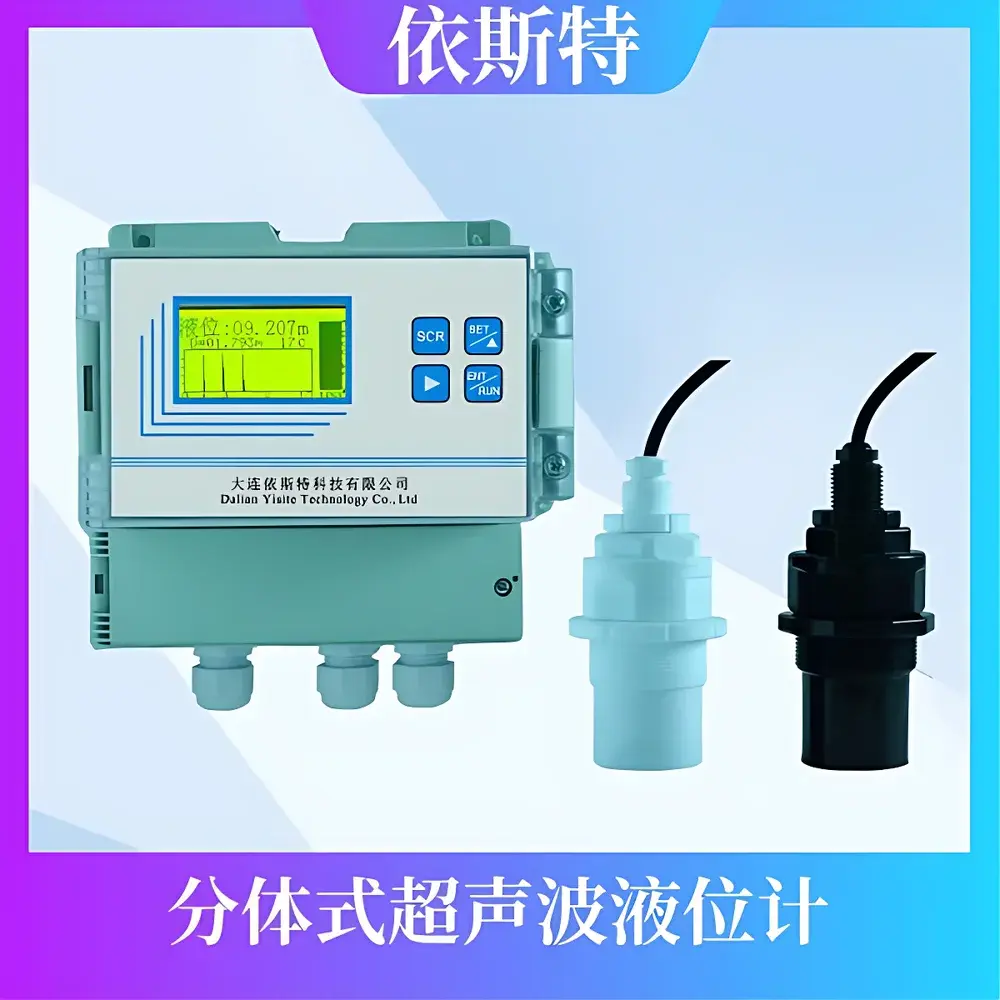
The Drexelbrook Verigap Series Ultrasonic Level Switch is an industrial-grade point-level detection device engineered for reliable, maintenance-free operation in continuous liquid level monitoring applications. It operates on the principle of ultrasonic time-of-flight (ToF), where a piezoelectric transducer emits a high-frequency acoustic pulse (typically 1–2 MHz) toward the liquid surface and precisely measures the return echo time. Unlike continuous level transmitters, the Verigap functions as a discrete switch—triggering two independent relay outputs at user-defined upper and lower threshold levels. Its dual-opening sensor architecture enables simultaneous high-level alarm and low-level alarm activation without requiring separate devices, reducing system complexity and installation footprint. Designed specifically for stable process conditions, the Verigap excels in clean, quiescent liquid environments—such as water storage tanks, chemical intermediate vessels, and coolant sumps—where foam, turbulence, vapor layers, or suspended solids are absent. The absence of moving parts, wetted electronics, or mechanical floats ensures long-term stability and immunity to drift over time.
Key Features
- Dual-point switching capability: Independent setpoints for high-level and low-level alarms within a single compact housing.
- No field calibration required: Factory-trimmed transducer and digital signal processing ensure repeatable switching accuracy across temperature variations.
- Robust stainless steel (316 SS) construction: Resistant to corrosion from common industrial liquids including water, glycols, mild acids, and alkaline solutions.
- IP67-rated enclosure: Sealed against dust ingress and temporary immersion, suitable for washdown and outdoor mounting.
- SPDT relay output with 250 VAC/5 A rating: Directly interfaces with PLCs, DCS systems, and alarm panels without external relays.
- Threaded process connection (NPT 1½” or metric G1½”): Ensures secure, leak-tight mounting on standard tank nozzles.
- Wide operating temperature range (–20 °C to +70 °C): Validated for use in ambient and moderate process environments.
Sample Compatibility & Compliance
The Verigap Series is validated for use with homogeneous, low-viscosity liquids exhibiting consistent acoustic impedance—primarily water, aqueous solutions, alcohols, and light hydrocarbons. It is not suitable for viscous media (>500 cP), foaming liquids, slurries, or applications involving heavy agitation or vapor condensation on the transducer face. While not certified for hazardous locations (e.g., ATEX, IECEx), its design conforms to general-purpose industrial safety requirements per IEC 61000-6-2 (EMC immunity) and IEC 61000-6-4 (EMC emissions). All units undergo functional testing per Drexelbrook’s internal QA protocol aligned with ISO 9001:2015 manufacturing controls. Documentation includes Declaration of Conformity (DoC) for CE-marked variants and RoHS-compliant material declarations.
Software & Data Management
The Verigap Series is a hardwired, analog-level switching device with no embedded firmware, network interface, or software dependency. Configuration is performed solely via mechanical potentiometers or DIP switches located under the terminal cover—enabling local adjustment of sensitivity and hysteresis without tools or external programming hardware. This architecture eliminates cybersecurity vulnerabilities, firmware update cycles, or IT infrastructure integration overhead. For traceability in regulated environments (e.g., pharmaceutical utilities or food-grade water systems), the device supports manual logbook entries per GLP/GMP practices. Relay status changes are timestamped externally by connected SCADA or DCS systems, enabling basic audit trail generation compliant with FDA 21 CFR Part 11 when paired with validated data acquisition platforms.
Applications
- Overflow prevention in municipal water reservoirs and fire protection tanks.
- Low-level detection in pump sump basins to prevent dry-running of centrifugal pumps.
- Interface monitoring between immiscible liquid layers in separator vessels (when density contrast permits clear echo separation).
- Chemical dosing tank supervision in wastewater treatment plants.
- Coolant level verification in CNC machine tool enclosures and laser cutting systems.
- Fill-level confirmation in batch mixing vessels during automated production sequences.
FAQ
Can the Verigap be used in pressurized or vacuum vessels?
No. The Verigap is rated for atmospheric or near-atmospheric pressure only. Internal pressure differentials exceeding ±0.1 bar may compromise transducer performance or seal integrity.
Is it compatible with aggressive solvents like acetone or THF?
Compatibility must be verified case-by-case using Drexelbrook’s chemical resistance guide. While 316 SS housings resist many organics, prolonged exposure to halogenated or highly polar solvents may affect O-ring elastomers (standard FKM or EPDM).
Does it require periodic recalibration during service life?
No. The Verigap is factory-calibrated and designed for zero-drift operation. No scheduled recalibration is specified; however, visual inspection and functional test per maintenance SOPs are recommended annually.
Can it detect interface levels between oil and water?
Only under controlled static conditions with sharp acoustic impedance discontinuity and no emulsification. Not recommended for routine interface detection; guided wave radar or capacitance probes are preferred for such applications.