
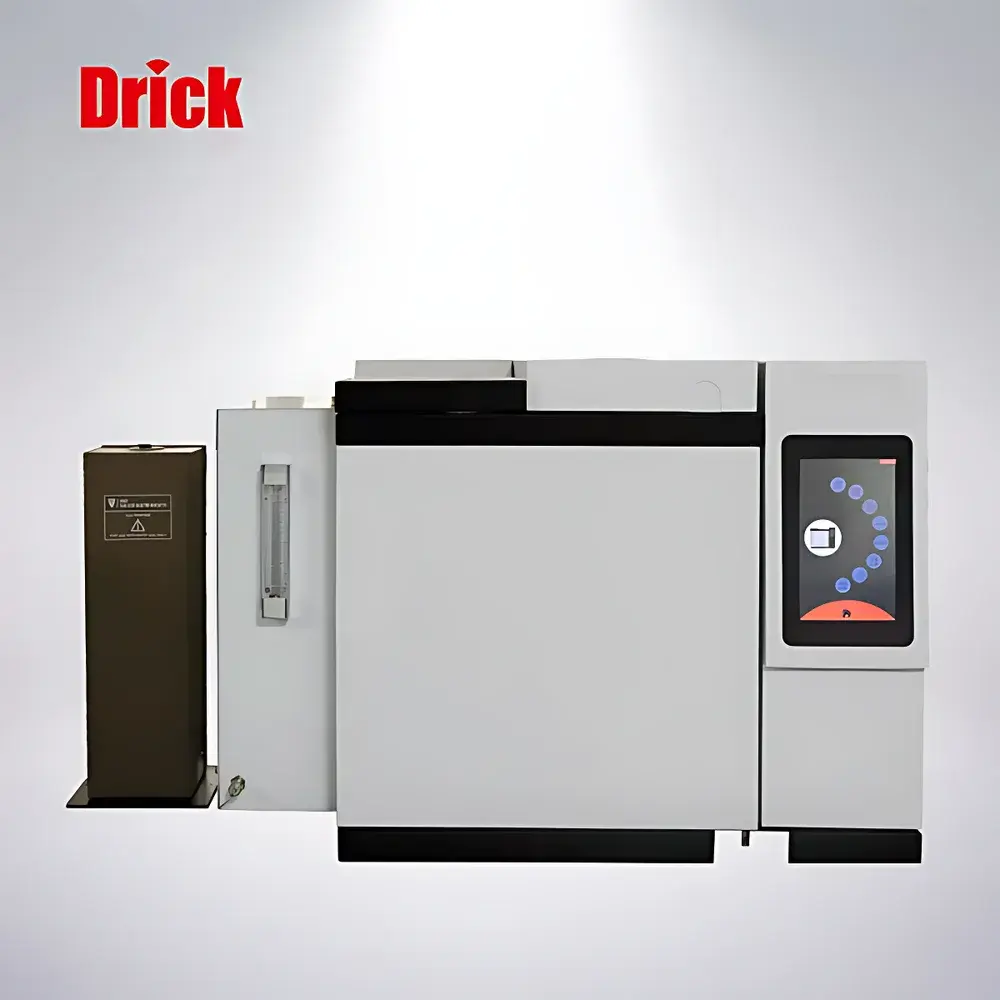
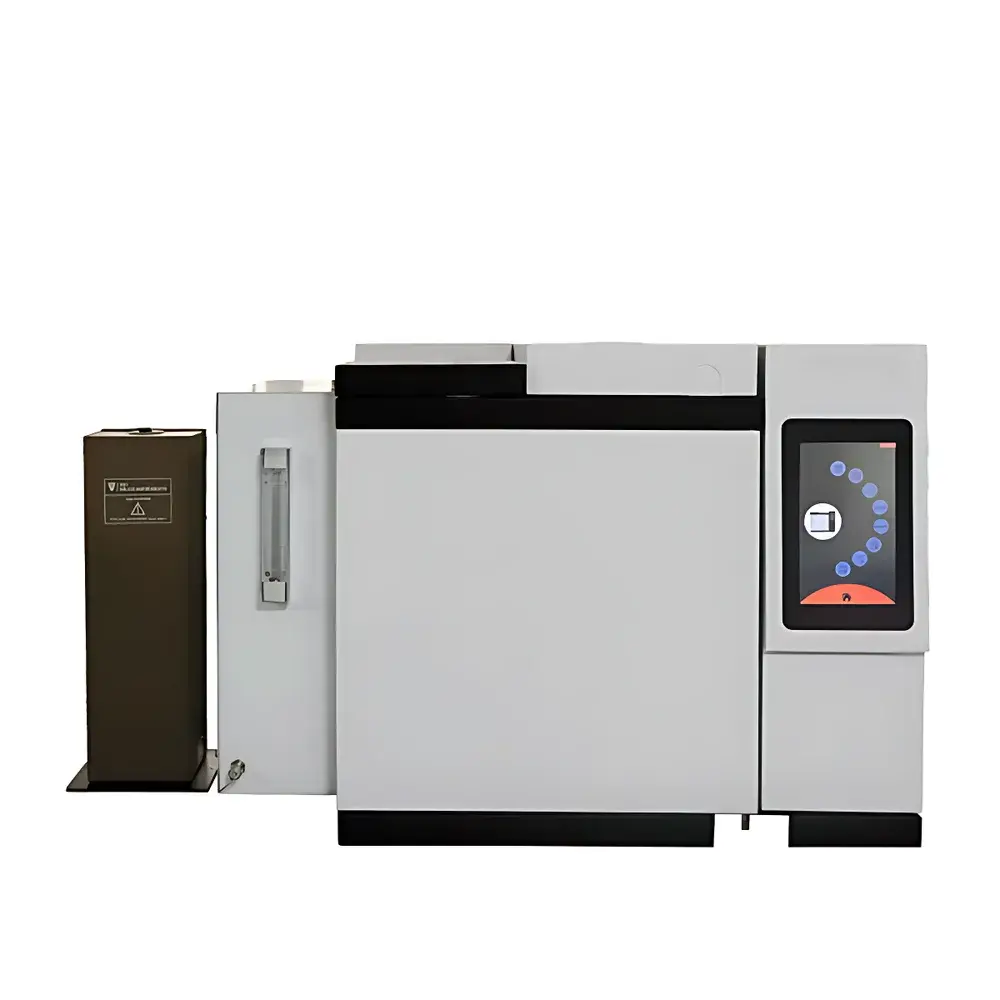
Drick DRK-7890 PDHID Pulsed Discharge Helium Ionization Gas Chromatograph
| Brand | Drick |
|---|---|
| Origin | Shandong, China |
| Manufacturer Type | Direct Manufacturer |
| Regional Classification | Domestic (China) |
| Model | DRK-7890 |
| Instrument Type | Laboratory Gas Chromatograph |
| Application Field | Petrochemical Industry Specific |
| Temperature Control Range | 4 °C above ambient to 450 °C |
| Ramp Rate | 0.1–60 °C/min |
Overview
The Drick DRK-7890 PDHID is a high-performance laboratory gas chromatograph engineered for ultra-trace analysis of permanent gases and light hydrocarbons in high-purity hydrogen matrices. It employs pulsed discharge helium ionization detection (PDHID), a non-radioactive, stable alternative to traditional ⁶³Ni electron capture detectors. Unlike radioactive sources, the PDHID utilizes low-power, pulsed DC helium plasma as its ionization source—generating electrons through controlled helium discharge in a microplasma cavity. Analyte elution from the column occurs counter-current to the helium carrier flow through the discharge region, enabling efficient ionization of species with ionization potentials below that of helium (24.6 eV). Electrons generated during ionization are directed toward a collector electrode via an offset bias field; the resulting current change constitutes the analytical signal. This principle delivers detection limits comparable to or lower than conventional radioactive detectors for O₂, N₂, CO, CO₂, CH₄, and Ar—without regulatory constraints associated with isotopic sources.
Key Features
- Non-radioactive PDHID detector supplied by VICI (USA), recipient of the Pittcon Editors’ Award for innovation in analytical instrumentation—ensuring long-term operational stability and regulatory compliance in GMP/GLP environments.
- Dual-column, dual-oven configuration with independent temperature control for optimized separation of complex gas mixtures, including overlapping peaks in H₂ matrix (e.g., O₂/Ar co-elution).
- Eight-zone precision temperature control with ±0.1 °C accuracy, programmable ramp rates from 0.1 to 60 °C/min across 16 heating steps—enabling reproducible method development per ASTM D7165 and ISO 6416.
- VICI-sourced ten-port switching valves, sample injection valves, and pneumatic components—certified for helium service and compatible with high-purity (>99.999%) carrier gas systems.
- Integrated HP2-grade helium purifier (customized for PDHID operation) reduces H₂O, O₂, and hydrocarbon contaminants to sub-ppb levels—critical for baseline stability and detector longevity.
- 7-inch full-color capacitive touchscreen interface with embedded firmware; functions as both local controller and remote terminal via Ethernet, supporting unattended operation and real-time data streaming.
- Comprehensive safety architecture: automatic power-loss recovery, carrier-gas failure shutdown, and motorized back-flush oven door for rapid cooldown and thermal management.
Sample Compatibility & Compliance
The DRK-7890 PDHID is validated for quantitative analysis of impurities in ultra-high-purity hydrogen (99.999% to 99.9999%), including O₂ + Ar (resolved via molecular sieve 5Å), N₂, CO, CO₂, and CH₄. All wetted surfaces contacting sample gas—including valve bodies, transfer lines, and detector chambers—are passivated using SilcoTek® SilcoNert® 2000 coating, eliminating catalytic decomposition and surface adsorption artifacts. The system meets design requirements for Class I, Division 2 hazardous location suitability when installed with appropriate gas cabinets and ventilation. It supports audit-ready operation under FDA 21 CFR Part 11 (via optional electronic signature module) and aligns with ISO/IEC 17025 documentation workflows for accredited laboratories.
Software & Data Management
The instrument operates with a Windows-based Chinese/English bilingual chromatography workstation featuring full remote control, sequence scheduling, peak integration with customizable baselines, and automated calibration curve generation. Raw data files (.chd) include embedded metadata (operator ID, method version, hardware serial numbers, timestamped event logs). Audit trail functionality records all parameter modifications, integration edits, and report exports—with user-level permissions and digital signature support. Data export complies with ASTM E1783 and LIMS-compatible CSV/Excel formats. Optional OPC UA server enables seamless integration into plant-wide SCADA or MES platforms for continuous process gas monitoring.
Applications
Primary use cases include QC/QA testing of hydrogen fuel feedstocks per ISO 8573-5 (Class 1 purity grading), impurity profiling in PEM electrolyzer output streams, specification verification of hydrogen used in semiconductor annealing atmospheres, and routine monitoring of syngas composition in ammonia synthesis loops. The system is routinely deployed in refinery off-gas analysis, FCC unit purge gas characterization, and catalyst evaluation studies where detection of sub-ppm CO or CH₄ in H₂ backgrounds is critical. Its robustness supports 24/7 operation in central lab and on-site mobile trailer configurations.
FAQ
Is the PDHID detector truly free of radioactive materials?
Yes—the detector uses only electrically generated helium plasma; no isotopic sources (e.g., ⁶³Ni) are present, eliminating licensing, disposal, and transport restrictions.
Can the system analyze O₂ and Ar as separate peaks?
Yes—when configured with a 5Å molecular sieve column and optimized temperature programming, O₂ and Ar are fully resolved with resolution Rs > 1.5 per USP .
What helium purity is required for optimal PDHID performance?
Carrier helium must be ≥99.999% pure, with H₂O and O₂ ≤ 100 ppt; the integrated HP2 purifier ensures this specification is maintained throughout detector operation.
Does the system support ASTM D7165-compliant reporting?
Yes—the software includes preconfigured report templates aligned with ASTM D7165 Annex A1 for permanent gas analysis in hydrogen, including uncertainty estimation per GUM guidelines.
Are spare parts and service support available outside China?
Drick maintains authorized service partners in Southeast Asia, the Middle East, and Latin America; detector modules and critical valves are stocked regionally for <72-hour replacement.




