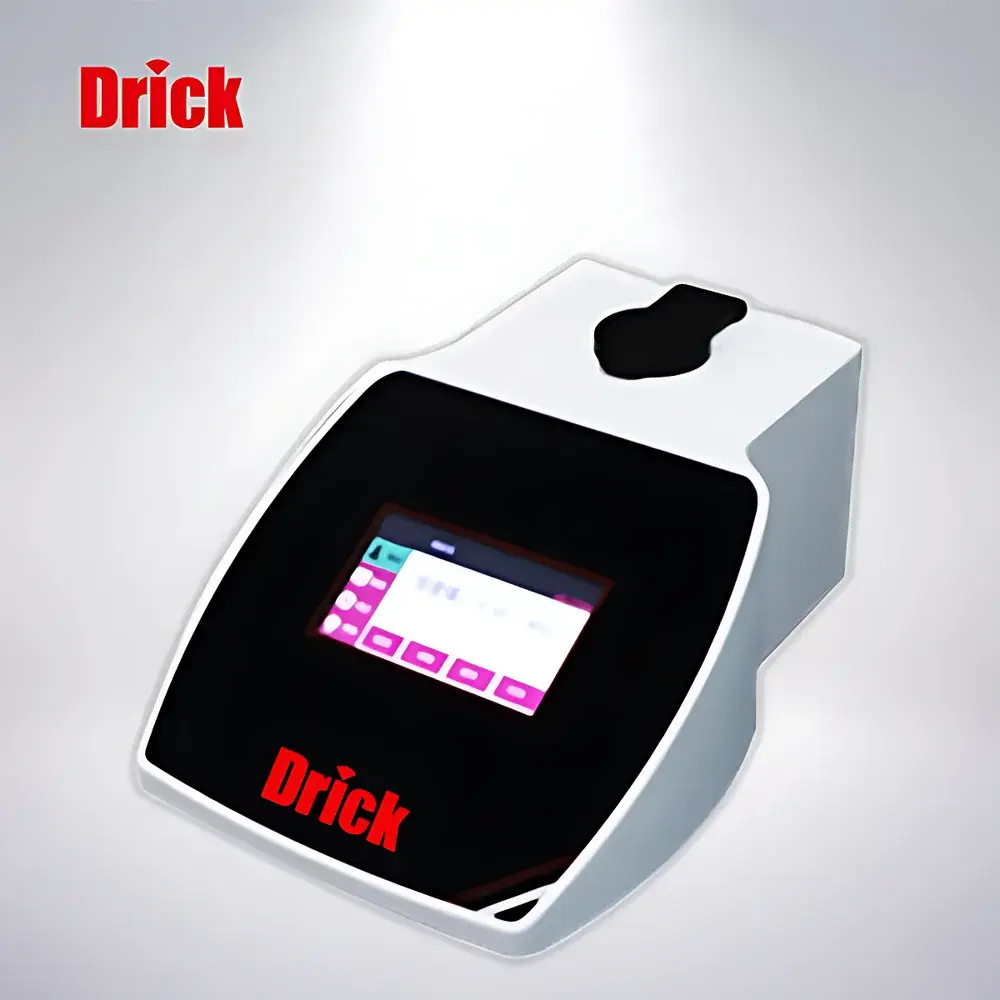
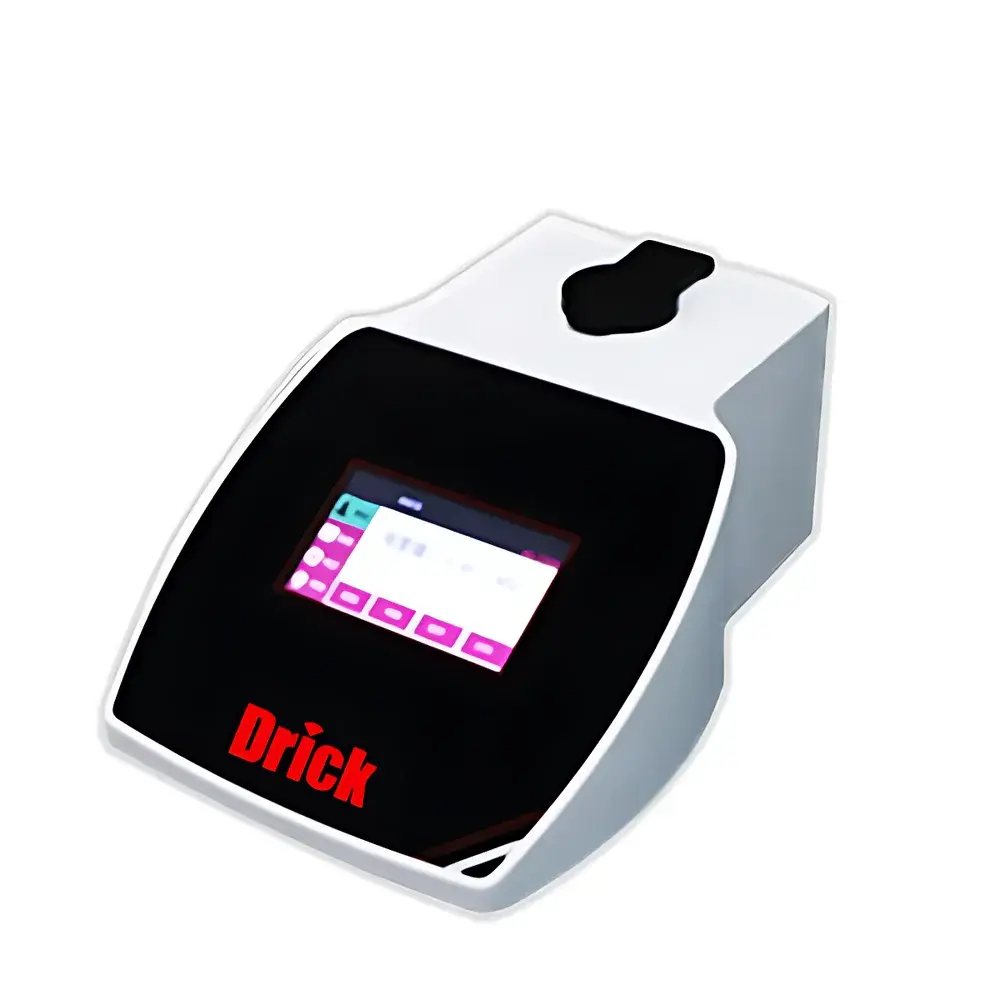
Drick DRK-GZ Series Turbidimeter / Light Scattering Analyzer / Suspended Solids Concentration Meter
| Brand | Drick |
|---|---|
| Origin | Shandong, China |
| Manufacturer Type | Direct Manufacturer |
| Country of Origin | China |
| Model | DRK-GZ |
| Price Range | USD 11,200 – 14,000 (FOB Qingdao) |
Overview
The Drick DRK-GZ Series Turbidimeter is a laboratory-grade optical instrument engineered for precise quantification of turbidity and suspended particulate concentration in liquid samples via nephelometric light scattering measurement. Operating on the principle of 90° scattered light detection at a standardized wavelength (typically 850 nm LED source), the system complies with ISO 7027 and EPA Method 180.1 for turbidity determination. It is designed for routine quality control in municipal water treatment plants, pharmaceutical manufacturing, food & beverage production, environmental monitoring laboratories, and academic research settings where reproducible, traceable, and operator-independent turbidity assessment is required. The instrument employs a dual-beam optical architecture to compensate for source drift and photodetector aging, ensuring long-term stability and measurement repeatability within ±2% of full scale under controlled ambient conditions.
Key Features
- High-sensitivity nephelometric detection using calibrated 850 nm infrared LED source and silicon photodiode detector
- Automatic zero and calibration verification with built-in reference standards (0.02 NTU, 10 NTU, 100 NTU)
- Wide dynamic range: 0.01–1000 NTU (Nephelometric Turbidity Units), extendable to 2000 NTU via optional high-range mode
- Integrated temperature sensor (±0.3 °C accuracy) for automatic temperature compensation per ISO 7027 Annex B
- Large backlit LCD display with real-time graphing and statistical functions (mean, SD, CV%, min/max)
- Robust aluminum alloy housing with IP65-rated front panel; compliant with IEC 61010-1 for laboratory electrical safety
- USB 2.0 interface supporting data export in CSV format; compatible with Windows-based PC software for audit trail generation
Sample Compatibility & Compliance
The DRK-GZ accepts standard 25 mm round glass or quartz cuvettes (10 mm path length), accommodating both clear and moderately colored aqueous samples. It supports sample volumes from 10 mL to 40 mL and tolerates moderate particulate settling during measurement cycles. The instrument meets ISO 7027:2016 for formazin-based turbidity calibration traceability and is validated for use in GLP-compliant environments. While not FDA 21 CFR Part 11–certified out-of-the-box, its data logging firmware supports time-stamped, user-ID–tagged measurements—enabling configuration for Part 11–aligned workflows when deployed with validated third-party LIMS integration. It is routinely used in compliance with USP <<731> Turbidity and Clarity, ASTM D6416 (Standard Test Method for Turbidity of Water), and Chinese national standard GB/T 13200-1991.
Software & Data Management
The DRK-GZ includes PC-based analysis software (DRK-TurbSoft v3.2) that enables instrument control, method storage, calibration management, and report generation. Each measurement record contains embedded metadata: date/time stamp, operator ID, calibration status, cuvette ID (optional barcode input), ambient temperature, and raw signal intensity (mV). Audit trails are exportable as encrypted PDF or signed CSV files. Software supports configurable pass/fail limits per test method and auto-generates QC charts (X-bar/R) for daily verification. All data files are stored with SHA-256 hash integrity checks, and software installation packages include full documentation for IQ/OQ validation protocols.
Applications
- Monitoring filter efficiency and coagulant dosing in drinking water treatment
- Verifying clarity of parenteral solutions and ophthalmic preparations per USP monographs
- Quantifying yeast cell density in fermentation broth during bioprocess development
- Assessing sediment resuspension kinetics in environmental sediment core studies
- Validating cleaning-in-place (CIP) rinse endpoints in dairy and brewery applications
- Supporting ISO 13485–compliant quality systems for medical device packaging wash validation
FAQ
What calibration standards are required for routine operation?
Primary calibration uses NIST-traceable formazin or polymer-based standards (e.g., StablCal®). Daily verification requires at least two points: low-range (0.1–1 NTU) and mid-range (20–100 NTU).
Can the DRK-GZ measure samples with high color interference?
Yes—its 850 nm infrared source minimizes absorbance interference from yellow/brown humic substances; however, highly absorbing samples (>0.5 AU at 850 nm) require dilution or alternative methods such as ISO 7027 Annex C compensation.
Is the instrument suitable for field use?
It is designed for benchtop laboratory use only; no battery option or ruggedized enclosure is provided. For portable deployment, consider the DRK-GZ-P handheld variant (sold separately).
How often does the optical path require cleaning or maintenance?
The cuvette chamber and lens surfaces should be inspected and cleaned with lint-free wipes and isopropanol after every 50 measurements or when visible residue is observed. No internal optical alignment is user-serviceable.
Does the DRK-GZ support networked data transfer or LIMS integration?
Yes—via USB-to-Ethernet bridge or optional RS-485 module (DRK-COM485), enabling Modbus RTU protocol for direct LIMS polling and automated result ingestion.