
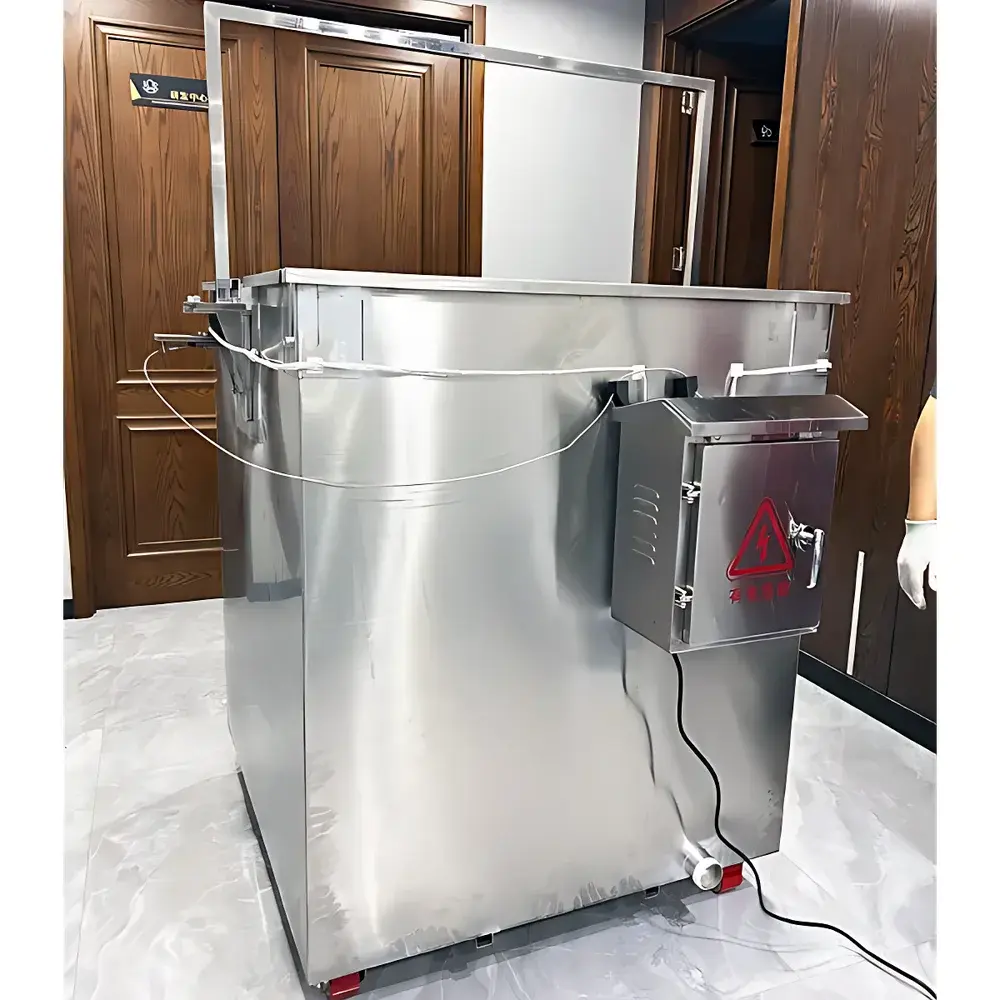
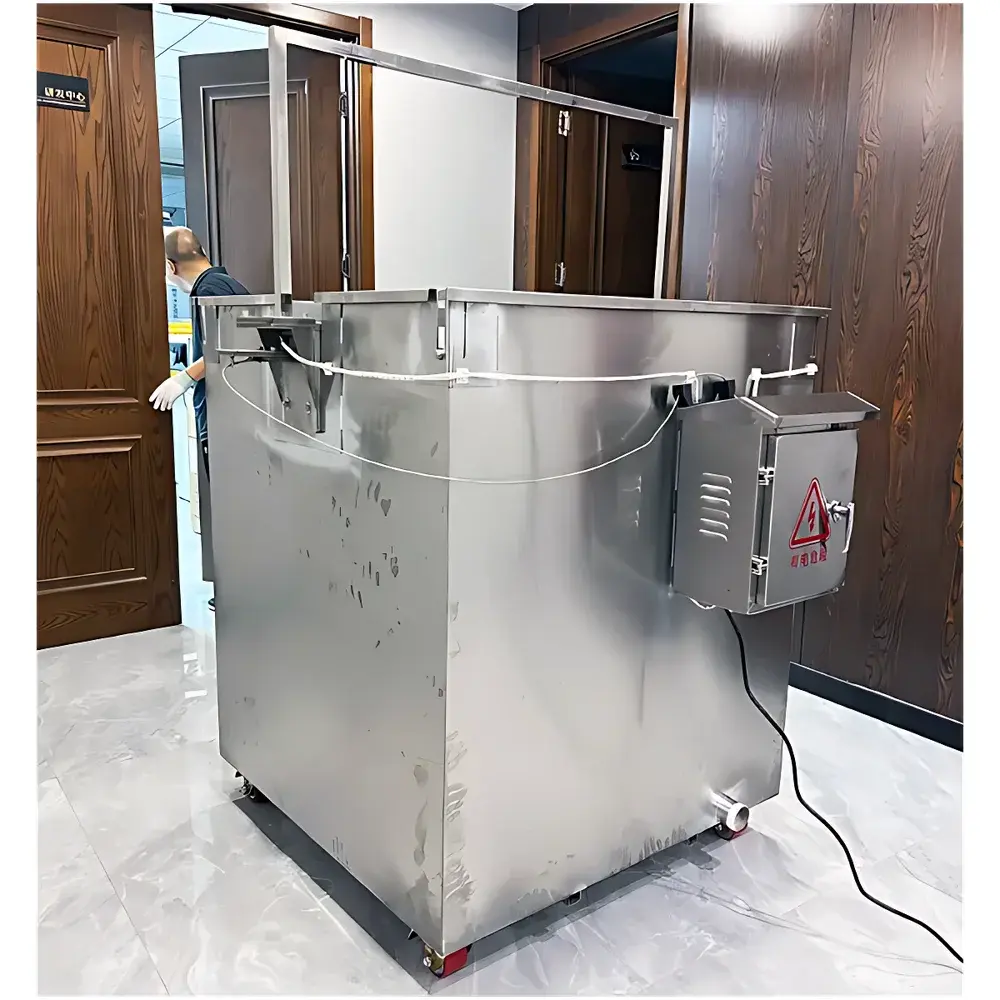
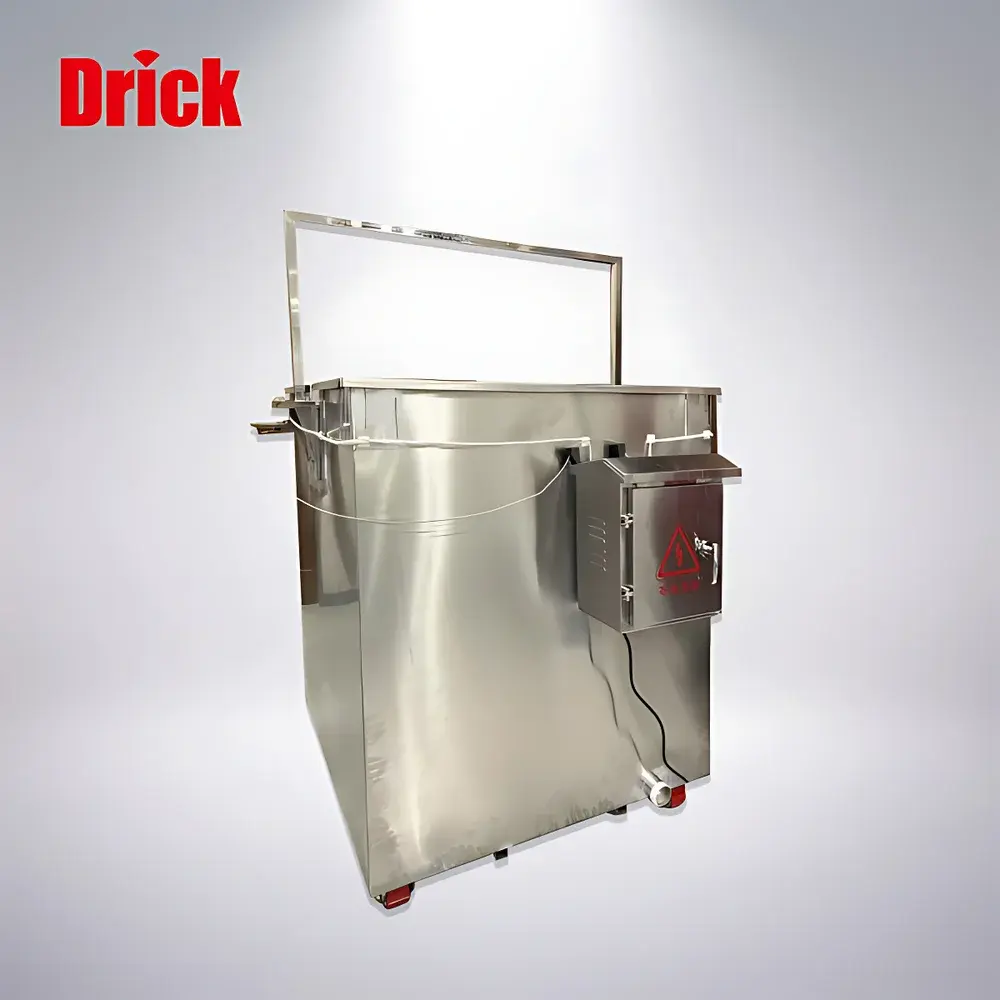
Drick DRK-D01 Battery Safety Test Platform
| Brand | Drick |
|---|---|
| Origin | Shandong, China |
| Manufacturer Type | OEM/ODM Producer |
| Country of Origin | China |
| Model | DRK-D01 |
| Power Supply | 220 V AC, 50 Hz, 300 W |
| Manual Version Dimensions | 600 × 400 × 900 mm (L×W×H) |
| Remote + Manual Version Dimensions | 1000 × 1000 × 1750 mm (L×W×H) |
| Construction Material | 304 Stainless Steel |
| Remote Actuation | Motorized Platform Flip Mechanism |
| Integrated Water Suppression System | Dual-port water tank with fan-shaped nozzle |
| Mobility | Heavy-duty locking casters |
| Compliance | Designed for alignment with IEC 62133, UN 38.3, GB 31241, and ISO 12405-4 safety testing workflows |
Overview
The Drick DRK-D01 Battery Safety Test Platform is an engineered safety infrastructure solution designed for controlled thermal runaway evaluation, overcharge/overdischarge stress testing, and mechanical abuse simulation of lithium-ion, Li-metal, and other secondary battery cells and modules. It operates on a passive–active hybrid safety principle: structural containment combined with rapid intervention capability. The platform’s core function is to isolate hazardous thermal events—such as flame ejection, gas venting, or projectile ejection—while enabling immediate remote response via motorized 180° platform inversion. This action directs the energized cell into a dedicated water-filled suppression tank, thereby quenching combustion, absorbing thermal energy, and mitigating toxic off-gas dispersion. Constructed entirely from 304 stainless steel, the DRK-D01 meets stringent corrosion resistance and structural integrity requirements for repeated exposure to electrolyte leakage, acidic off-gases, and high-temperature thermal cycling.
Key Features
- Robust 304 stainless steel monocoque frame—fully welded, non-porous, and compatible with decontamination protocols required in battery failure analysis labs.
- Bi-modal actuation system: manual override lever plus IP65-rated wireless remote control (operating range ≥15 m), ensuring operator safety during emergency scenarios.
- Motor-driven flip mechanism with precision angular positioning (±1° repeatability) and fail-safe mechanical lock at both 0° (test position) and 180° (dump position).
- Integrated water suppression subsystem: 60 L capacity tank with dual inlet/outlet ports, calibrated fan-shaped spray nozzle delivering uniform water curtain coverage across the fall path (flow rate adjustable 0–8 L/min).
- Modular footprint design—standard configurations support cylindrical (18650, 21700), prismatic, and pouch cell formats; custom dimensions available for module-level (e.g., 1P24S) or pack-level (≤20 kg) testing.
- Heavy-duty industrial casters (100 mm diameter, 300 kg load rating per wheel) with central locking and swivel brake—enabling repositioning within fume hoods, fire-rated test chambers, or open-bay safety bays.
Sample Compatibility & Compliance
The DRK-D01 accommodates single-cell, multi-cell assemblies, and small-format battery modules under standardized safety evaluation protocols. Its open-frame geometry permits integration with external instrumentation—including thermocouple arrays (Type K, up to 12 channels), gas chromatography–mass spectrometry (GC-MS) sampling lines, high-speed infrared cameras (≥1000 fps), and voltage/current monitoring systems. The platform is routinely deployed in laboratories performing conformance testing to IEC 62133-2 (secondary cells and batteries containing alkaline or other non-acid electrolytes), UN Manual of Tests and Criteria Part III, subsection 38.3 (transport safety), and China’s GB 31241–2022 (lithium batteries for portable electronics). Structural design considerations align with ISO 12405-4 (electric vehicle battery safety) for thermal propagation assessment, particularly when used in conjunction with adjacent calorimetric enclosures or ventilated hood systems.
Software & Data Management
While the DRK-D01 is a hardware-centric safety platform without embedded firmware, its operational sequence supports full traceability within GLP/GMP-compliant environments. Remote actuation logs (timestamp, operator ID, flip event trigger source) can be captured via optional RS-485 or Ethernet-connected PLC interface. When integrated with third-party data acquisition systems (e.g., NI CompactDAQ, Keysight DAQ970A), the platform enables synchronized recording of thermal, electrical, and mechanical event markers—critical for root cause analysis and regulatory audit trails. All mechanical operations comply with ISO/IEC 17025 documentation standards for test equipment validation, including periodic verification of flip torque, water flow calibration, and caster load-bearing certification.
Applications
- Thermal runaway initiation and propagation studies under controlled ambient conditions (20–60°C).
- Overcharge, external short-circuit, and crush testing per UL 1642 and IEEE 1625/1679 guidelines.
- Fire containment validation for battery module enclosures and fire-retardant material screening.
- Emergency response protocol development for R&D, quality assurance, and production line battery handling.
- Training platforms for EHS personnel in high-risk battery testing facilities.
FAQ
Does the DRK-D01 meet UL or FM Global certification requirements?
The platform itself is not UL-listed as an end-product, but it is engineered to support test methodologies referenced in UL 1642, UL 1973, and FM 6921. Certification of final test setups requires system-level validation by an accredited third-party body.
Can the water tank be replaced with alternative suppression media (e.g., dry chemical or aerosol)?
The tank is dimensionally optimized for aqueous suppression. Retrofitting for non-aqueous agents requires structural redesign and pressure-rating verification—consult Drick Engineering for custom engineering change proposals.
Is CE marking applicable to this device?
As a laboratory safety apparatus falling outside the scope of the Machinery Directive (2006/42/EC) and EMC Directive (2014/30/EU), CE marking is not mandatory. However, compliance documentation (DoC, risk assessment per ISO 12100) is provided upon request for EU-based institutional procurement.
What maintenance intervals are recommended for the flip actuator and casters?
Motor gearbox lubrication every 500 actuation cycles; caster wheel bearing inspection and grease replenishment every 6 months or 2,000 km of cumulative movement—whichever occurs first.




