
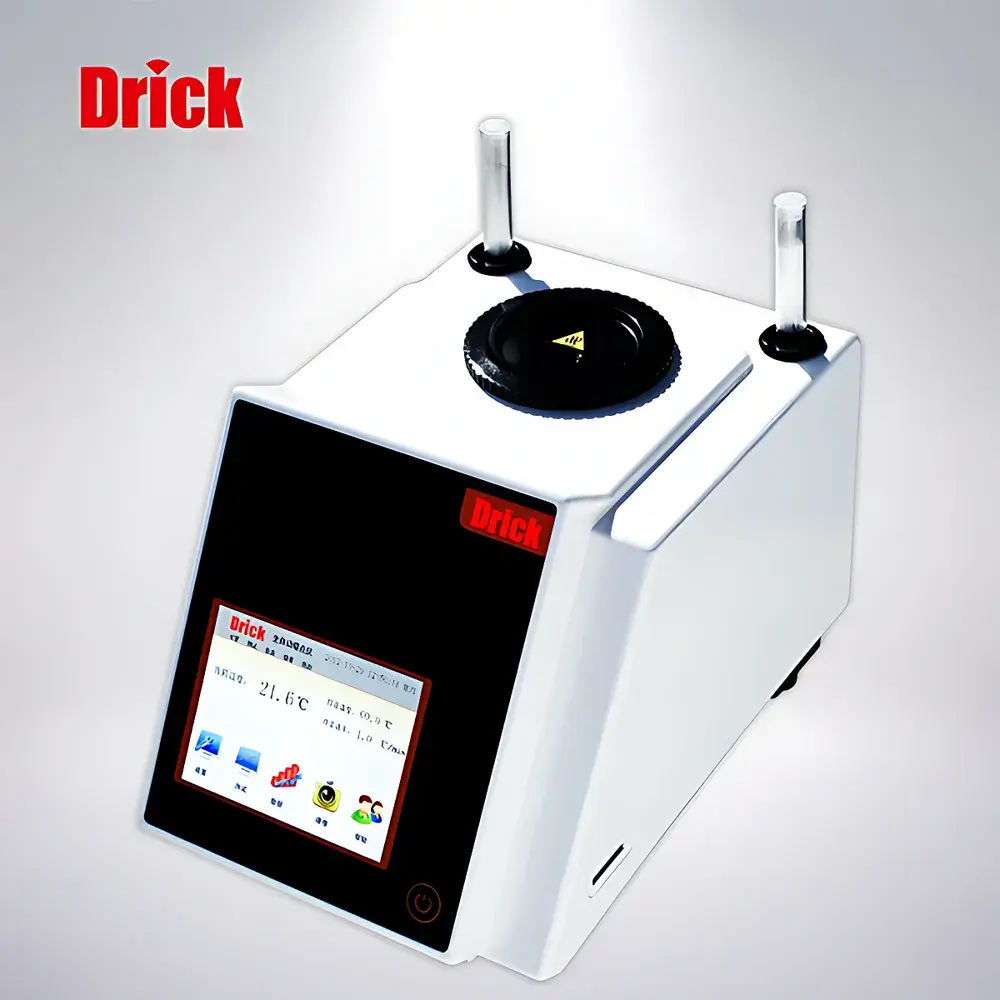
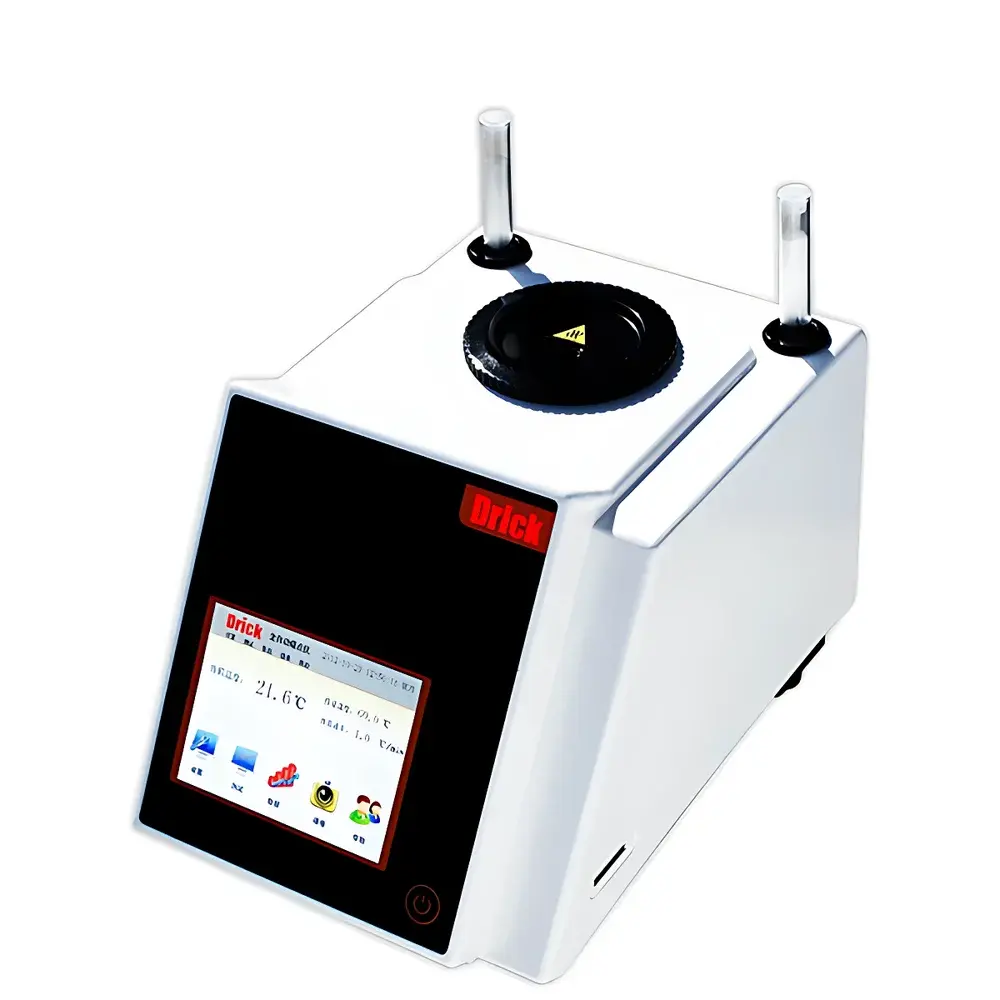
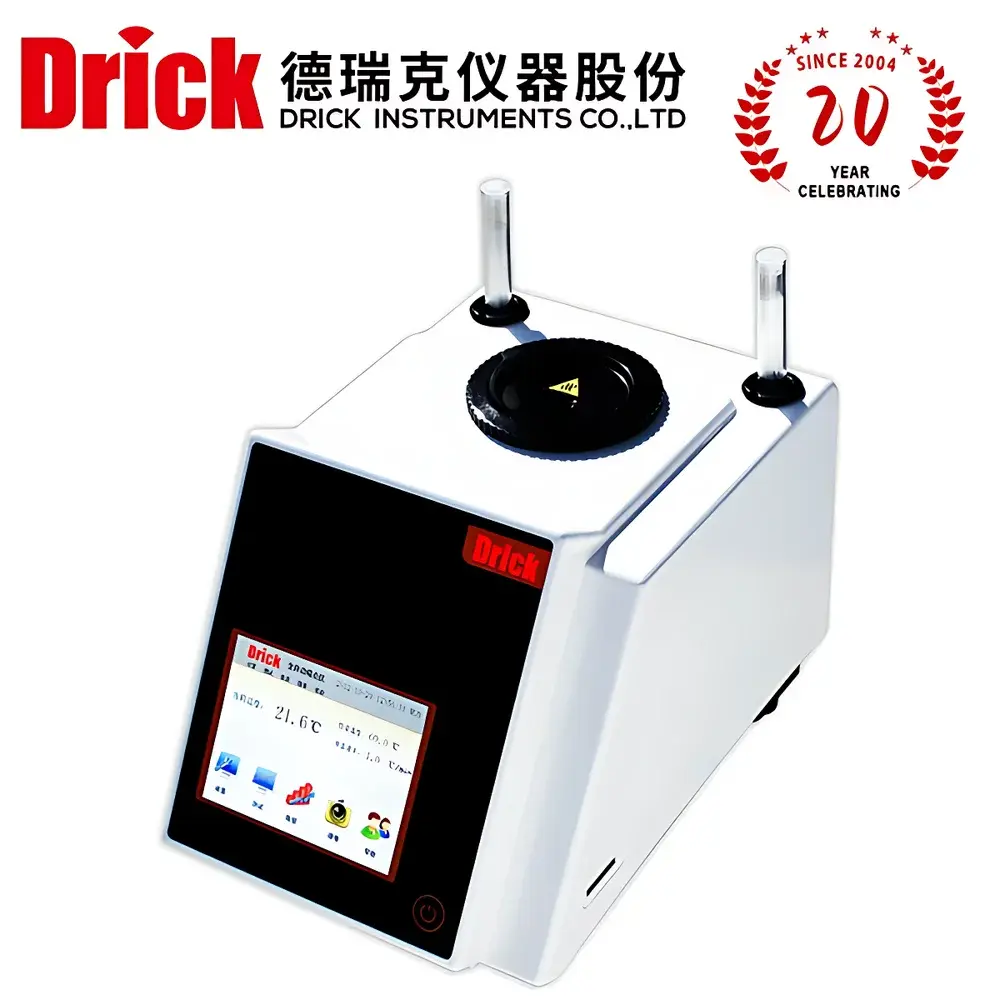
Drick DRK-R61 Automated Video Melting Point Apparatus
| Brand | Drick |
|---|---|
| Origin | Shandong, China |
| Manufacturer Type | Manufacturer |
| Product Category | Domestic |
| Model | DRK-R61 |
| Temperature Range | Ambient to 400 °C |
| Heating Rate | 0.1–20 °C/min (200-step infinitely adjustable) |
| Temperature Repeatability | ±0.1 °C at 0.1 °C/min |
| Temperature Accuracy | ±0.3 °C (<250 °C) |
| Capillary Dimensions | OD 1.4 mm, ID 1.2 mm |
| Sample Capacity | 4 samples per batch |
| Temperature Resolution | 0.1 °C |
Overview
The Drick DRK-R61 Automated Video Melting Point Apparatus is a precision thermal analysis instrument engineered for accurate, reproducible determination of melting point and melting range of crystalline organic and pharmaceutical compounds. It operates on the principle of real-time video observation combined with high-resolution digital temperature control, enabling simultaneous visual monitoring and thermal profiling of up to four independent samples. Unlike traditional analog or single-channel systems, the DRK-R61 integrates a high-definition CCD camera, programmable heating module, and synchronized image capture software to deliver objective, operator-independent results. Its design conforms to fundamental requirements of pharmacopeial methods—including USP <741>, EP 2.2.17, and JP 2.60—where visual endpoint detection under controlled heating conditions remains the reference standard for purity assessment and identity verification.
Key Features
- Four-channel parallel measurement capability ensures throughput efficiency without compromising thermal uniformity across sample positions.
- Infinitely adjustable heating rate (0.1–20 °C/min in 200 discrete steps) supports method development for both narrow-melting pure substances and broad-range decomposition studies.
- Digital PID temperature control with 0.1 °C resolution and verified accuracy (±0.3 °C below 250 °C; ±0.5 °C above) meets stringent calibration traceability requirements for GLP-compliant laboratories.
- Integrated HD video system captures real-time capillary images at configurable frame rates, allowing retrospective review of melt onset, meniscus movement, and complete liquefaction.
- Optimized optical path accommodates standard 1.4 mm OD × 1.2 mm ID capillaries, ensuring compatibility with ASTM E324-20 and ISO 6397:2022 specimen preparation protocols.
- Robust aluminum alloy heating block with low thermal inertia enables rapid cooldown between runs and stable baseline drift performance over extended operation cycles.
Sample Compatibility & Compliance
The DRK-R61 accepts standard sealed or open-end capillaries prepared according to ICH Q5B and USP general chapter <741>. It supports solid-phase characterization of APIs, excipients, polymers, fine chemicals, and natural product isolates. The instrument’s thermal profile stability and video-based endpoint detection satisfy data integrity expectations under FDA 21 CFR Part 11 when used with validated software configurations. While not certified to ISO/IEC 17025 out-of-the-box, its metrological performance aligns with ISO 11357-3:2013 (DSC-based melting point correlation) and serves as an orthogonal verification tool for DSC and TGA workflows. All hardware components comply with RoHS 2011/65/EU directives and CE-marked electromagnetic compatibility standards (EN 61326-1).
Software & Data Management
The proprietary Drick MPView software provides full control of heating parameters, real-time video streaming, timestamp-synchronized image logging, and automated melt-point annotation. Each test generates a structured .mp4 video file paired with a CSV metadata log containing temperature vs. time, user ID, sample ID, and operator-defined annotations. Audit trail functionality records all parameter changes, session start/stop timestamps, and calibration events—enabling compliance with ALCOA+ principles. Export options include PDF reports compliant with GMP Annex 11 formatting guidelines, as well as raw data for integration into LIMS platforms via ODBC or REST API (available upon request with enterprise license).
Applications
- Pharmaceutical quality control: Identity confirmation and purity estimation of active pharmaceutical ingredients (APIs) per USP monographs.
- Academic research: Polymorph screening and thermal behavior mapping of novel organic solids.
- Chemical manufacturing: Batch release testing of intermediates and final products where melting point serves as a critical quality attribute (CQA).
- Food & cosmetics: Verification of fatty acid composition through eutectic point analysis in triglyceride mixtures.
- Materials science: Characterization of phase transitions in polymer blends and metal-organic frameworks (MOFs).
FAQ
What capillary specifications are supported?
The DRK-R61 is calibrated and optimized for standard capillaries with outer diameter 1.4 mm and inner diameter 1.2 mm. Alternative dimensions may be accommodated but require revalidation of thermal gradient uniformity.
Is the instrument suitable for regulatory submission data?
Yes—when operated with documented procedures, calibrated thermocouples, and version-controlled software, the DRK-R61 generates data suitable for inclusion in IND, NDA, and DMF filings, provided laboratory-specific validation (IQ/OQ/PQ) has been completed.
How is temperature calibration performed?
Calibration uses NIST-traceable reference standards (e.g., indium, tin, zinc) at defined transition points. The system supports multi-point calibration routines with automatic deviation reporting against certified values.
Can the apparatus be integrated into a networked lab environment?
Yes—via Ethernet interface, the DRK-R61 supports remote monitoring, centralized data archiving, and role-based access control when deployed with Drick’s Enterprise Edition software suite.



