
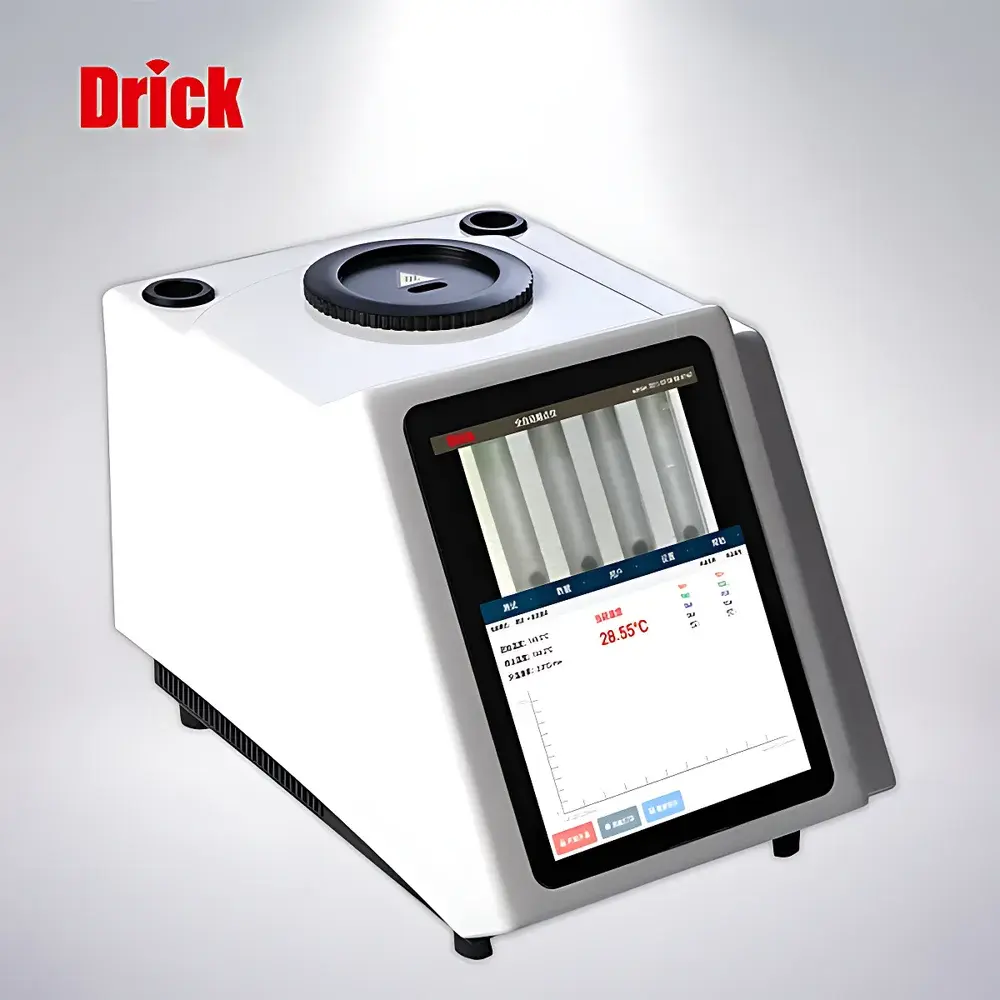
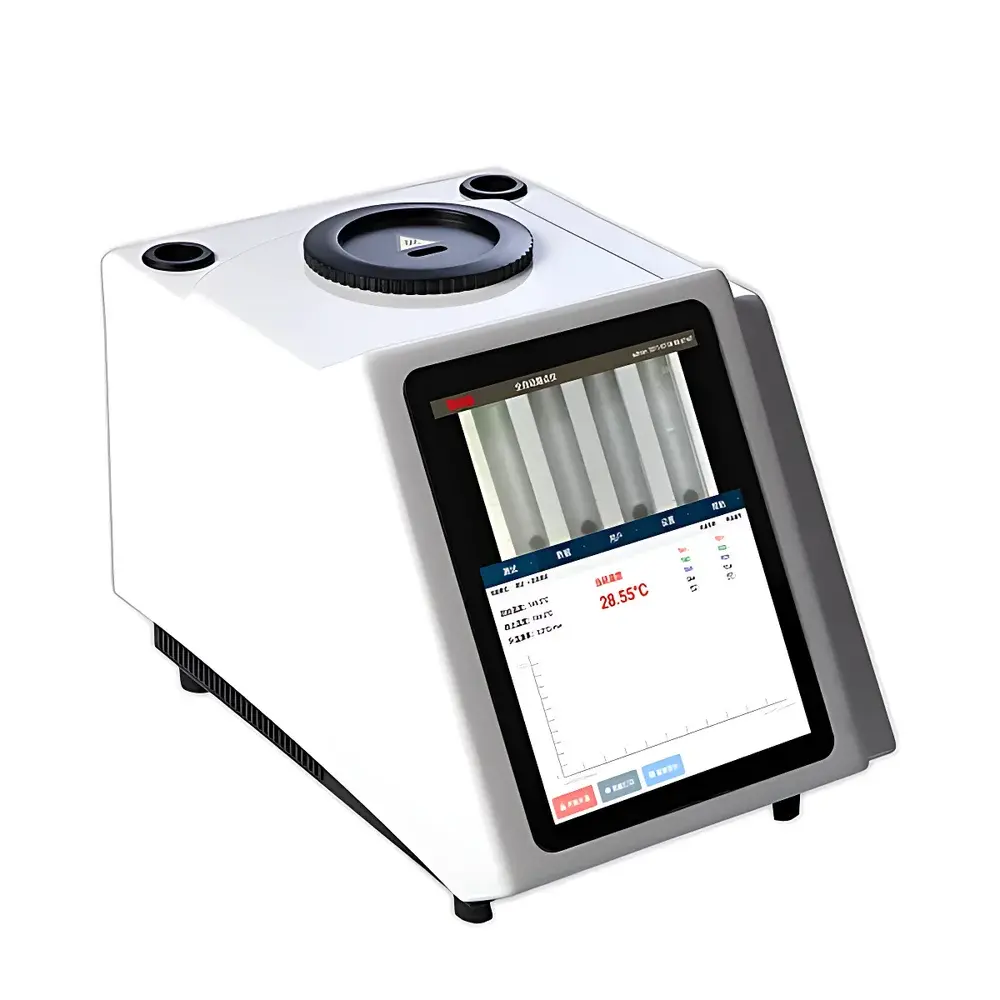
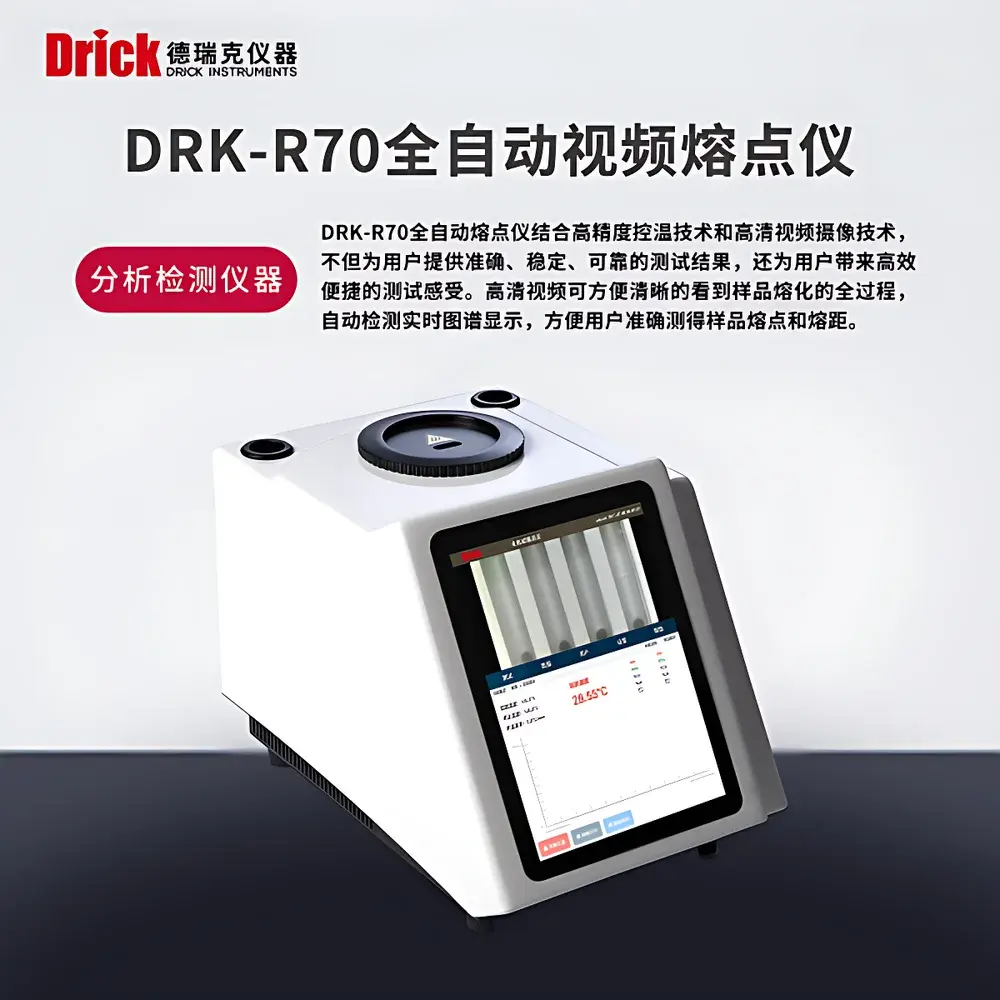
Drick DRK-R70 Automated Video Melting Point Apparatus
| Brand | Drick |
|---|---|
| Origin | Shandong, China |
| Manufacturer Type | Manufacturer |
| Product Category | Domestic |
| Model | DRK-R70 |
| Temperature Range | Ambient to 360 °C |
| Heating Rate | 0.1–20 °C/min (200-step continuously adjustable) |
| Temperature Repeatability | ±0.1 °C at 0.1 °C/min |
| Capillary Dimensions | OD 1.3 mm, ID 1.1 mm |
| Sample Capacity | 4 samples per batch |
| Temperature Resolution | 0.01 °C |
Overview
The Drick DRK-R70 Automated Video Melting Point Apparatus is a precision thermal analysis instrument engineered for accurate, reproducible determination of solid-phase transition temperatures in crystalline and semi-crystalline materials. It operates on the principle of real-time optical observation combined with high-stability programmable heating, enabling unambiguous identification of onset, clear point, and endpoint of melting—critical for material purity assessment, polymorph characterization, and quality control in regulated environments. Unlike traditional analog melting point devices, the DRK-R70 integrates a high-resolution digital video system with synchronized thermal profiling, eliminating subjective visual interpretation and operator-dependent variability. Its robust Peltier-based heating architecture ensures uniform temperature distribution across the sample stage and minimizes thermal lag, supporting compliance with pharmacopeial methods including USP <741>, EP 2.2.17, and JP 2.60.
Key Features
- Four-channel parallel measurement capability: Simultaneous analysis of up to four independent samples per run, significantly improving throughput in routine QC laboratories.
- Fully programmable heating profiles: Adjustable ramp rates from 0.1 to 20 °C/min in 200 discrete steps, allowing precise method replication for method transfer between labs or validation studies.
- High-resolution thermal sensing: 0.01 °C temperature resolution with ±0.1 °C repeatability at low ramp rates (0.1 °C/min), meeting stringent requirements for pharmacopeial melting point determination.
- Digital video capture and playback: Integrated 5-megapixel CMOS camera with LED illumination and real-time magnification (up to 40×) enables frame-by-frame review of morphological changes during phase transition.
- Standardized capillary compatibility: Optimized for industry-standard capillaries (OD 1.3 mm, ID 1.1 mm), ensuring interchangeability with existing lab workflows and reference material protocols.
- Thermal stability architecture: Dual-zone temperature control and active cooling assist ensure rapid equilibration and minimal overshoot, enhancing measurement fidelity across wide-range thermal scans.
Sample Compatibility & Compliance
The DRK-R70 accommodates a broad spectrum of organic and inorganic compounds—including APIs, excipients, polymers, dyes, and specialty chemicals—in standard sealed or open-end capillaries. Its design conforms to ISO/IEC 17025 calibration traceability requirements when used with NIST-traceable reference standards (e.g., caffeine, indomethacin, vanillin). The instrument supports audit-ready documentation practices: all video recordings, thermal curves, and metadata (operator ID, timestamp, method name, ambient conditions) are stored with immutable file attributes. Optional software modules enable 21 CFR Part 11-compliant electronic signatures, audit trails, and user-access controls—essential for GMP/GLP-regulated pharmaceutical and contract testing laboratories.
Software & Data Management
The proprietary DrickTherm™ software provides intuitive method creation, live video overlay with real-time temperature annotation, and automated event detection (onset, inflection, clear point). All data—including raw thermal profiles (.csv), annotated video (.mp4), and summary reports (.pdf)—are exported in vendor-neutral formats. The system supports LIMS integration via ASTM E1384-compliant HL7 messaging or direct database export (ODBC). Calibration logs, maintenance records, and version-controlled firmware updates are centrally managed within the software interface, facilitating internal SOP adherence and external regulatory inspections.
Applications
- Pharmaceutical development: Polymorph screening, batch-to-batch consistency verification, and stability-indicating assay support.
- Chemical manufacturing: Identity confirmation of synthetic intermediates and final products per ICH Q5A and Q6A guidelines.
- Polymer science: Crystallinity evaluation of thermoplastics (e.g., PP, PET, PEEK) and copolymer composition analysis.
- Food & agriculture: Melting behavior of fats, waxes, and cocoa butter equivalents under controlled humidity conditions.
- Academic research: Teaching thermal transitions in undergraduate physical chemistry labs and graduate-level materials science investigations.
- Regulatory submission support: Generation of GLP-compliant datasets for ANDA, NDA, and DMF filings with full traceability.
FAQ
Does the DRK-R70 comply with USP <741> and EP 2.2.17?
Yes—the instrument’s temperature accuracy, repeatability, and video documentation capabilities meet the procedural and reporting requirements outlined in both monographs.
Can the system be validated for GMP use?
Yes—comprehensive IQ/OQ/PQ protocols are available, and the software supports 21 CFR Part 11 functionality with role-based access control and electronic signature workflows.
Is remote monitoring supported?
The DRK-R70 supports Ethernet connectivity and can be accessed via secure VNC or RDP sessions for off-site supervision and troubleshooting.
What capillary types are compatible?
Standard thin-wall glass capillaries with outer diameter 1.3 mm and inner diameter 1.1 mm; pre-filled capillaries are also supported with minor protocol adjustments.
How is temperature calibration performed?
Calibration is conducted using certified reference materials (e.g., NIST SRM 742a, 1597a) across three points (50 °C, 150 °C, 300 °C), with results logged automatically in the calibration history module.



