
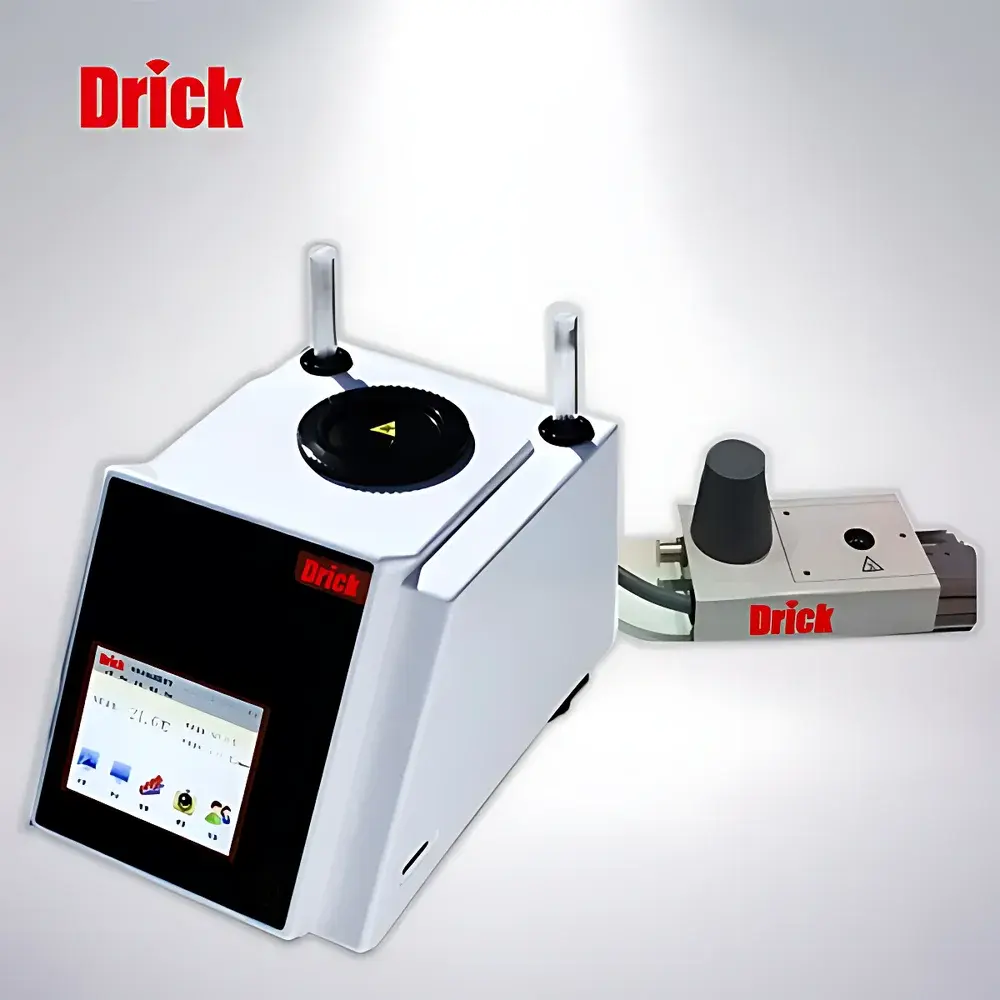
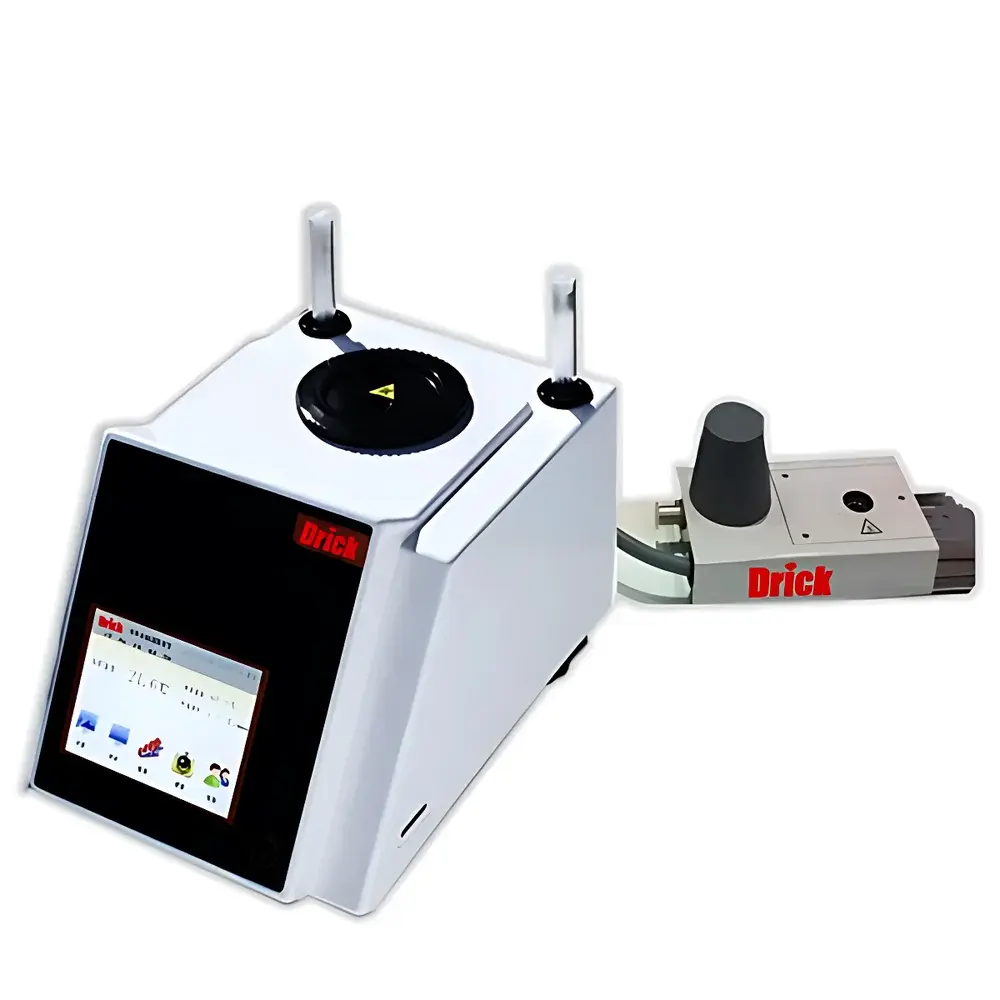
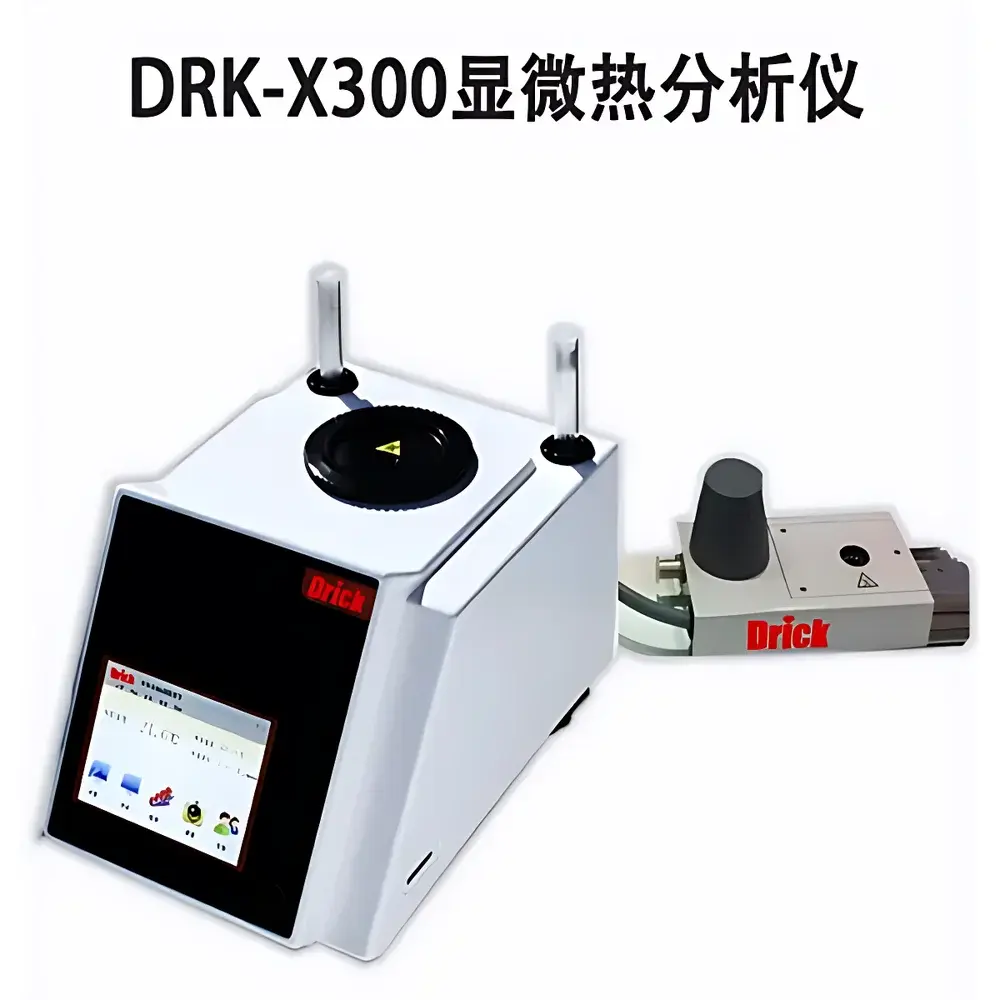
Drick DRK-X300 Micro Thermal Analysis System for Melting Point Determination of Microsamples and Thin Sections
| Brand | Drick |
|---|---|
| Origin | Shandong, China |
| Manufacturer Type | Direct Manufacturer |
| Country of Origin | China |
| Model | DRK-X300 |
| Price Range | USD 11,200–14,000 (FOB Qingdao) |
| Temperature Range | Ambient to 300 °C |
| Heating Rate | 0.1–20 °C/min (200-step continuous adjustment) |
| Temperature Resolution | 0.1 °C |
Overview
The Drick DRK-X300 Micro Thermal Analysis System is a precision optical-microscopic melting point apparatus engineered for quantitative thermal transition analysis of minute solid samples—including microcrystalline powders, pharmaceutical actives, polymer fragments, thin-sectioned biological tissues, and metallurgical inclusions. It operates on the principle of hot-stage microscopy: a calibrated heating stage integrated with high-magnification stereo or polarized light optics enables real-time visual observation of phase transitions (solid-to-liquid, polymorphic conversion, decomposition onset) under controlled thermal ramping. Unlike bulk DSC systems, the DRK-X300 delivers direct, operator-verified transition endpoints with spatial context—critical for heterogeneous or anisotropic materials where bulk averaging obscures localized behavior. Its compact benchtop architecture supports ISO/IEC 17025-compliant calibration traceability and meets core requirements for USP & Ph. Eur. general chapter (Melting Points and Related Temperatures) when operated under documented SOPs.
Key Features
- High-stability Peltier-assisted heating stage with closed-loop PID temperature control, delivering ±0.3 °C accuracy across the full 20–300 °C operational range.
- 200-step continuously adjustable heating rate (0.1–20 °C/min), enabling method optimization for kinetic studies, eutectic detection, or slow-transition materials.
- 0.1 °C digital temperature resolution with NIST-traceable RTD sensor embedded directly in the sample stage.
- Dual-view optical path: coaxial LED illumination + optional polarizer/analyzer set for birefringence monitoring during phase changes.
- Integrated digital camera interface (USB 3.0) supporting time-lapse video capture and frame-by-frame thermal annotation for audit-ready documentation.
- Robust aluminum-alloy chassis with passive thermal shielding to minimize ambient drift and ensure repeatability (RSD < 0.5% for triplicate naphthalene runs).
Sample Compatibility & Compliance
The DRK-X300 accommodates samples as small as 10–50 µg loaded onto standard glass capillaries (1.0 mm OD) or directly mounted on quartz microscope slides (up to 1 mm thickness). It supports both powdered specimens and precisely sectioned slices (e.g., cryo-cut tissue sections, embedded polymer lamellae, or sputtered metal cross-sections). The system complies with ASTM E324-22 (Standard Test Methods for Softening and Melting Temperatures of Solids by Thermal Analysis), ISO 11357-3 (Plastics — Differential Scanning Calorimetry — Part 3: Determination of Melting Temperature), and supports GLP/GMP workflows through configurable user access levels and electronic signature readiness. Full audit trail logging (user, timestamp, parameter set, image metadata) satisfies FDA 21 CFR Part 11 requirements when deployed with validated software modules.
Software & Data Management
The DRK-X300 is operated via DrickTherm v4.2 software—a Windows-based application supporting method creation, real-time thermal imaging overlay, automatic melt-endpoint detection (based on pixel-intensity gradient thresholds), and export of CSV/Excel-compatible reports with embedded thermal video thumbnails. All raw data—including temperature vs. time curves, annotated frames, and calibration logs—are stored in encrypted SQLite databases with SHA-256 hashing. Software validation packages (IQ/OQ documentation templates, UAT protocols) are available upon request. Remote diagnostics and firmware updates are supported over secure TLS 1.2 connections, ensuring long-term regulatory alignment without hardware modification.
Applications
- Pharmaceutical QA/QC: Polymorph screening of APIs, excipient compatibility testing, and batch release verification per ICH Q5A and Q6A guidelines.
- Materials Science: Characterization of low-melting-point alloys, solder pastes, waxes, and thermoplastic elastomers where microstructural heterogeneity affects macroscopic performance.
- Forensic & Environmental Labs: Identification of unknown crystalline residues (e.g., illicit drugs, pesticide formulations) using melting point depression and mixed-melt behavior.
- Academic Research: In-situ study of solid-state reactions, hydrate/dehydrate transitions, and liquid crystal mesophase formation in thin-film geometries.
- Food & Cosmetic R&D: Fat bloom analysis in chocolate, melting profile mapping of emulsifiers, and stability assessment of structured lipid systems.
FAQ
What sample preparation methods are recommended for thin-section analysis?
Standard microtome-cut sections (5–20 µm thick) mounted on low-fluorescence quartz slides yield optimal thermal contact and optical clarity. Avoid adhesive mounting media with low Tg; use vacuum-deposited carbon coating for conductive stabilization if electrostatic charging occurs.
Is the system compatible with third-party image analysis software?
Yes—raw .avi and .tiff sequences export with embedded EXIF-style thermal metadata, enabling integration with ImageJ/Fiji, MATLAB, or commercial platforms like Olympus cellSens via custom plugin development.
How is temperature calibration verified and maintained?
Calibration uses certified reference standards (e.g., indium, tin, zinc) traceable to NIST SRM 722. The system supports two-point linear calibration routines with auto-drift compensation; annual recalibration is recommended per ISO/IEC 17025 clause 6.5.3.
Can the DRK-X300 be integrated into a LIMS environment?
Via RESTful API endpoints (HTTPS/JSON), the software supports bidirectional data exchange with major LIMS platforms including LabWare, Thermo Fisher SampleManager, and Agilent OpenLab, including sample ID push, result pull, and instrument status polling.
What safety certifications does the unit hold?
CE marked per EN 61010-1:2019 (Safety Requirements for Electrical Equipment for Measurement, Control, and Laboratory Use) and RoHS 2011/65/EU compliant. No Class I laser components are present.



