
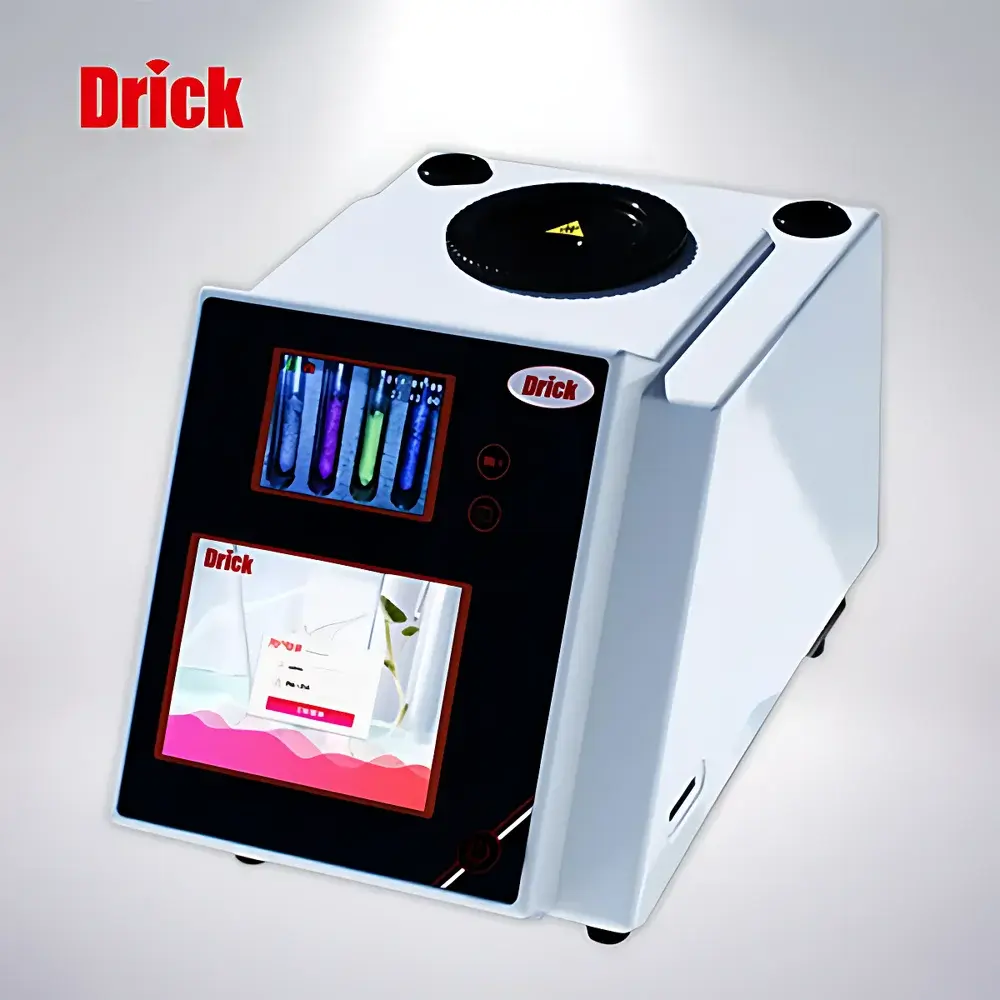
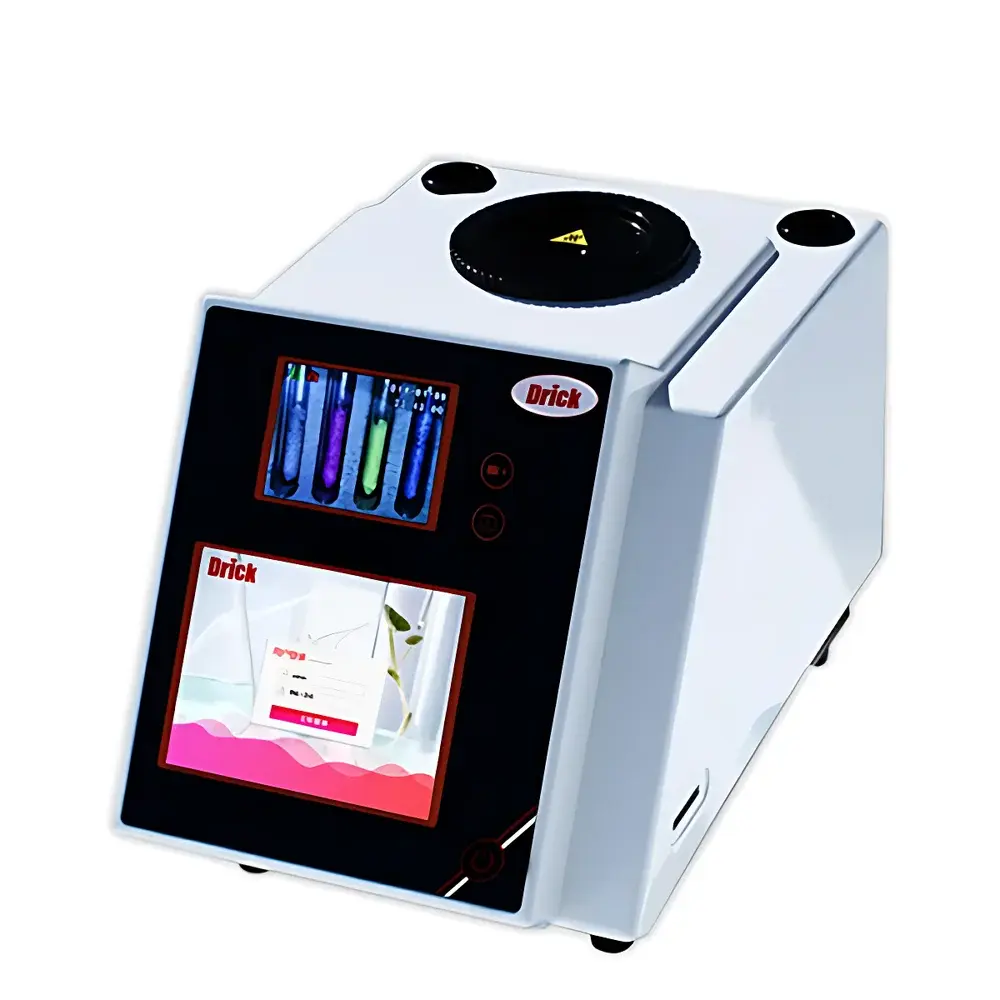
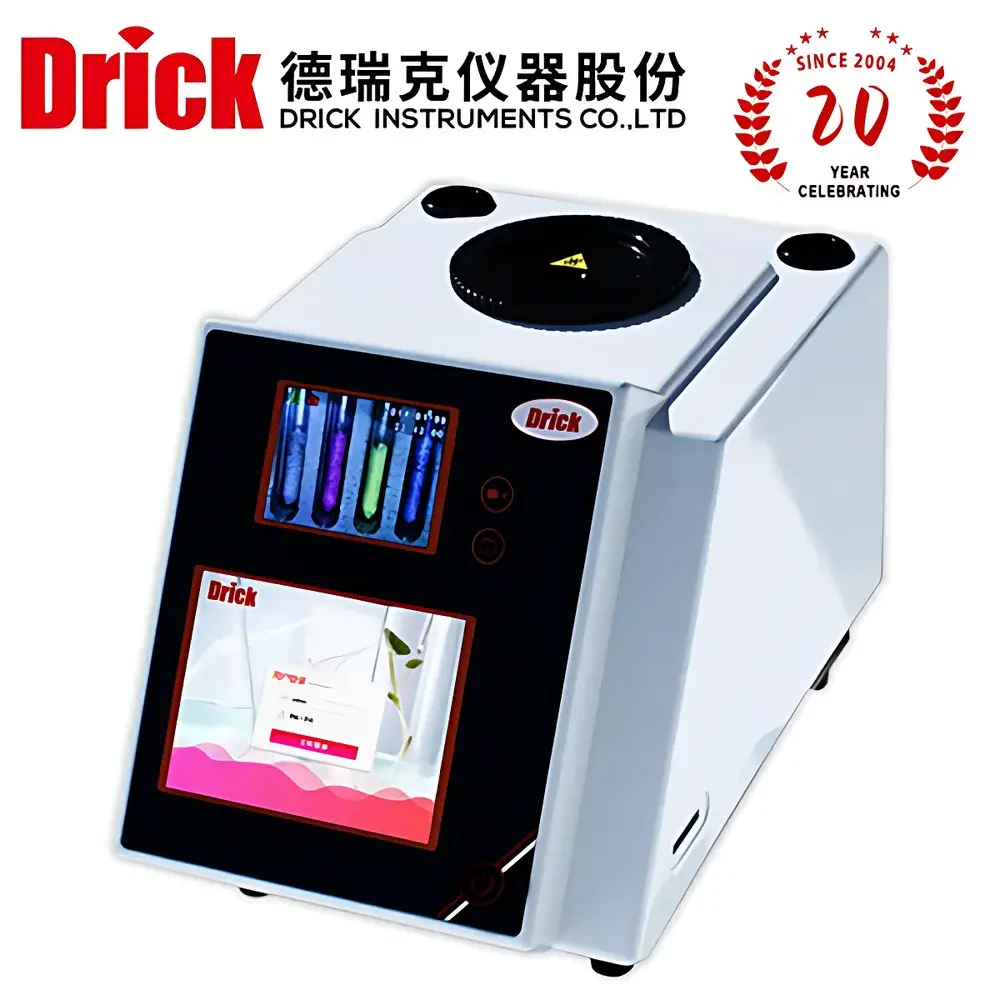
Drick DRK-X350 CE-Certified Semi-Automatic Video Melting Point Apparatus with Programmable Temperature Control
| Brand | Drick |
|---|---|
| Origin | Shandong, China |
| Manufacturer Type | Direct Manufacturer |
| Country of Origin | China |
| Model | DRK-X350 |
| Temperature Range | Ambient to 400 °C |
| Heating Rate | 0.1–20 °C/min (200-step continuous adjustment) |
| Temperature Repeatability | ±0.1 °C at 0.1 °C/min |
| Temperature Accuracy | ±0.3 °C (<250 °C) |
| Capillary Tube Dimensions | OD 1.4 mm, ID 1.2 mm |
Overview
The Drick DRK-X350 is a CE-certified semi-automatic video melting point apparatus engineered for precise, visually verified thermal transition analysis of crystalline solids. It operates on the principle of controlled heating combined with real-time digital microscopy, enabling direct observation of sample phase changes—melting onset, clear point, and complete liquefaction—under standardized thermal ramping conditions. Designed for routine quality control and R&D laboratories in pharmaceuticals, fine chemicals, polymers, and academic research, the instrument delivers traceable, operator-independent results through synchronized high-resolution video capture and calibrated temperature profiling. Its robust architecture integrates a Peltier-assisted heating block with optical-grade viewing optics and an integrated HD camera system, ensuring consistent illumination and sharp image contrast across the full 400 °C operational range.
Key Features
- CE-marked design compliant with EU Directive 2014/30/EU (EMC) and 2014/35/EU (LVD), supporting regulatory submissions in EEA markets.
- Programmable temperature control with 200-step continuous heating rate adjustment (0.1–20 °C/min), facilitating method development per pharmacopoeial standards including USP <741>, EP 2.2.17, and JP 2.60.
- High-precision platinum resistance thermometer (PT100) with NIST-traceable calibration; accuracy validated at ±0.3 °C below 250 °C and ±0.5 °C above—meeting ISO 8317 and ASTM E324 requirements for thermal measurement uncertainty.
- Dual-view optical path with coaxial LED illumination and 10× magnification lens, optimized for capillary-based sample observation using standard 1.4 mm OD / 1.2 mm ID tubes.
- Integrated video recording and frame-by-frame playback functionality, allowing retrospective identification of melting onset (onset temperature) and endpoint (clear point) with timestamped thermal data logging.
- Thermal stability maintained within ±0.1 °C over repeated measurements at low ramp rates (e.g., 0.1 °C/min), supporting GLP-compliant validation protocols.
Sample Compatibility & Compliance
The DRK-X350 accommodates standard thin-walled glass capillaries (1.4 mm OD, 1.2 mm ID) filled with 1–3 mg of dry, finely powdered crystalline material. It supports both single-point and multi-point melting assays, making it suitable for purity estimation via mixed-melting point determination. The instrument conforms to international regulatory expectations for analytical instrumentation used in GMP environments: its temperature calibration procedure follows ISO/IEC 17025 principles, and raw video + thermal data outputs are structured to support audit trails required under FDA 21 CFR Part 11 (when paired with compliant third-party data management software). While the device itself does not embed electronic signature or user-role access controls, its output format enables integration into validated LIMS or ELN systems.
Software & Data Management
The DRK-X350 operates via embedded firmware with a responsive touchscreen interface (no external PC required). All measurement sessions—including heating profile parameters, real-time temperature readings, and synchronized video—are stored internally on non-volatile memory and exportable via USB 2.0 to CSV and MP4 formats. Timestamped data files include metadata such as date/time, operator ID (manually entered), ambient temperature, and capillary batch reference. For laboratories requiring enhanced data integrity, optional companion software (sold separately) provides automated report generation aligned with ICH M4 Q5 and WHO TRS 992 Annex 5 guidelines, including statistical summary of replicate runs and deviation flagging against preset specification limits.
Applications
- Pharmaceutical QC: Identity confirmation and purity assessment of active pharmaceutical ingredients (APIs) and excipients per USP-NF monographs.
- Chemical synthesis: Monitoring reaction completion and intermediate characterization during organic route development.
- Academic research: Teaching fundamental thermal behavior concepts and validating computational models of crystal lattice energy.
- Polymers & materials science: Determining softening points of thermoplastics and eutectic compositions in binary mixtures.
- Food & cosmetics: Verifying melting profiles of fats, waxes, and surfactants to ensure batch-to-batch consistency.
FAQ
Does the DRK-X350 support automatic melting point detection via image analysis?
No—it is a semi-automatic instrument requiring manual visual interpretation of the video feed to determine onset and clear points. Fully automated algorithms are not implemented to preserve method transparency and regulatory acceptability in audited environments.
Is the temperature sensor calibrated before shipment?
Yes—each unit undergoes factory calibration using certified reference materials (e.g., indium, tin, zinc) traceable to NIST SRM 722. A calibration certificate is included with delivery.
Can the DRK-X350 be used for decomposition point determination?
It is not designed for decomposition analysis, as rapid color change or charring may occur without clear phase transition. Users should consult literature or perform preliminary tests to confirm suitability for thermally unstable compounds.
What maintenance is required for long-term accuracy?
Annual recalibration is recommended; optical components require periodic cleaning with lens-grade solvent and lint-free wipes. No consumables beyond capillaries are needed.
Is technical documentation available in English?
Yes—the operation manual, calibration protocol, and CE Declaration of Conformity are provided in English and comply with EN 61000-6-3 and EN 61000-6-2 EMC standards.
Related Products



