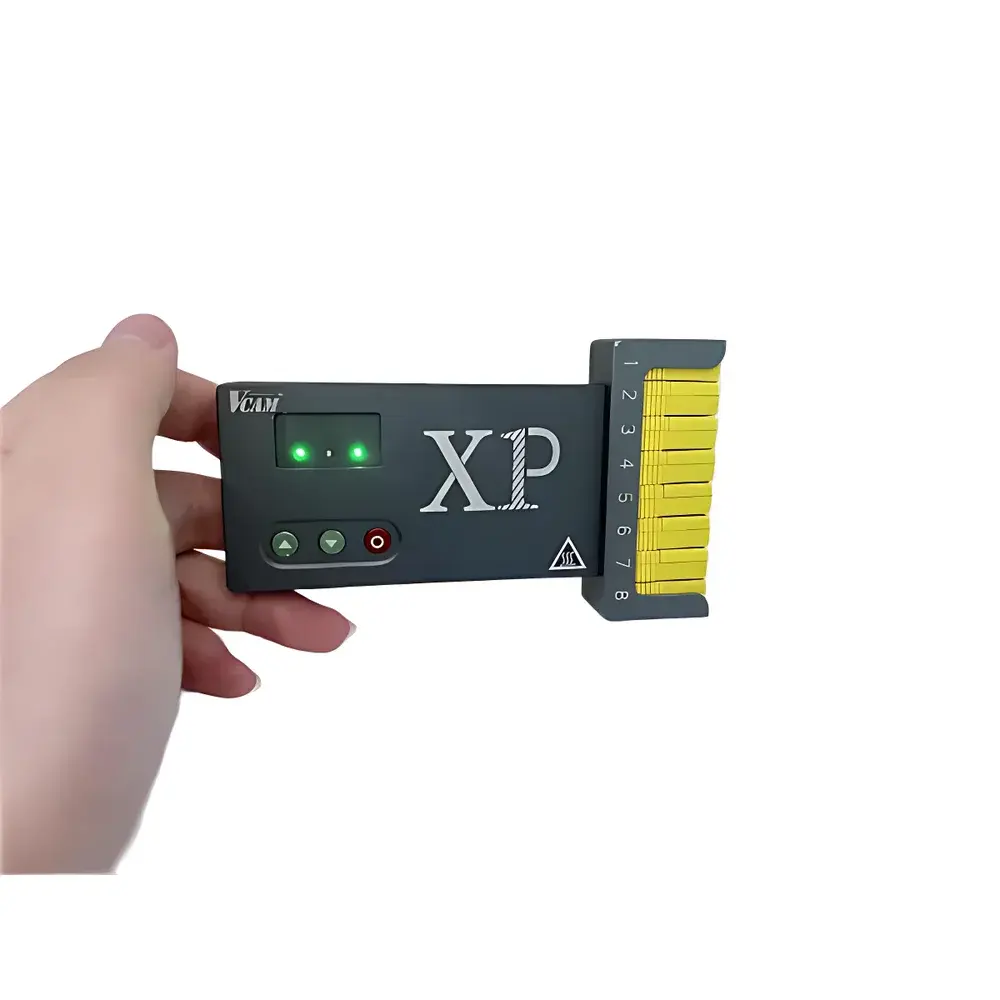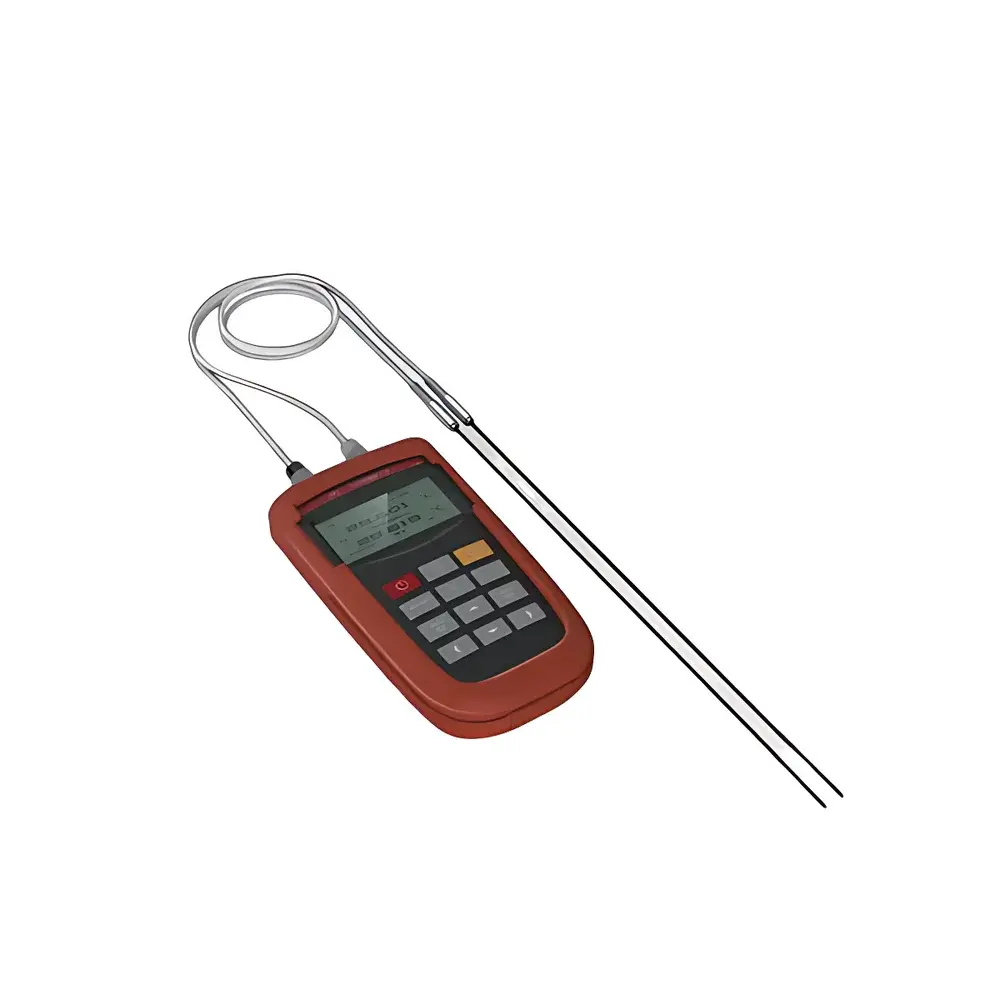
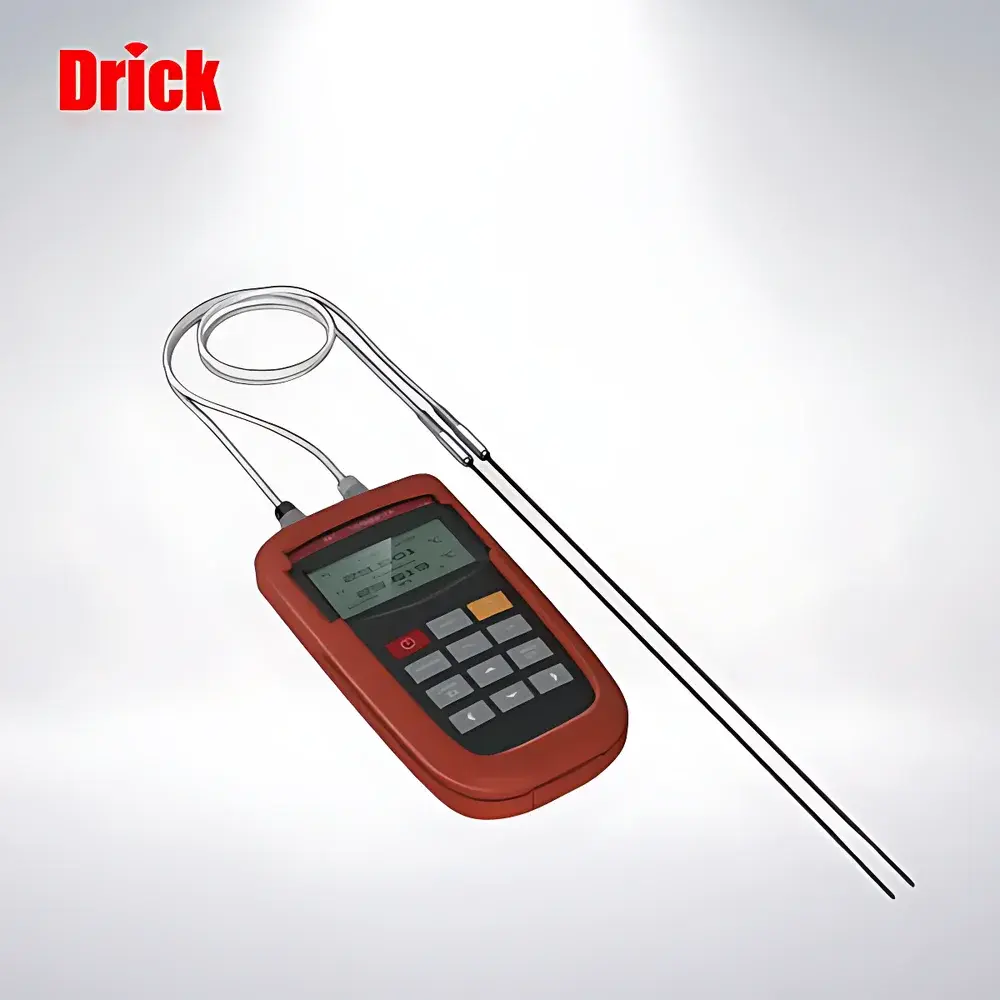
Drick GT11 High-Precision Handheld Resistance Thermometer
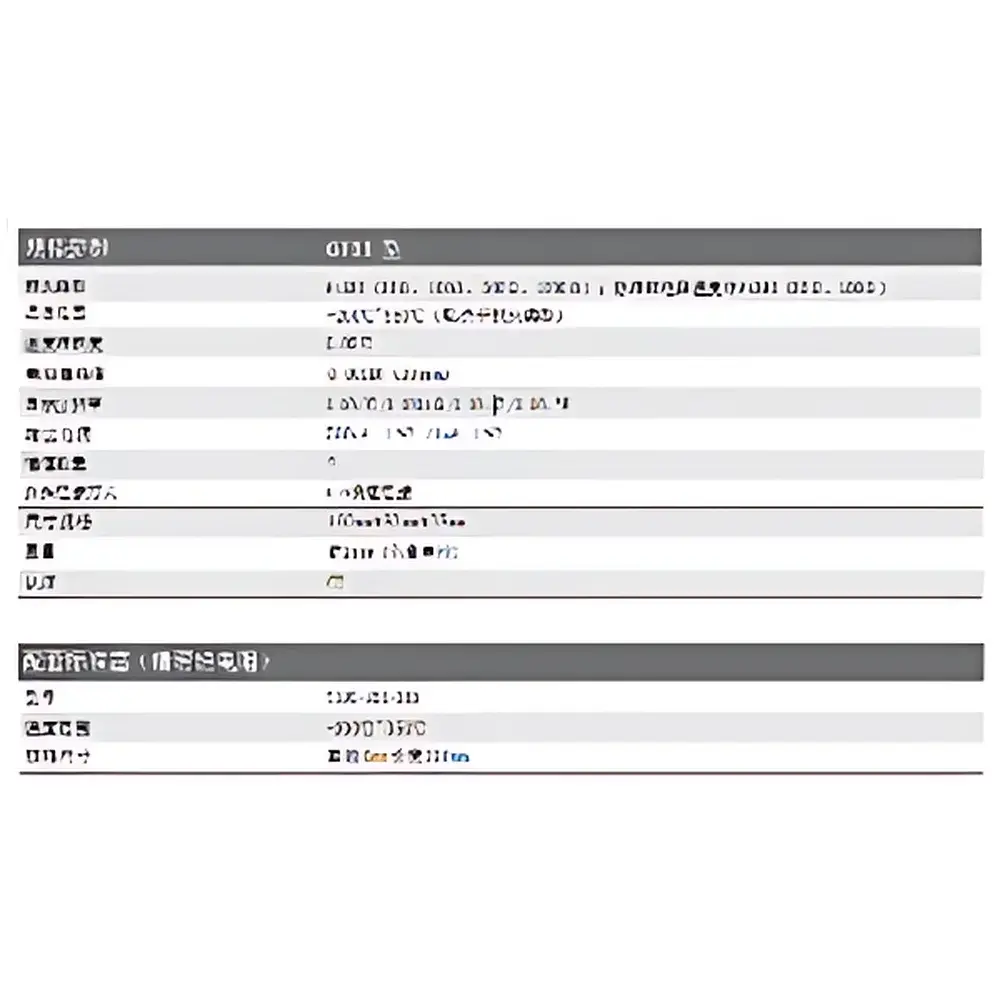
| Brand | Drick |
|---|---|
| Origin | Shandong, China |
| Manufacturer Type | Manufacturer |
| Product Origin | Domestic |
| Model | GT11 |
| Temperature Measurement Principle | Platinum Resistance Thermometry (PRT) based on ITS-90 |
| Measurement Method | Contact |
| Probe Types | Pt385 (25 Ω, 100 Ω, 500 Ω, 1000 Ω) |
| Temperature Range | −200 °C to +850 °C (probe-dependent) |
| Temperature Accuracy | ±0.02 °C |
| Resistance Accuracy | Class 0.002 (20 ppm) |
| Display Resolution | 0.001 °C / 0.0001 Ω / 0.001 °F / 0.001 K |
| Excitation Current | 500 µA ±2% or 1 mA ±2% |
| Channel Count | 2 |
| Connection Interface | DIN quick-connect |
| Dimensions | 160 mm × 83 mm × 38 mm |
| Weight | ~255 g (with batteries) |
| Certification | CE |
| Data Logging Capacity | 60,000 records with timestamps |
| Software Interface | PC communication via USB/RS232 |
| Compliance | ITS-90 traceable, supports GLP/GMP audit trails in software mode |
Overview
The Drick GT11 High-Precision Handheld Resistance Thermometer is a metrology-grade portable instrument engineered for primary and secondary temperature calibration tasks in accredited laboratories, national metrology institutes, and industrial QA/QC environments. It operates on the fundamental principle of platinum resistance thermometry—measuring the electrical resistance of precision platinum sensing elements (Pt385 and Pt392) and converting it to temperature values using the internationally recognized International Temperature Scale of 1990 (ITS-90). Unlike conventional digital thermometers, the GT11 employs dual-channel, low-noise, current-reversal excitation circuitry to eliminate thermal EMF errors (<0.1 µV), ensuring high reproducibility and long-term stability essential for reference-level measurements. Its compact form factor (160 × 83 × 38 mm) and battery-powered operation enable seamless transition between laboratory benchtop use and field deployment—such as calibrating constant-temperature baths, verifying industrial RTDs, or validating thermocouple transmitters on-site.
Key Features
- Dual independent measurement channels with selectable excitation currents (500 µA or 1 mA), both calibrated to ±2% tolerance and optimized for minimal self-heating error
- ITS-90-compliant internal RTD resistance-to-temperature conversion algorithms, preloaded with standard Pt385 and Pt392 curves per IEC 60751 and ASTM E1137
- High-resolution display showing simultaneous temperature (°C/°F/K), resistance (Ω), deviation (REL), and statistical parameters (MAX/MIN/AVG/HOLD)
- Real-time clock with timestamped data logging—up to 60,000 records stored internally with millisecond-accurate time stamps
- DIN-standard quick-connect probe interface enabling rapid interchange of certified reference probes (e.g., T100-350-385) without recalibration
- Low thermal EMF architecture with automatic current reversal and guarded input design, minimizing parasitic voltages in high-impedance measurements
- PC connectivity via USB or RS232 for firmware updates, configuration export, and raw data retrieval compliant with ISO/IEC 17025 documentation requirements
Sample Compatibility & Compliance
The GT11 supports a broad range of platinum resistance thermometer configurations, including industrial Pt100/Pt1000 sensors (IEC 60751 Class A/B), standard SPRTs (Pt392), and custom-wound reference elements. It accommodates probes with nominal resistances of 25 Ω, 100 Ω, 500 Ω, and 1000 Ω, covering operational ranges from −200 °C to +850 °C depending on probe construction and insulation class. All measurement functions are traceable to national standards through documented calibration certificates issued by CNAS-accredited providers. The instrument meets CE marking requirements under the EU Electromagnetic Compatibility Directive 2014/30/EU and Low Voltage Directive 2014/35/EU. When used with validated software and audit-trail-enabled data acquisition, it supports compliance with FDA 21 CFR Part 11, ISO/IEC 17025:2017 Clause 7.7 (measurement traceability), and GLP/GMP documentation protocols.
Software & Data Management
The GT11 interfaces with dedicated Windows-based calibration management software supporting bidirectional communication. Users can configure logging intervals, define pass/fail tolerances, generate calibration reports per ISO/IEC 17025 Annex A.1, and export CSV or XML files compatible with LIMS integration. The software implements electronic signature functionality, user access levels, and immutable audit trails—including operator ID, timestamp, parameter changes, and raw resistance readings. Data integrity is reinforced by cyclic redundancy check (CRC) validation during transfer and optional password-protected configuration locks to prevent unauthorized modification of calibration constants.
Applications
- Primary calibration of industrial platinum resistance thermometers (PRTs), thermocouples, and temperature transmitters against reference standards
- Verification and adjustment of constant-temperature baths, environmental chambers, and stability ovens in metrology labs
- Field validation of temperature measurement chains in power generation facilities, pharmaceutical cleanrooms, and petrochemical process lines
- Supporting manual resistance thermometry systems when integrated with low-thermal-EMF switching units (e.g., ST-1204 12-channel scanner)
- Replacement of mercury-in-glass thermometers in legal metrology applications where NIST-traceable digital alternatives are mandated
- Research-grade temperature mapping and uncertainty budgeting for ISO/IEC 17025 accreditation audits
FAQ
What temperature standards does the GT11 support?
The GT11 implements ITS-90 interpolation equations for Pt385 and Pt392 resistance thermometers, fully aligned with the latest revisions of IEC 60751 and ASTM E1137.
Can the GT11 be used for accredited calibration reports?
Yes—when operated with certified reference probes and validated software, it meets ISO/IEC 17025 requirements for uncertainty evaluation and traceable reporting.
Is external power required for field use?
No—the unit operates on internal rechargeable batteries with >12 hours of continuous measurement runtime; no AC adapter is needed for typical field deployments.
How is thermal EMF minimized during resistance measurement?
Through hardware-level current reversal, guarded input terminals, and low-thermal-EMF PCB layout—ensuring stray voltages remain below 0.1 µV across the full operating range.
Does the GT11 support custom probe calibration coefficients?
Yes—users may import individual probe-specific Callendar-Van Dusen coefficients or polynomial tables directly into the device memory for non-standard sensor types.