
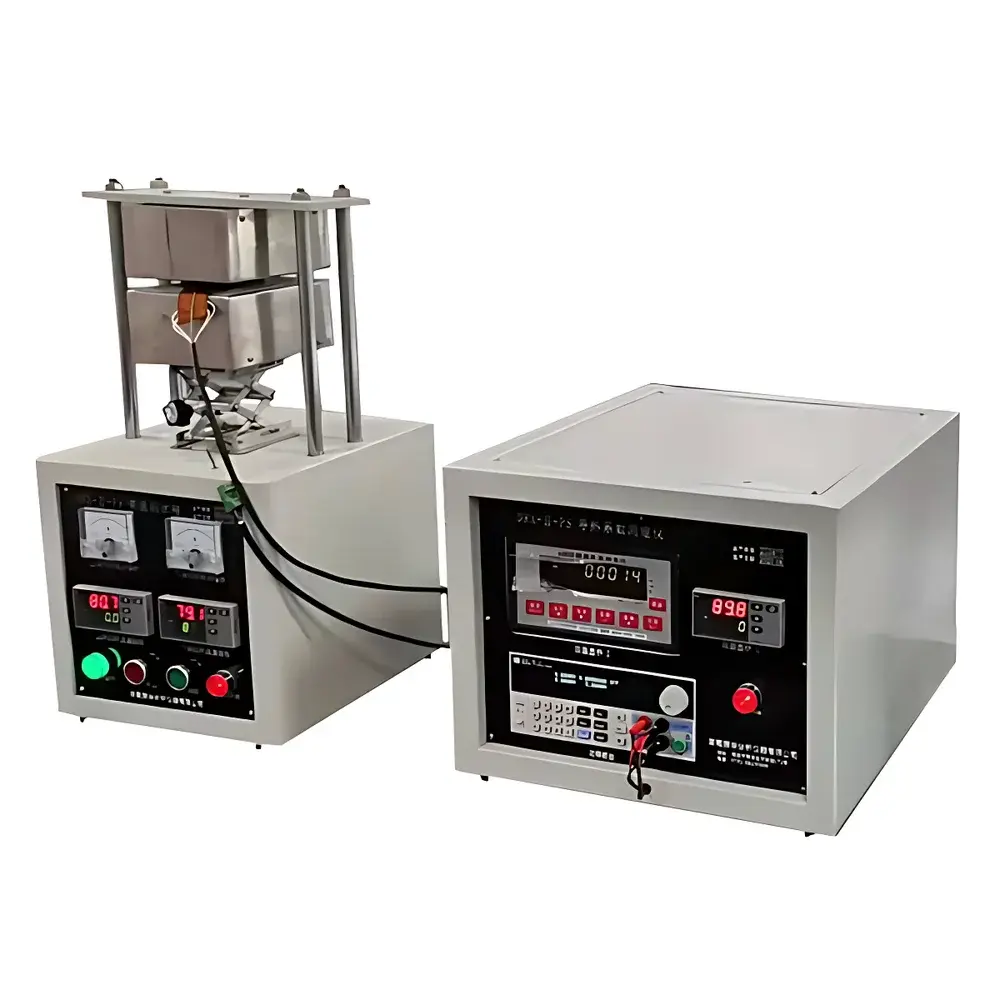
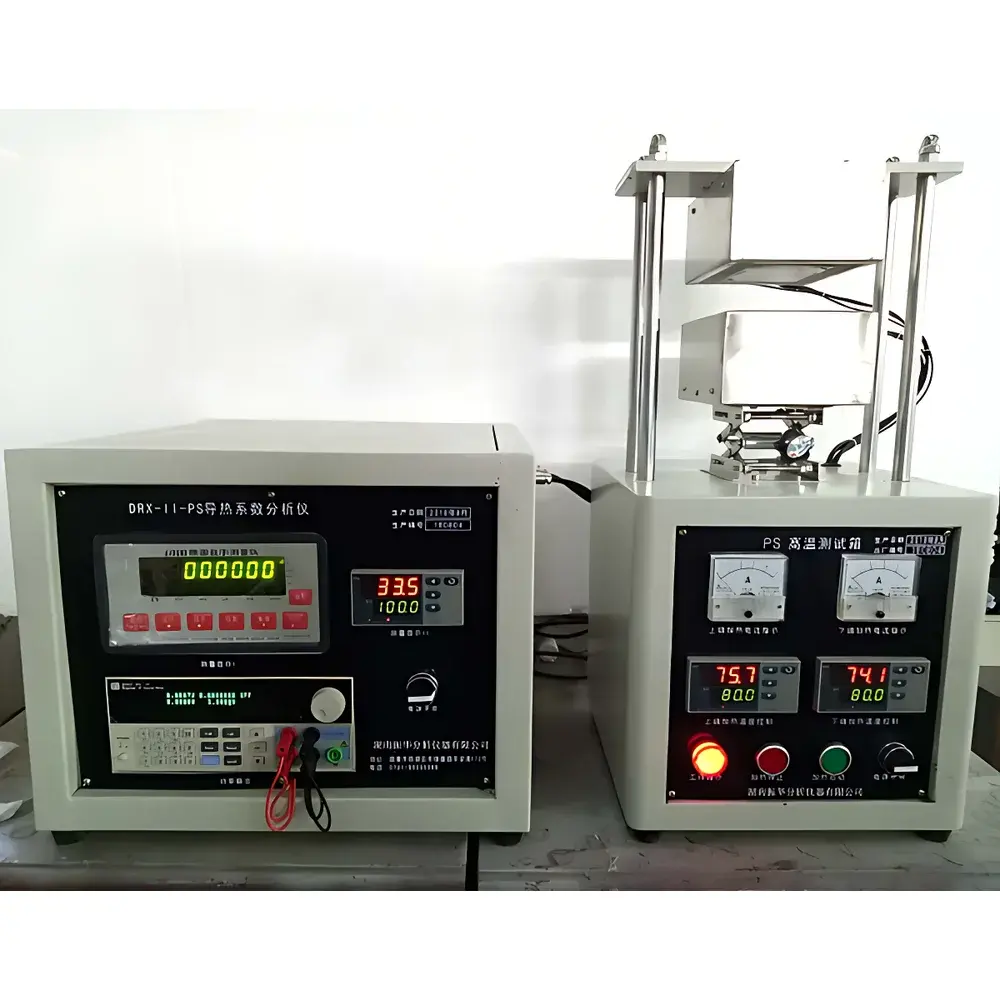
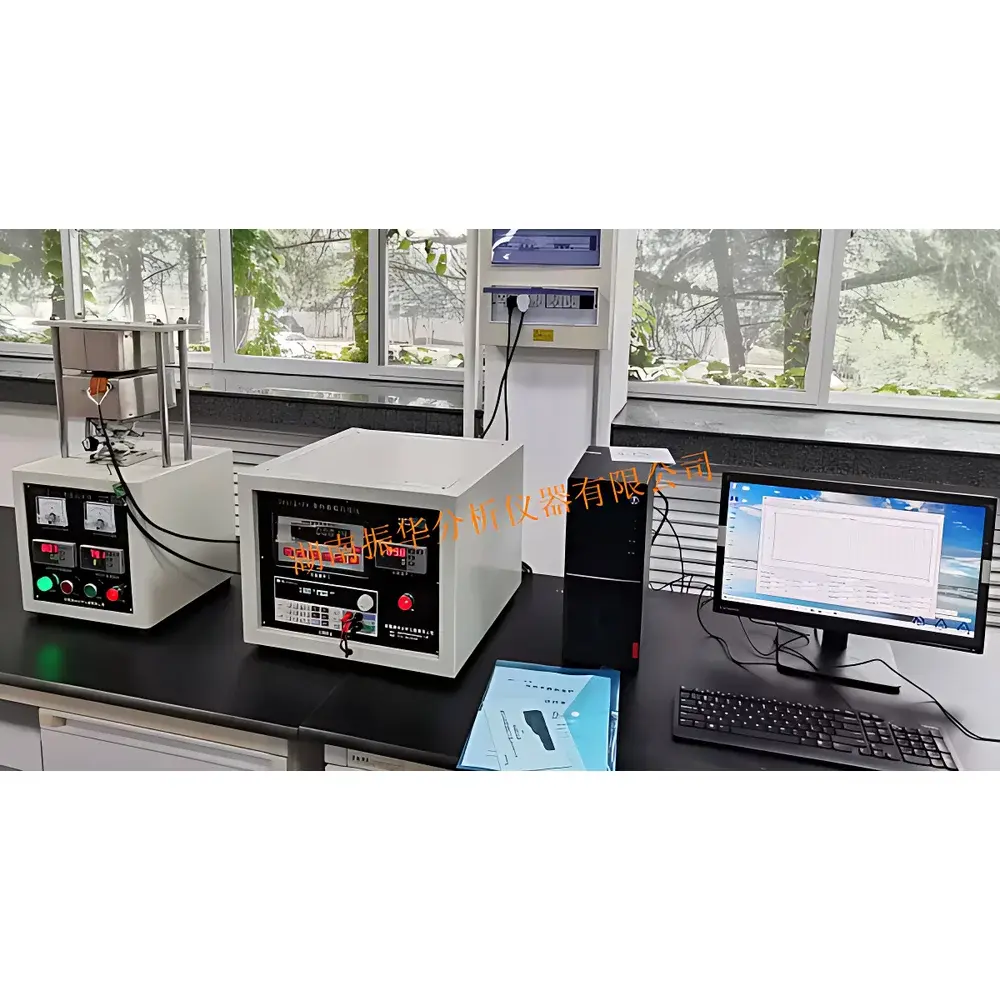
DRX-II-PS Rapid Thermal Conductivity Analyzer
| Origin | Hunan, China |
|---|---|
| Manufacturer Type | Distributor |
| Origin Category | Domestic (China-made) |
| Model | DRX-II-PS |
| Quotation | Available upon request |
| Thermal Conductivity Range | 0.005–500 W/(m·K) |
| Temperature Range Options | Ambient to 40 °C / 130 °C / 200 °C / 1000 °C |
| Probe Diameter Options | Φ2–Φ30 mm (custom up to Φ100 mm) |
| Sample Types | Solids, powders, thin films, coatings, liquids, anisotropic materials |
| Measurement Principle | Transient Plane Source (TPS) with longitudinal heat flow configuration |
| Test Duration | 5–160 s per measurement |
| Accuracy | ±3% |
| Software | Fully automated thermal analysis suite with parameter fitting, curve validation, and ASTM/ISO-compliant reporting |
| Compliance | Supports GLP/GMP audit trails, 21 CFR Part 11–ready data logging (software-configurable), compliant with ISO 22007-2 and ASTM D5470 test methodologies |
Overview
The DRX-II-PS Rapid Thermal Conductivity Analyzer is a high-throughput, laboratory-grade instrument engineered for precise, contact-based thermal property characterization using the Transient Plane Source (TPS) method—specifically configured with longitudinal heat flow geometry. Unlike steady-state or guarded-hot-plate techniques, the TPS principle relies on Joule heating of a symmetric, sandwiched sensor acting simultaneously as both heat source and resistance thermometer. This dual-function design enables direct, real-time acquisition of thermal conductivity (λ), thermal diffusivity (α), and volumetric heat capacity (ρcp) from a single transient measurement. The DRX-II-PS is optimized for R&D labs and QC environments in construction materials science, advanced composites development, electronics thermal management, and building envelope performance evaluation—where rapid turnaround, minimal sample preparation, and robust repeatability across heterogeneous material classes are critical operational requirements.
Key Features
- True transient measurement with sub-second response initiation and full-curve capture within 5–160 seconds—eliminating thermal equilibration delays inherent in static methods
- Elimination of interfacial contact resistance error through symmetrical sensor embedding or one-sided application (optional single-face module)
- No requirement for machining, polishing, or dimensional standardization—accepts samples with surface flatness ≥ ±25 µm over probe contact area
- Modular test configurations: Basic (bulk solids), Thin-Film (substrate-supported layers ≥1 µm), Anisotropic (orthogonal λx/λy/λz mapping), Plate (large-area homogeneous slabs), and Single-Sided (for non-destructive on-site prep or constrained geometries)
- Thermally stabilized temperature control options spanning ambient +10 °C to 1000 °C—enabling high-temperature thermal stability profiling per ASTM E1952 or ISO 22007-4
- Probe diameter scalability from Φ2 mm (micro-domain resolution) to Φ100 mm (statistical averaging over heterogeneous aggregates such as concrete or insulation boards)
Sample Compatibility & Compliance
The DRX-II-PS accommodates diverse physical forms without phase transformation or degradation: rigid solids (metals, ceramics, stone), compliant polymers, porous insulations (aerogels, mineral wool), dispersive powders (dry or consolidated), liquid suspensions (coolants, phase-change slurries), vapor-deposited thin films (<50 nm), and directionally reinforced composites (carbon fiber laminates, wood grain structures). All measurements adhere to ISO 22007-2:2015 (Plastics — Determination of thermal conductivity and thermal diffusivity — Part 2: Transient plane heat source method) and are traceable to NIST SRM 1470a (thermistor calibration standard). Instrument firmware supports electronic signature-enabled audit trails, user-level access control, and raw-data immutability—meeting GLP documentation standards and FDA 21 CFR Part 11 requirements when deployed in regulated construction material certification workflows.
Software & Data Management
The embedded thermal analysis software provides fully automated experiment sequencing, real-time curve fitting using nonlinear least-squares inversion of the TPS analytical solution, uncertainty propagation modeling (based on sensor calibration certificates and thermal contact modeling), and customizable report generation. Output formats include CSV (for statistical process control integration), PDF (with embedded metadata, operator ID, timestamp, and environmental conditions), and XML (compatible with LIMS platforms). Calibration modules support multi-point verification against certified reference materials (e.g., Pyroceram 9606, Inconel 600, sapphire), while drift compensation algorithms correct for ambient thermal fluctuations during extended test campaigns.
Applications
- Building envelope qualification: thermal resistance (R-value) validation of insulation foams, vacuum panels, and aerated concrete per EN ISO 10456
- Fire-rated material development: high-temperature λ and α tracking during ASTM E119 exposure protocols
- Electronics packaging: interface thermal resistance (Rth) estimation between PCB substrates and thermal interface materials (TIMs)
- Sustainable construction: comparative thermal performance assessment of bio-based composites (hempcrete, mycelium boards) versus conventional gypsum or OSB
- Quality assurance in refractory manufacturing: batch-to-batch consistency monitoring of castables and ceramic fibers at service temperatures up to 1000 °C
- Research into phase-change materials (PCMs): latent heat contribution separation via modulated TPS pulse trains
FAQ
What standards does the DRX-II-PS comply with for thermal conductivity testing?
It implements the core physics and procedural requirements of ISO 22007-2 and ASTM D5470, with optional validation packages for EN 12667 and JIS A 1412-2.
Can the system measure anisotropic materials like oriented graphite or layered composites?
Yes—the anisotropic module performs orthogonal sensor orientation and directional heat flux analysis to decouple λ∥ and λ⊥ with <5% cross-axis coupling error.
Is sample thickness a limiting factor for accurate measurement?
For bulk mode, minimum thickness should exceed 3× the probe radius; for thin-film mode, substrate correction algorithms accommodate thicknesses down to 10 µm with known substrate properties.
How is calibration maintained across temperature ranges?
Each temperature stage includes NIST-traceable thermistor calibration, and probe resistance drift is compensated using integrated four-wire sensing and periodic zero-offset verification.
Does the software support automated pass/fail criteria for incoming material inspection?
Yes—user-defined specification limits can be embedded in test templates, triggering visual alerts and auto-flagging outliers in exported reports.





