
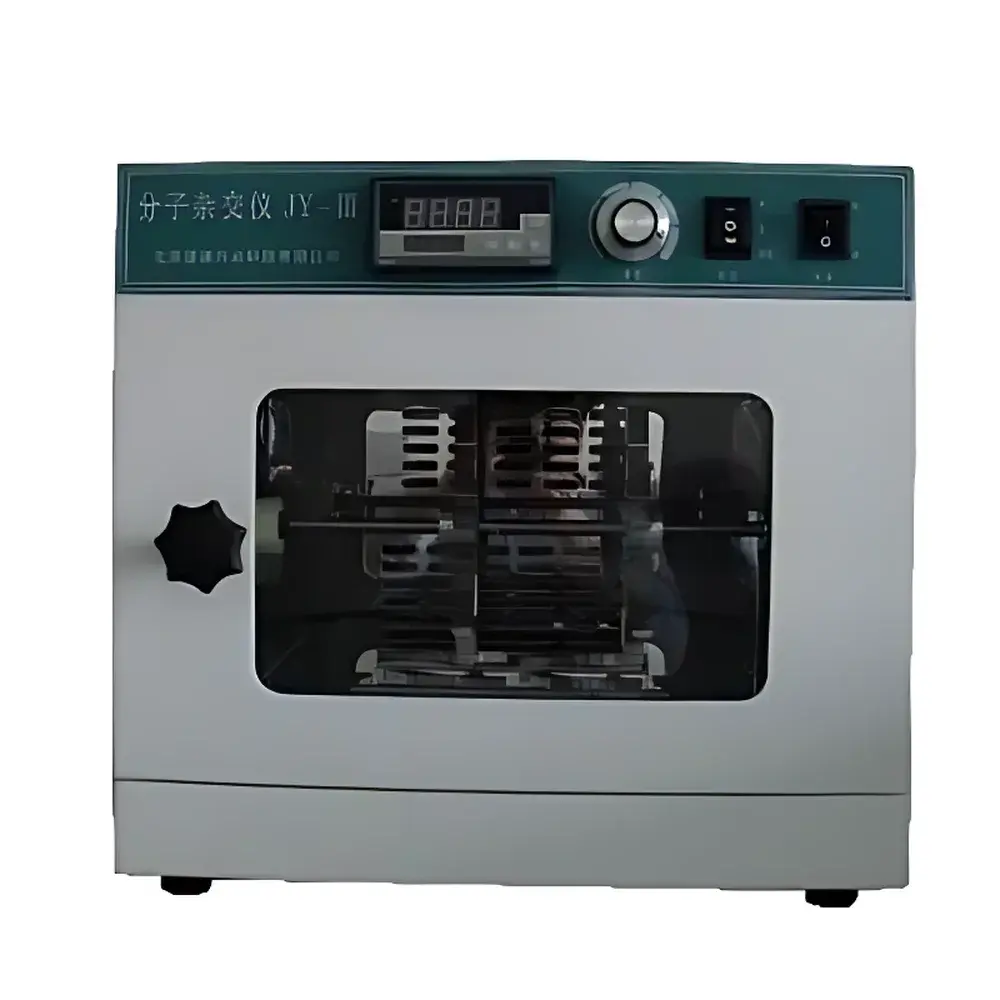
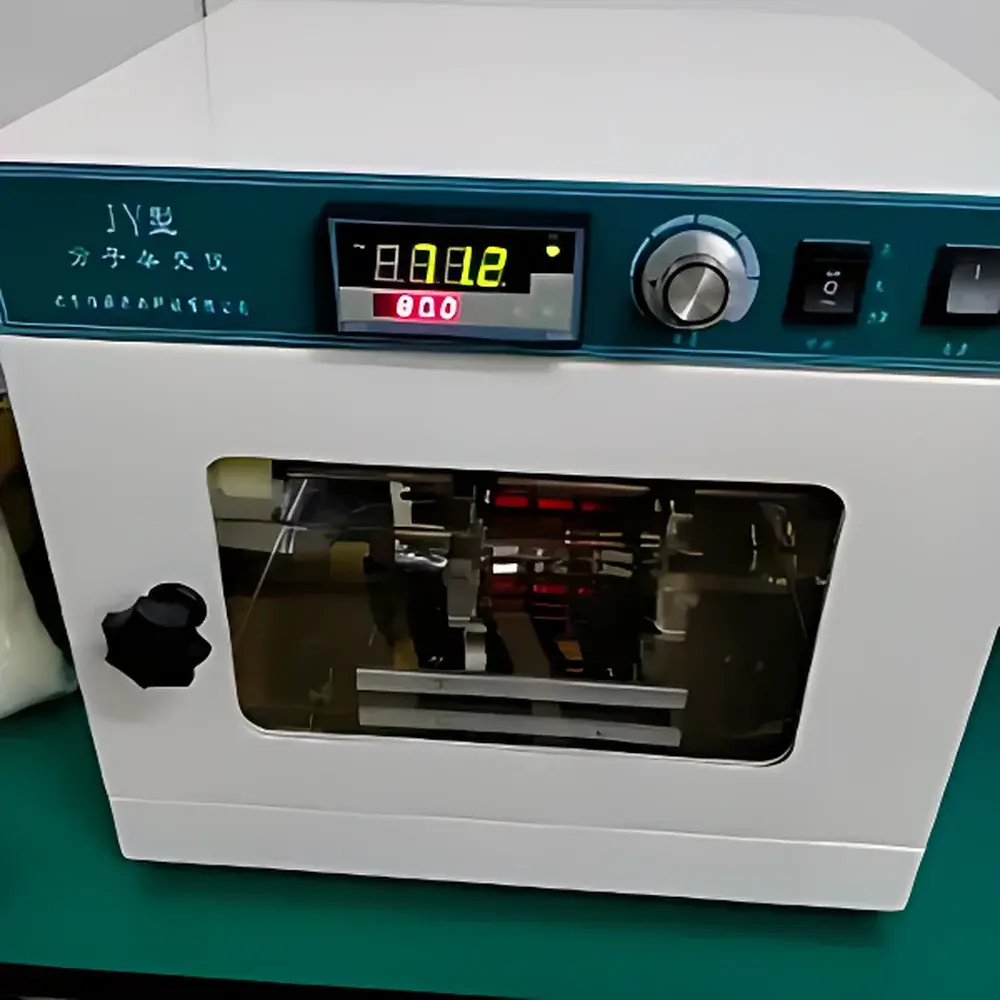
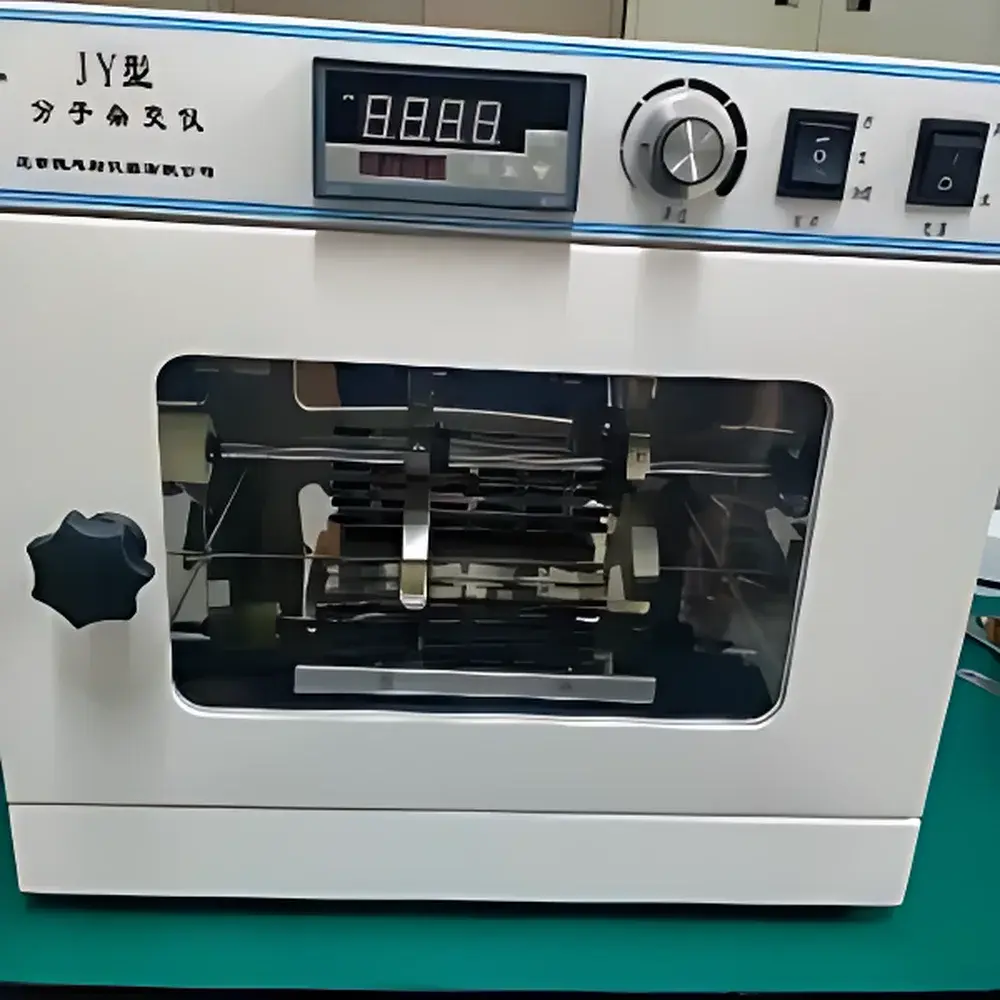
DS JY-III Molecular Hybridization Instrument
| Brand | DS |
|---|---|
| Origin | Beijing, China |
| Model | JY-III |
| Instrument Type | Nucleic Acid Molecular Hybridization Instrument |
| Temperature Range | Room Temperature +5°C to 100°C |
| Temperature Uniformity | ±0.5°C |
| Rotation Speed | 6.5 ± 0.5 rpm |
| Capacity | 6 hybridization tubes (Ø35 × 220 mm) |
| Buffer Volume per Tube | 100 mL |
| Power Supply | 220 VAC, 50 Hz |
| Max Power Consumption | <600 W |
| Continuous Operation | Up to 24 h |
| Temperature Display Resolution | 0.1°C |
| Temperature Equilibration Time | <20 min |
Overview
The DS JY-III Molecular Hybridization Instrument is a precision-controlled, rotating incubation system engineered for nucleic acid hybridization assays—including Southern, Northern, and dot blot procedures—as well as enzyme-linked immunoassays (ELISA), antibody-antigen binding studies, and other temperature- and motion-dependent molecular binding protocols. It operates on the principle of controlled thermal convection and uniform rotational mixing to ensure consistent probe-target interaction across solid-phase membranes (e.g., nitrocellulose or nylon), glass slides, or microtiter plates. Unlike static hybridization ovens or manual agitation methods, the JY-III maintains laminar buffer flow around immobilized nucleic acids via continuous low-speed rotation (6.5 ± 0.5 rpm), minimizing edge effects, preventing membrane drying, and eliminating the need for sealed plastic bags—thereby reducing contamination risk and eliminating potential radioactive leakage associated with traditional autoradiographic workflows. Its thermally stable chamber, coupled with digital PID temperature regulation, supports reproducible hybridization kinetics across clinically relevant temperature ranges (RT +5°C to 100°C), making it suitable for stringent applications in clinical molecular diagnostics, virology, bacteriology, and academic research laboratories.
Key Features
- Modular, space-efficient benchtop design with intuitive front-panel controls and LED speed/timer display
- Digital microprocessor-based temperature controller delivering ±0.5°C accuracy and <20-minute thermal equilibration
- Stable, brushless DC motor drive ensuring consistent 6.5 ± 0.5 rpm rotation—immune to line voltage fluctuations
- Simultaneous processing of up to six standard hybridization tubes (Ø35 × 220 mm), each accommodating 100 mL of hybridization buffer
- Thermally insulated chamber with radiation-shielded construction, compliant with IEC 61010-1 safety standards for laboratory equipment
- 24-hour continuous operation capability with automatic shutdown timer and over-temperature protection circuitry
- Integrated anti-condensation heating element to prevent dew formation during low-temperature hybridizations
Sample Compatibility & Compliance
The JY-III accommodates standard nucleic acid transfer membranes (nitrocellulose, PVDF, nylon), microscope slides, and 96-well ELISA plates when used with optional adapter trays. It supports both radioactive (e.g., ³²P-labeled probes) and non-radioactive detection chemistries (e.g., DIG-, biotin-, or fluorescent-labeled probes). The instrument meets general electrical safety requirements per IEC 61010-1 and is compatible with GLP-compliant workflows when paired with validated SOPs and electronic logbook documentation. While not FDA-cleared as an IVD device, its thermal performance and mechanical repeatability align with common validation benchmarks referenced in ISO/IEC 17025-accredited labs performing molecular pathology testing. No internal data storage or audit trail functionality is embedded; external documentation of run parameters (time, temperature, duration) is required for regulatory traceability.
Software & Data Management
The DS JY-III is a standalone hardware platform with no embedded software, network interface, or USB connectivity. All operational parameters—including setpoint temperature, rotation speed, and timer duration—are configured manually via tactile push-button controls and displayed on dual-segment LED indicators. This architecture ensures electromagnetic compatibility (EMC) stability in sensitive lab environments and eliminates cybersecurity concerns associated with connected instruments. Users are advised to record experimental metadata (e.g., batch ID, protocol version, operator name) in laboratory notebooks or LIMS-integrated electronic records. For automated data capture, third-party environmental monitoring systems with 4–20 mA or RS-485 analog outputs may be interfaced externally using optional signal converters.
Applications
- High-stringency DNA/RNA hybridization for pathogen detection (e.g., HBV, HIV, HPV, Mycobacterium tuberculosis)
- Pre-hybridization blocking and post-hybridization wash optimization under controlled thermal gradients
- Antibody incubation steps in immunoblotting (Western blot) and antigen retrieval protocols
- Protein-DNA interaction assays requiring gentle agitation at defined temperatures
- Validation of hybridization efficiency across multiple membrane lots in QC/QA settings
- Development and refinement of PCR-based diagnostic assays integrated with ELISA readouts
FAQ
Is the JY-III compatible with radioactive probes?
Yes—the instrument’s shielded chamber and leak-proof tube design mitigate exposure risks during handling of isotopically labeled nucleic acids.
Can the rotation speed be adjusted?
No—the JY-III operates exclusively at a fixed 6.5 ± 0.5 rpm optimized for uniform hybridization kinetics; variable-speed models (e.g., JY-IIIA) are available separately.
What is the maximum recommended buffer volume per tube?
100 mL per standard Ø35 × 220 mm hybridization tube; exceeding this volume may compromise rotational stability and thermal homogeneity.
Does the instrument support temperature ramping or multi-step protocols?
No—it maintains a single user-defined setpoint temperature throughout the run; multi-stage protocols require manual intervention or external scheduling.
Is calibration documentation provided with the unit?
A factory calibration certificate verifying temperature accuracy and rotational speed is included; users should perform periodic verification using NIST-traceable thermometers and tachometers per internal QA policies.





