
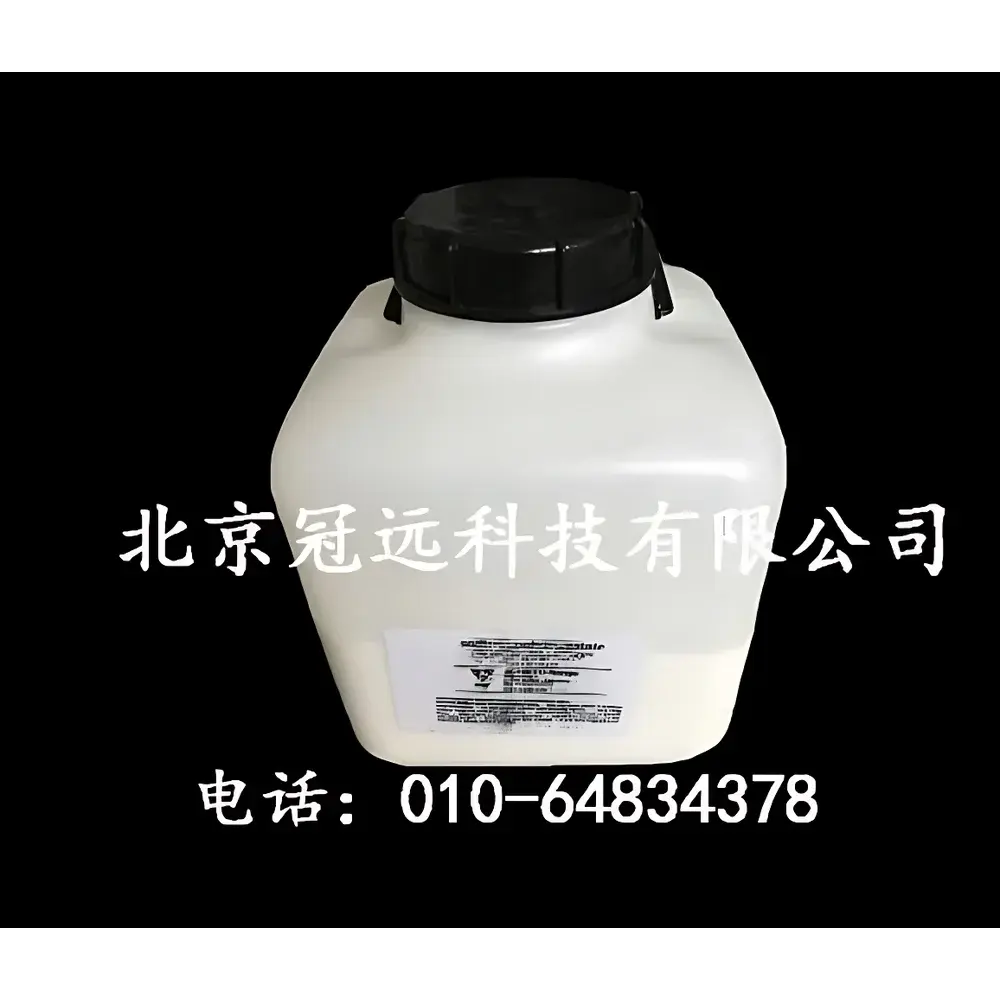
DTU Risø SPT1 Sodium Polytungstate (SPT) Heavy Liquid Reagent
| Brand | DTU Risø |
|---|---|
| Model | SPT1 |
| Purity | ≥99.5% (Na₂WO₄-based polymeric tungstate) |
| Density Range | 2.8–3.1 g/cm³ (adjustable via concentration and temperature) |
| Form | White crystalline powder or aqueous solution |
| CAS No. | 10361-41-6 (sodium tungstate base) |
| Compliance | ISO 9001-manufactured raw materials |
| Packaging | 100 g, 500 g, and 1 kg sealed HDPE bottles under inert atmosphere |
Overview
DTU Risø SPT1 Sodium Polytungstate is a high-purity, density-tunable heavy liquid reagent engineered for precise mineral separation, geological density fractionation, and microplastic isolation in environmental analytical workflows. Unlike conventional heavy liquids such as sodium metatungstate (SMT) or lithium heteropolytungstate (LST), SPT1 offers enhanced thermal stability (>60 °C continuous use), lower viscosity at equivalent densities, and reduced hygroscopicity—critical for reproducible sink-float separations in ISO 11277-compliant soil particle analysis and ASTM D7551-22 microplastic quantification protocols. The reagent functions on the principle of buoyant density separation: particles denser than the adjusted SPT1 solution sink, while those less dense float—enabling rapid, non-destructive liberation of target phases from complex matrices without organic solvent exposure.
Key Features
- Controlled density range from 2.80 to 3.10 g/cm³ at 20 °C, adjustable via precise gravimetric dilution with deionized water
- Low cytotoxicity profile (OECD 471 pre-screened) and absence of heavy metal impurities (Pb, Cd, As < 1 ppm by ICP-MS)
- Stable pH 6.8–7.2 in 25 wt% aqueous solution; compatible with standard glassware and polypropylene centrifuge tubes
- Batch-certified traceability: each SPT1 lot includes CoA with density calibration curve, residual chloride content (<0.05%), and sulfate impurity (<0.1%)
- No phase separation or crystallization observed after 12 months storage at 15–25 °C in sealed, light-protected containers
Sample Compatibility & Compliance
SPT1 is validated for use with silicates, carbonates, oxides, coal macerals, and polymer microbeads (PET, PE, PP) across particle sizes from 10 µm to 2 mm. It exhibits no measurable dissolution or surface etching on quartz, feldspar, or zircon under standard 10-minute immersion protocols. The reagent conforms to ISO/IEC 17025-accredited laboratory requirements for method validation, and its manufacturing process adheres to ISO 9001:2015 quality management standards. For regulated environmental testing (e.g., EPA Method 1664B adjunct applications), SPT1 supports GLP-compliant documentation including full lot traceability, expiration dating, and stability data per ICH Q1A(R2).
Software & Data Management
While SPT1 itself is a chemical reagent—not an instrument—its integration into automated density gradient systems (e.g., LUMiFuge® or custom-built centrifugal separators) enables digital workflow control. Users may employ DTU Risø’s free SPT Density Calculator (Windows/macOS web app) to generate concentration–density–temperature lookup tables compliant with ITS-90 reference conditions. All batch-specific certificates of analysis are delivered as PDF/A-1b files with embedded digital signatures, supporting 21 CFR Part 11 audit trails when stored in validated LIMS environments.
Applications
- Mineralogical separation of heavy minerals (e.g., garnet, ilmenite, rutile) from beach sands and till samples per ISO 14688-1
- Density-based sorting of microplastics from wastewater sludge and sediment cores (EN 17293:2020 Annex B)
- Preparatory step in U-Pb geochronology workflows requiring zircon concentrate purity >99.9%
- Quality control of ceramic raw materials (e.g., kaolin clay density grading per ASTM C721)
- Archaeological soil matrix processing for artifact residue recovery without organic solvent residues
FAQ
What is the shelf life of SPT1 under recommended storage conditions?
Unopened SPT1 has a guaranteed shelf life of 36 months from manufacture date when stored at 15–25 °C in original sealed container away from direct sunlight.
Can SPT1 solutions be reused after density adjustment?
Yes—provided no particulate contamination or evaporation occurs, solutions may be re-calibrated using a certified digital densimeter (e.g., Anton Paar DMA 4500M) and re-used for up to five sequential separation cycles.
Is SPT1 compatible with downstream XRD or SEM-EDS analysis?
Absolutely. Residual SPT1 is fully removable via three sequential 18.5 MΩ·cm water rinses followed by 40 °C vacuum drying; no tungsten residue is detectable by EDS down to 0.1 wt% detection limit.
Does DTU Risø provide technical support for method development?
Yes—application scientists offer complimentary protocol optimization for new sample types, including density gradient profiling and recovery efficiency validation reports.






