
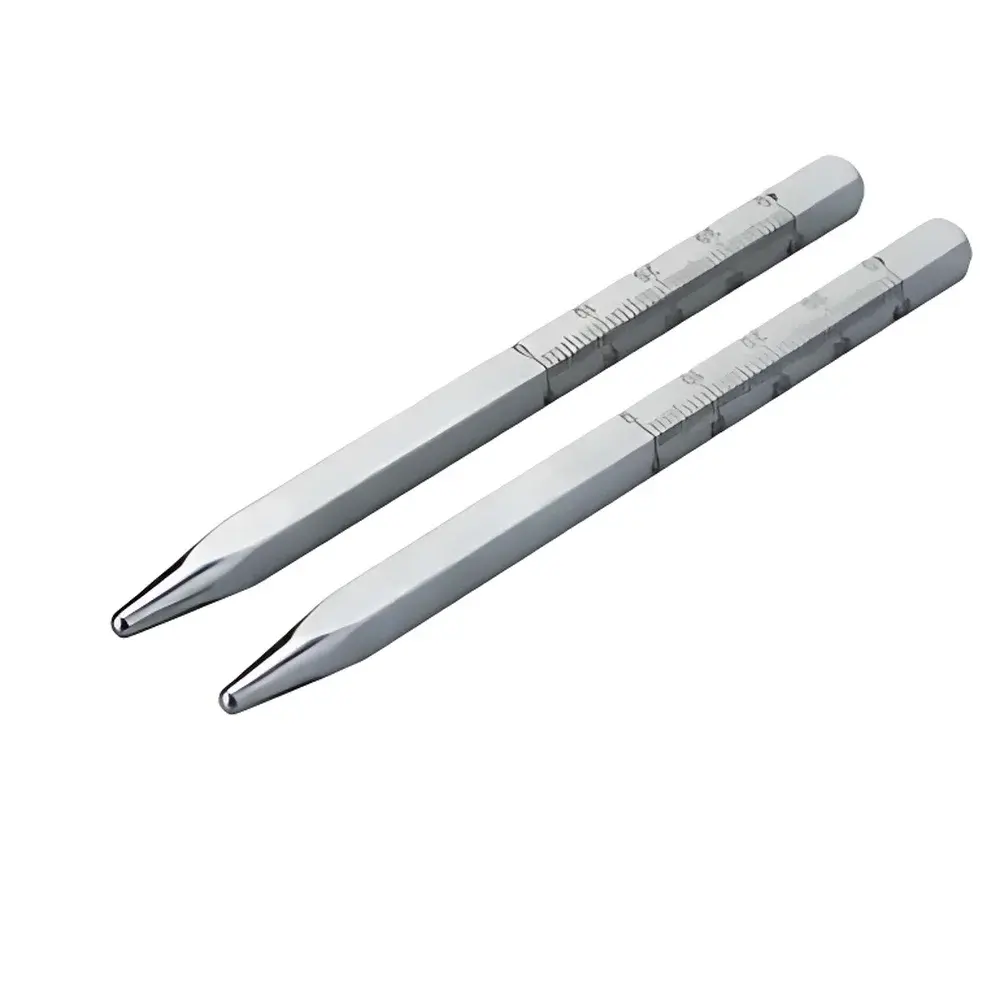
EB-1 Ear Bar Set for Stereotactic Instruments (NARISHIGE)
| Brand | NARISHIGE |
|---|---|
| Origin | Japan |
| Model | EB-1 |
| Length | 115 mm (per bar) |
| Weight | 80 g (pair) |
| Compatibility | SN-series stereotactic frames |
Overview
The EB-1 Ear Bar Set is a precision-machined, OEM-grade accessory designed exclusively for use with NARISHIGE’s SN-series stereotactic instruments. Engineered to meet the stringent mechanical and dimensional tolerances required in neuroscientific and preclinical research, these ear bars serve as critical fixation components that anchor the animal’s head within the stereotactic frame. Their function is foundational to achieving submillimeter spatial reproducibility during intracranial procedures—including microinjection, electrophysiological recording, optogenetic implantation, and targeted ablation. Constructed from high-strength stainless steel with a matte-finish surface treatment, the EB-1 set minimizes slippage and thermal drift while maintaining biocompatibility and autoclavability. Each bar is symmetrically balanced and calibrated to ensure bilateral force distribution across the external auditory meatus—critical for minimizing physiological stress and anatomical distortion during prolonged experiments.
Key Features
- Precision-ground geometry: 115 mm total length per ear bar, with tapered distal tips and integrated depth-stop notches for repeatable insertion depth control.
- Optimized mass distribution: 80 g total weight for the pair ensures stable fixation without excessive clamping force—reducing risk of tympanic membrane compression or temporal bone deformation.
- Direct compatibility: Designed for seamless integration with all SN-series stereotactic frames (e.g., SN-1, SN-2, SN-3), including standardized mounting interfaces and torque-spec alignment pins.
- Material integrity: Made from medical-grade 316L stainless steel; fully compatible with standard laboratory sterilization protocols (autoclave up to 134°C, 2 bar; ethylene oxide; hydrogen peroxide plasma).
- Traceable manufacturing: Produced in NARISHIGE’s ISO 13485-certified facility in Japan, with batch-specific documentation available upon request for GLP-compliant study reporting.
Sample Compatibility & Compliance
The EB-1 ear bars are validated for use in rodent models (mice, rats, hamsters) across a wide range of skull morphologies. Their fixed-length design accommodates standard bregma–lambda distances and interaural widths typical of C57BL/6, Sprague-Dawley, and Wistar strains. The set complies with ISO 14971:2019 (risk management for medical devices) as an ancillary component in Class I non-invasive instrumentation systems. While not classified as a medical device under FDA 21 CFR Part 801, it supports experimental workflows aligned with NIH Guide for the Care and Use of Laboratory Animals and AAALAC International accreditation standards. No adhesives, polymers, or coatings are used—ensuring zero leachable contaminants in sterile or chronic implantation settings.
Software & Data Management
As a purely mechanical accessory, the EB-1 requires no embedded firmware, drivers, or software integration. Its performance is independent of digital control systems, ensuring full interoperability with third-party stereotactic planning software (e.g., Paxinos atlas-based coordinate mapping tools, MATLAB-based targeting scripts, or open-source platforms such as BrainRAT). All dimensional specifications—including center-to-center spacing, tip angle (12° bevel), and thread pitch (M3 × 0.5)—are published in NARISHIGE’s SN-series technical manual (Rev. 4.2, 2023), enabling precise CAD modeling and custom jig development. Audit trails for instrument setup—including ear bar installation torque (recommended: 0.15–0.20 N·m), orientation markers, and lateral offset calibration—are maintained manually in lab notebooks or electronic lab notebooks (ELNs) compliant with 21 CFR Part 11 when paired with validated signature workflows.
Applications
- Chronic electrode array implantation in longitudinal behavioral studies.
- High-precision viral vector delivery to discrete thalamic nuclei or hippocampal subfields.
- Calibration and validation of intraoperative navigation systems using fiducial marker registration.
- Teaching laboratories requiring robust, reusable components for stereotactic technique training.
- Standardized phenotyping pipelines where inter-laboratory reproducibility depends on consistent head fixation geometry.
FAQ
Are replacement ear bars available individually, or only as a pair?
NARISHIGE supplies the EB-1 exclusively as a matched pair to guarantee symmetrical wear characteristics and torque balance; individual replacements are not offered.
Can the EB-1 be used with non-NARISHIGE stereotactic frames?
Mechanical adaptation is possible via custom adapter plates, but dimensional mismatch may compromise targeting accuracy; NARISHIGE does not validate or support cross-platform use.
What is the recommended maintenance interval for sterilization and inspection?
Inspect visually before each use for surface pitting or thread deformation; sterilize after every procedure if used in survival surgery; replace after 50 autoclave cycles or upon visible fatigue signs.
Is there a tolerance specification for length or angular deviation?
Yes—length tolerance is ±0.05 mm per bar; tip bevel angular tolerance is ±0.5°, certified per NARISHIGE QC report QCR-EB1-2024-087.



